


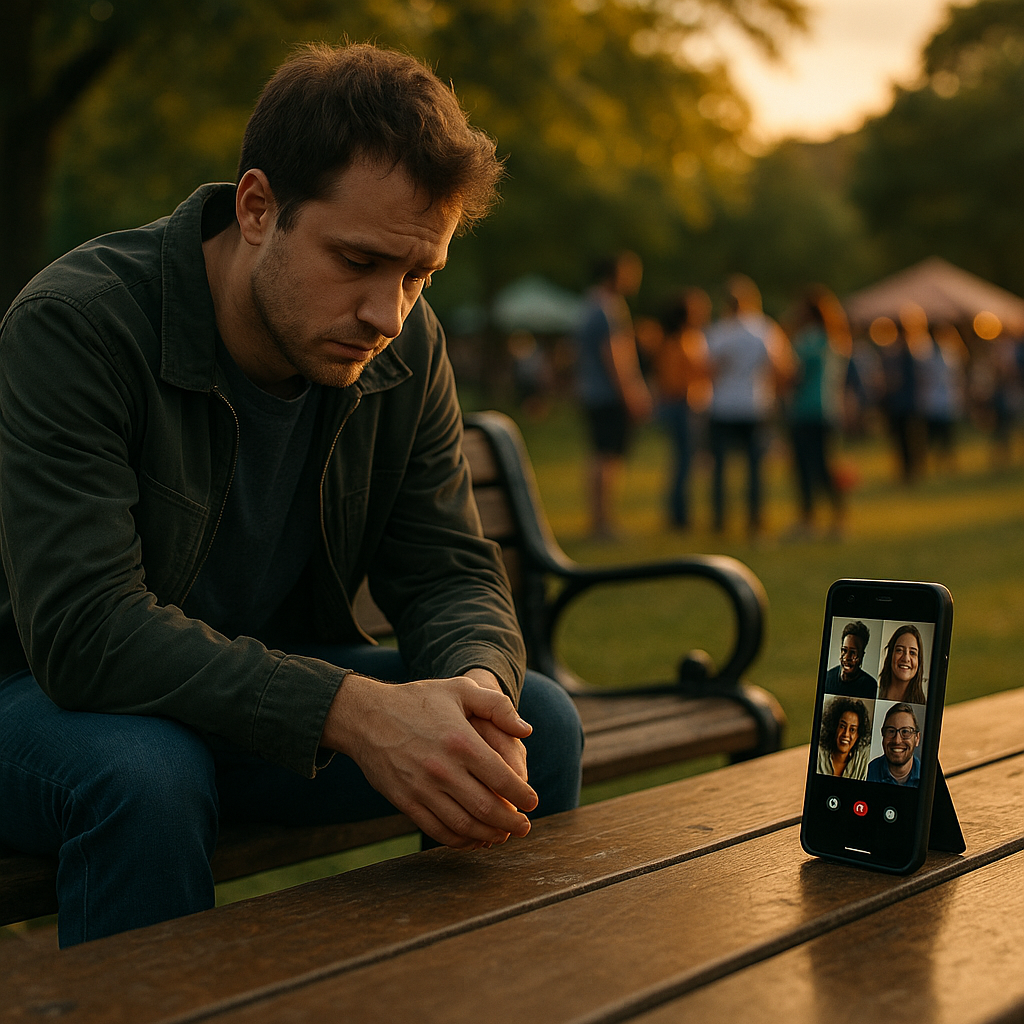
In 2025, brands face a human reality that reshapes how people discover, trust, and stay loyal: The Loneliness Epidemic As A Driver For Niche Community Marketing. When customers feel disconnected, they seek belonging in smaller, values-led spaces. Marketers who understand this shift can build communities that help people feel seen, not sold to. The question is: will your brand earn a place?
Why the loneliness epidemic matters to niche community marketing
Loneliness is not just a personal emotion; it is a market force. When people struggle to find consistent connection through work, neighborhood ties, or family proximity, they look for identity and support elsewhere. Many find it in micro-communities built around shared interests, lived experiences, and values.
Recent public health guidance underscores the scale. In 2023, the U.S. Surgeon General issued an advisory describing loneliness and social isolation as a public health concern, linking weak social connection to poorer health outcomes. In 2023, the World Health Organization also elevated social connection as a global health priority by launching a commission focused on social connection. These signals matter for marketers because they validate a durable behavioral trend: people are actively searching for belonging.
Niche community marketing works when it does two things at once: it meets a real social need and it improves product-market fit. If your product supports a specific identity or life situation (new parenthood, caregiving, chronic conditions, remote work, sobriety, neurodiversity, hobby mastery), a well-run community can become the most trusted “decision layer” above ads, influencers, and reviews.
Reader question you might be asking: “Is this just a tactic to increase engagement?” Not if it is done responsibly. The ethical line is clear: you build community to create genuine connection and mutual value, and the commercial upside follows.
Community-led growth: why micro-communities outperform broad audiences
Community-led growth shifts marketing from “broadcast and persuade” to “host and enable.” Instead of aiming for the widest reach, you prioritize the tightest relevance. This is why micro-communities often outperform broad audiences:
- Higher trust density: People trust peers who share context. A recommendation inside a niche group carries more weight than a generic review.
- Faster feedback loops: Members tell you what is confusing, missing, or delightful in real time, reducing guesswork in messaging and product improvements.
- Lower acquisition friction: When a community answers “Will I fit in?” customers move from curiosity to commitment faster.
- Resilience against algorithm swings: Owned spaces (email, forums, member portals, events) reduce reliance on paid media volatility.
However, community-led growth is not a replacement for marketing fundamentals. It is a multiplier. You still need clear positioning, a differentiated offer, and a product experience that matches the promise. Communities cannot “fix” a product that disappoints.
Practical litmus test: If your ideal customer would benefit from meeting another ideal customer, you likely have community potential.
Belonging-based positioning: how to craft values-first niche communities
Niche community marketing becomes powerful when it aligns with a clear identity and values, not just a category. Positioning for belonging means you define who the community is for, what it stands for, and what members can expect socially.
Use these building blocks to create a values-first community:
- Shared identity statement: “This is a space for…” followed by a specific group and a specific purpose.
- Emotional job-to-be-done: Beyond the functional benefit, name the feeling members want (confidence, safety, momentum, relief, pride).
- Mutual value exchange: Explain how members help each other, not only how the brand helps members.
- Non-negotiable norms: Set standards around respect, privacy, inclusion, and evidence-based advice where relevant.
Example framing: “A community for first-time managers in technical teams who want practical scripts, peer coaching, and a place to talk through people problems without judgment.” This is niche, socially clear, and easy to say yes to.
Answering the follow-up: “Should the community be open to everyone?” Often, no. Exclusivity can be ethical when it protects psychological safety. Consider layered access: public content for learning, and gated spaces for sensitive peer support.
Trust and EEAT in community marketing: safety, moderation, and credibility
In 2025, trust is the competitive moat. Google’s EEAT principles (Experience, Expertise, Authoritativeness, Trustworthiness) map naturally to community marketing because communities live or die on credibility and safety.
Experience: Feature real member stories and practical outcomes. Showcase “what worked for me” content with context: constraints, timeline, and trade-offs. Avoid miraculous claims.
Expertise: When topics affect health, finances, or legal risk, you must clearly separate peer discussion from professional guidance. Use expert-led sessions, vetted resources, and disclaimers that are easy to understand.
Authoritativeness: Build a visible ecosystem of credible contributors: practitioners, researchers, certified professionals, and respected community members. Publish resource pages that cite primary sources when you reference statistics or health claims.
Trustworthiness: Trust is operational. It requires:
- Clear rules and enforcement: Post community guidelines, define escalation steps, and apply them consistently.
- Privacy by design: Minimize data collection, explain how data is used, and avoid selling member data. Offer anonymous posting for sensitive topics if appropriate.
- Anti-harassment safeguards: Active moderation, reporting tools, and quick response times.
- Transparent brand role: Disclose when staff participate, when content is sponsored, and when offers are promotional.
Critical ethical note: Loneliness makes people more vulnerable to manipulation. Do not weaponize scarcity, shame, or parasocial dependency. A healthy community encourages members to build offline connection too, not to replace their lives with your platform.
Retention and monetization: turning connection into sustainable growth
Community marketing should not feel like a funnel. It should feel like a helpful environment where buying is a natural extension of trust. Sustainable monetization comes from designing offers that support the community’s goals.
Effective revenue pathways for niche communities include:
- Member-powered onboarding: Pair new customers with peer buddies, cohorts, or guided checklists. This reduces churn by improving early success.
- Events with outcomes: Workshops, clinics, office hours, and local meetups that solve specific problems. Charge for premium sessions if they deliver clear value.
- Tiered membership: Free access for learning and belonging; paid tiers for deeper support, templates, expert Q&A, or accredited training.
- Product co-creation: Invite members to test features, vote on roadmap items, and contribute use cases. This increases adoption because members recognize their input.
Measure community impact with metrics that reflect both business health and member wellbeing:
- Activation: time-to-first-meaningful-interaction, cohort completion, first post or first helpful reply.
- Quality: ratio of questions to answers, helpfulness ratings, repeat participation, unresolved threads.
- Business outcomes: retention, expansion, referral rate, support deflection with satisfaction maintained.
- Safety: incident rate, time-to-moderation, member-reported sense of belonging.
Follow-up answered: “How do we sell without breaking trust?” Keep promotion contextual and permission-based. Use “offer moments” tied to member intent (when they ask for a tool, a template, a coach), and maintain a strong ratio of help-to-hype.
Platforms and playbooks: choosing channels and launching your niche community
Your platform choice should match your community’s purpose, privacy needs, and moderation capacity. Start simple. Complexity kills momentum.
Common models:
- Private group (fast start): Good for early-stage validation and conversation. Risk: limited ownership and algorithm dependence.
- Forum or community hub (scalable knowledge): Best for searchable answers, long-term value, and structured categories.
- Messaging-based community (high intimacy): Strong for daily support and quick wins; harder to organize knowledge and moderate at scale.
- Hybrid (best of both): Hub for resources + smaller cohorts for support + periodic live events.
A practical 6-step launch playbook:
- Define the niche promise: Who it is for, the problem it solves, and the social outcome members can expect.
- Recruit 30–100 founding members: Invite customers, email subscribers, and partners who already align with your values.
- Seed 10 high-value threads or resources: FAQs, quick-start guides, wins, and “ask me anything” prompts.
- Set moderation and safety workflows: Guidelines, reporting, escalation, and a visible moderator presence.
- Run a 30-day programming sprint: Weekly themes, prompts, and a live session to create rhythm.
- Convert insight into improvements: Publish “what we changed because of you” updates to prove member impact.
How long until it works? Expect a ramp period. Communities often show early qualitative wins (better feedback, warmer referrals) before they show strong quantitative gains (retention lift, lower support load). The key is consistency: community is a practice, not a campaign.
FAQs
What is niche community marketing?
Niche community marketing builds and nurtures a focused group of people who share a specific identity, need, or interest. The community creates peer trust and ongoing engagement, which can improve retention, referrals, and product insight when managed ethically.
How is the loneliness epidemic connected to marketing?
As social connection weakens in many traditional settings, people seek belonging in smaller, interest-based spaces. Brands that create safe, useful communities can meet a real human need while earning trust and long-term loyalty.
What are the biggest risks when building a brand community?
The main risks are poor moderation, unclear rules, privacy missteps, and over-commercialization. Any of these can break trust quickly. Plan safety workflows, disclose brand involvement, and keep member wellbeing central.
Should our community be paid or free?
Start with a free or low-friction option to validate demand and establish culture. Add paid tiers when you can offer clear incremental outcomes: expert access, structured cohorts, toolkits, certifications, or hands-on support.
How do we measure ROI without reducing community to vanity metrics?
Track a balanced scorecard: activation and participation quality, member safety and belonging signals, and business outcomes like retention, expansion, referrals, and support efficiency. Pair metrics with member interviews to capture real experience.
Do we need experts in the community?
If discussions touch health, finance, or legal areas, expert input and strong guardrails are essential. For hobby or lifestyle communities, experts still help, but peer experience can lead as long as misinformation is controlled.
Loneliness reshapes buying behavior by increasing demand for safe belonging, credible guidance, and peers who understand context. In 2025, niche community marketing wins when it treats connection as a responsibility, not a gimmick: clear positioning, strong moderation, privacy-first design, and value members can feel quickly. Build a community that improves people’s lives, and sustainable growth becomes the byproduct.
Top Influencer Marketing Agencies
The leading agencies shaping influencer marketing in 2026
Agencies ranked by campaign performance, client diversity, platform expertise, proven ROI, industry recognition, and client satisfaction. Assessed through verified case studies, reviews, and industry consultations.
Moburst

-
2

The Shelf
Boutique Beauty & Lifestyle Influencer AgencyA data-driven boutique agency specializing exclusively in beauty, wellness, and lifestyle influencer campaigns on Instagram and TikTok. Best for brands already focused on the beauty/personal care space that need curated, aesthetic-driven content.Clients: Pepsi, The Honest Company, Hims, Elf Cosmetics, Pure LeafVisit The Shelf → -
3

Audiencly
Niche Gaming & Esports Influencer AgencyA specialized agency focused exclusively on gaming and esports creators on YouTube, Twitch, and TikTok. Ideal if your campaign is 100% gaming-focused — from game launches to hardware and esports events.Clients: Epic Games, NordVPN, Ubisoft, Wargaming, Tencent GamesVisit Audiencly → -
4

Viral Nation
Global Influencer Marketing & Talent AgencyA dual talent management and marketing agency with proprietary brand safety tools and a global creator network spanning nano-influencers to celebrities across all major platforms.Clients: Meta, Activision Blizzard, Energizer, Aston Martin, WalmartVisit Viral Nation → -
5

The Influencer Marketing Factory
TikTok, Instagram & YouTube CampaignsA full-service agency with strong TikTok expertise, offering end-to-end campaign management from influencer discovery through performance reporting with a focus on platform-native content.Clients: Google, Snapchat, Universal Music, Bumble, YelpVisit TIMF → -
6

NeoReach
Enterprise Analytics & Influencer CampaignsAn enterprise-focused agency combining managed campaigns with a powerful self-service data platform for influencer search, audience analytics, and attribution modeling.Clients: Amazon, Airbnb, Netflix, Honda, The New York TimesVisit NeoReach → -
7

Ubiquitous
Creator-First Marketing PlatformA tech-driven platform combining self-service tools with managed campaign options, emphasizing speed and scalability for brands managing multiple influencer relationships.Clients: Lyft, Disney, Target, American Eagle, NetflixVisit Ubiquitous → -
8

Obviously
Scalable Enterprise Influencer CampaignsA tech-enabled agency built for high-volume campaigns, coordinating hundreds of creators simultaneously with end-to-end logistics, content rights management, and product seeding.Clients: Google, Ulta Beauty, Converse, AmazonVisit Obviously →