


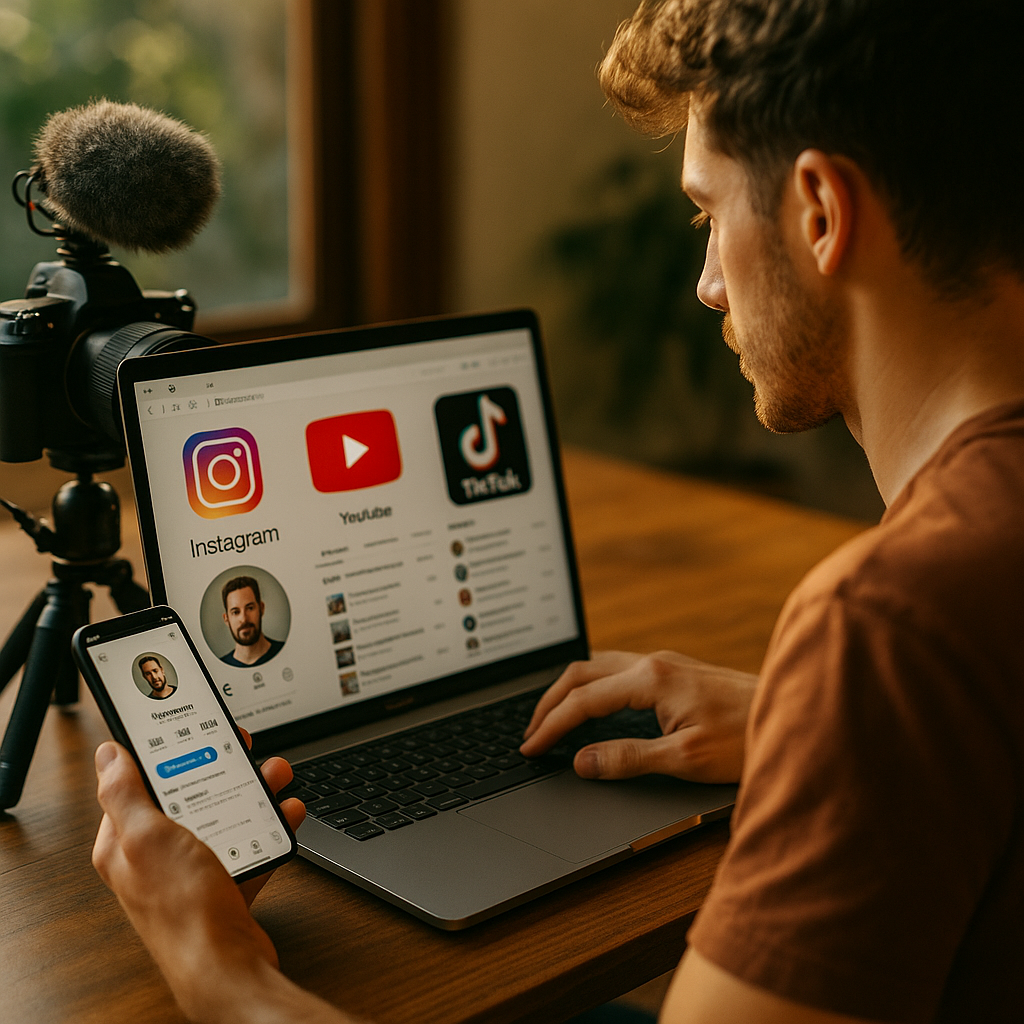
In 2025, creators are shifting power back to themselves, building audiences and revenue streams that survive algorithm changes and platform policy swings. The Sovereign Creator Trend captures this move toward ownership: of identity, audience access, data, and distribution. It’s not anti-platform; it’s pro-resilience. If your influence can travel anywhere, your career can, too—so what does sovereignty actually look like in practice?
Platform-agnostic influence: what it means (and what it isn’t)
Platform-agnostic influence means your reach and trust do not depend on a single app’s feed, monetization program, or rules. You can publish, sell, and communicate across multiple channels while maintaining consistent identity and measurable outcomes.
It is not “posting everywhere” for the sake of presence. It is a deliberate operating model built on:
- Portable audience access: direct contact methods like email, SMS, community spaces, and owned profiles.
- Clear positioning: a niche promise that stays intact across formats (short video, long video, audio, text).
- Repeatable distribution: workflows that let one idea become many assets without diluting quality.
- Revenue diversity: multiple offers so a single program pause or CPM dip doesn’t break the business.
Creators adopt this approach because the risks are real: sudden reach drops, demonetization, account issues, shifting audience behavior, and rising competition. The goal is stability without losing growth. You still use major platforms—just not as the single point of failure.
Creator sovereignty: the pillars of true ownership
Creator sovereignty is the ability to make independent choices about your content, business model, and community without being trapped by one platform’s incentives. It requires ownership at three levels: identity, audience, and assets.
1) Identity ownership
Your name, visual style, and value proposition must be consistent and searchable. Use the same handle where possible. Publish a clear “what I help you do” statement. Build a media kit page and a public bio that is easy to quote.
2) Audience ownership
Owned audience access is the difference between “followers” and “relationships.” Prioritize channels where you can reliably reach people:
- Email: still the most practical owned channel because it’s portable and measurable.
- SMS: high attention, best for launches and time-sensitive updates (use consent-first practices).
- Community: groups or memberships that encourage peer connection, not just creator broadcasts.
3) Asset ownership
Assets include your content library, lead magnets, course materials, templates, and brand IP. Host originals in a place you control (site, cloud storage, or a repository) and treat social posts as distribution endpoints, not the master archive.
Answering the practical follow-up: sovereignty does not mean abandoning platforms. It means you can walk away from any single one without losing your audience, your income, or your ability to publish.
Owned media strategy: build your hub-and-spoke ecosystem
An effective owned media strategy usually follows a hub-and-spoke model. Your hub is your website (or a primary home base) where your best content, offers, and subscriber paths live. Spokes are social platforms, podcast apps, video platforms, and partner channels that drive discovery.
Start with a simple stack (you can expand later):
- Website with an about page, a “start here” page, and a clear offer page.
- Newsletter with a focused promise (not “weekly updates”).
- One community layer (free or paid) tied to a defined outcome.
- Analytics that track signups, conversions, and top-performing topics.
Design for conversion, not just traffic
Traffic without capture is rented attention. Add one primary call-to-action across your site and profiles: “Join the newsletter,” “Get the checklist,” or “Book a consult.” Keep it consistent for 60–90 days so you can measure what works.
Repurpose with intent
Instead of copying the same post everywhere, adapt to each platform’s native behavior while keeping the same core idea:
- One long-form insight becomes a short video hook, a carousel, a thread, a newsletter issue, and a podcast outline.
- Each version points back to the same owned destination (your hub or lead magnet).
This creates compounding returns: the topic builds authority, the system builds subscribers, and your influence stays portable.
Multi-platform branding: consistency without becoming repetitive
Multi-platform branding is how you remain recognizable while speaking the language of each channel. The goal is to reduce cognitive load for your audience: they should know it’s you in under two seconds, and they should know why they should care.
Build a brand kit you can actually maintain
- Message: a single-line positioning statement and three supporting proof points.
- Visuals: two fonts, a limited color palette, and one thumbnail style.
- Voice: a short list of words you use and words you avoid.
Use signature frameworks
Frameworks help you scale content without sounding repetitive. For example:
- Problem → cause → solution → next step for educational posts.
- Mistake → consequence → fix for tactical content.
- Case study → lesson → template for authority building.
Answer the “Which platform should I focus on?” question
Pick one primary discovery platform where your audience already spends time and one secondary platform that supports your strengths. Then route both toward your owned channel. This avoids burnout and makes growth measurable.
Brand trust requires clarity
If your niche is broad, your offers will feel vague. Tighten the promise: who you help, what outcome you deliver, and what method you use. Clarity is what travels across platforms—not trends.
Direct audience relationships: trust, consent, and community flywheels
Direct audience relationships are the engine of sovereign creation. They turn casual viewers into repeat readers, buyers, and advocates—without relying on a feed to reintroduce you every time.
Lead with value, then deepen engagement
- Public content: broad education and opinion that signals expertise.
- Owned channel: deeper guidance, behind-the-scenes processes, and curated resources.
- Community: peer learning, accountability, and access to you at defined times.
Consent-first is non-negotiable
Ask clearly for permission to email or text, explain what people will receive, and make unsubscribing easy. Trust compounds when people feel respected. It also protects your deliverability and long-term reach.
Use feedback loops to improve expertise
To follow Google’s helpful content expectations in 2025, build content from real questions and observed outcomes:
- Track replies to newsletters and common support questions.
- Publish “what worked / what didn’t” notes from your own experiments.
- Use lightweight surveys to identify the next problems to solve.
Show your experience, not just opinions
EEAT is easier when you document your process: what you tested, what you learned, what constraints you had, and who the approach is for. Readers trust creators who can say, “Here’s the method I used, here’s the result, and here’s where it may not apply.”
Creator monetization diversification: resilient income beyond one program
Creator monetization diversification protects you from volatility and lets you build a business that matches your audience’s needs at different stages. Sovereign creators typically combine at least three revenue types: one transactional, one recurring, and one high-value.
Common revenue layers
- Transactional: digital products, templates, workshops, affiliate offers.
- Recurring: memberships, paid communities, retainers, subscriptions.
- High-value: consulting, coaching, audits, done-for-you services, sponsorship packages.
Match offers to audience intent
Not everyone wants a course. Some want a quick template. Some want you to implement. Create a simple ladder:
- Free: checklist or mini-guide that solves one specific pain.
- Entry: low-priced product that saves time.
- Core: flagship course or membership with a defined outcome.
- Premium: limited high-touch offer for complex problems.
Answer the “How do I sell without harming trust?” question
Sell as a continuation of your teaching. Explain who the offer is for, who it is not for, what problem it solves, and what the buyer will be able to do afterward. Use transparent terms and avoid inflated promises. Your reputation is the asset that makes platform-agnostic influence possible.
FAQs
What is the Sovereign Creator Trend?
It’s the shift toward creators owning their audience access, brand assets, and revenue pathways so they can grow and earn without depending on any single platform’s algorithm or policies.
Do I need a website to be platform-agnostic?
A website is the most reliable hub because you control it, but the deeper requirement is an owned home base plus an owned contact channel (usually email). If you start without a website, prioritize a newsletter and a simple landing page, then expand.
Which owned channel should I build first: email, SMS, or community?
Email first for portability and cost-effectiveness. Add community when you have repeat engagement and a clear reason for members to interact. Add SMS only when you can manage consent, frequency, and real-time value.
How many platforms should I publish on in 2025?
One primary discovery platform and one secondary is enough for most creators. Use the rest as light redistribution channels. Focus on consistent output and routing attention to your owned channel.
How do I measure platform-agnostic influence?
Track metrics that stay meaningful across platforms: email subscriber growth, reply rate, returning visitors, conversion rate to offers, repeat purchases, and direct traffic to your hub. These indicate real demand, not just impressions.
Is repurposing content bad for originality or SEO?
Not if you adapt the content to each format and keep a canonical “source” on your hub. Publish the deepest version on your site or newsletter, then distribute tailored versions elsewhere that reference the core idea and drive readers back.
What’s the biggest mistake creators make when trying to be sovereign?
Confusing sovereignty with isolation. The strongest model uses platforms for discovery, partnerships, and cultural relevance—while keeping audience access and business infrastructure under creator control.
Platform shifts will keep happening in 2025, but your leverage doesn’t have to swing with them. The sovereign approach builds a stable base—owned audience access, a clear brand, and diversified revenue—then uses platforms as distribution, not dependency. Choose a hub, set one primary capture goal, and publish consistently for a specific audience outcome. Influence that travels is influence that lasts.
Top Influencer Marketing Agencies
The leading agencies shaping influencer marketing in 2026
Agencies ranked by campaign performance, client diversity, platform expertise, proven ROI, industry recognition, and client satisfaction. Assessed through verified case studies, reviews, and industry consultations.
Moburst

-
2

The Shelf
Boutique Beauty & Lifestyle Influencer AgencyA data-driven boutique agency specializing exclusively in beauty, wellness, and lifestyle influencer campaigns on Instagram and TikTok. Best for brands already focused on the beauty/personal care space that need curated, aesthetic-driven content.Clients: Pepsi, The Honest Company, Hims, Elf Cosmetics, Pure LeafVisit The Shelf → -
3

Audiencly
Niche Gaming & Esports Influencer AgencyA specialized agency focused exclusively on gaming and esports creators on YouTube, Twitch, and TikTok. Ideal if your campaign is 100% gaming-focused — from game launches to hardware and esports events.Clients: Epic Games, NordVPN, Ubisoft, Wargaming, Tencent GamesVisit Audiencly → -
4

Viral Nation
Global Influencer Marketing & Talent AgencyA dual talent management and marketing agency with proprietary brand safety tools and a global creator network spanning nano-influencers to celebrities across all major platforms.Clients: Meta, Activision Blizzard, Energizer, Aston Martin, WalmartVisit Viral Nation → -
5

The Influencer Marketing Factory
TikTok, Instagram & YouTube CampaignsA full-service agency with strong TikTok expertise, offering end-to-end campaign management from influencer discovery through performance reporting with a focus on platform-native content.Clients: Google, Snapchat, Universal Music, Bumble, YelpVisit TIMF → -
6

NeoReach
Enterprise Analytics & Influencer CampaignsAn enterprise-focused agency combining managed campaigns with a powerful self-service data platform for influencer search, audience analytics, and attribution modeling.Clients: Amazon, Airbnb, Netflix, Honda, The New York TimesVisit NeoReach → -
7

Ubiquitous
Creator-First Marketing PlatformA tech-driven platform combining self-service tools with managed campaign options, emphasizing speed and scalability for brands managing multiple influencer relationships.Clients: Lyft, Disney, Target, American Eagle, NetflixVisit Ubiquitous → -
8

Obviously
Scalable Enterprise Influencer CampaignsA tech-enabled agency built for high-volume campaigns, coordinating hundreds of creators simultaneously with end-to-end logistics, content rights management, and product seeding.Clients: Google, Ulta Beauty, Converse, AmazonVisit Obviously →