


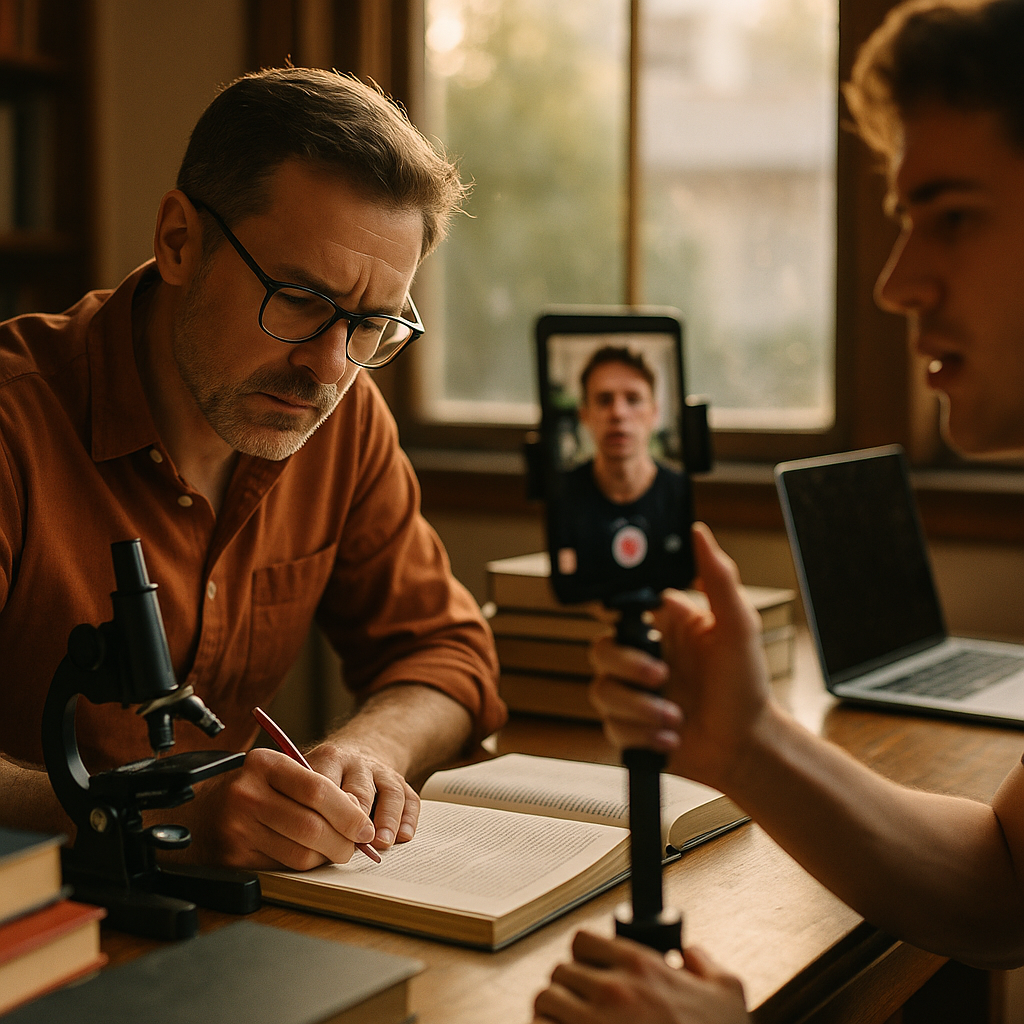
The creator economy is maturing fast. Audiences have more choices, higher standards, and less patience for vague advice. In 2025, The Death Of The Generalist Influencer And The Rise Of The Domain Expert isn’t a hot take—it’s a measurable shift in what earns trust, drives conversions, and survives algorithm changes. Brands want outcomes, followers want clarity, and experts are stepping in—will you adapt?
Why generalist influencers are losing traction: generalist influencer
For years, the generalist influencer model worked because distribution was abundant and novelty was rewarded. A creator could post about productivity on Monday, skincare on Wednesday, and investing on Friday—and still grow. In 2025, that approach increasingly underperforms for three reasons: audience skepticism, platform incentives, and brand risk management.
Audiences are better at detecting shallow expertise. Viewers have been trained by endless “tips” content. They now ask: “What has this person actually done?” and “Can they prove it?” When the answer is unclear, engagement drops and comments shift from curiosity to challenge. This is not about being negative; it’s about buyers protecting their attention and money.
Platforms reward clarity and repeatable satisfaction. Recommendation systems prioritize content that creates predictable viewer outcomes—saving time, solving a defined problem, or supporting a specific identity. Generalists dilute that signal. If someone follows you for running form and you pivot to credit card hacks, you force the algorithm and the audience to re-learn what you represent.
Brands want fewer surprises. Marketing teams are pressured to show ROI and to avoid reputational blowback. Generalists often lack defensible differentiation, and their audience composition can be too mixed to target efficiently. A creator with a focused niche and a credible background is easier to brief, easier to measure, and safer to approve.
None of this means variety is “bad.” It means variety without a unifying domain promise is harder to grow, harder to monetize, and harder to sustain.
The trust shift: EEAT and the domain expert advantage
Trust is the scarce resource in the attention economy, and domain experts compound it. Google’s helpful content expectations and broader EEAT signals (Experience, Expertise, Authoritativeness, Trustworthiness) align with what audiences already prefer: evidence over vibes.
Experience: Domain experts show they’ve done the work. They share what they tried, what failed, and what changed their outcomes. Experience reads as specific: constraints, trade-offs, timelines, and context.
Expertise: Expertise is more than vocabulary. It’s correct prioritization. Experts know what matters, what to ignore, and when advice depends on a user’s situation. They can say, “If you’re X, do Y; if you’re Z, don’t.” That conditional guidance earns loyalty.
Authoritativeness: Authority is a network effect. When peers cite you, when credible publications reference your work, and when your audience shares your frameworks, you become the default choice in a category.
Trustworthiness: Trust is built through transparency. Domain experts disclose conflicts, show methodology, separate education from promotion, and update older content when facts change. They also avoid inflated claims, which protects the audience and their own reputation.
For creators, this is good news: you don’t need to be famous to be trusted. You need a well-defined domain, proof of practice, and consistent value delivery.
How algorithms and search reward niche content in 2025
Creators often blame “the algorithm” when performance drops, but the real issue is usually positioning. In 2025, distribution systems—social feeds, video recommendations, and search—favor content that makes it easy to classify intent and satisfaction.
Niche clarity improves recommendation accuracy. When you repeatedly solve a specific problem for a defined audience, platforms can confidently serve your content to similar users. That increases watch time, saves, shares, and repeat exposure.
Search visibility follows helpfulness patterns. Search surfaces pages and videos that answer the query completely, demonstrate real-world experience, and match the user’s next-step needs. That means anticipating follow-up questions inside the content: costs, steps, pitfalls, alternatives, and who the advice is not for.
Evergreen compounds faster than trends. Generalist creators often chase trends to stay relevant. Domain experts can turn one expertise area into an interlinked library: beginner guides, advanced breakdowns, tools, templates, case studies, and opinionated comparisons. Each piece strengthens the others.
Topic authority beats one-off virality. Viral posts can spike followers, but domain expertise sustains conversion. A smaller audience that trusts you can outperform a larger audience that merely recognizes you.
If you want to future-proof your reach, design your content like a curriculum, not a roulette wheel.
Brand deals and monetization: the new standard for creator marketing
Brand budgets haven’t disappeared; they’ve become stricter. In 2025, creator marketing increasingly resembles performance marketing with a human face. Domain experts win because they reduce uncertainty.
Higher purchase intent. Expert-led audiences are often “problem-aware” and actively researching solutions. A domain expert speaking about a tool, course, or service fits naturally into the buyer journey.
Better brief alignment. Brands don’t just want impressions; they want correct messaging. Experts can translate product features into practical use cases, limitations, and comparisons. That produces content that feels useful rather than scripted.
Premium pricing through specialization. Generalist sponsorship rates are often pressured because brands can swap one creator for another. Domain experts are harder to replace. When your content consistently influences decisions in one category, you can charge for the risk you remove.
More defensible monetization beyond ads. Domain experts can build multiple revenue lines that don’t depend on platform swings:
- Advisory or consulting for businesses that want implementation help
- Courses and cohorts with measurable outcomes and clear prerequisites
- Templates and tools tied to workflows you’ve demonstrated publicly
- Membership communities anchored in ongoing expertise updates
- Speaking and training because authority travels offline, too
Brands also care about reputational safety. Experts who cite sources, disclose partnerships, and avoid sensational claims reduce compliance headaches and keep relationships long-term.
How to pivot from generalist to expert without losing your audience: personal branding
You don’t need to delete your past to become a domain expert. You need to reframe it and choose a lane that aligns with your real experience. A clean pivot has three parts: domain selection, proof building, and editorial consistency.
1) Pick a domain where you have evidence, not just interest. Start with your overlap of: what you’ve done repeatedly, what people already ask you for, and what has economic value. If you’re stuck, audit your last 90 days of content and identify which posts triggered the most “How do I…?” comments from the right kind of audience.
2) Define your “domain promise” in one sentence. Examples of a strong promise structure:
- I help [specific audience] achieve [specific outcome] using [your method or context].
- I translate [complex field] into [practical steps] for [who].
This statement becomes your content filter. If a post doesn’t support the promise, it becomes optional, not default.
3) Show receipts in ethical, audience-first ways. Proof is not bragging; it’s clarity. Use:
- Before/after metrics with context (what changed, what you controlled, what you didn’t)
- Case studies (what you tried, why, results, lessons)
- Process walkthroughs (screen recordings, checklists, annotated decisions)
- Credential framing (relevant training, roles, or years of practice—only if it supports the topic)
4) Publish like an expert: a repeatable content system. A simple weekly structure keeps you consistent and makes you easier to follow:
- One foundational post (principles, frameworks, definitions)
- One applied post (case study, teardown, live audit)
- One conversion post (tool recommendation, offer explanation, FAQ, comparison)
5) Keep variety, but anchor it to the domain. You can still share personality, lifestyle, or opinions. The difference is you connect them back to the audience’s goal. Instead of “random updates,” share “what I learned this week about X” or “how I made a decision using Y framework.”
6) Build trust signals that scale. Add clear disclosures for sponsored content, keep a public “start here” resource, and update older posts when information changes. These are small actions that signal maturity and protect your reputation.
What the next era looks like: the expert creator ecosystem
The rise of the domain expert doesn’t eliminate creativity; it refocuses it. In 2025, the most durable creators look less like general entertainers and more like category leaders who communicate with personality.
Expect more hybrid roles. Experts will combine education with implementation: operator-creators, researcher-creators, clinician-creators, analyst-creators. Their content stands out because it is informed by real constraints and real responsibility.
Expect smaller but more valuable audiences. Many expert creators will never chase mass appeal. They will prioritize the right 10,000 people over a noisy 1,000,000. That focus tends to increase revenue per follower and decrease burnout.
Expect stronger collaboration between experts. Crossovers will be based on complementary domains rather than shared popularity. For example, a tax specialist collaborating with a small-business operations expert creates integrated value that generalists struggle to match.
Expect higher standards for claims. Audiences will increasingly demand sources, data context, and honest limitations. Creators who handle uncertainty well—who can say “it depends” and explain why—will outperform those who over-simplify.
The practical implication: if you invest in depth, you won’t just survive platform changes—you’ll benefit from them.
FAQs
Is the generalist influencer really “dead,” or just changing?
It’s changing. Generalists can still succeed if they have a clear unifying angle—such as a distinct worldview, a specific audience they serve, or a consistent outcome they deliver. What’s declining is the “anything I feel like today” approach without proof, positioning, or a coherent value proposition.
How do I choose a niche if I have multiple interests?
Choose the niche where you can demonstrate real-world experience and where the audience has a clear problem to solve. You can keep other interests as supporting content, but anchor your main channel around one domain promise for at least a full content cycle so platforms and viewers can learn what you’re for.
Do I need formal credentials to be a domain expert?
Not always. Credentials help in regulated or high-stakes fields, but expertise can also come from documented experience, repeatable results, and transparent methodology. If you lack credentials, strengthen trust with case studies, clear limitations, and reputable sources.
How long does it take to reposition from generalist to expert?
Most creators see meaningful signals within a few months if they publish consistently and tighten their topic focus. The key is consistency: repeated, high-clarity content that targets the same audience problem and builds a library that compounds.
Will focusing on a niche reduce my growth?
It can reduce broad reach, but it often increases the quality of reach. Niche focus typically improves retention, conversion, and monetization. Many creators find that “slower follower growth” comes with “faster revenue growth” because trust rises.
What should brands look for when hiring domain expert creators?
Look for proof of experience, consistent topic authority, audience alignment, transparent disclosures, and content that demonstrates practical outcomes. Ask for examples of past campaigns with learnings, not just views. The best expert creators can explain what worked, why it worked, and what they would change next time.
In 2025, influence is shifting from broad visibility to earned credibility. Generalist content still has a place, but it rarely wins trust or revenue without a clear, repeatable promise. Domain experts outperform because they deliver specific outcomes, prove experience, and build content libraries that compound. The takeaway: pick one domain, document real practice, and publish with consistency—depth is the growth strategy that lasts.
Top Influencer Marketing Agencies
The leading agencies shaping influencer marketing in 2026
Agencies ranked by campaign performance, client diversity, platform expertise, proven ROI, industry recognition, and client satisfaction. Assessed through verified case studies, reviews, and industry consultations.
Moburst

-
2

The Shelf
Boutique Beauty & Lifestyle Influencer AgencyA data-driven boutique agency specializing exclusively in beauty, wellness, and lifestyle influencer campaigns on Instagram and TikTok. Best for brands already focused on the beauty/personal care space that need curated, aesthetic-driven content.Clients: Pepsi, The Honest Company, Hims, Elf Cosmetics, Pure LeafVisit The Shelf → -
3

Audiencly
Niche Gaming & Esports Influencer AgencyA specialized agency focused exclusively on gaming and esports creators on YouTube, Twitch, and TikTok. Ideal if your campaign is 100% gaming-focused — from game launches to hardware and esports events.Clients: Epic Games, NordVPN, Ubisoft, Wargaming, Tencent GamesVisit Audiencly → -
4

Viral Nation
Global Influencer Marketing & Talent AgencyA dual talent management and marketing agency with proprietary brand safety tools and a global creator network spanning nano-influencers to celebrities across all major platforms.Clients: Meta, Activision Blizzard, Energizer, Aston Martin, WalmartVisit Viral Nation → -
5

The Influencer Marketing Factory
TikTok, Instagram & YouTube CampaignsA full-service agency with strong TikTok expertise, offering end-to-end campaign management from influencer discovery through performance reporting with a focus on platform-native content.Clients: Google, Snapchat, Universal Music, Bumble, YelpVisit TIMF → -
6

NeoReach
Enterprise Analytics & Influencer CampaignsAn enterprise-focused agency combining managed campaigns with a powerful self-service data platform for influencer search, audience analytics, and attribution modeling.Clients: Amazon, Airbnb, Netflix, Honda, The New York TimesVisit NeoReach → -
7

Ubiquitous
Creator-First Marketing PlatformA tech-driven platform combining self-service tools with managed campaign options, emphasizing speed and scalability for brands managing multiple influencer relationships.Clients: Lyft, Disney, Target, American Eagle, NetflixVisit Ubiquitous → -
8

Obviously
Scalable Enterprise Influencer CampaignsA tech-enabled agency built for high-volume campaigns, coordinating hundreds of creators simultaneously with end-to-end logistics, content rights management, and product seeding.Clients: Google, Ulta Beauty, Converse, AmazonVisit Obviously →