


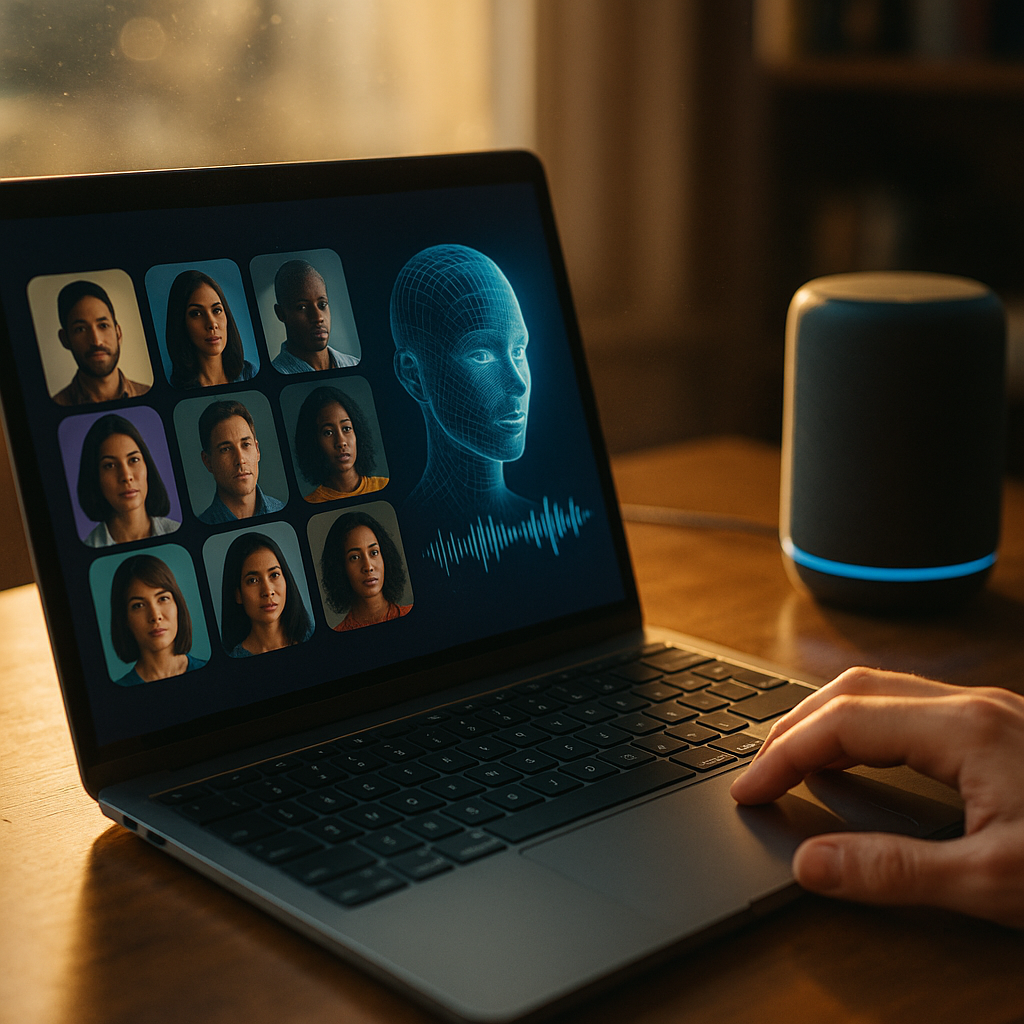
In 2025, customers expect voice experiences that feel consistent, helpful, and unmistakably “on brand.” Using AI To Personalize Voice Assistant Brand Personas In Real Time is no longer experimental—it’s a practical way to adapt tone, wording, and guidance to each user and moment without losing brand control. Done well, it builds trust, reduces friction, and improves outcomes across channels. But how do you personalize safely at scale?
What “real-time voice persona personalization” means for brand experience
Real-time persona personalization is the ability for a voice assistant to adjust how it communicates—tone, formality, pace, vocabulary, empathy level, and even micro-interactions—based on the user’s context and intent, while staying inside defined brand boundaries. The goal is not to “shape-shift” into different characters. It is to express one brand identity in ways that fit different situations.
In practice, personalization can happen at multiple layers:
- Language style: concise vs. detailed, friendly vs. formal, playful vs. serious—within approved ranges.
- Guidance depth: short confirmation for experts, step-by-step coaching for novices.
- Emotional calibration: more empathetic phrasing for complaints, more efficient wording for routine tasks.
- Channel continuity: remembering that a user started on a mobile app and continued via smart speaker, without repeating questions.
- Accessibility adaptation: slower pacing, clearer enunciation cues, or simplified wording when needed.
Readers often ask whether this is the same as “voice cloning.” It’s not. Personalizing a persona is primarily about what the assistant says and how it says it within policy—rather than copying a specific person’s voice. If you also use custom text-to-speech, it should be treated as a separate, tightly governed workstream with explicit permissions.
Real-time AI personalization signals that improve voice assistant UX
Effective personalization starts with choosing the right signals. The best signals are relevant, minimally invasive, and explainable to stakeholders. They also align with user expectations, especially in regulated or sensitive journeys.
Common signals used to personalize voice assistant user experience in real time include:
- Intent and task complexity: “reset password” vs. “understand a bill” should trigger different support depth and tone.
- Session context: repeat contact within a short time can prompt a more direct, apologetic, and solution-forward approach.
- Device and environment: car mode benefits from shorter prompts and fewer confirmations; at home can allow longer explanations.
- User preference controls: a chosen “concise mode,” preferred name pronunciation, or opt-in memory for favorites.
- Language and locale: local idioms and measurement units, but also culturally appropriate formality.
- Sentiment and conversational cues: rising frustration can trigger de-escalation scripts and faster handoff options.
Follow-up question: “How do we avoid being creepy?” Personalization should be predictable to the user. If the assistant references an insight, it should be because the user provided it, asked for it, or explicitly opted in. When in doubt, keep personalization subtle (tone and guidance depth) rather than explicit (“I noticed you…”).
Brand persona consistency with AI guardrails and style governance
The central risk of real-time personalization is brand drift—responses that sound off-brand, inconsistent, or noncompliant. The solution is to separate brand identity (stable) from brand expression (adaptive) and govern both with clear artifacts and technical controls.
Strong governance typically includes:
- Persona charter: a short document describing values, tone principles, do/don’t language, and unacceptable behaviors.
- Voice style guide for AI: preferred sentence length, reading level, empathy phrases, escalation language, and taboo terms.
- Response templates and “safe completions”: approved structures for high-risk topics like billing disputes, medical info, or cancellations.
- Policy-based constraints: disallowed claims, required disclaimers, and jurisdiction-specific rules.
- Testing suites: automated checks for profanity, personally identifying information leakage, regulated claims, and tone violations.
On the implementation side, teams often combine:
- System-level instructions: fixed rules that define the non-negotiable brand persona boundaries.
- Retrieval-augmented generation (RAG): pulling approved brand content, product policies, and current offers from a controlled knowledge base.
- Policy engines: pre- and post-generation filters that reject or rewrite unsafe outputs.
- Human review loops: targeted sampling of conversations, especially during launches or campaigns.
Follow-up question: “Can we personalize without losing consistency?” Yes—by constraining personalization to dimensions you can test. For example, allow two levels of verbosity and three levels of formality, rather than unlimited variation. That keeps the experience coherent while still feeling tailored.
Privacy-first personalization and consent design for voice AI
Personalization only works long-term if users trust it. In 2025, a privacy-first approach is a competitive advantage as much as a compliance requirement. The safest strategy is to minimize data collection, prioritize on-device or short-lived processing when feasible, and make consent and controls easy to understand through voice.
Practical privacy and consent design patterns include:
- Progressive consent: ask for permission when the feature becomes useful (“Want me to remember your preferred store?”), not at onboarding.
- Clear memory boundaries: distinguish between session memory (temporary) and long-term memory (saved), using plain language.
- Voice-accessible controls: “Delete what you saved about me,” “Turn off personalization,” and “What do you remember?” should work reliably.
- Data minimization: store preferences rather than raw transcripts when possible, and retain only what supports user value.
- Security and access controls: encrypt stored preferences, limit staff access, and audit data usage.
A common follow-up question is whether sentiment detection requires storing sensitive data. It doesn’t have to. Many teams can run lightweight sentiment or frustration scoring in-session and discard raw features after the interaction. If you keep any derived signals, treat them as personal data and explain their purpose.
Architecture for dynamic voice personas: models, memory, and orchestration
Building a real-time adaptive persona requires an architecture that can respond quickly, remain stable under load, and support controlled experimentation. Most successful systems separate the conversation into components so teams can iterate without breaking the brand experience.
A practical reference architecture often includes:
- Speech layer: automatic speech recognition (ASR) and text-to-speech (TTS), with pronunciation dictionaries for brand terms and names.
- Orchestrator: routes intents to tools (account lookup, order status, booking) and decides when to answer vs. act.
- Persona engine: applies style parameters (verbosity, formality, empathy), selected from a small approved set.
- Context manager: handles session state, user preferences, and consent flags, with strict separation between temporary and saved memory.
- Knowledge layer (RAG): retrieves only approved, versioned content with citations available for internal auditing.
- Safety and compliance layer: redacts sensitive inputs, blocks disallowed outputs, and enforces regulated scripts.
- Observability: logs events and metrics without over-collecting raw audio or transcripts.
Latency is a frequent concern. To keep conversations natural, teams typically:
- Cache approved phrasing for common intents and confirmations.
- Precompute persona variants for high-traffic flows.
- Use smaller, faster models for routine turns and reserve larger reasoning models for complex tasks.
- Keep tool calls deterministic and time-bounded, with graceful fallbacks.
Another follow-up: “Should we let the model ‘remember’ everything?” No. Store only what improves the user experience and is explicitly permitted. Your best “memory” is often structured preferences (e.g., delivery address confirmed, communication style) rather than open-ended summaries.
Measuring impact: KPIs, QA, and continuous improvement for personalized voice
Real-time persona personalization must prove value. The right metrics track both business outcomes and user trust, and they help you detect when the assistant sounds off-brand or becomes less helpful.
Core KPIs to monitor include:
- Task completion rate: did users successfully finish the intended job?
- Containment rate: how often did the assistant resolve the issue without escalation, while still offering a clear handoff path?
- Time to resolution: shorter isn’t always better, but spikes can signal confusion or tool failures.
- Recontact rate: repeat calls for the same issue indicate low clarity or incomplete resolution.
- User satisfaction signals: star ratings, post-call surveys, or “Was this helpful?” prompts—kept short and optional.
- Brand voice adherence: automated tone checks plus human scoring against the persona charter.
- Safety and compliance: incidence of policy violations, sensitive data exposure, or incorrect claims.
Quality assurance should combine automated and human evaluation:
- Golden conversation sets: curated scenarios for regression testing after model or prompt updates.
- Adversarial testing: users who try to jailbreak policies, request disallowed info, or provoke unsafe behavior.
- Segmented analysis: check performance across languages, accents, accessibility needs, and device types.
- Change control: version prompts, policies, and knowledge sources so you can trace why a response occurred.
To answer the likely next question—“How do we roll this out safely?”—use phased deployment: start with low-risk intents (store hours, order status), limit personalization to tone and verbosity, and expand only after you meet quality thresholds and see stable metrics.
FAQs about AI personalization for voice assistant brand personas
What is the difference between a brand persona and a conversational style?
A brand persona is the consistent identity and values your assistant represents. Conversational style is how that identity is expressed—word choice, formality, pace, and empathy. Real-time personalization should adjust style while keeping the persona stable.
Do we need customer data to personalize a voice assistant in real time?
Not always. Many effective improvements come from session-only signals such as intent, device context, and conversational cues. When you do store preferences, collect the minimum needed and make opt-in and deletion easy.
How can we keep personalization from sounding inconsistent across channels?
Use a shared persona charter and centralized style rules for voice, chat, and email. Keep a consistent set of style parameters (for example, “concise” vs. “detailed”) and apply them across channels with the same naming and behavior.
Can personalization increase compliance risk in regulated industries?
Yes, if unmanaged. Reduce risk with fixed scripts for regulated content, policy-based guardrails, restricted response templates, and auditable knowledge retrieval. Personalize tone and guidance depth, not the underlying regulated claims.
What should we personalize first for the highest impact?
Start with verbosity and guidance depth, then add empathy calibration for support journeys. These changes improve clarity quickly, are measurable, and are easier to govern than highly creative variations.
How do we handle multilingual brand personas?
Create language-specific style guides rather than translating one guide word-for-word. Keep the same persona principles, but adapt formality, idioms, and politeness norms per locale, then validate with native-speaking reviewers and localized QA sets.
AI-driven voice persona personalization works when it balances flexibility with firm boundaries. Define one brand identity, personalize only approved dimensions like verbosity and empathy, and enforce guardrails with policy, testing, and observability. Use privacy-first consent and minimal memory to keep trust high. The takeaway for 2025: design personalization as a controlled system, not a creative free-for-all—then scale it with confidence.
Top Influencer Marketing Agencies
The leading agencies shaping influencer marketing in 2026
Agencies ranked by campaign performance, client diversity, platform expertise, proven ROI, industry recognition, and client satisfaction. Assessed through verified case studies, reviews, and industry consultations.
Moburst

-
2

The Shelf
Boutique Beauty & Lifestyle Influencer AgencyA data-driven boutique agency specializing exclusively in beauty, wellness, and lifestyle influencer campaigns on Instagram and TikTok. Best for brands already focused on the beauty/personal care space that need curated, aesthetic-driven content.Clients: Pepsi, The Honest Company, Hims, Elf Cosmetics, Pure LeafVisit The Shelf → -
3

Audiencly
Niche Gaming & Esports Influencer AgencyA specialized agency focused exclusively on gaming and esports creators on YouTube, Twitch, and TikTok. Ideal if your campaign is 100% gaming-focused — from game launches to hardware and esports events.Clients: Epic Games, NordVPN, Ubisoft, Wargaming, Tencent GamesVisit Audiencly → -
4

Viral Nation
Global Influencer Marketing & Talent AgencyA dual talent management and marketing agency with proprietary brand safety tools and a global creator network spanning nano-influencers to celebrities across all major platforms.Clients: Meta, Activision Blizzard, Energizer, Aston Martin, WalmartVisit Viral Nation → -
5

The Influencer Marketing Factory
TikTok, Instagram & YouTube CampaignsA full-service agency with strong TikTok expertise, offering end-to-end campaign management from influencer discovery through performance reporting with a focus on platform-native content.Clients: Google, Snapchat, Universal Music, Bumble, YelpVisit TIMF → -
6

NeoReach
Enterprise Analytics & Influencer CampaignsAn enterprise-focused agency combining managed campaigns with a powerful self-service data platform for influencer search, audience analytics, and attribution modeling.Clients: Amazon, Airbnb, Netflix, Honda, The New York TimesVisit NeoReach → -
7

Ubiquitous
Creator-First Marketing PlatformA tech-driven platform combining self-service tools with managed campaign options, emphasizing speed and scalability for brands managing multiple influencer relationships.Clients: Lyft, Disney, Target, American Eagle, NetflixVisit Ubiquitous → -
8

Obviously
Scalable Enterprise Influencer CampaignsA tech-enabled agency built for high-volume campaigns, coordinating hundreds of creators simultaneously with end-to-end logistics, content rights management, and product seeding.Clients: Google, Ulta Beauty, Converse, AmazonVisit Obviously →