


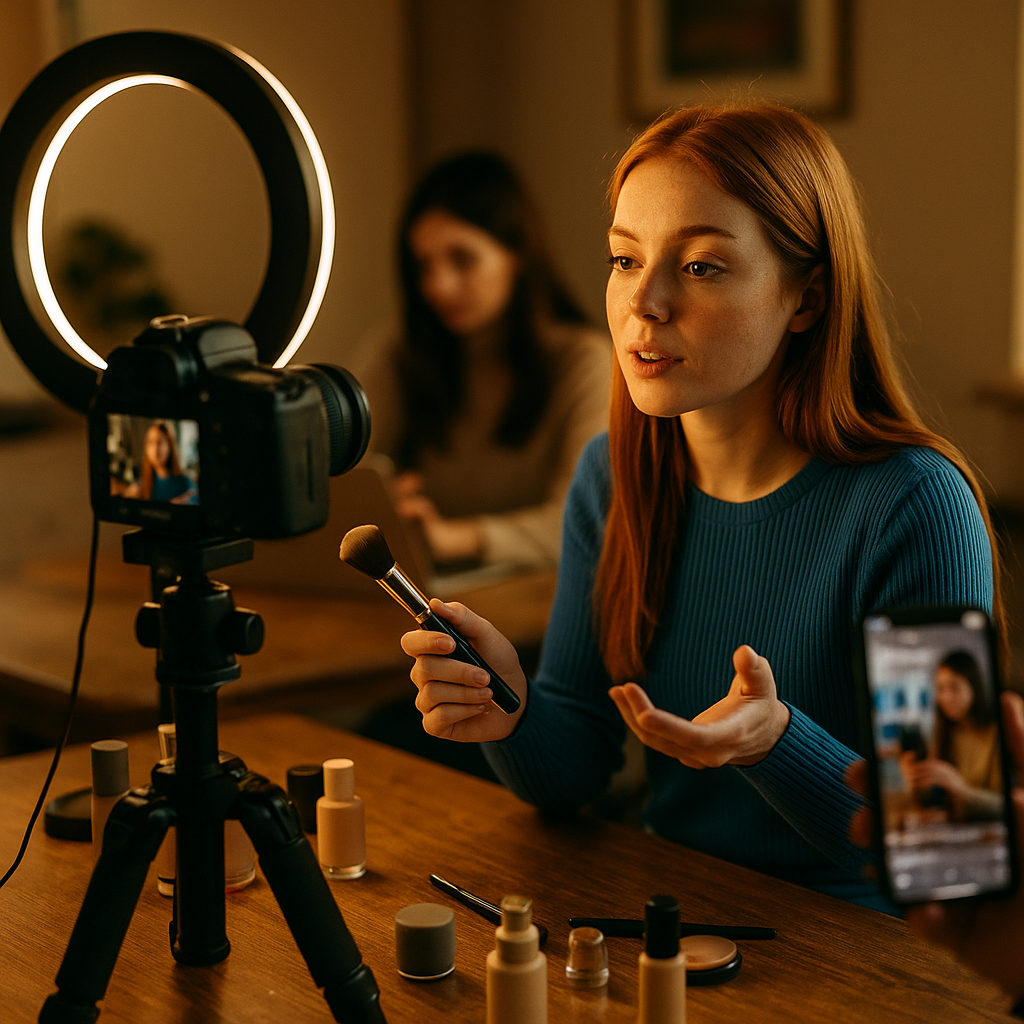
The Death Of The Generalist Influencer is no longer a prediction in 2025; it is a platform, audience, and brand-side reality. As feeds tighten, trust becomes harder to earn, and buyers demand proof, broad “lifestyle” posting struggles to convert. Meanwhile, specialists with receipts win attention and budgets. What changed, and how do you adapt before relevance slips away?
Why generalist content is losing reach: algorithm changes
Generalist influencers used to thrive on volume: frequent posting, wide appeal, and surface-level coverage of many topics. In 2025, most major platforms reward a different behavior pattern: sustained viewer satisfaction around a repeatable theme. Recommendation systems increasingly optimize for signals that correlate with trust and depth, such as longer watch time, repeat viewing, meaningful saves, comments that indicate intent, and low “regret” behaviors (quick swipes away or “not interested”).
That shift hits generalists in three ways:
- Inconsistent audience expectations: When your content jumps from skincare to finance to travel to gadgets, viewers don’t know what problem you solve. Algorithms struggle to classify you, and users struggle to commit.
- Weak topical authority signals: Platforms infer expertise from repetition and outcomes. A scattered posting history dilutes the “this creator is the go-to for X” signal.
- Lower conversion confidence for brands: Reach alone no longer justifies spend. Brands want evidence that your audience trusts you on a specific decision, not that they enjoy you generally.
Readers often ask whether this means variety is dead. It isn’t. Variety can still work inside a domain. A cybersecurity creator can cover passwords, scams, privacy tools, and data breaches. The difference is that each post reinforces a single identity: “this person helps me stay safe online.”
How trust is earned now: creator credibility
Trust has become the core currency of influence, and trust is increasingly audited. Audiences have learned to ask: “Why should I believe you?” and “What happened when you tried it?” That pushes creators toward demonstrable expertise, and it pushes brands toward safer partnerships that won’t backfire in public.
In practice, creator credibility in 2025 comes from observable behaviors, not slogans:
- Evidence of experience: Case studies, “before and after” results, demos, audits, and process walk-throughs.
- Clear scope: Domain experts are confident about what they cover and equally clear about what they don’t.
- Transparent incentives: Clean labeling of paid partnerships, affiliate relationships, and gifted items, plus a consistent policy on what you refuse to promote.
- Accurate language: Experts explain tradeoffs and constraints. They avoid absolute claims, and they correct mistakes publicly when needed.
This is where Google’s EEAT principles map directly to creator strategy: Experience (you’ve done the thing), Expertise (you understand it deeply), Authoritativeness (others in the space recognize you), and Trust (your incentives and claims are transparent).
If you are a creator, the fastest way to build EEAT is to publish repeatable proof. For example, instead of “best budgeting apps,” show your monthly budgeting workflow, compare apps against the same criteria, and include screenshots of outcomes. If you are a brand, ask for proof assets: past performance by content type, audience breakdown by interest cluster, and examples of how the creator handled a critical comment thread.
What brands want in 2025: influencer marketing ROI
Budgets are under pressure, and brands now treat creator partnerships as performance media plus brand reputation management. That is why influencer marketing ROI has shifted from “impressions and vibes” to measurable business impact.
Domain experts fit this new model because they can:
- Shorten the buyer’s research cycle: A specialist answers the exact objections buyers have in a category.
- Create decision-grade content: Tutorials, comparisons, teardown reviews, audits, and implementation guides drive high-intent actions.
- Reduce brand risk: Experts tend to stay inside their lane, which lowers the odds of off-topic controversy.
- Support sales enablement: Brands can reuse expert content in landing pages, email, and customer success onboarding.
Creators often wonder what metrics matter most when pitching. Bring a simple, credible measurement plan:
- Top-of-funnel: watch time, saves, profile clicks, newsletter signups.
- Mid-funnel: link clicks, product page dwell time, quiz completions, “add to cart.”
- Bottom-funnel: conversion rate, cost per acquisition, assisted revenue, trial-to-paid rate.
Also address attribution limitations upfront. If you rely only on a single discount code, you will undercount influence. Ask for a mixed approach: tracked links, post-purchase surveys (“Where did you hear about us?”), and view-through reporting where available.
How niche creators grow faster: niche authority
Many creators fear that narrowing down will cap their growth. In 2025, the opposite is often true. Niche authority makes you easier to understand, easier to recommend, and easier to buy from.
Here is why niche experts scale:
- They earn compounding trust: Each post reinforces a single promise, so new viewers convert into followers more reliably.
- They attract higher-quality inbound: Podcasts, conferences, partnerships, and press tend to prefer specialists with a clear point of view.
- They unlock premium pricing: Expert audiences pay for implementation, not just inspiration.
To build niche authority without shrinking your possibilities, define your niche as an intersection:
- Audience: who you help (e.g., “first-time managers,” “bootstrapped SaaS founders,” “busy parents with prediabetes”).
- Outcome: what changes (e.g., “reduce A1C,” “ship security fixes,” “earn the first 10 customers”).
- Mechanism: how you do it (e.g., “meal planning system,” “threat modeling,” “cold email experiments”).
Then build a content ladder that answers follow-up questions before they are asked:
- Level 1: diagnose the problem (symptoms, common mistakes).
- Level 2: explain the principles (why it happens, what matters).
- Level 3: provide a process (step-by-step method).
- Level 4: show proof (case studies, results, benchmarks).
- Level 5: offer tools (templates, checklists, calculators).
This structure keeps your content focused while still giving you range. You are not repeating yourself; you are deepening understanding.
How to pivot from generalist to expert: content strategy
If you built a following as a generalist, you do not need to delete your past. You need a deliberate transition that respects your current audience and retrains platform signals. A good content strategy in 2025 balances clarity, consistency, and proof.
Step 1: Choose a domain and commit for 90 days. Pick the topic where you have real experience, stronger curiosity than competitors, and a clear path to outcomes. If you cannot explain your domain in one sentence, your audience won’t either.
Step 2: Publish “pillar proof” weekly. Proof builds credibility faster than opinions. Examples include:
- live audits (with permission)
- side-by-side comparisons using the same test criteria
- breakdowns of what you changed and what results followed
- myths vs. reality posts with citations and limitations
Step 3: Create a repeatable format. Experts win with recognizable series: “Fix This in 10 Minutes,” “Clinic Notes,” “Sales Call Debrief,” “Code Review,” “Portfolio Teardown.” Series make your content easier to follow and binge, and they make collaboration easier for brands.
Step 4: Add light credentials without hiding behind them. Credentials help, but results persuade. If you have certifications, years on the job, publications, or client outcomes, include them in your bio and your media kit. If you don’t, emphasize your experience: projects shipped, experiments run, users served, or problems solved.
Step 5: Build owned distribution. Algorithms change. An email list or community lets you keep attention you earned. Offer a domain-specific lead magnet such as a checklist, calculator, or template that people will actually use.
Creators often worry: “Will I lose followers?” You might lose some. That is not failure; it is filtering. Brands and buyers pay for a concentrated audience with a shared need, not for a crowd that likes everything a little.
Where expert influence goes next: thought leadership
Domain experts are not only winning attention; they are shaping purchasing standards. In 2025, the most effective thought leadership is practical and testable. Instead of hot takes, expert creators publish frameworks, benchmarks, teardown analyses, and repeatable workflows that others can adopt.
Expect these trends to accelerate:
- Proof-driven collaborations: Brands will prioritize creators who can run transparent tests, publish methodology, and explain results without overclaiming.
- Smaller audiences, bigger impact: Micro and mid-tier specialists will command premium rates because they drive qualified demand.
- Hybrid expert roles: Creators will blend education with services: coaching, audits, implementations, and community-based support.
- Stricter disclosure norms: Audiences will penalize vague sponsorship language. Clear disclosure will become a competitive advantage.
If you want to future-proof your influence, treat your content like a knowledge product. Document your methods, collect outcomes, and publish updates when best practices change. The expert who revises their stance based on new evidence tends to earn more trust than the expert who never admits uncertainty.
FAQs
Is the generalist influencer really “dead,” or just less profitable?
Generalist influence still exists, but it is less reliable for growth and monetization. In 2025, platforms and brands reward clear topical authority and measurable outcomes, which specialists deliver more consistently.
Do I need formal credentials to be a domain expert?
No. Credentials help in regulated categories, but most domains reward demonstrated experience. Show your process, publish results, cite sources, and be transparent about limitations and sponsorships.
How narrow should my niche be?
Narrow enough that a stranger can describe you in one sentence, broad enough to sustain many subtopics. A good test: you can list 50 content ideas without leaving the domain.
What content formats best support expert positioning?
Tutorials, teardown reviews, audits, case studies, side-by-side comparisons, and “how I did it” walkthroughs. These formats naturally generate saves, shares, and high-intent questions.
How do brands evaluate expert creators beyond follower count?
They look at audience relevance, engagement quality (saves, thoughtful comments), conversion indicators, brand safety, and proof of past performance. A strong media kit with examples and clear measurement beats inflated reach.
How long does it take to pivot from generalist to specialist?
Most creators see clearer audience signals within 30–90 days if they post consistently in one domain, use repeatable series formats, and publish proof-based content weekly.
Can a creator be both entertaining and expert?
Yes. Entertainment attracts attention; expertise keeps it. The winning combination is a consistent domain plus a distinctive delivery style that makes complex ideas feel usable.
In 2025, influence follows credibility, and credibility comes from focus, proof, and consistency. Generalist creators can still succeed, but the market now pays a premium for specialists who reduce uncertainty and drive decisions. Choose a domain, document real outcomes, and build repeatable formats that train both algorithms and audiences. The takeaway: be known for something specific, then earn trust daily.
Top Influencer Marketing Agencies
The leading agencies shaping influencer marketing in 2026
Agencies ranked by campaign performance, client diversity, platform expertise, proven ROI, industry recognition, and client satisfaction. Assessed through verified case studies, reviews, and industry consultations.
Moburst

-
2

The Shelf
Boutique Beauty & Lifestyle Influencer AgencyA data-driven boutique agency specializing exclusively in beauty, wellness, and lifestyle influencer campaigns on Instagram and TikTok. Best for brands already focused on the beauty/personal care space that need curated, aesthetic-driven content.Clients: Pepsi, The Honest Company, Hims, Elf Cosmetics, Pure LeafVisit The Shelf → -
3

Audiencly
Niche Gaming & Esports Influencer AgencyA specialized agency focused exclusively on gaming and esports creators on YouTube, Twitch, and TikTok. Ideal if your campaign is 100% gaming-focused — from game launches to hardware and esports events.Clients: Epic Games, NordVPN, Ubisoft, Wargaming, Tencent GamesVisit Audiencly → -
4

Viral Nation
Global Influencer Marketing & Talent AgencyA dual talent management and marketing agency with proprietary brand safety tools and a global creator network spanning nano-influencers to celebrities across all major platforms.Clients: Meta, Activision Blizzard, Energizer, Aston Martin, WalmartVisit Viral Nation → -
5

The Influencer Marketing Factory
TikTok, Instagram & YouTube CampaignsA full-service agency with strong TikTok expertise, offering end-to-end campaign management from influencer discovery through performance reporting with a focus on platform-native content.Clients: Google, Snapchat, Universal Music, Bumble, YelpVisit TIMF → -
6

NeoReach
Enterprise Analytics & Influencer CampaignsAn enterprise-focused agency combining managed campaigns with a powerful self-service data platform for influencer search, audience analytics, and attribution modeling.Clients: Amazon, Airbnb, Netflix, Honda, The New York TimesVisit NeoReach → -
7

Ubiquitous
Creator-First Marketing PlatformA tech-driven platform combining self-service tools with managed campaign options, emphasizing speed and scalability for brands managing multiple influencer relationships.Clients: Lyft, Disney, Target, American Eagle, NetflixVisit Ubiquitous → -
8

Obviously
Scalable Enterprise Influencer CampaignsA tech-enabled agency built for high-volume campaigns, coordinating hundreds of creators simultaneously with end-to-end logistics, content rights management, and product seeding.Clients: Google, Ulta Beauty, Converse, AmazonVisit Obviously →