


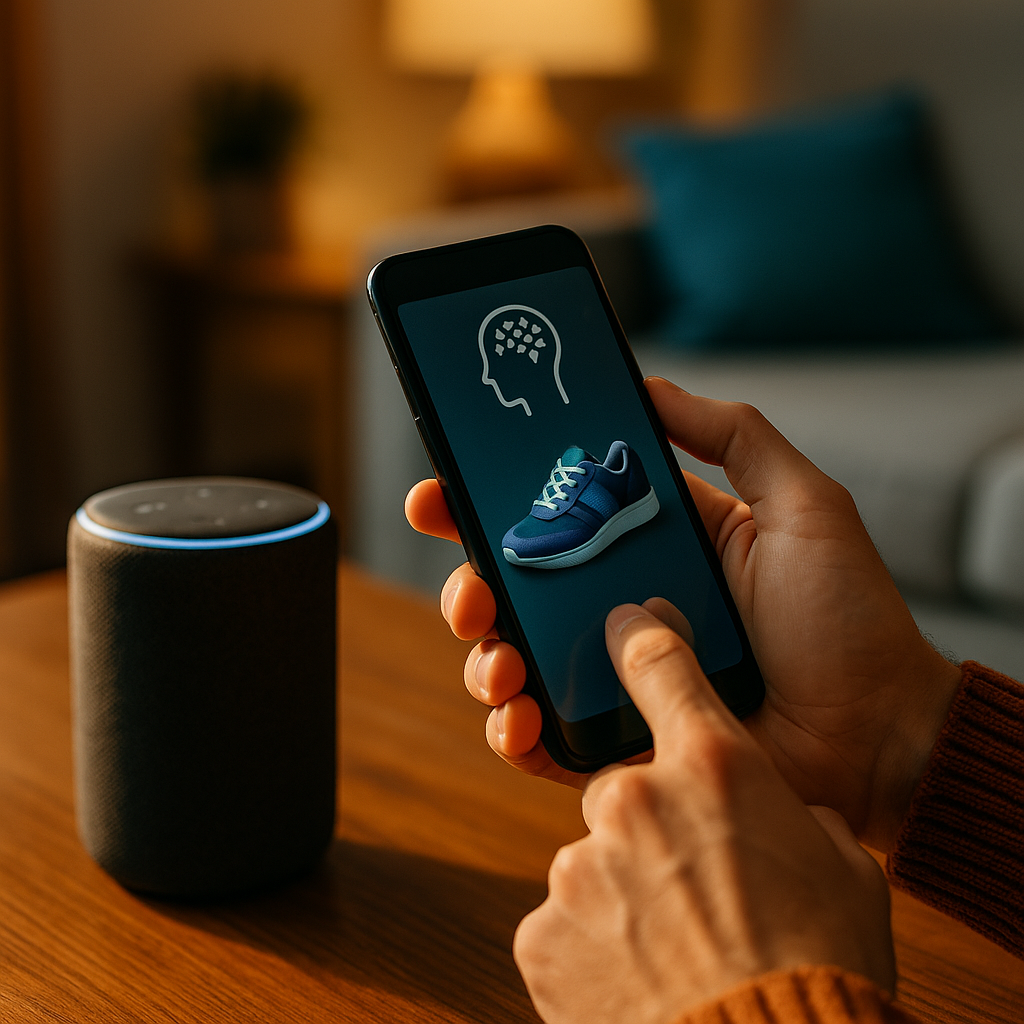
In 2025, brands compete for attention in moments measured in seconds, and voice interfaces often decide whether customers stay or leave. Using AI To Personalize Voice Assistant Brand Personas In Real Time lets companies adapt tone, wording, and guidance to each user and context without losing brand consistency. Done well, it increases trust and completion rates while reducing friction. The real question is: how do you do it safely and reliably?
AI voice personalization: what “real-time brand persona” really means
Real-time brand persona personalization is the ability for a voice assistant to adjust how it communicates—not just what it says—based on live signals such as user intent, device type, location permissions, conversation history, and the customer’s current task. The key is to preserve a consistent brand identity while tailoring the delivery to the person and situation.
At a practical level, a brand persona in voice includes:
- Voice and tone: formal vs. friendly, concise vs. explanatory, energetic vs. calm.
- Conversation style: direct answers, guided steps, clarifying questions, or proactive suggestions.
- Language choices: preferred terminology, reading level, multilingual support, and accessibility phrasing.
- Risk posture: when to refuse, when to escalate to a human, and how to communicate uncertainty.
“Real time” does not mean improvisation without control. It means the assistant selects persona variants within defined guardrails. For example, a travel brand’s assistant can stay adventurous and upbeat, but become more concise during airport navigation or more empathetic during flight disruption. This is personalization that respects the moment and still sounds unmistakably like your brand.
Readers often ask whether this is just “voice skins.” It’s broader than that. A skin changes the sound; persona personalization changes behavior: the ordering of information, the level of explanation, and the type of follow-up questions. The goal is to reduce effort while building confidence.
Real-time context signals: how assistants adapt without getting creepy
Effective personalization depends on selecting the right signals and using them transparently. In 2025, customers expect personalization that is helpful, not intrusive. The difference usually comes down to consent, data minimization, and whether the adaptation is understandable.
Common real-time signals that improve voice experiences:
- Intent and task complexity: “reset password” demands clarity; “browse gift ideas” benefits from warmth and creativity.
- Conversation state: first-time user vs. returning user; whether the assistant already asked for a preference.
- Channel and environment: smart speaker at home vs. in-car system; noisy settings call for shorter prompts.
- User preferences: verbosity level, language, pronunciation preferences, accessibility needs (with explicit opt-in).
- Operational context: outages, delivery delays, policy changes, or high-demand periods that require extra clarity.
Signals to treat carefully (or avoid) unless strictly necessary:
- Sensitive categories: health, financial hardship, or precise location—only with explicit consent and clear value.
- Inferred attributes: guessing demographics or emotions can backfire and create compliance risk.
To keep personalization from feeling “creepy,” build the experience around user-controlled knobs. For instance, offer “brief” vs. “detailed” answers, a “friendly” vs. “professional” tone option, and “remember my preferences” toggles. In voice, the simplest transparency is often a short explanation: “I can keep answers brief—would you like that?”
Also design for “privacy-respecting defaults.” If you can achieve the benefit with on-device signals, do not send data to the cloud. If you only need a temporary signal to complete a task, do not store it.
Brand voice consistency: designing a persona system that scales
Brands struggle with a real tension: personalization demands flexibility, but brand management demands consistency. The solution is to define a persona system rather than a single monolithic “character.”
A scalable approach usually includes:
- Persona blueprint: a documented set of traits (tone, humor boundaries, empathy level), “do/don’t” rules, and example utterances.
- Persona variants: approved modes such as “concise,” “coach,” “empathetic support,” “expert,” and “sales assist,” each with guardrails.
- Style guide for spoken language: contractions, sentence length, numbers and dates, and how to handle uncertainty.
- Brand lexicon: product names, approved synonyms, pronunciation, and prohibited phrasing.
To make this operational, teams often build a “persona router” layer that selects a variant based on context. The router should be deterministic and auditable: you should be able to answer, “Why did the assistant speak this way?” This matters for quality control, compliance reviews, and customer support escalations.
Answering a likely follow-up: can you let generative AI freely “be creative” while staying on brand? You can, but only within boundaries. Keep the brand persona stable and allow controlled creativity in microcopy: alternative phrasings, short confirmations, or empathetic acknowledgments. For critical moments—pricing, safety, medical, legal, financial, returns policies—use approved templates or retrieval from canonical content so the assistant cannot hallucinate.
Finally, align the persona with customer journey stages. A discovery conversation can be warmer and more exploratory; a checkout conversation should be crisp and confidence-building; a complaint conversation should prioritize empathy, ownership, and resolution steps. This prevents a common mistake: sounding cheerful during serious issues.
Conversational AI architecture: models, memory, and low-latency delivery
Real-time personalization has to work under tight latency constraints. If the assistant takes too long to respond, the “personal” experience feels broken. A modern architecture typically combines multiple components rather than relying on one large model for everything.
Core building blocks:
- Automatic speech recognition (ASR): optimized for your domain vocabulary and accents; include custom pronunciations.
- Natural language understanding (NLU) or intent inference: determines what the user wants and extracts entities.
- Persona router: selects the right persona variant and verbosity level using context rules and preference signals.
- Retrieval-augmented generation (RAG): pulls from approved knowledge sources (policies, product docs, account FAQs) to ground responses.
- Response planner: decides whether to answer, ask a clarifying question, confirm an action, or escalate.
- Text-to-speech (TTS): renders the voice consistently; can adjust prosody (pace, pauses, emphasis) to match persona.
Memory is where many deployments go wrong. Use a layered approach:
- Session memory: ephemeral context for the current conversation (safe default).
- Preference memory: user-controlled, long-lived settings like language or verbosity.
- Account memory: only what’s necessary for service delivery, protected with authentication and access controls.
Latency strategies that preserve personalization:
- Precompute: cache persona-specific templates for common intents (“track order,” “store hours,” “reset password”).
- Stream responses: start speaking while the rest of the response is generated, but ensure the opening is safe and on-brand.
- Hybrid generation: use deterministic templates for sensitive or regulated content; use generation for non-critical phrasing.
- Fallbacks: if personalization signals are missing, default to the baseline brand persona rather than guessing.
If you’re wondering how to keep the assistant from contradicting itself mid-conversation, enforce a single “conversation plan” per turn and attach persona parameters at the planning layer. That way, tone changes do not cause content changes. Consistency comes from separating content grounding from stylistic rendering.
Voice assistant governance: privacy, safety, and compliance in 2025
Personalization increases responsibility. In 2025, organizations must treat voice as a high-trust channel: it can reveal sensitive information and can also persuade users. Strong governance is part of Google’s EEAT expectations because it demonstrates expertise, reliability, and respect for users.
Practical governance controls:
- Consent and disclosure: clearly explain what data is used for personalization and provide opt-out paths.
- Data minimization: collect the least data needed; prefer on-device processing when feasible.
- Authentication steps: require verification before account actions, purchases, or revealing personal details.
- Safety policies: define refusals and escalations for harmful, illegal, or sensitive requests.
- Content sourcing hierarchy: prioritize canonical sources; block untrusted web content for policy topics.
- Audit logs: capture what context was used, which persona variant was selected, and which knowledge sources were referenced.
Bias and inclusivity matter in voice. Train and test ASR for diverse accents and speech patterns. Ensure persona variants do not encode stereotypes (for example, “professional” shouldn’t map to a narrow dialect). Provide accessible defaults, such as slower speech options, repeat/summary commands, and support for screen-reader-friendly companion transcripts when applicable.
For teams building internal credibility, establish a cross-functional review process: brand, legal/compliance, security, accessibility, and customer support should all sign off on persona rules and escalation behaviors. This is not bureaucracy for its own sake; it prevents the most expensive failures: reputational harm, regulatory exposure, and customer churn.
Voice UX optimization: measurement, experimentation, and continuous learning
Real-time persona personalization is only valuable if it improves outcomes. Measurement should capture both business performance and user trust. The best teams treat persona tuning as ongoing product optimization, not a one-time copywriting exercise.
Metrics that map directly to voice success:
- Task completion rate: did the user accomplish the goal without abandoning?
- Time to resolution: shorter is better for utility tasks; longer can be acceptable for discovery if engagement rises.
- Clarification rate: how often the assistant asks “Did you mean…?”—too high indicates NLU issues or unclear prompts.
- Escalation quality: percentage of escalations with enough context for agents; reduced repeat explanations.
- User satisfaction signals: explicit ratings, re-engagement, and complaint frequency.
- Trust and safety indicators: refusal accuracy, policy adherence, and hallucination reports.
Experimentation tips that reduce risk:
- A/B test persona variants by intent: keep the content constant; only vary style and dialogue structure.
- Constrain tests to low-risk intents: start with FAQs and discovery, then expand to transactions.
- Use human evaluation: include brand reviewers and customer support agents to score “on-brand” and “helpful.”
- Monitor drift: if models update, re-validate persona compliance and policy accuracy before broad rollout.
A common follow-up question is whether personalization should aim to maximize friendliness. Not always. For many tasks—billing, password reset, appointment changes—users prefer directness. The most effective systems personalize toward clarity and control, then add warmth when it supports the moment.
Continuous learning should never mean silently storing everything. Use privacy-preserving analytics, aggregate trend analysis, and opt-in feedback prompts. When you do store transcripts for improvement, define retention limits and remove identifiers whenever possible.
FAQs
What is a “brand persona” for a voice assistant?
A brand persona is the set of consistent communication traits—tone, word choice, helpfulness style, and boundaries—that make the assistant sound and behave like your brand across different situations.
How is real-time persona personalization different from basic customization?
Basic customization lets users pick a voice or a theme. Real-time personalization adapts the assistant’s style and dialogue flow dynamically based on context (intent, environment, journey stage) while staying within brand-approved guardrails.
Does real-time personalization require storing personal data?
Not necessarily. Many adaptations can rely on session context and on-device signals. Long-term preference memory should be opt-in, minimal, and easy to delete.
How do you prevent hallucinations when the assistant is personalized?
Ground answers in approved sources using retrieval, keep sensitive topics on templates or canonical text, require confirmations for actions, and enforce policy-based refusals and escalation rules.
What are the biggest risks of personalizing voice assistants in real time?
The main risks are privacy violations, inconsistent brand voice, biased or exclusionary behavior, incorrect policy statements, and unsafe actions without proper authentication.
How do you measure whether persona personalization is working?
Track task completion, time to resolution, clarification and escalation rates, satisfaction signals, and safety metrics like policy adherence and hallucination reports. Evaluate by intent so you can tune persona choices where they matter most.
Real-time persona personalization works when you treat it as a controlled system, not a freestyle performance. Define brand-safe variants, use consented context signals, ground content in approved sources, and measure outcomes by intent. In 2025, the winners will be brands that deliver fast, trustworthy voice help that still feels human. Build the guardrails first—then let personalization earn loyalty.
Top Influencer Marketing Agencies
The leading agencies shaping influencer marketing in 2026
Agencies ranked by campaign performance, client diversity, platform expertise, proven ROI, industry recognition, and client satisfaction. Assessed through verified case studies, reviews, and industry consultations.
Moburst

-
2

The Shelf
Boutique Beauty & Lifestyle Influencer AgencyA data-driven boutique agency specializing exclusively in beauty, wellness, and lifestyle influencer campaigns on Instagram and TikTok. Best for brands already focused on the beauty/personal care space that need curated, aesthetic-driven content.Clients: Pepsi, The Honest Company, Hims, Elf Cosmetics, Pure LeafVisit The Shelf → -
3

Audiencly
Niche Gaming & Esports Influencer AgencyA specialized agency focused exclusively on gaming and esports creators on YouTube, Twitch, and TikTok. Ideal if your campaign is 100% gaming-focused — from game launches to hardware and esports events.Clients: Epic Games, NordVPN, Ubisoft, Wargaming, Tencent GamesVisit Audiencly → -
4

Viral Nation
Global Influencer Marketing & Talent AgencyA dual talent management and marketing agency with proprietary brand safety tools and a global creator network spanning nano-influencers to celebrities across all major platforms.Clients: Meta, Activision Blizzard, Energizer, Aston Martin, WalmartVisit Viral Nation → -
5

The Influencer Marketing Factory
TikTok, Instagram & YouTube CampaignsA full-service agency with strong TikTok expertise, offering end-to-end campaign management from influencer discovery through performance reporting with a focus on platform-native content.Clients: Google, Snapchat, Universal Music, Bumble, YelpVisit TIMF → -
6

NeoReach
Enterprise Analytics & Influencer CampaignsAn enterprise-focused agency combining managed campaigns with a powerful self-service data platform for influencer search, audience analytics, and attribution modeling.Clients: Amazon, Airbnb, Netflix, Honda, The New York TimesVisit NeoReach → -
7

Ubiquitous
Creator-First Marketing PlatformA tech-driven platform combining self-service tools with managed campaign options, emphasizing speed and scalability for brands managing multiple influencer relationships.Clients: Lyft, Disney, Target, American Eagle, NetflixVisit Ubiquitous → -
8

Obviously
Scalable Enterprise Influencer CampaignsA tech-enabled agency built for high-volume campaigns, coordinating hundreds of creators simultaneously with end-to-end logistics, content rights management, and product seeding.Clients: Google, Ulta Beauty, Converse, AmazonVisit Obviously →