


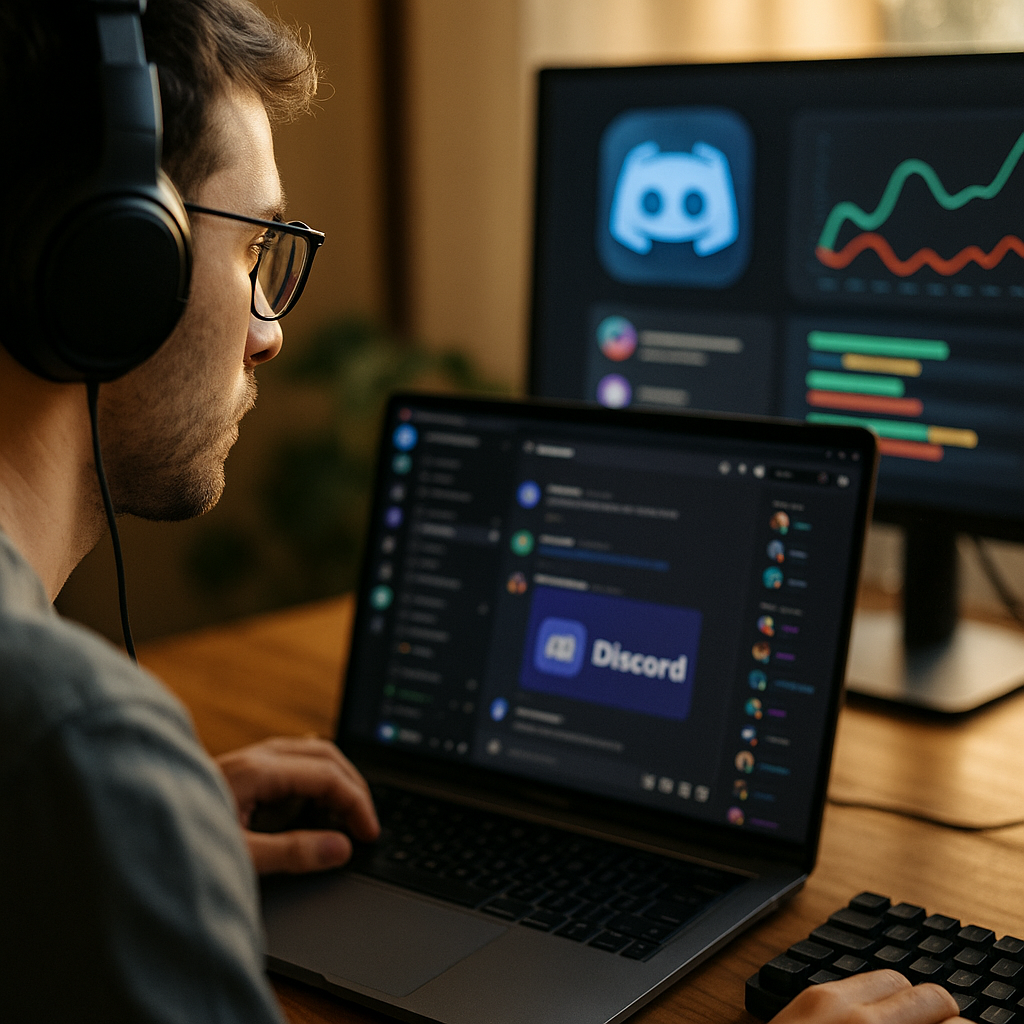
Using AI to analyze the “vibe” shift in community Discord servers has moved from novelty to necessity in 2025, as communities scale faster than human moderators can read every thread. The goal is not spying; it’s understanding when trust, energy, and belonging start to drift. Done well, AI becomes an early-warning system that protects culture without crushing spontaneity—so what should you measure first?
AI sentiment analysis for Discord: what “vibe” really means
Community leaders often describe vibe as “the feel” of the server, but you can operationalize it without reducing people to numbers. In practice, vibe is the combined effect of tone (how people speak), cohesion (whether members support or ignore each other), psychological safety (how comfortable people feel asking questions), and momentum (whether conversation flows or stalls).
AI sentiment analysis for Discord is a starting point, but sentiment alone is rarely enough. “Negative” messages can signal healthy debate, while “positive” emojis can mask passive aggression. A better approach is a layered model:
- Emotion and sentiment: frustration, excitement, sarcasm likelihood, polarity and intensity.
- Conversation quality: reply rates, unanswered questions, thread depth, turn-taking, repeated conflicts.
- Norm alignment: whether messages match stated community guidelines and tone expectations.
- Member experience signals: newcomer retention, first-week participation, member-to-member welcomes.
To avoid “algorithmic vibes” that misread your culture, define a community-specific vibe taxonomy. For example: “helpful and nerdy,” “fast-paced and playful,” or “professional and supportive.” Then map each dimension to measurable signals (like ratio of helpful replies, frequency of inside jokes in designated channels, or how quickly questions get an answer).
Follow-up question you’re likely asking: “Will this kill authenticity?” Not if you frame AI as context for moderators, not a judge. The system should highlight patterns and anomalies, while humans interpret intent and make decisions.
Discord community health metrics: signals that predict a vibe shift
Vibe shifts rarely happen overnight. They show up as small changes in patterns: more drive-by snark, fewer thoughtful replies, newcomers lurking instead of posting, or certain channels becoming low-grade battlegrounds. Strong Discord community health metrics focus on trendlines, not one-off spikes.
Build a dashboard around four categories of indicators:
- Engagement quality: median replies per message, percentage of messages that receive a response, average time-to-first-response for questions, thread continuation rate (messages beyond the first reply).
- Social cohesion: network density (how many members interact with each other), cross-channel participation, number of unique responders per week, balance of contributions (few voices dominating vs. many contributing).
- Risk and friction: increase in reports, moderation actions per 1,000 messages, toxicity probability, repeated interpersonal conflicts, escalation markers (caps, insults, dogpiling patterns).
- Newcomer experience: welcome-response rate, first-week posting rate, conversion from join to first message, return rate after first interaction.
AI helps by detecting leading indicators rather than waiting for visible conflict. For example, a server might keep posting volume steady while helpfulness drops: more short replies, fewer explanations, and a higher “unanswered” count. That’s often a precursor to member churn.
To make these metrics trustworthy, establish baselines per channel. A meme channel will look “noisier” than a support channel, and a debate channel will naturally score higher on disagreement. Compare channels to themselves over time, and compare weeks to rolling averages rather than arbitrary targets.
Likely follow-up: “How do we avoid overreacting?” Use alert thresholds that require both magnitude and duration, such as “20% increase in unresolved questions sustained for two weeks,” or “toxicity probability elevated across three channels, not just one argument thread.”
Moderation automation with AI: workflows that protect culture
In 2025, the best results come from moderation automation with AI that supports humans instead of replacing them. Think “assistive moderation”: surfacing context, reducing manual triage, and standardizing responses where appropriate.
Effective workflows include:
- Trend alerts with context: When AI flags a vibe shift, it should attach examples, summaries, and a channel-by-channel breakdown. Avoid black-box warnings that force moderators to hunt for evidence.
- Conversation summarization: Daily or weekly summaries for high-traffic channels can reduce moderator burnout and make it easier to spot emerging tensions.
- Policy coaching (not policing): Suggest gentle nudges like “Please move this to #support” or “Critique ideas, not people,” using your server’s tone. Keep nudges optional and editable.
- Escalation routing: Route high-risk situations to experienced moderators, and low-risk “messy but normal” threads to lighter-touch responses.
- Member support prompts: Detect when a user might be asking for help and getting ignored; prompt volunteers or designated helpers to respond.
Design for human-in-the-loop decisions. The AI can recommend “needs attention,” but a moderator decides whether it’s a spirited debate, a misunderstanding, or harassment. This approach improves fairness and aligns with Google’s helpful content expectations: it is accountable, transparent, and grounded in real community goals.
Likely follow-up: “Will AI cause more conflict by mislabeling messages?” Reduce that risk by avoiding punitive automation. Start with low-stakes features: summaries, queue prioritization, and opt-in nudges. Only automate removals or timeouts when you have strong, tested rules and an appeals process.
Server vibe monitoring tools: choosing models and integrations
There’s no single best stack for server vibe monitoring tools. Your choice depends on scale, privacy needs, and whether you want an off-the-shelf product or a custom pipeline.
When evaluating tools, prioritize these capabilities:
- Granular permissions: Ability to exclude private channels, staff channels, sensitive topics, or DMs.
- Channel-aware analysis: Different baselines and tone expectations per channel type.
- Explainability: Clear reasons for flags, example snippets, and confidence scores.
- Multilingual and slang robustness: Discord language changes quickly; the tool should adapt or let you customize dictionaries and labels.
- Custom taxonomies: Support for your vibe dimensions (helpfulness, inclusivity, expertise, playfulness) instead of generic “positive/negative.”
- Data export and retention controls: So you can audit decisions, limit storage, and comply with your community’s expectations.
On the model side, teams often combine approaches:
- Rules + ML: Rules catch obvious issues (slurs, doxxing patterns), ML handles nuance (harassment, dogpiling, hostility).
- Embedding-based clustering: Groups similar complaints or recurring topics to show what’s driving mood changes.
- Topic + sentiment pairing: Tracks whether “pricing,” “updates,” or “moderation decisions” are becoming consistently tense.
Integrations matter. If moderators already live in Discord, send actionable alerts to a private mod channel with buttons to jump to context, tag a teammate, and log outcomes. If you use external tooling, connect to issue trackers or community management platforms for follow-through.
Likely follow-up: “How do we validate accuracy?” Run a pilot. Compare AI flags with moderator judgments on a labeled sample, track false positives/negatives, and recalibrate thresholds. Treat model evaluation as ongoing maintenance, not a one-time setup.
Ethical AI for online communities: privacy, consent, and trust
Vibe monitoring fails if members feel watched. Ethical AI for online communities starts with clarity: what you analyze, why, and how it benefits the community. In 2025, trust is a competitive advantage for community servers, and transparency is part of good moderation.
Adopt guardrails that respect people and reduce risk:
- Publish a plain-language policy: Explain what data is analyzed (public channels vs. private), what’s stored, and what’s not. Keep it short and readable.
- Data minimization: Store aggregates and short snippets only when necessary for moderation evidence. Prefer on-the-fly scoring over long-term message archiving.
- Purpose limitation: Use analysis to improve safety and culture, not to profile individuals for unrelated reasons.
- Opt-outs where feasible: At minimum, exclude sensitive channels and allow private support routes that aren’t processed by automation.
- Bias and fairness checks: Audit for disproportionate flags against dialects, slang, or certain groups. Add community-specific context to reduce misclassification.
- Appeals and accountability: If AI contributes to enforcement, provide a clear appeal path and log decisions for review.
Also, be honest about limits. AI may misread sarcasm, in-jokes, or reclaimed language. A best practice is to treat AI scores as risk estimates rather than verdicts. Keep final authority with moderators trained to apply your rules consistently.
Likely follow-up: “How do we communicate this without causing panic?” Frame it as community care: preventing burnout, spotting unanswered help requests, and catching rising tensions early. Share examples of positive outcomes, and invite feedback on the system’s boundaries.
Community sentiment tracking: turning insights into better outcomes
Insights only matter if they lead to better experiences. Community sentiment tracking should feed clear interventions that improve tone, inclusion, and participation—without turning the server into a compliance exercise.
Use a simple response playbook:
- If helpfulness drops: Recruit “on-call” helpers, pin templates for good answers, reward high-quality support, and improve channel organization so questions land in the right place.
- If conflict rises around a topic: Create a dedicated thread/channel with clearer rules, add a moderator presence, and summarize decisions to reduce rumor cycles.
- If newcomers stop posting: Improve onboarding prompts, add buddy systems, host low-stakes intro events, and ensure first posts receive a warm response.
- If certain members dominate: Encourage turn-taking norms, prompt quieter members with questions, and structure events that rotate speaking opportunities.
- If burnout signals appear in mods: Reduce alert noise, schedule coverage, add automation for triage, and define “office hours” to protect volunteer time.
Close the loop with measurement. After each intervention, monitor whether the relevant indicators recover over the next two to four weeks. Keep notes on what worked in your specific culture. This builds institutional memory and improves consistency even when moderators rotate.
Finally, blend quantitative AI signals with qualitative feedback. Run periodic pulse polls, hold office hours, and invite members to describe how the server feels. When AI and humans disagree, investigate—those moments often reveal blind spots in either the model or the moderation approach.
FAQs
What is a “vibe shift” in a Discord server?
A vibe shift is a sustained change in how the community feels and behaves—often seen in tone, helpfulness, trust, and participation. It can look like more hostility, fewer thoughtful replies, or newcomers disengaging, even if message volume stays high.
Can AI accurately detect sarcasm and jokes in Discord chats?
AI can estimate sarcasm but often struggles with inside jokes and community-specific humor. You’ll get better results by training on your server’s examples, setting channel-specific expectations, and keeping humans in the loop for interpretation.
Is sentiment analysis enough to measure community health?
No. Sentiment is useful but incomplete. Combine sentiment with engagement quality, cohesion metrics, newcomer experience, and moderation signals to avoid misreading healthy debate as “bad vibes.”
How do we implement AI vibe monitoring without violating privacy?
Analyze only channels covered by your policy, minimize data retention, prefer aggregated trends over individual profiling, and publish clear documentation. Exclude sensitive channels and create an appeal process for enforcement decisions.
What should moderators do when AI flags a negative trend?
First review context and confirm it’s sustained. Then apply targeted interventions: improve onboarding, add structured discussion spaces, adjust rules, or increase moderator presence. Track whether the metrics recover over the next few weeks.
Will AI replace Discord moderators?
Not effectively. AI is strongest at scanning patterns and surfacing risks. Moderators provide judgment, empathy, and legitimacy—especially when intent is unclear or community norms require nuance.
AI can’t define your culture, but it can reveal when the culture is drifting. By combining sentiment, conversation-quality signals, and newcomer experience metrics, you can spot early warnings and respond with light-touch interventions before conflict hardens. Use human-in-the-loop workflows, publish transparent policies, and minimize data collection. The takeaway: measure trends, protect trust, and let AI support—not control—your Discord community.
Top Influencer Marketing Agencies
The leading agencies shaping influencer marketing in 2026
Agencies ranked by campaign performance, client diversity, platform expertise, proven ROI, industry recognition, and client satisfaction. Assessed through verified case studies, reviews, and industry consultations.
Moburst

-
2

The Shelf
Boutique Beauty & Lifestyle Influencer AgencyA data-driven boutique agency specializing exclusively in beauty, wellness, and lifestyle influencer campaigns on Instagram and TikTok. Best for brands already focused on the beauty/personal care space that need curated, aesthetic-driven content.Clients: Pepsi, The Honest Company, Hims, Elf Cosmetics, Pure LeafVisit The Shelf → -
3

Audiencly
Niche Gaming & Esports Influencer AgencyA specialized agency focused exclusively on gaming and esports creators on YouTube, Twitch, and TikTok. Ideal if your campaign is 100% gaming-focused — from game launches to hardware and esports events.Clients: Epic Games, NordVPN, Ubisoft, Wargaming, Tencent GamesVisit Audiencly → -
4

Viral Nation
Global Influencer Marketing & Talent AgencyA dual talent management and marketing agency with proprietary brand safety tools and a global creator network spanning nano-influencers to celebrities across all major platforms.Clients: Meta, Activision Blizzard, Energizer, Aston Martin, WalmartVisit Viral Nation → -
5

The Influencer Marketing Factory
TikTok, Instagram & YouTube CampaignsA full-service agency with strong TikTok expertise, offering end-to-end campaign management from influencer discovery through performance reporting with a focus on platform-native content.Clients: Google, Snapchat, Universal Music, Bumble, YelpVisit TIMF → -
6

NeoReach
Enterprise Analytics & Influencer CampaignsAn enterprise-focused agency combining managed campaigns with a powerful self-service data platform for influencer search, audience analytics, and attribution modeling.Clients: Amazon, Airbnb, Netflix, Honda, The New York TimesVisit NeoReach → -
7

Ubiquitous
Creator-First Marketing PlatformA tech-driven platform combining self-service tools with managed campaign options, emphasizing speed and scalability for brands managing multiple influencer relationships.Clients: Lyft, Disney, Target, American Eagle, NetflixVisit Ubiquitous → -
8

Obviously
Scalable Enterprise Influencer CampaignsA tech-enabled agency built for high-volume campaigns, coordinating hundreds of creators simultaneously with end-to-end logistics, content rights management, and product seeding.Clients: Google, Ulta Beauty, Converse, AmazonVisit Obviously →