


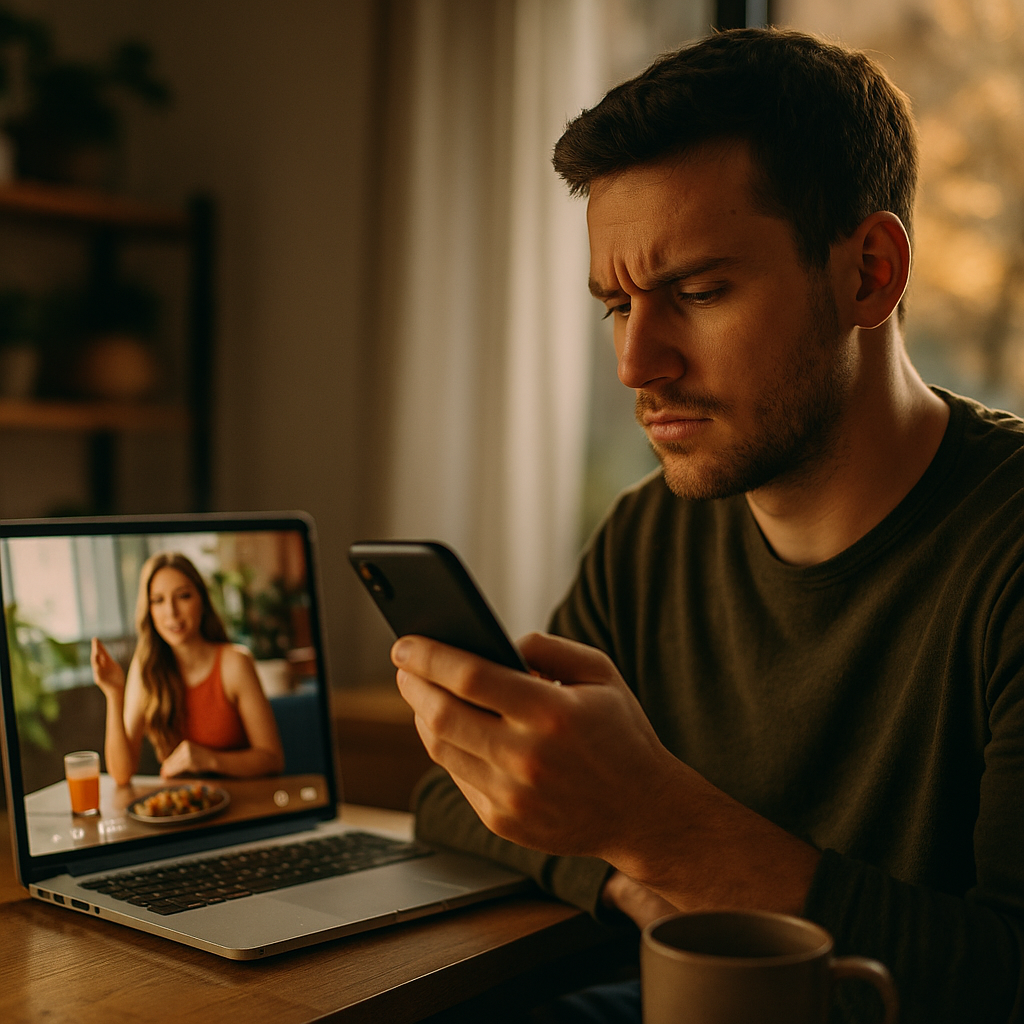
In 2025, brands are rethinking who they trust to influence decisions. The Death Of The Generalist Influencer And The Return To Contextual Marketing reflects a shift from broad, personality-driven reach to expertise-driven relevance. Audiences want proof, not vibes; platforms reward intent, not fame. If your influencer plan still chases scale, you’re paying for attention that won’t convert—so what replaces it?
The end of broad reach: why generalist influencer campaigns are losing impact
The “everyone’s audience” model is breaking because discovery systems and buyer behavior have changed. On most major platforms, distribution is no longer purely follower-based; it’s increasingly interest- and intent-based. That favors content that matches a specific need in a specific moment, not a creator’s general popularity.
Generalist influencer campaigns often fail for three practical reasons:
- Low message-to-market fit: A single creator talking to many segments forces vague messaging. Vague messaging lowers watch time, clicks, and purchase confidence.
- Trust gaps: Audiences can quickly sense when a creator lacks hands-on experience. If the content doesn’t show authentic usage, constraints, tradeoffs, or comparisons, it reads like an ad.
- Measurement confusion: Broad campaigns inflate vanity metrics (views, likes) without clarifying which audience segments actually moved toward purchase.
Marketers also face a more skeptical consumer. In 2024, Edelman’s Trust Barometer reported growing concern about misinformation and a stronger preference for credible sources when making decisions. That skepticism translates directly into influencer performance: if the creator can’t demonstrate competence and context, the audience hesitates.
The result isn’t “influencer marketing is dead.” It’s that the generalist influencer—known for being broadly entertaining but not specifically credible—no longer drives reliable outcomes for most categories, especially high-consideration products and B2B.
How contextual marketing aligns with intent, credibility, and conversion
Contextual marketing means placing a message where the audience’s current goal makes the message useful. It’s not only about targeting demographics; it’s about matching the buyer’s situation: their problem, constraints, timing, and vocabulary.
In practice, contextual marketing answers three questions before spending budget:
- What job is the audience trying to get done? Example: “shorten invoice processing time,” not “buy accounting software.”
- What proof reduces their risk? Example: benchmarks, side-by-side comparisons, implementation steps, and limitations.
- Where do they seek validation? Example: niche YouTube channels, subreddit threads, industry newsletters, practitioner podcasts, review sites, and search.
Context makes your message feel less like persuasion and more like assistance. That matters because modern platforms and buyers both reward helpfulness. Helpful content earns longer watch time, more saves, more shares, and stronger brand recall. It also shortens the “trust ramp” because the content demonstrates relevance immediately.
For marketers, contextual marketing creates cleaner measurement. When content is built for a defined intent (for example, “how to choose X” or “X vs Y”), you can connect performance to downstream actions like demo requests, add-to-carts, trial starts, or qualified lead rates—rather than guessing whether awareness will eventually turn into sales.
Building trust with niche creators and real expertise
The replacement for the generalist influencer is not simply the “micro-influencer.” It’s the credible specialist: the creator with lived experience, repeatable frameworks, and the ability to explain tradeoffs. In 2025, audiences follow expertise across formats—short clips, long-form reviews, newsletters, and community Q&A—because expertise travels.
To apply Google’s EEAT principles (Experience, Expertise, Authoritativeness, Trust) in creator partnerships, evaluate creators like you would evaluate a consultant:
- Experience: Do they show hands-on use, real workflows, and before/after outcomes? Are they transparent about constraints?
- Expertise: Can they teach the category clearly? Do they use precise language and correct terminology?
- Authoritativeness: Are they cited by peers, invited to speak, or referenced in niche communities? Do other experts engage with them?
- Trust: Do they disclose sponsorships consistently? Do they critique products honestly, including what’s not a fit?
Brands sometimes worry niche creators won’t deliver enough reach. The better question is: reach among whom? A smaller audience with high intent routinely outperforms broad reach with low intent—especially when the content is evergreen and searchable.
Actionable approach: create a “creator credibility brief” that asks for proof of prior work (case studies, audience questions they’ve answered, examples of unbiased comparisons). Then co-design content that uses the creator’s real process: setup, evaluation criteria, mistakes to avoid, and measurable results. This is how partnerships feel earned rather than rented.
A practical content strategy for contextual influencer campaigns
Contextual influencer marketing works best when you plan for the full journey—discovery, evaluation, and decision—without forcing one piece of content to do everything.
Build a three-layer content system:
- Problem framing (discovery): “Signs you’ve outgrown spreadsheets for inventory” or “What causes churn in community apps.” The goal is recognition and relevance.
- Decision support (evaluation): comparisons, teardown reviews, workflows, checklists, “what I’d choose with $X budget,” and “who this is not for.” The goal is trust-building.
- Implementation proof (decision/post-purchase): onboarding walkthroughs, templates, migration steps, and troubleshooting. The goal is reducing fear and increasing retention.
To answer the follow-up question marketers usually ask—“How do we keep brand messaging consistent?”—use a shared backbone:
- Non-negotiables: claims you can substantiate, compliance language, disclosure rules, and product boundaries.
- Creator-led storytelling: the creator’s criteria, their workflow, and their voice.
- Evidence kit: verified stats, product documentation, customer quotes you have rights to use, and demo access.
Also plan distribution beyond the initial post. In contextual marketing, reuse is a feature when it stays aligned with the same intent. Turn one deep creator review into short clips, an FAQ reel, a newsletter excerpt, a comparison carousel, and a landing page summary—each linking back to the next step. That’s how you compound trust without repeating generic slogans.
Smarter measurement: proving ROI without vanity metrics
Contextual marketing makes measurement easier because the goal of each asset is explicit. Replace “views and vibes” with a measurement model that connects content to business outcomes.
Use three measurement tiers:
- Quality signals: average view duration, saves, shares, comment depth (questions vs emojis), and click-to-view ratio. These indicate relevance.
- Intent signals: branded search lift, product page depth, return visits, comparison page traffic, email signups, and demo starts. These indicate evaluation.
- Outcome signals: assisted conversions, trial-to-paid rate, cost per qualified lead, pipeline influenced (B2B), and repeat purchase (DTC). These indicate business impact.
To address a common follow-up—“Attribution is messy; what’s realistic?”—use a hybrid approach:
- Direct tracking: unique URLs, promo codes, landing pages per creator, and post-purchase surveys (“Where did you first hear about us?”).
- Incrementality testing: holdout geos, time-based tests, or matched audience experiments where possible.
- Content tagging: label assets by intent stage and topic cluster so you can see which contexts drive the best downstream behavior.
Set expectations with stakeholders: contextual campaigns often outperform on conversion efficiency and customer quality, even if they don’t deliver the biggest top-line reach. In 2025, that tradeoff is usually a win.
Risk, compliance, and brand safety in creator partnerships
As contextual marketing leans into expertise, it also raises the bar for accuracy. If a creator is teaching, errors can spread quickly—especially in health, finance, and technical categories. Protect trust by operationalizing quality control without stripping the creator’s voice.
Best-practice safeguards:
- Claims verification: require sources for performance claims; provide approved references (documentation, published benchmarks, third-party reports).
- Disclosure discipline: ensure sponsorship and affiliate disclosures are clear and consistent across platforms.
- Review workflow: pre-publish review for regulated statements and factual accuracy, not tone-policing.
- Customer support readiness: if a creator drives demand, ensure your team can handle implementation questions, refunds, and onboarding spikes.
Brand safety improves when creators are chosen for alignment, not just audience size. A niche expert with a clear point of view is often lower risk than a generalist who must constantly chase trends to maintain reach.
FAQs
What is contextual marketing in influencer campaigns?
Contextual marketing places creator content around a specific audience intent—problem, comparison, or implementation—so the message is useful in the moment. It prioritizes relevance and proof over broad awareness, which typically improves conversion and trust.
Are micro-influencers always better than generalist influencers?
Not automatically. The key is credible specialization, not follower count. A creator with demonstrated experience, accurate teaching, and audience trust will usually outperform a generalist for high-intent categories, even if their audience is smaller.
How do I choose the right niche creators for my brand?
Look for evidence of hands-on experience, clear frameworks, and authentic audience engagement (questions, detailed comments, community references). Ask for past examples that include pros/cons and “who it’s not for,” and confirm disclosure habits.
What content formats work best for contextual influencer marketing in 2025?
Intent-driven formats perform consistently: comparison videos, teardown reviews, workflows, checklists, “mistakes to avoid,” and implementation walkthroughs. Pair short-form discovery with long-form evaluation assets and a clear next step (trial, demo, or guided product page).
How do I measure ROI if attribution is limited?
Use a blended model: unique landing pages and codes, post-purchase surveys, branded search lift, and incrementality testing where possible. Track quality and intent signals alongside outcomes like qualified leads, trial-to-paid rate, and assisted conversions.
Does contextual marketing replace paid ads?
No. It improves paid performance by giving ads better inputs: credible content, clearer positioning, and higher-intent landing experiences. Many brands use creator content as both organic education and paid amplification, keeping the context consistent.
In 2025, the winning shift is simple: stop buying generalized attention and start earning specific trust. The Death Of The Generalist Influencer And The Return To Contextual Marketing signals a move toward expertise, intent, and proof across every touchpoint. When you partner with credible specialists and build content for real decisions, measurement gets clearer and conversion improves. Choose context, and the market will choose you.
Top Influencer Marketing Agencies
The leading agencies shaping influencer marketing in 2026
Agencies ranked by campaign performance, client diversity, platform expertise, proven ROI, industry recognition, and client satisfaction. Assessed through verified case studies, reviews, and industry consultations.
Moburst

-
2

The Shelf
Boutique Beauty & Lifestyle Influencer AgencyA data-driven boutique agency specializing exclusively in beauty, wellness, and lifestyle influencer campaigns on Instagram and TikTok. Best for brands already focused on the beauty/personal care space that need curated, aesthetic-driven content.Clients: Pepsi, The Honest Company, Hims, Elf Cosmetics, Pure LeafVisit The Shelf → -
3

Audiencly
Niche Gaming & Esports Influencer AgencyA specialized agency focused exclusively on gaming and esports creators on YouTube, Twitch, and TikTok. Ideal if your campaign is 100% gaming-focused — from game launches to hardware and esports events.Clients: Epic Games, NordVPN, Ubisoft, Wargaming, Tencent GamesVisit Audiencly → -
4

Viral Nation
Global Influencer Marketing & Talent AgencyA dual talent management and marketing agency with proprietary brand safety tools and a global creator network spanning nano-influencers to celebrities across all major platforms.Clients: Meta, Activision Blizzard, Energizer, Aston Martin, WalmartVisit Viral Nation → -
5

The Influencer Marketing Factory
TikTok, Instagram & YouTube CampaignsA full-service agency with strong TikTok expertise, offering end-to-end campaign management from influencer discovery through performance reporting with a focus on platform-native content.Clients: Google, Snapchat, Universal Music, Bumble, YelpVisit TIMF → -
6

NeoReach
Enterprise Analytics & Influencer CampaignsAn enterprise-focused agency combining managed campaigns with a powerful self-service data platform for influencer search, audience analytics, and attribution modeling.Clients: Amazon, Airbnb, Netflix, Honda, The New York TimesVisit NeoReach → -
7

Ubiquitous
Creator-First Marketing PlatformA tech-driven platform combining self-service tools with managed campaign options, emphasizing speed and scalability for brands managing multiple influencer relationships.Clients: Lyft, Disney, Target, American Eagle, NetflixVisit Ubiquitous → -
8

Obviously
Scalable Enterprise Influencer CampaignsA tech-enabled agency built for high-volume campaigns, coordinating hundreds of creators simultaneously with end-to-end logistics, content rights management, and product seeding.Clients: Google, Ulta Beauty, Converse, AmazonVisit Obviously →