


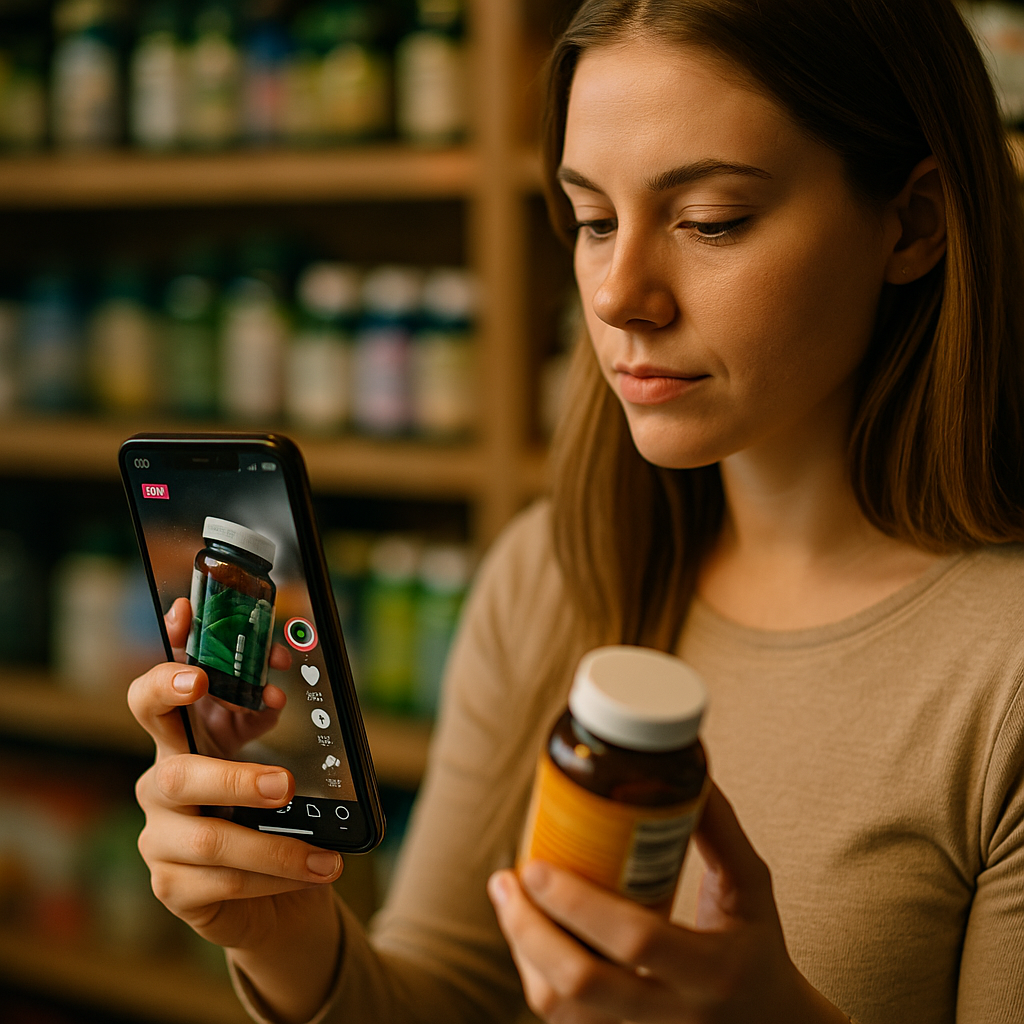
A gummy vitamin brand with no retail distribution just cracked eight figures in TikTok Shop sales, and it did it in under a year. TikTok Shop supplement sales have become the platform’s fastest-growing commerce category, and the affiliate commission data behind that growth tells a story most brands aren’t reading correctly. It’s not about trust. It’s about timing.
The Numbers Behind the Surge
Supplements and vitamins have quietly outpaced beauty as TikTok Shop’s most commission-heavy category this cycle. Creators are running commission rates north of 20% on many supplement SKUs, well above the platform average for most verticals. That’s not charity from brands. It’s a calculated response to a category where conversion windows are brutally short and affiliate incentive is the only lever that reliably moves units.
Compare that to the beauty category, where discovery-driven purchase patterns already reshaped how brands think about product seeding. Supplements are following a similar discovery-to-cart pipeline, but with a twist: repeat purchase behavior is far less predictable, and the entire model leans on capturing the impulse moment rather than nurturing consideration.
Supplement commissions on TikTok Shop aren’t pricing in loyalty. They’re pricing in urgency, and that changes how brands should structure every affiliate deal they sign.
Why Supplements Convert Differently Than Beauty or Fashion
Beauty products sell on aspiration. Fashion sells on identity. Supplements sell on a promise: better sleep, clearer skin, more energy, less bloat. That promise creates a narrower decision window. Someone watching a video about magnesium glycinate for sleep either buys in the next ninety seconds or forgets about it by the time they’ve scrolled past three more videos.
This is the core dynamic affiliate commission data exposes. Brands paying higher commissions on supplements aren’t overpaying — they’re compensating creators for capturing a conversion moment that has almost no second chance. There’s no retargeting a TikTok Shop impulse buy the way you’d retarget an abandoned cart on a DTC site. The moment passes, and it’s gone.
That single-shot dynamic explains why supplement brands are aggressively over-indexing on social commerce pathways instead of splitting budget across owned channels. When the purchase decision lives entirely inside a fifteen-second window, you optimize for the in-app moment, not the funnel.
What the Commission Tiers Actually Show
Look closely at TikTok Shop’s Affiliate Center data and a pattern emerges. Supplement brands cluster commissions into three rough tiers:
- Entry-tier creators (under 50K followers): commissions often sit at 15-25%, because these accounts drive volume through sheer frequency of posting, not reach.
- Mid-tier creators (50K-500K): commissions compress slightly, typically 12-18%, as brands bet on higher production value and stronger trust signals.
- Macro and niche health authorities: commissions vary wildly, sometimes dropping below 10% because the creator’s credibility alone is expected to carry conversion.
This isn’t how beauty or apparel commissions typically stack. In those categories, reach and aesthetic fit still carry weight. In supplements, it’s frequency and specificity that win — a creator posting daily about gut health content converts better than a general lifestyle creator with triple the following.
The Impulse-Conversion Trap Brands Keep Falling Into
Here’s the uncomfortable part. Many supplement brands are chasing short-term GMV spikes without building the infrastructure to retain those buyers. It’s the same mistake CPG brands made when TikTok Shop first exploded, detailed in the earlier CPG media mix shift coverage. Impulse conversion is not the same as customer acquisition. A one-time buyer who grabbed a $24 bottle of ashwagandha because a creator made a funny face at the camera is not the same as a subscriber.
Brands treating TikTok Shop affiliate revenue as their primary growth engine, rather than a discovery layer, are setting themselves up for retention problems nobody’s pricing into their CAC models yet.
If your supplement brand’s TikTok Shop strategy stops at the sale, you’re funding someone else’s subscription business — probably a competitor who nailed the follow-up email.
Regulatory Exposure Is the Quiet Risk Here
Supplements sit in a regulatory gray zone that beauty and fashion mostly avoid. Health claims made by affiliate creators — even offhand ones in a fifteen-second video — carry real liability. The FTC’s disclosure and endorsement guidance applies just as forcefully to a nano-creator hawking probiotics as it does to a celebrity spokesperson. Brands scaling supplement affiliate programs without a claims-review process are one viral video away from a compliance headache.
This is where the standardization conversation matters. The same logic driving CTA standardization in branded UGC needs to extend into supplement affiliate briefs specifically: locked language on claims, mandatory disclosure placement, and pre-approved talking points. Loose creator briefs are the single biggest unforced error in this category right now.
How Smart Brands Are Structuring Supplement Affiliate Deals
The brands actually winning in this category aren’t just throwing commission percentage at the problem. They’re restructuring the entire deal architecture around the impulse-conversion reality.
- Tiered urgency bonuses: Extra commission triggered when a creator’s video hits a conversion threshold within the first 48 hours of posting, rewarding the moments that matter most.
- Bundle-first offers: Pushing multi-product bundles through affiliate links rather than single SKUs, since bundles raise average order value and partially offset the one-and-done buyer problem.
- Retention hooks baked into fulfillment: QR codes or inserts in the shipped product driving buyers into a subscription flow or branded community, essentially trying to convert the impulse buyer after the fact.
- Performance-based contract terms: Increasingly mirroring the shift documented in performance-pay influencer contracts, where flat fees are disappearing in favor of commission-only or hybrid structures tied directly to shop conversions.
None of this is revolutionary marketing theory. It’s just applying direct-response discipline to a channel that still gets treated like a branding play by half the marketers using it.
What This Means for Budget Allocation Going Forward
If you’re a brand strategist deciding how much of next quarter’s budget goes into TikTok Shop affiliate versus other creator formats, the commission data gives you a real signal: this channel rewards volume and speed, not polish. A high-output creator program with tight compliance guardrails will outperform a handful of expensive, highly-produced partnerships in this category almost every time.
That said, don’t mistake volume for a strategy vacuum. The brands getting burned are the ones recruiting affiliates indiscriminately, hoping commission alone drives quality content. It doesn’t. You still need creative direction, claims review, and a plan for what happens after the sale.
Marketing teams without in-house analytics muscle to track this properly are going to struggle here, especially as analytics talent shortages make it harder to build the attribution models needed to separate genuine LTV from inflated impulse-driven GMV. If you can’t measure repeat purchase rate by creator cohort, you’re flying blind on whether your commission spend is actually profitable.
External benchmarks are still catching up to how fast this category moved. eMarketer’s retail media forecasts and Statista’s social commerce trackers are useful directional tools, but neither fully captures the SKU-level commission dynamics unique to TikTok Shop’s affiliate marketplace. For now, the platform’s own Affiliate Center dashboard remains the most granular source brands have, and TikTok’s advertiser resources are worth monitoring for policy updates specific to health and wellness claims.
Visible FAQ
Why are TikTok Shop commission rates so much higher for supplements than other categories?
Supplement purchases happen in a narrow impulse window with almost no retargeting opportunity, so brands pay creators more to compensate for the difficulty of capturing that single conversion moment.
Does high affiliate commission on TikTok Shop guarantee repeat customers?
No. Commission rates are priced around one-time conversion, not retention. Brands need separate strategies, like subscription hooks or post-purchase email flows, to turn impulse buyers into repeat customers.
What compliance risks should supplement brands watch on TikTok Shop?
Unverified health claims made by affiliate creators can trigger FTC scrutiny. Brands should lock down approved language, mandate disclosure placement, and review creator content before it goes live whenever possible.
Should brands prioritize macro-influencers or smaller creators for supplement affiliate programs?
Commission data shows smaller, high-frequency creators often outperform larger accounts in this category, since consistency and niche specificity drive conversion more than raw reach.
How should brands measure success beyond gross merchandise value?
Track repeat purchase rate by creator cohort, not just total GMV. Without that data, it’s impossible to know whether affiliate spend is generating real customer value or just one-time impulse sales.
FAQs
Why are TikTok Shop commission rates so much higher for supplements than other categories? Supplement purchases happen in a narrow impulse window with almost no retargeting opportunity, so brands pay creators more to compensate for the difficulty of capturing that single conversion moment.
Does high affiliate commission on TikTok Shop guarantee repeat customers? No. Commission rates are priced around one-time conversion, not retention. Brands need separate strategies, like subscription hooks or post-purchase email flows, to turn impulse buyers into repeat customers.
What compliance risks should supplement brands watch on TikTok Shop? Unverified health claims made by affiliate creators can trigger FTC scrutiny. Brands should lock down approved language, mandate disclosure placement, and review creator content before it goes live whenever possible.
Should brands prioritize macro-influencers or smaller creators for supplement affiliate programs? Commission data shows smaller, high-frequency creators often outperform larger accounts in this category, since consistency and niche specificity drive conversion more than raw reach.
How should brands measure success beyond gross merchandise value? Track repeat purchase rate by creator cohort, not just total GMV. Without that data, it’s impossible to know whether affiliate spend is generating real customer value or just one-time impulse sales.
The brands winning in this category aren’t the ones with the biggest commission budgets — they’re the ones who built a retention plan before they ever ran an affiliate deal. Audit your current TikTok Shop program for claims-review gaps and repeat-purchase tracking this quarter, before the next viral moment turns into your next compliance problem.
Top Influencer Marketing Agencies
The leading agencies shaping influencer marketing in 2026
Agencies ranked by campaign performance, client diversity, platform expertise, proven ROI, industry recognition, and client satisfaction. Assessed through verified case studies, reviews, and industry consultations.
Moburst

-
2

The Shelf
Boutique Beauty & Lifestyle Influencer AgencyA data-driven boutique agency specializing exclusively in beauty, wellness, and lifestyle influencer campaigns on Instagram and TikTok. Best for brands already focused on the beauty/personal care space that need curated, aesthetic-driven content.Clients: Pepsi, The Honest Company, Hims, Elf Cosmetics, Pure LeafVisit The Shelf → -
3

Audiencly
Niche Gaming & Esports Influencer AgencyA specialized agency focused exclusively on gaming and esports creators on YouTube, Twitch, and TikTok. Ideal if your campaign is 100% gaming-focused — from game launches to hardware and esports events.Clients: Epic Games, NordVPN, Ubisoft, Wargaming, Tencent GamesVisit Audiencly → -
4

Viral Nation
Global Influencer Marketing & Talent AgencyA dual talent management and marketing agency with proprietary brand safety tools and a global creator network spanning nano-influencers to celebrities across all major platforms.Clients: Meta, Activision Blizzard, Energizer, Aston Martin, WalmartVisit Viral Nation → -
5

The Influencer Marketing Factory
TikTok, Instagram & YouTube CampaignsA full-service agency with strong TikTok expertise, offering end-to-end campaign management from influencer discovery through performance reporting with a focus on platform-native content.Clients: Google, Snapchat, Universal Music, Bumble, YelpVisit TIMF → -
6

NeoReach
Enterprise Analytics & Influencer CampaignsAn enterprise-focused agency combining managed campaigns with a powerful self-service data platform for influencer search, audience analytics, and attribution modeling.Clients: Amazon, Airbnb, Netflix, Honda, The New York TimesVisit NeoReach → -
7

Ubiquitous
Creator-First Marketing PlatformA tech-driven platform combining self-service tools with managed campaign options, emphasizing speed and scalability for brands managing multiple influencer relationships.Clients: Lyft, Disney, Target, American Eagle, NetflixVisit Ubiquitous → -
8

Obviously
Scalable Enterprise Influencer CampaignsA tech-enabled agency built for high-volume campaigns, coordinating hundreds of creators simultaneously with end-to-end logistics, content rights management, and product seeding.Clients: Google, Ulta Beauty, Converse, AmazonVisit Obviously →