


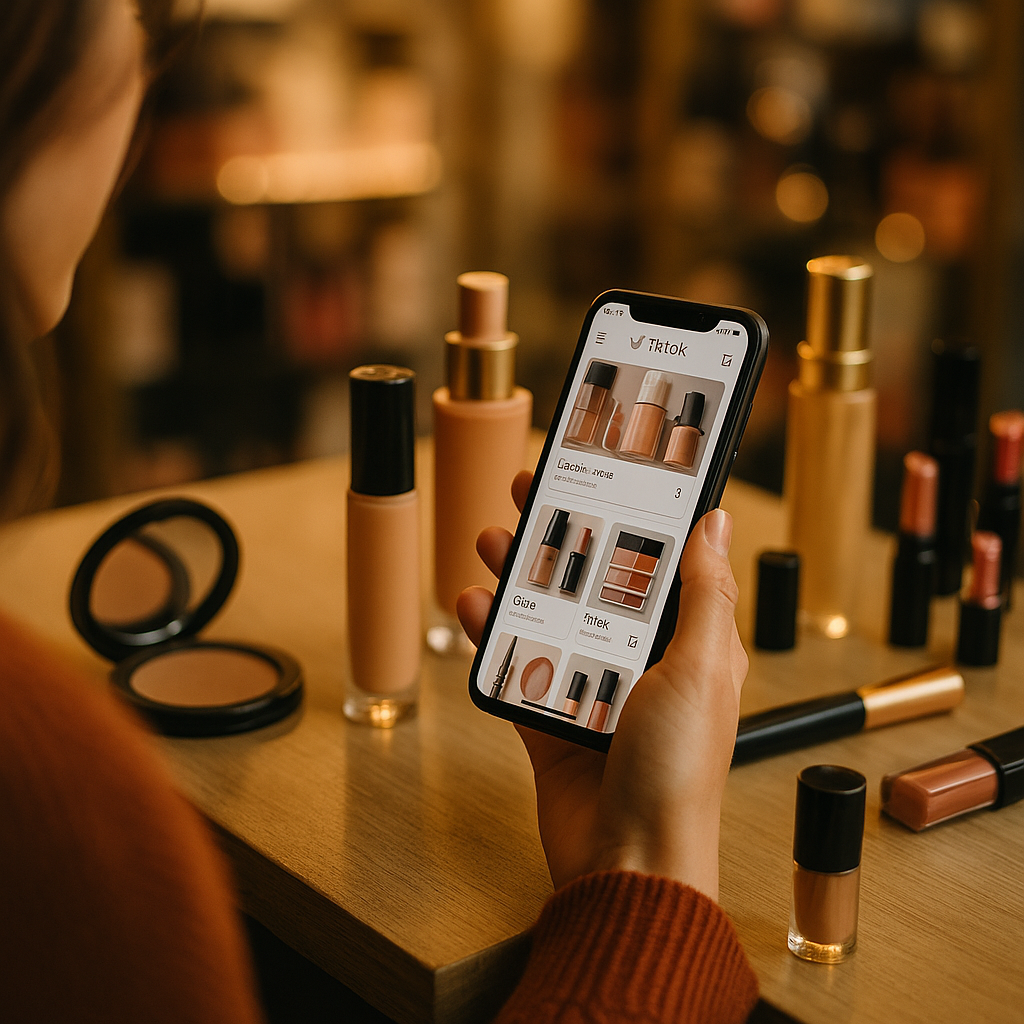
A 107.7% jump in beauty category growth on TikTok Shop isn’t a seasonal blip — it’s a receipt. It confirms what brand teams have suspected for two years: the path from “never heard of it” to “add to cart” no longer runs through a search engine. It runs through a For You Page. If your discovery strategy still treats social as top-of-funnel awareness and search as the conversion moment, that model is now structurally out of date.
The Number That Should Reframe Your Media Plan
Beauty has always been an early-adopter category on new commerce formats — it was first into influencer seeding, first into livestream shopping, first into affiliate-heavy creator programs. So when beauty posts triple-digit growth on a single platform’s shop feature, it’s worth treating as a leading indicator, not an outlier. Skincare, color cosmetics, and haircare brands that leaned into TikTok Shop early are now seeing compounding returns: creator content that also functions as a shoppable unit, with no redirect, no cart abandonment from a clunky external checkout, no lag between desire and purchase.
Compare that to the traditional funnel: see an ad, get curious, open a search tab, compare three listicles, maybe abandon the mission entirely because dinner’s ready. TikTok Shop collapses that into one continuous motion. That collapse is the structural shift referenced in the headline, and it’s the same discovery compression discussed in our coverage of social commerce pathways becoming the default channel rather than a supplementary one.
When discovery and checkout happen in the same swipe, the old separation between “brand awareness budget” and “performance budget” stops making operational sense.
Why Beauty Specifically? It’s Not an Accident
Three things make beauty uniquely suited to this shift, and understanding them helps you judge whether your own category is next.
- Visual proof is the whole sale. A serum’s texture, a foundation’s undertone match, a hair product’s before/after — these are inherently video-native claims. Static product photography on a retailer PDP has always undersold beauty products relative to a 15-second demo.
- Repeat purchase cycles reward algorithmic memory. TikTok’s system learns a user’s skin concerns and preferences fast, then keeps resurfacing adjacent products. That’s a recommendation engine doing the job a beauty counter associate used to do.
- Price points suit impulse commerce. Most beauty SKUs sit in a range where a confident creator recommendation is enough to trigger purchase without a research phase. Try that with a mattress.
None of this means beauty is unique forever. It means beauty is the proof of concept. Categories with strong visual demonstration value and mid-range price points — supplements, home fragrance, pet care — are watching this data closely and adjusting 2026 budgets accordingly.
Discovery Has Moved. Has Your Attribution Model?
Here’s the uncomfortable part for a lot of brand teams: marketing organizations are still measuring this new discovery behavior with old-funnel logic. If your dashboards separate “TikTok” spend from “commerce” spend, you’re already misreading the data. The platform isn’t a media channel that happens to have a checkout bolted on. It’s becoming the product discovery engine itself, which changes what you should be optimizing creative for.
This is the same dynamic we’ve flagged in zero-click search and AI overviews redefining discovery: consumers increasingly get their answer, and now their purchase, without ever leaving the platform that surfaced it. Search marketers are already adjusting to a world of winning citations instead of clicks. Social commerce teams need the equivalent mindset shift: win the feed moment, because there may not be a second touchpoint to win.
Practically, that means:
- Stop measuring TikTok Shop performance solely on last-click revenue. Track view-to-purchase velocity and repeat purchase rate by creator cohort.
- Rebuild creative briefs around demonstration-first formats, not brand-message-first formats.
- Give commerce and content teams shared KPIs. Siloed teams optimizing for different goals is the single biggest reason brands underperform this channel.
The Algorithm Doesn’t Care About Your Follower Count
One reason beauty brands are seeing outsized returns is that TikTok’s discovery algorithm rewards engagement signals over audience size, which flattens the playing field between mega-influencers and smaller, highly trusted creators. We covered this mechanic in depth in how the TikTok beauty algorithm favors engagement over followers, and it matters directly here: growth this steep isn’t being driven by a handful of celebrity partnerships. It’s coming from a long tail of creators whose content performs, gets pushed further by the algorithm, and compounds shop visibility without additional media spend.
For brand teams, that’s both an opportunity and an operational headache. Opportunity, because you don’t need celebrity-tier budgets to win category share. Headache, because managing hundreds of smaller creator relationships requires infrastructure most teams don’t have yet — which is exactly why agencies are hiring data analysts to make sense of which micro-creators are actually driving shop conversions versus vanity engagement.
What This Means for Budget Allocation
TikTok Shop’s own advertiser resources have been pushing brands toward full-funnel campaign structures that combine paid amplification with organic creator content, and the beauty data explains why: the platforms winning discovery aren’t necessarily the ones with the biggest reach, they’re the ones with the tightest content-to-cart loop. Recent market sizing from eMarketer has repeatedly flagged social commerce as one of the fastest-growing slices of overall retail media spend, and beauty is consistently cited as the category pulling that growth forward.
A 107.7% category jump isn’t a single quarter’s win. It’s evidence that budget allocated to “discovery” and budget allocated to “commerce” are now the same line item, whether your finance team has caught up or not.
We’ve written before about the scale this represents at the platform level in TikTok Shop’s forecast signaling a CPG media mix shift. Beauty’s growth rate is simply the clearest category-level evidence that the forecast isn’t theoretical. If your CPG or beauty brand is still running TikTok as a brand-awareness-only channel with a separate Amazon or DTC conversion strategy, you’re leaving structural growth on the table, not just incremental spend.
Governance Is Catching Up — Plan For It Now
Rapid category growth always attracts regulatory and platform scrutiny, and TikTok Shop is no exception. The platform has tightened seller verification and creator posting rules, a trend covered in TikTok’s ID crackdown signaling creator commerce rules ahead and ID checks and posting caps signaling a governance shift. Beauty brands, given the regulatory sensitivity around ingredient claims and skin safety, should treat this as a compliance priority, not an afterthought.
Build creator content review into your workflow now, before enforcement tightens further. The FTC’s endorsement guidance already applies to shoppable content exactly as it does to traditional influencer posts, and beauty’s crowded claims environment (efficacy, “clean” labeling, dermatologist endorsements) makes this category a likely enforcement focus.
What Brands Should Actually Do Next
Don’t chase the growth number itself. Chase the behavior underneath it: consumers discovering, evaluating, and buying beauty products inside a single continuous scroll. Audit your current TikTok Shop creator mix against actual conversion data, not follower count or reach, and reallocate briefly-tested budget toward the creator cohorts already proving the loop works for your product line.
FAQs
Why did beauty grow so much faster than other categories on TikTok Shop?
Beauty products demonstrate well on video, have repeat purchase cycles that suit algorithmic recommendation, and sit at price points conducive to impulse buying — all factors that make the discovery-to-checkout loop especially efficient for this category.
Does this growth mean brands should shift budget entirely away from search and paid social?
No. It means budget allocation should reflect that discovery and commerce are converging on the same platforms. Search still matters for high-consideration purchases, but for impulse-driven beauty categories, TikTok Shop is increasingly the first and last touchpoint.
How should brands measure TikTok Shop performance beyond last-click revenue?
Track view-to-purchase velocity, repeat purchase rate by creator cohort, and engagement-to-conversion ratios rather than relying solely on last-click attribution, which undercounts the platform’s actual discovery influence.
What compliance risks should beauty brands watch on TikTok Shop?
Ingredient and efficacy claims, undisclosed paid partnerships, and creator verification requirements are all under increased scrutiny. Brands should build claims review into creator briefs before content goes live.
Is this trend specific to TikTok, or will it spread to other platforms?
The underlying behavior — collapsing discovery and checkout into one motion — is platform-agnostic. Instagram, Meta’s broader shopping tools, and even AI-driven search interfaces are all moving toward the same model.
Top Influencer Marketing Agencies
The leading agencies shaping influencer marketing in 2026
Agencies ranked by campaign performance, client diversity, platform expertise, proven ROI, industry recognition, and client satisfaction. Assessed through verified case studies, reviews, and industry consultations.
Moburst

-
2

The Shelf
Boutique Beauty & Lifestyle Influencer AgencyA data-driven boutique agency specializing exclusively in beauty, wellness, and lifestyle influencer campaigns on Instagram and TikTok. Best for brands already focused on the beauty/personal care space that need curated, aesthetic-driven content.Clients: Pepsi, The Honest Company, Hims, Elf Cosmetics, Pure LeafVisit The Shelf → -
3

Audiencly
Niche Gaming & Esports Influencer AgencyA specialized agency focused exclusively on gaming and esports creators on YouTube, Twitch, and TikTok. Ideal if your campaign is 100% gaming-focused — from game launches to hardware and esports events.Clients: Epic Games, NordVPN, Ubisoft, Wargaming, Tencent GamesVisit Audiencly → -
4

Viral Nation
Global Influencer Marketing & Talent AgencyA dual talent management and marketing agency with proprietary brand safety tools and a global creator network spanning nano-influencers to celebrities across all major platforms.Clients: Meta, Activision Blizzard, Energizer, Aston Martin, WalmartVisit Viral Nation → -
5

The Influencer Marketing Factory
TikTok, Instagram & YouTube CampaignsA full-service agency with strong TikTok expertise, offering end-to-end campaign management from influencer discovery through performance reporting with a focus on platform-native content.Clients: Google, Snapchat, Universal Music, Bumble, YelpVisit TIMF → -
6

NeoReach
Enterprise Analytics & Influencer CampaignsAn enterprise-focused agency combining managed campaigns with a powerful self-service data platform for influencer search, audience analytics, and attribution modeling.Clients: Amazon, Airbnb, Netflix, Honda, The New York TimesVisit NeoReach → -
7

Ubiquitous
Creator-First Marketing PlatformA tech-driven platform combining self-service tools with managed campaign options, emphasizing speed and scalability for brands managing multiple influencer relationships.Clients: Lyft, Disney, Target, American Eagle, NetflixVisit Ubiquitous → -
8

Obviously
Scalable Enterprise Influencer CampaignsA tech-enabled agency built for high-volume campaigns, coordinating hundreds of creators simultaneously with end-to-end logistics, content rights management, and product seeding.Clients: Google, Ulta Beauty, Converse, AmazonVisit Obviously →