


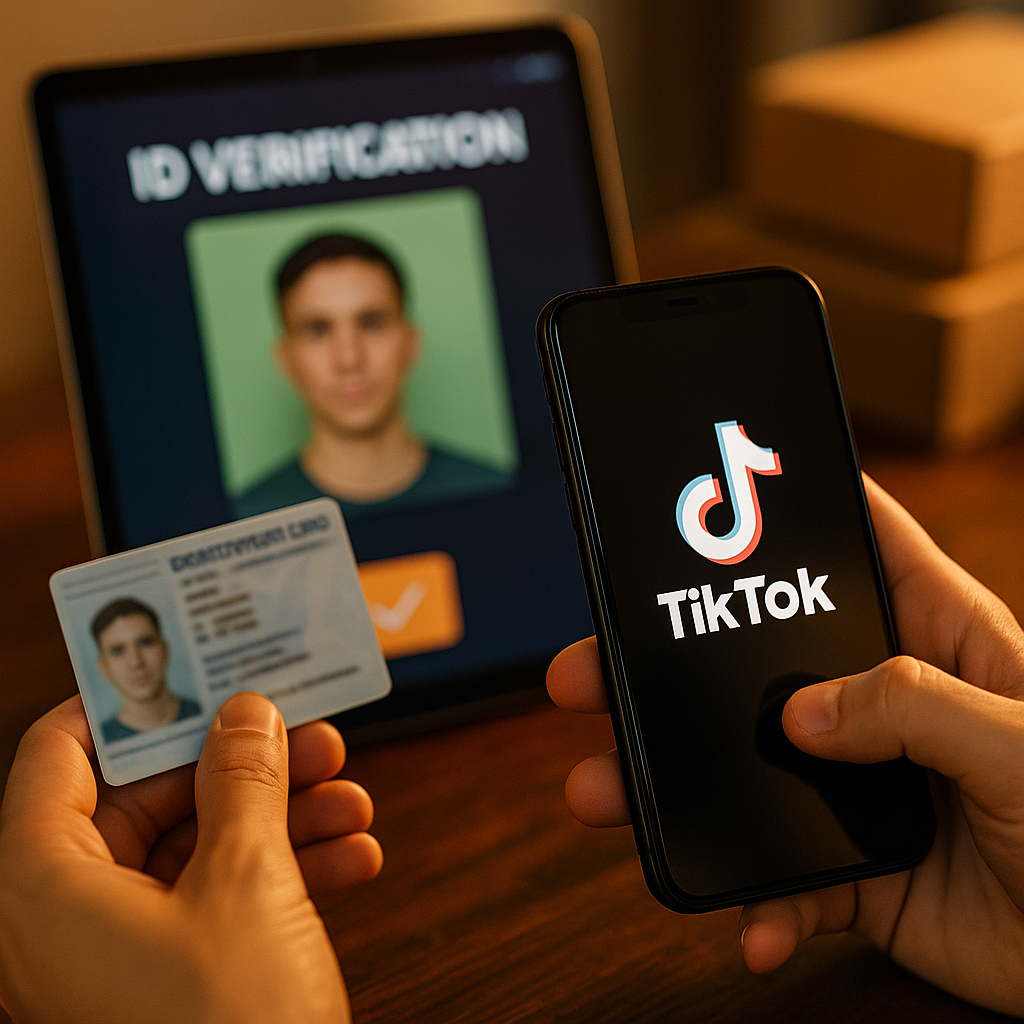
One platform’s ID checkpoint is about to become every platform’s ID checkpoint. TikTok now requires government-issued ID or business registration for anyone running a shop or posting affiliate commerce content at scale — and regulators from Brussels to Brasília are watching closely. This isn’t a TikTok quirk. It’s the opening move in a global creator-commerce regulatory convergence that will reshape how Meta and Amazon govern their own creator ecosystems within the next product cycle.
If you’re running influencer programs across multiple platforms, the compliance patchwork you’ve tolerated for years is closing fast. Here’s what’s actually happening, and why brands that treat this as a TikTok-only problem will get blindsided.
What TikTok’s Entity Verification Actually Requires
TikTok Shop’s identity-verification rollout isn’t a minor form update. Sellers, affiliates, and creators posting shoppable content above certain thresholds now must submit government ID, business registration numbers, or tax documentation tied to a verified legal entity. Posting caps kick in for unverified accounts. Commission payouts get frozen until verification clears. We covered the mechanics of this shift in detail when ID checks and posting caps first rolled out, and the pattern has only intensified since.
The stated rationale is fraud prevention and counterfeit control. Fair enough — TikTok Shop has had real problems with unverified sellers pushing knockoff goods and fake influencer accounts gaming the algorithm. But the deeper motivation is regulatory self-preservation. TikTok is under intense scrutiny in the US, EU, and UK simultaneously. Building an auditable, entity-linked commerce trail is how the platform demonstrates it can be trusted with transactional data at all.
Entity verification isn’t a fraud fix. It’s a compliance insurance policy platforms are taking out against regulators who no longer accept “we didn’t know who was selling” as an answer.
Why This Pattern Won’t Stay Contained to One App
Look at the regulatory forces converging right now. The EU’s Digital Services Act already requires large platforms to implement “know your business customer” verification for anyone selling goods online. The UK’s Online Safety Act pushes similar accountability standards. In the US, state-level laws on influencer disclosure and platform liability are multiplying faster than any single compliance team can track manually.
Meta and Amazon aren’t naive about where this is headed. Amazon has already been tightening seller verification through its Brand Registry and influencer program requirements, and its recent universal commerce protocol push signals a broader move toward standardized, auditable transaction infrastructure. Meta, meanwhile, has spent two years expanding branded-content disclosure tools and creator monetization eligibility checks that already resemble soft verification gates.
None of these platforms want to be the next headline in a regulatory hearing. Entity verification is cheap insurance against that outcome. Expect Meta to formalize creator/business entity checks for Reels commerce and Instagram Shop affiliate programs within the next major update cycle. Expect Amazon Influencer Program requirements to tighten similarly, particularly for anyone touching Amazon Live or storefront commissions.
The Youth-Safety Angle Is Accelerating Everything
It’s not just commerce fraud driving this. Youth-safety legislation is forcing platforms toward unified identity and age-verification frameworks that naturally overlap with seller verification infrastructure. Once a platform builds the plumbing to verify who someone is for safety compliance, extending that same plumbing to commerce verification is a small lift, not a rebuild. Our earlier coverage of how youth-safety rules are forcing one global algorithm standard lays out exactly this dynamic — regulation in one domain quietly standardizes infrastructure across the whole platform.
This matters for your program planning. Verification requirements you’re seeing on TikTok Shop today are being built on infrastructure that will get reused for age checks, ad targeting restrictions, and creator eligibility screening tomorrow. It’s all the same underlying identity layer.
What This Means for Brand and Agency Operations
Let’s get practical. If your influencer program spans TikTok, Instagram, and Amazon, you’re likely managing three separate verification standards right now, none of which talk to each other. That’s expensive. It’s also a liability nobody’s pricing in correctly.
- Creator onboarding gets slower. Build verification lag into your campaign timelines now. A creator who can’t post shoppable content until their ID clears TikTok’s review queue is a creator who can’t hit your launch date. Plan two to three weeks of buffer for new creator relationships on commerce-enabled platforms.
- Vetting becomes a documented process, not a vibe check. Regulators and platforms increasingly expect brands to show their own due diligence trail — who you worked with, how you confirmed their identity, what disclosure language you required. Treat this like you’d treat vendor compliance in any other B2B relationship.
- Multi-platform creators need multi-platform paperwork. A creator running shops on TikTok and Amazon simultaneously may need separate entity documentation for each. Agencies managing rosters at scale should centralize this in one compliance tracker rather than chasing it platform by platform.
- Payment and payout risk increases. Frozen commissions during verification delays hit creator cash flow, which affects creator relationships, which affects your program’s retention. Factor this into contracts and payment terms.
None of this is optional anymore. The brands treating verification friction as “the creator’s problem” are going to find themselves explaining shipment delays and broken campaigns to clients who don’t care whose fault it was.
Disclosure Compliance Was Already a Mess — Now It’s Worse
Here’s the uncomfortable adjacent fact: most brands haven’t even nailed basic disclosure compliance, let alone entity verification. Recent research found that 68% of YouTube affiliate videos violate FTC disclosure rules. If disclosure — the simpler, older, more heavily enforced requirement — has a 68% failure rate, what does that suggest about readiness for entity verification, a newer and more operationally demanding standard?
The FTC’s endorsement guidelines already give the agency enforcement teeth on disclosure. Layer entity verification requirements on top, and you get a compliance surface area most brand marketing teams aren’t staffed to manage. This is where legal, compliance, and marketing need to actually talk to each other instead of operating in separate Slack channels.
How Amazon and Meta Are Likely to Move
Predicting exact rollout timing is a fool’s errand, but the direction is clear enough to plan around.
Amazon already requires tax ID and banking verification for Associates and Influencer Program participants. The next logical step is tighter entity linkage between individual creator accounts and the products/brands they promote, closing loopholes where the same person operates multiple undisclosed storefronts. Given Amazon’s push toward standardized commerce protocols, expect verification to become a prerequisite for API-level integration access, not just a manual review step.
Meta has more ground to cover. Instagram and Facebook’s creator monetization tools have historically been looser than TikTok’s on identity requirements, largely because Meta’s commerce push (Shops, checkout, affiliate tagging) came later and less aggressively. But Meta is under the same DSA and Online Safety Act pressure as everyone else operating in the EU and UK. Expect Meta Business Suite to introduce mandatory entity verification for any account running paid partnership tags above a certain follower or GMV threshold within the coming product cycles.
The platforms racing to commerce dominance are the same ones racing hardest toward verification — because regulators have made clear that transaction volume without accountability is a liability, not a growth metric.
Building a Verification-Ready Program Now
Waiting for Meta and Amazon to formally announce their versions of this is a mistake. The smarter move is building your operational readiness now, while the requirements are still TikTok-specific, so you’re not scrambling when they expand.
Start with an audit: which creators in your active roster are verified where, and which aren’t? Build a single compliance record per creator that tracks entity documentation, disclosure language used, and platform-specific status. If you’re working through an agency or a martech platform for creator management, ask directly whether they’re building verification tracking into their workflow — this is quickly becoming table stakes, similar to how shipment-to-payment loops became expected infrastructure rather than a nice-to-have.
Second, revisit creator contracts. Add language requiring creators to maintain current verification status across platforms as a condition of active campaigns and payment. This shifts some operational burden back where it belongs and protects your program from being the one caught flat-footed when a creator’s account gets suspended mid-campaign.
Third, treat this as a cross-functional problem. Legal, compliance, and marketing ops all have a stake here. According to Sprout Social’s ongoing research into platform trust dynamics, brands that centralize compliance ownership recover faster from platform policy shifts than those managing it ad hoc across departments. Data privacy expectations are moving the same direction — as we noted when covering how data privacy gaps drive cart abandonment, consumer and regulatory trust now directly affects conversion, not just legal exposure.
The Bottom Line for Budget Planning
Entity verification adds friction, cost, and timeline risk to creator programs across every major platform, not just TikTok. Build that friction into your campaign forecasting now, because the platforms aren’t slowing down to accommodate brands that haven’t adjusted. The convergence is already underway; the only real choice is whether you’re ready before or after Meta and Amazon make it mandatory.
Frequently Asked Questions
What is entity verification in creator commerce?
Entity verification requires creators or sellers to submit government-issued ID, business registration, or tax documentation before they can sell products, earn commissions, or post shoppable content above certain thresholds. TikTok Shop currently enforces this most aggressively among major platforms.
Will Instagram and Amazon require the same verification as TikTok?
Not identically, but directionally, yes. Regulatory pressure from the EU’s Digital Services Act, the UK’s Online Safety Act, and youth-safety legislation is pushing all major platforms toward stricter identity and business verification for commerce-enabled creator accounts.
How should brands prepare for stricter creator verification rules?
Audit current creator verification status across every platform you use, centralize compliance documentation in one tracker, add verification-maintenance clauses to creator contracts, and build extra onboarding time into campaign timelines to absorb verification delays.
Does entity verification replace FTC disclosure requirements?
No. Entity verification confirms who is selling or promoting a product; FTC disclosure rules govern how that relationship must be communicated to consumers. Brands need to comply with both, and many are already falling short on disclosure alone.
What happens if a creator’s account isn’t verified in time for a campaign?
Unverified accounts typically face posting caps, restricted shoppable content, or frozen commission payouts, which can delay or derail campaign launches. This is why verification status should be confirmed before a creator is contracted, not after.
Visible FAQ (duplicate block omitted per instructions)
Top Influencer Marketing Agencies
The leading agencies shaping influencer marketing in 2026
Agencies ranked by campaign performance, client diversity, platform expertise, proven ROI, industry recognition, and client satisfaction. Assessed through verified case studies, reviews, and industry consultations.
Moburst

-
2

The Shelf
Boutique Beauty & Lifestyle Influencer AgencyA data-driven boutique agency specializing exclusively in beauty, wellness, and lifestyle influencer campaigns on Instagram and TikTok. Best for brands already focused on the beauty/personal care space that need curated, aesthetic-driven content.Clients: Pepsi, The Honest Company, Hims, Elf Cosmetics, Pure LeafVisit The Shelf → -
3

Audiencly
Niche Gaming & Esports Influencer AgencyA specialized agency focused exclusively on gaming and esports creators on YouTube, Twitch, and TikTok. Ideal if your campaign is 100% gaming-focused — from game launches to hardware and esports events.Clients: Epic Games, NordVPN, Ubisoft, Wargaming, Tencent GamesVisit Audiencly → -
4

Viral Nation
Global Influencer Marketing & Talent AgencyA dual talent management and marketing agency with proprietary brand safety tools and a global creator network spanning nano-influencers to celebrities across all major platforms.Clients: Meta, Activision Blizzard, Energizer, Aston Martin, WalmartVisit Viral Nation → -
5

The Influencer Marketing Factory
TikTok, Instagram & YouTube CampaignsA full-service agency with strong TikTok expertise, offering end-to-end campaign management from influencer discovery through performance reporting with a focus on platform-native content.Clients: Google, Snapchat, Universal Music, Bumble, YelpVisit TIMF → -
6

NeoReach
Enterprise Analytics & Influencer CampaignsAn enterprise-focused agency combining managed campaigns with a powerful self-service data platform for influencer search, audience analytics, and attribution modeling.Clients: Amazon, Airbnb, Netflix, Honda, The New York TimesVisit NeoReach → -
7

Ubiquitous
Creator-First Marketing PlatformA tech-driven platform combining self-service tools with managed campaign options, emphasizing speed and scalability for brands managing multiple influencer relationships.Clients: Lyft, Disney, Target, American Eagle, NetflixVisit Ubiquitous → -
8

Obviously
Scalable Enterprise Influencer CampaignsA tech-enabled agency built for high-volume campaigns, coordinating hundreds of creators simultaneously with end-to-end logistics, content rights management, and product seeding.Clients: Google, Ulta Beauty, Converse, AmazonVisit Obviously →