


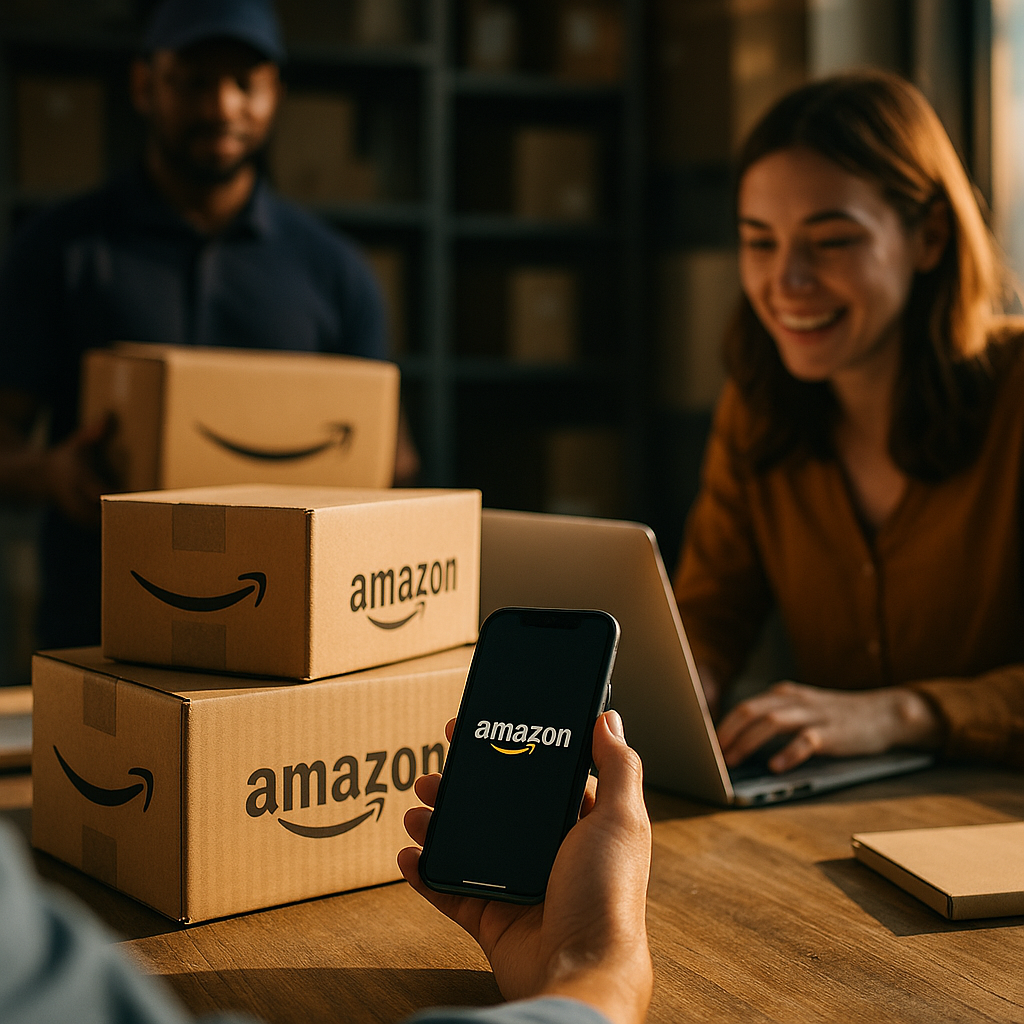
Roughly 40% of online shoppers now say they’ve used an AI tool to research or start a purchase, according to recent eMarketer estimates. Now imagine that number climbing toward checkout, not just research. Amazon’s Universal Commerce Protocol is the clearest signal yet that agent-to-agent commerce isn’t a thought experiment anymore. It’s an infrastructure decision, and brands that aren’t preparing for it are already behind.
What Amazon Actually Announced
Strip away the press-release language and the Universal Commerce Protocol (UCP) is a standardized way for AI agents to discover products, check pricing and inventory, and complete transactions on behalf of a human, without that human clicking through a traditional storefront. Think of it as an API layer purpose-built for autonomous shopping agents rather than browsers.
This matters because right now, agentic commerce is a mess of proprietary integrations. OpenAI has its own commerce plumbing. Perplexity has been testing shopping actions. Google is layering agent capabilities into Search and Gemini. Each of these lives in its own walled garden, forcing merchants to build and maintain separate integrations for every AI platform that wants to transact on a customer’s behalf.
A universal protocol changes that math. If Amazon can get even a handful of major AI players and merchants to speak the same commerce language, it becomes the default rail for agent-to-agent commerce the way HTTP became the default rail for the web. That’s the ambition, anyway.
Agent-to-agent commerce isn’t about chatbots recommending products. It’s about one AI system negotiating, verifying, and transacting with another AI system, with humans setting parameters rather than clicking buttons.
Why This Is Different From “Conversational Commerce”
Marketers have heard “AI is changing shopping” for a few years now and, understandably, some of that has become background noise. But there’s a meaningful distinction between conversational commerce (a chatbot suggesting products inside a chat window) and true agent-to-agent commerce.
In the conversational model, the AI is essentially a smarter search bar. It surfaces recommendations, maybe compares prices, but a human still lands on a page and completes checkout. In the agent-to-agent model, the human’s shopping agent negotiates directly with the merchant’s selling agent. Price comparisons, inventory checks, even loyalty-program applications happen machine-to-machine, in milliseconds, with no page views at all.
That’s a genuinely different retail architecture. It also explains why this shift pairs so directly with the broader move away from traditional search. We’ve already covered how zero-click search is eroding the top of the funnel; agent-to-agent commerce is the natural extension of that trend into the bottom of the funnel. If discovery is zero-click, why wouldn’t transaction eventually become zero-click too?
Consider what that does to attribution. Your last-click model, your UTM parameters, your retargeting pixels — all of it assumes a human browsing session. When a shopping agent completes a transaction on a user’s behalf, there may be no session to track at all.
The Trust Problem Nobody’s Solved Yet
Here’s the uncomfortable question brand leaders should be asking: would you let an AI agent spend your customer’s money without a human double-checking the choice? And on the flip side — would you let an AI agent represent your brand’s pricing and inventory to another AI, with no human in the loop to catch an error?
Trust in AI-mediated commerce is already shaky. Our own reporting on AI ad trust falling even as spend rises shows a real gap between adoption and confidence. Consumers are using these tools more, but they don’t fully trust the outputs. Layer transactional authority on top of that skepticism and the stakes go up considerably. A hallucinated product spec is embarrassing. A hallucinated price that an agent actually honors is a financial and legal problem.
This is where Amazon’s protocol has an advantage over scrappier competitors: it can lean on decades of merchant verification, return policies, and fraud infrastructure. That said, no protocol solves trust by itself. Brands still need clean, structured, current product data feeding these systems, because an agent can only transact as reliably as the data it’s reading.
We’ve seen what happens when that data is broken. Target’s recent surge in AI-driven traffic exposed serious gaps in product data — mismatched inventory, outdated pricing, incomplete attributes. That was AI agents just recommending products. Now imagine those same data gaps feeding an agent that’s authorized to actually complete the purchase.
What This Means for Product Data and Feeds
If agents are going to transact directly, your product feed effectively becomes your storefront. Not your website, not your app — the structured data underneath it.
- Schema completeness stops being optional. Missing attributes, vague sizing, and inconsistent GTINs will actively exclude products from agent consideration.
- Real-time inventory accuracy becomes non-negotiable. An agent that gets a “sold out” response after transacting is a trust failure that lands on your brand, not the platform.
- Pricing logic needs guardrails. Dynamic pricing, promo codes, and loyalty discounts all need to be machine-readable and consistent across every channel an agent might query.
- Return and warranty terms need structured representation. Agents negotiating on behalf of risk-averse consumers will likely deprioritize sellers whose policies are ambiguous or buried in fine print.
None of this is new work, exactly. It’s the same product-data discipline that SEO and marketplace teams have preached for years. What’s new is the urgency, and the fact that the audience is now a machine that won’t forgive sloppy data the way a human might.
Marketing to a Machine That Shops for Humans
Here’s the part that should keep CMOs up at night: brand marketing has spent a century optimizing for human persuasion. Emotion, aspiration, social proof, scarcity. Agents don’t feel FOMO. They compare structured attributes against a stated set of user preferences and optimize for fit, price, and reliability.
So what actually influences an agent’s purchase decision? Early evidence suggests a few things:
- Verified review volume and sentiment, ingested as structured data rather than persuasive copy
- Consistent availability across sales channels, since agents may cross-check multiple sources before committing
- Documented policies (shipping speed, return windows, warranty terms) that reduce perceived risk
- Third-party trust signals — certifications, sustainability claims, verified specs — that an agent can validate against external sources
This doesn’t make brand storytelling irrelevant. It makes it upstream work. If an agent is choosing between your product and a competitor’s, the emotional connection that made a human default to your brand in the first place still matters — it just has to be established before the agent ever gets involved. This is where creator content and AI shopping tools intersect in an interesting way: influencer-driven consideration builds the preference, and the agent just executes on it.
Brand preference gets built before the agent ever opens a session. If you’re not already in the consideration set, no amount of clean product data will get an agent to choose you at the point of transaction.
Where Creators and Influencer Programs Fit In
It’s tempting to think agent-to-agent commerce makes influencer marketing less relevant. The opposite is probably true, at least in the near term.
If agents execute transactions based on pre-established preference and structured trust signals, then the job of building that preference falls even harder on discovery-stage marketing — and creators remain the most effective discovery-stage channel available. A creator review, a demo video, a comparison post: these are exactly the kind of trust signals that get referenced (directly or indirectly) when a consumer tells their shopping agent “get me the one that reviewer recommended” or “find something similar to what I saw on TikTok.”
There’s also a practical wrinkle. As platform algorithms shift toward trust-based distribution, the overlap between “content that earns algorithmic reach” and “content that earns agent trust” is likely to grow. Both systems are, in their own way, trying to filter for credibility signals rather than just engagement volume.
Brands running influencer programs should start asking their agencies a new question: does this content generate the kind of structured, verifiable claims (specs, comparisons, documented use cases) that could theoretically be cited by a shopping agent? Vague brand-lift content won’t translate. Specific, evidence-based creator content probably will.
The Compliance and Risk Angle Brands Can’t Skip
Regulators are not going to sit this one out. The FTC has already shown appetite for scrutinizing AI-driven consumer decisions, and agent-to-agent transactions raise fresh questions: who’s liable if an agent misrepresents a product? What disclosure obligations exist when an AI, not a human, completes a purchase? How does consumer protection law apply when there’s no clickthrough, no cart abandonment, no traditional “moment of sale” to point to?
Brand and legal teams should be mapping this now, not waiting for enforcement actions to define the rules. That includes revisiting terms of service for AI-agent transactions, auditing how product claims are structured for machine consumption, and building internal accountability for agent-facing data accuracy the same way teams already own accuracy for human-facing listings.
There’s a useful parallel here to how the industry responded to youth-safety regulation reshaping algorithm standards — reactive compliance is expensive and slow. Brands that build governance frameworks before agent-to-agent commerce scales will have a real operational advantage over those scrambling to retrofit compliance later.
Practical Steps for the Next Two Quarters
You don’t need to overhaul your entire commerce stack this quarter. But a few moves are worth prioritizing now:
- Audit product feed completeness across every channel where an agent might query your catalog, not just your primary marketplace listing.
- Assign clear ownership for machine-readable data accuracy — pricing, inventory, policies — separate from human-facing content teams.
- Pressure-test your attribution stack for scenarios where no human session exists. If your analytics can’t account for agent-mediated conversions, start scoping the gap now.
- Brief your influencer and content teams on producing verifiable, specific claims rather than purely persuasive copy — the kind of content that holds up as a trust signal to both humans and machines.
- Loop in legal and compliance early on terms of service, liability, and disclosure questions tied to agent-executed transactions.
None of this requires certainty about which protocol wins. Amazon’s UCP might become the standard, or it might get absorbed into something more open, the way plenty of “universal” standards eventually do. What’s not in doubt is the direction: retail is moving toward machine-mediated transactions, and the brands with clean data, documented trust signals, and governance frameworks in place will adapt fastest, regardless of which protocol ends up winning.
Frequently Asked Questions
What is Amazon’s Universal Commerce Protocol?
It’s a standardized framework that lets AI agents discover products, check pricing and inventory, and complete purchases on behalf of users without requiring a traditional browser-based checkout flow.
How is agent-to-agent commerce different from chatbot shopping?
Chatbot shopping still typically ends with a human clicking through to complete checkout. Agent-to-agent commerce allows a user’s AI agent to negotiate and transact directly with a merchant’s systems, often without any human-facing session at all.
Will agent-to-agent commerce hurt influencer marketing?
Unlikely. If anything, it increases the importance of discovery-stage content like creator reviews and demos, since agents execute on preferences that are typically established before the transaction happens.
What should brands do first to prepare?
Start with product data hygiene: complete, accurate, real-time structured data across pricing, inventory, and policies. Agents can only transact as reliably as the data they’re reading.
Does this change how attribution and analytics work?
Yes, significantly. Traditional last-click and session-based attribution assumes a human browsing journey. Agent-mediated transactions may leave little to no session data, forcing marketers to rethink how conversions get tracked and credited.
Frequently Asked Questions
What is Amazon’s Universal Commerce Protocol?
It’s a standardized framework that lets AI agents discover products, check pricing and inventory, and complete purchases on behalf of users without requiring a traditional browser-based checkout flow.
How is agent-to-agent commerce different from chatbot shopping?
Chatbot shopping still typically ends with a human clicking through to complete checkout. Agent-to-agent commerce allows a user’s AI agent to negotiate and transact directly with a merchant’s systems, often without any human-facing session at all.
Will agent-to-agent commerce hurt influencer marketing?
Unlikely. If anything, it increases the importance of discovery-stage content like creator reviews and demos, since agents execute on preferences that are typically established before the transaction happens.
What should brands do first to prepare?
Start with product data hygiene: complete, accurate, real-time structured data across pricing, inventory, and policies. Agents can only transact as reliably as the data they’re reading.
Does this change how attribution and analytics work?
Yes, significantly. Traditional last-click and session-based attribution assumes a human browsing journey. Agent-mediated transactions may leave little to no session data, forcing marketers to rethink how conversions get tracked and credited.
Top Influencer Marketing Agencies
The leading agencies shaping influencer marketing in 2026
Agencies ranked by campaign performance, client diversity, platform expertise, proven ROI, industry recognition, and client satisfaction. Assessed through verified case studies, reviews, and industry consultations.
Moburst

-
2

The Shelf
Boutique Beauty & Lifestyle Influencer AgencyA data-driven boutique agency specializing exclusively in beauty, wellness, and lifestyle influencer campaigns on Instagram and TikTok. Best for brands already focused on the beauty/personal care space that need curated, aesthetic-driven content.Clients: Pepsi, The Honest Company, Hims, Elf Cosmetics, Pure LeafVisit The Shelf → -
3

Audiencly
Niche Gaming & Esports Influencer AgencyA specialized agency focused exclusively on gaming and esports creators on YouTube, Twitch, and TikTok. Ideal if your campaign is 100% gaming-focused — from game launches to hardware and esports events.Clients: Epic Games, NordVPN, Ubisoft, Wargaming, Tencent GamesVisit Audiencly → -
4

Viral Nation
Global Influencer Marketing & Talent AgencyA dual talent management and marketing agency with proprietary brand safety tools and a global creator network spanning nano-influencers to celebrities across all major platforms.Clients: Meta, Activision Blizzard, Energizer, Aston Martin, WalmartVisit Viral Nation → -
5

The Influencer Marketing Factory
TikTok, Instagram & YouTube CampaignsA full-service agency with strong TikTok expertise, offering end-to-end campaign management from influencer discovery through performance reporting with a focus on platform-native content.Clients: Google, Snapchat, Universal Music, Bumble, YelpVisit TIMF → -
6

NeoReach
Enterprise Analytics & Influencer CampaignsAn enterprise-focused agency combining managed campaigns with a powerful self-service data platform for influencer search, audience analytics, and attribution modeling.Clients: Amazon, Airbnb, Netflix, Honda, The New York TimesVisit NeoReach → -
7

Ubiquitous
Creator-First Marketing PlatformA tech-driven platform combining self-service tools with managed campaign options, emphasizing speed and scalability for brands managing multiple influencer relationships.Clients: Lyft, Disney, Target, American Eagle, NetflixVisit Ubiquitous → -
8

Obviously
Scalable Enterprise Influencer CampaignsA tech-enabled agency built for high-volume campaigns, coordinating hundreds of creators simultaneously with end-to-end logistics, content rights management, and product seeding.Clients: Google, Ulta Beauty, Converse, AmazonVisit Obviously →