


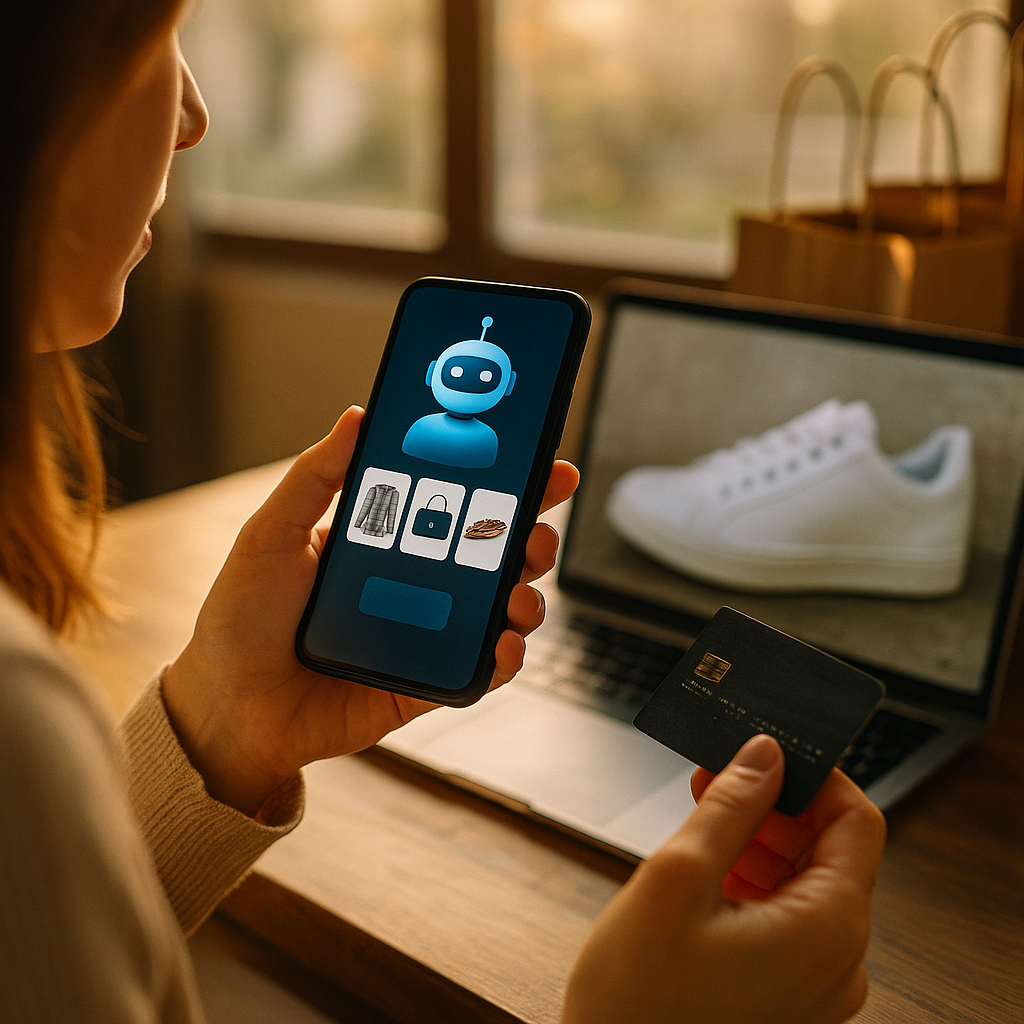
68% of shoppers now use an AI tool to research or buy something in the last quarter. Trust in AI-personalized ads, meanwhile, keeps sliding. That’s the demand-trust paradox defining marketing right now: consumers want the convenience of AI shopping assistants but recoil the moment they sense an algorithm is trying to sell them something. If your media plan doesn’t account for this split, you’re burning budget on tactics people are actively learning to resent.
Two Curves Moving in Opposite Directions
Adoption of AI shopping tools has gone mainstream fast. ChatGPT shopping plugins, Google’s AI Overviews with product carousels, Amazon’s Rufus, Perplexity’s shopping features — these aren’t novelty demos anymore. They’re default behavior for a growing share of consumers, especially under-40 shoppers who treat conversational search as a first stop, not a last resort.
Meanwhile, trust in AI-personalized advertising has been eroding for several straight reporting cycles. Recent data covered in our piece on AI ad trust falling as spend rises found brands are pouring more money into AI-driven ad personalization even as consumer confidence in those same ads declines. It’s not a contradiction brands can shrug off. It’s a structural mismatch between where budgets are going and where trust is being built.
People don’t distrust AI. They distrust ads that feel like AI is guessing at their life and getting it slightly, uncomfortably wrong.
Why the Split Exists
The logic here isn’t as strange as it first looks. When a consumer opens an AI shopping assistant, they’re in control. They asked the question. They set the parameters. The AI is working for them, in a context they initiated.
A personalized ad is the opposite dynamic. Nobody asked for it. It shows up mid-scroll, referencing a search you made three days ago or a product you looked at once, and the inference feels invasive rather than helpful. Same underlying technology, wildly different trust outcome, because the frame is different: assistant versus surveillance.
This is the same trust logic reshaping platform algorithms more broadly. Our coverage of TikTok’s trust-based algorithm shift showed how platforms are increasingly rewarding content that earns attention honestly over content that’s forced into feeds. Consumers are getting more literate about the difference between “this was recommended to me” and “this was targeted at me.” Brands that can’t tell those two things apart in their own media strategy will keep losing ground.
The Data Behind the Skepticism
Surveys from eMarketer and Statista both point to the same pattern across markets: majorities of consumers say they’re comfortable with AI helping them find products, but far fewer say they trust brands to use their personal data responsibly in ad targeting. That gap, comfort with the tool versus distrust of the application, is the whole story in one sentence.
It also tracks with broader zero-click behavior. As we detailed in zero-click search hitting 50%, consumers are getting answers without ever landing on a brand-owned page. They’re delegating research to AI intermediaries they trust more than the brands themselves. That’s a direct threat to any strategy built around retargeting pixels and last-click attribution.
What This Means for Ad Spend
Here’s the uncomfortable part for CMOs: budgets haven’t caught up to the behavior shift. Programmatic and paid social still dominate line items, much of it leaning on AI-driven personalization engines that consumers say they trust less every quarter. You’re spending more to earn less goodwill. That’s not a sustainable trade.
- Retargeting fatigue is real. The more precisely an ad mirrors recent browsing behavior, the more likely it triggers a “how does it know that” reaction rather than a purchase.
- Opaque personalization invites regulatory attention. Guidance from the FTC and the UK’s ICO increasingly scrutinizes automated ad targeting and data use, raising compliance risk alongside the trust risk.
- AI shopping assistants are becoming a new discovery layer that brands don’t control the same way they control paid media, which means product data quality now matters as much as creative.
That last point connects directly to what we saw in Target’s AI traffic spike exposing broken product data. When AI agents started pulling Target’s catalog into shopping answers, it exposed how much product feed hygiene now functions as a marketing channel in its own right. If your structured data, pricing accuracy, and inventory feeds are sloppy, no amount of ad spend fixes the resulting trust gap.
Where Trust Is Actually Being Rebuilt
Not everything is losing ground. Trust is migrating toward formats that feel human-adjacent even when AI is involved behind the scenes. Creator content is the clearest example. Consumers extend more benefit of the doubt to a creator’s product mention than to a retargeted display ad, even when both are technically “sponsored.”
That’s part of why sub-macro creators are commanding a growing share of budgets. Our analysis of sub-20K creators claiming 46% of influencer spend shows brands quietly redirecting dollars away from broad-reach programmatic toward smaller creators whose audiences trust their judgment. It’s not charity. It’s a rational response to the trust data.
The same logic shows up in the shift toward expert creators whose credibility does the persuasion work an algorithm can’t fake. When an AI-personalized ad and a trusted creator recommend the same product, the creator wins the trust contest almost every time, even if the AI targeting was more “accurate” on paper.
Consumers aren’t rejecting AI. They’re rejecting ads that use AI to feel like surveillance instead of assistance.
So What Should Brands Actually Do?
Start by separating your AI investments into two buckets: tools that help customers, and tools that target customers. Then be honest about which bucket is earning trust and which is spending it.
- Audit your personalization for creepiness, not just performance. A/B test ad copy that references less obviously-tracked behavior. Sometimes vaguer targeting converts better because it doesn’t spook the buyer.
- Invest in product data infrastructure now. AI shopping agents will only get better at pulling structured data. Brands with clean feeds get chosen; brands with messy ones get skipped or misrepresented.
- Shift discretionary budget toward creator-mediated trust. Retainer-based creator partnerships, detailed in our piece on creators ditching one-off gigs for retainers, give brands a repeatable trust asset that doesn’t degrade the way ad personalization does.
- Be transparent about AI use in ads. Platforms like Meta and TikTok now offer disclosure tools for AI-generated or AI-optimized creative. Use them proactively rather than waiting for regulation to force the issue.
- Measure trust, not just clicks. Brand lift surveys and sentiment tracking should sit next to CTR and ROAS in your reporting. A channel can be efficient and still be quietly corroding brand equity.
The Efficiency Trap
It’s tempting to read all this as an argument against AI personalization altogether. That’s not the point. The point is that efficiency and trust are no longer the same metric, and treating them as interchangeable is how brands end up with declining favorability scores despite rising ROAS.
Marketing teams built the last decade of infrastructure around the assumption that more data plus better targeting equals better outcomes. That held up right until consumers got sophisticated enough to notice the mechanics. Now the smartest brands are the ones asking a harder question: not “can we personalize this,” but “should we personalize this, and does the customer want us to know this much?”
The martech stack is adjusting too. As covered in our look at AI-native martech suites, vendors are consolidating around platforms that promise both personalization power and privacy-forward defaults, a signal that the market itself sees the trust gap as a real commercial risk, not just a PR concern.
Next step: Pull your last quarter’s ad performance data next to your brand trust or NPS scores, segmented by channel. If AI-personalized placements are driving efficiency but dragging trust metrics down, that’s your signal to rebalance budget toward creator-led and first-party-consented channels before the gap widens further.
Frequently Asked Questions
What is the demand-trust paradox in AI marketing?
It refers to the gap between rising consumer use of AI shopping tools, like chatbots and AI search assistants, and falling trust in AI-personalized advertising. Consumers embrace AI when they control the interaction but distrust it when it’s used to target them without consent.
Why do consumers trust AI shopping assistants more than AI ads?
Shopping assistants respond to a request the consumer initiated, so the interaction feels helpful. Personalized ads appear uninvited and often reference tracked behavior, which feels invasive even when the underlying technology is similar.
How should brands adjust ad spend given falling trust in AI personalization?
Brands should audit personalized campaigns for over-targeting, invest in cleaner product data for AI shopping agents, shift more budget toward creator-led content, and track brand trust metrics alongside performance metrics like ROAS.
Does AI-generated ad content need to be disclosed?
Regulators including the FTC are increasing scrutiny of AI-driven ad personalization and disclosure practices. Platforms like Meta and TikTok now offer AI disclosure tools, and using them proactively reduces both compliance risk and consumer distrust.
Are creators a solution to declining trust in AI ads?
Creator content, especially from micro and expert creators, tends to retain higher consumer trust than algorithmically targeted ads because it carries a human credibility signal that automated personalization can’t replicate.
Top Influencer Marketing Agencies
The leading agencies shaping influencer marketing in 2026
Agencies ranked by campaign performance, client diversity, platform expertise, proven ROI, industry recognition, and client satisfaction. Assessed through verified case studies, reviews, and industry consultations.
Moburst

-
2

The Shelf
Boutique Beauty & Lifestyle Influencer AgencyA data-driven boutique agency specializing exclusively in beauty, wellness, and lifestyle influencer campaigns on Instagram and TikTok. Best for brands already focused on the beauty/personal care space that need curated, aesthetic-driven content.Clients: Pepsi, The Honest Company, Hims, Elf Cosmetics, Pure LeafVisit The Shelf → -
3

Audiencly
Niche Gaming & Esports Influencer AgencyA specialized agency focused exclusively on gaming and esports creators on YouTube, Twitch, and TikTok. Ideal if your campaign is 100% gaming-focused — from game launches to hardware and esports events.Clients: Epic Games, NordVPN, Ubisoft, Wargaming, Tencent GamesVisit Audiencly → -
4

Viral Nation
Global Influencer Marketing & Talent AgencyA dual talent management and marketing agency with proprietary brand safety tools and a global creator network spanning nano-influencers to celebrities across all major platforms.Clients: Meta, Activision Blizzard, Energizer, Aston Martin, WalmartVisit Viral Nation → -
5

The Influencer Marketing Factory
TikTok, Instagram & YouTube CampaignsA full-service agency with strong TikTok expertise, offering end-to-end campaign management from influencer discovery through performance reporting with a focus on platform-native content.Clients: Google, Snapchat, Universal Music, Bumble, YelpVisit TIMF → -
6

NeoReach
Enterprise Analytics & Influencer CampaignsAn enterprise-focused agency combining managed campaigns with a powerful self-service data platform for influencer search, audience analytics, and attribution modeling.Clients: Amazon, Airbnb, Netflix, Honda, The New York TimesVisit NeoReach → -
7

Ubiquitous
Creator-First Marketing PlatformA tech-driven platform combining self-service tools with managed campaign options, emphasizing speed and scalability for brands managing multiple influencer relationships.Clients: Lyft, Disney, Target, American Eagle, NetflixVisit Ubiquitous → -
8

Obviously
Scalable Enterprise Influencer CampaignsA tech-enabled agency built for high-volume campaigns, coordinating hundreds of creators simultaneously with end-to-end logistics, content rights management, and product seeding.Clients: Google, Ulta Beauty, Converse, AmazonVisit Obviously →