


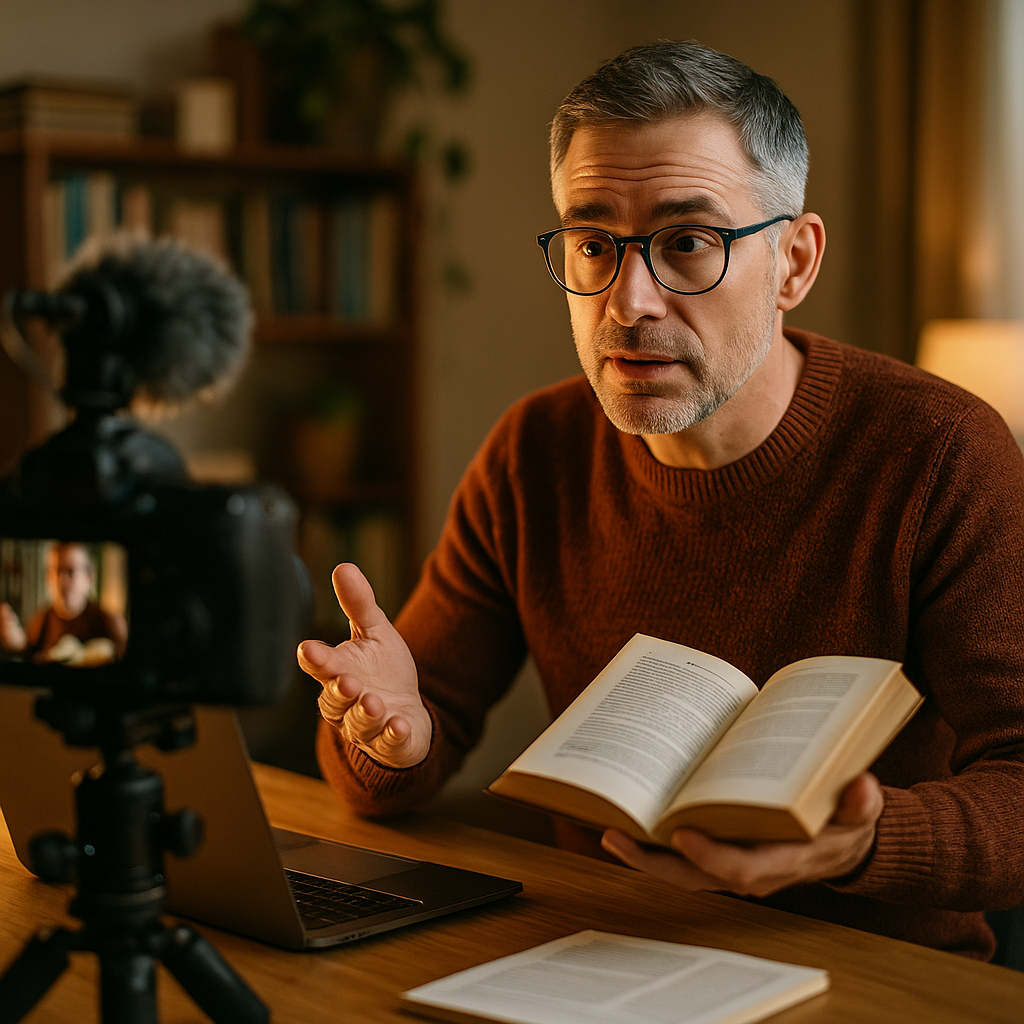
Google’s own search quality raters manual dedicates entire sections to expertise and trustworthiness — and in 2026, that same scrutiny has landed squarely on influencer marketing. A creator with three million followers and zero domain credibility is now a liability, not an asset. So why are brands still signing them?
They aren’t, not as much anyway. The smart ones have pivoted hard toward expert creators: the dermatologist who happens to post skincare routines, the CPA who breaks down tax law on TikTok, the licensed contractor reviewing power tools. This is the E-E-A-T influencer shift, and it’s rewriting how brands allocate budget, vet talent, and measure trust.
The Trust Recession Meets a Search Algorithm
Two forces collided to make this happen. First, consumer trust in generic influencer endorsements has been sliding for years. Sprout Social’s data already showed that buyers act on trust, not reach, and that gap has only widened. Second, and more structurally important, is what’s happening in search and AI.
Google’s Search Quality Evaluator Guidelines have long emphasized Experience, Expertise, Authoritativeness, and Trustworthiness as ranking signals for content, especially in “Your Money or Your Life” categories like health, finance, and safety. What’s new is that generative AI systems, Google’s AI Overviews, ChatGPT search, Perplexity, are pulling from the same signal set when deciding whose content gets cited and summarized. If your brand’s influencer content lacks a credentialed source, it may simply not surface in AI-generated answers at all.
That’s a direct hit to visibility. Half of shoppers now let AI research products for them, according to recent survey data, which means the influencer content brands publish has to satisfy a machine’s credibility check before it ever reaches a human.
If AI systems won’t cite your influencer content because it lacks demonstrable expertise, that content has already lost half its value before a single human reads it.
What “Expert Creator” Actually Means (It’s Not Just a Job Title)
Let’s be precise, because “expert” gets thrown around loosely in creator briefs. An expert creator, in the E-E-A-T sense, has some combination of:
- Verifiable credentials (licenses, degrees, certifications, years in a regulated profession)
- First-hand experience with the product category, not just a paid trial
- A public track record of content in that niche predating the brand deal
- Recognition from peers or institutions, citations, awards, media mentions
Contrast that with the traditional influencer casting brief: follower count, engagement rate, aesthetic fit, maybe a vague “passion for the category.” None of that maps to E-E-A-T. A beauty influencer with gorgeous production value isn’t automatically an expert. A licensed esthetician with a shaky ring light might be.
This is why follower count is fading as a discovery signal. Platforms and brands alike are building new vetting layers around credentials, not just reach metrics.
Why Brands Are Making the Switch Now
Three practical pressures are pushing budget toward expert creators this cycle.
Regulatory exposure is rising. The FTC has sharpened its focus on deceptive endorsements, especially in health, finance, and supplements. Brands working with unqualified creators making medical or financial claims face real enforcement risk. Check the FTC’s endorsement guidance and you’ll see the bar for substantiation keeps climbing. An expert creator with actual credentials is inherently lower-risk: they’re less likely to make claims they can’t back up, and if they do, the brand has a stronger defense.
AI visibility now depends on it. As covered in our piece on zero-click search and AI visibility, brands are rebuilding attribution models around whether their content gets surfaced in AI answers at all, not just whether it ranks on page one. Expert-created content, with clear bylines, credentials, and citations, performs better in that environment. Google’s own guidance on creating helpful, reliable content reinforces the same principle: demonstrated expertise wins.
ROI math has shifted. Generic influencer costs have crept up across nearly every tier. Micro-creator rates have surged to the point where procurement teams are rebuilding rate cards from scratch. When you’re paying premium rates anyway, the marginal cost of hiring a genuine subject-matter expert over a generalist with a similar following is often negligible. Brands are asking: why pay lifestyle-influencer rates for someone with no actual authority in the category?
The Category Breakdown: Where Expertise Matters Most
Not every vertical needs a PhD. But some absolutely do, and brands are learning that the hard way.
Health and wellness is ground zero. Nutritionists, registered dietitians, and licensed therapists are commanding premium rates precisely because generic wellness influencers can’t legally or credibly make the claims brands want made. A protein powder brand partnering with an unlicensed “wellness coach” is one bad claim away from an FTC letter.
Financial services follows close behind. Fin-fluencers without credentials have been a compliance nightmare for years. Brands in fintech, insurance, and investing are now requiring CFP, CFA, or equivalent credentials before signing creator contracts, not as a nice-to-have but as a contractual gate.
Home services and skilled trades are quieter but growing fast. Licensed electricians, plumbers, and contractors reviewing tools or materials carry authority that a generalist home-content creator simply cannot fake.
B2B and SaaS deserve a mention too. The rise of practitioner-creators, actual CMOs, data scientists, and engineers posting about their real work, has paralleled the broader shift documented in Chief Creator Officer roles reshaping org design. B2B buyers trust peers with real operational experience far more than polished brand ambassadors.
Vetting Expertise: What Procurement Needs to Add to the Brief
Casting for expertise requires a different intake process than casting for reach. Here’s what’s showing up in creator briefs now:
- Credential verification, not just a self-reported bio line
- Content history audit, does their pre-brand-deal content actually reflect the claimed expertise?
- Disclosure language reviewed against FTC standards before publishing
- Citation-readiness, can this creator’s content be referenced as a legitimate source by AI summarization tools?
- Cross-platform consistency, is the expertise credible on LinkedIn and TikTok alike, or only where it’s convenient?
This is more labor-intensive than pulling a media kit and checking engagement rate. It’s also why UGC operations have matured into full licensing and vetting workflows rather than ad hoc DM outreach. Brands running influencer programs at scale are building the same rigor into expert-creator sourcing that they’ve applied to rights management and usage licensing.
Vetting for expertise costs more upfront than vetting for reach. It costs far less than a retraction, an FTC inquiry, or content that AI systems simply refuse to surface.
The Trade-Off Nobody Likes to Admit
Expert creators aren’t a universal upgrade. They often have smaller audiences. Their content can be less polished, less viral, more clinical. A board-certified dermatologist isn’t going to out-dance a 22-year-old with a ring light and a trending sound.
That’s fine, because the job has changed. This isn’t about winning the algorithm’s attention economy anymore; it’s about winning the credibility test that both humans and AI systems now apply. Brands running mixed portfolios, some reach-driven creators for top-of-funnel awareness, some expert creators for consideration and trust-building, are seeing the best results. Pure reach plays are increasingly siloed to categories where trust matters less: entertainment, fashion trends, low-stakes lifestyle content.
Where the stakes are higher, health claims, financial advice, safety-related products, expertise isn’t a nice differentiator. It’s the entry ticket.
Where Budget Is Actually Moving
Forecasts back this up directionally. Creator economy investment is projected to keep climbing, with one $21B creator investment forecast signaling a broader budget shift toward more structured, credentialed creator relationships rather than one-off influencer posts. Meanwhile, brands are increasingly pairing performance data with expertise vetting, tying pay to outcomes rather than just impressions, a trend detailed in coverage of performance-based contracts rewiring influencer pay. Expert creators, it turns out, often convert better anyway, which makes the performance-pay model even more favorable for brands willing to make the switch.
Industry benchmarking from firms like eMarketer and Statista continues to track rising influencer marketing spend overall, but the qualitative shift toward credentialed, niche-authority creators is the story underneath the topline number. Platforms like Meta for Business and TikTok Ads have both introduced creator discovery filters that increasingly surface professional and credentialed accounts, a tacit acknowledgment that advertisers are asking for it.
FAQs
Frequently Asked Questions
What does E-E-A-T mean for influencer marketing specifically?
E-E-A-T stands for Experience, Expertise, Authoritativeness, and Trustworthiness, a framework Google uses to evaluate content quality. Applied to influencers, it means brands now prioritize creators with verifiable credentials and real-world experience in their niche over creators chosen primarily for follower count or engagement metrics.
Are expert creators more expensive than generic influencers?
Not necessarily. Many credentialed niche experts have smaller followings and charge comparable or lower rates than mid-tier lifestyle influencers, especially as micro-creator rates have risen across the board. The value comes from lower compliance risk and stronger conversion, not from a lower price tag alone.
Which industries benefit most from expert creators?
Health and wellness, financial services, legal, home services and skilled trades, and B2B/SaaS see the biggest lift, largely because these categories carry regulatory risk or require specialized knowledge that generalist influencers can’t credibly provide.
How do brands verify a creator’s expertise before signing a contract?
Best practice includes checking licenses or certifications directly with issuing bodies, auditing the creator’s content history for consistency, and reviewing past disclosures for FTC compliance. Some brands now build this verification step directly into procurement workflows alongside standard media-kit review.
Does AI search actually favor expert-created influencer content?
Generative AI tools like Google’s AI Overviews and other AI search assistants tend to prioritize content with clear authorship, credentials, and citations when generating summaries or answers. Content lacking demonstrable expertise is less likely to be surfaced, which directly affects a brand’s visibility in AI-driven search results.
Is reach-based influencer marketing becoming obsolete?
No, but its role is narrowing. Reach-driven creators still work well for top-of-funnel awareness and low-stakes categories like entertainment or trend content. For consideration-stage and trust-sensitive categories, expert creators are increasingly the better investment.
Next step: audit your current creator roster against E-E-A-T criteria this quarter, flag any partnerships making health, financial, or safety claims without credential backing, and reallocate at least one test budget line toward a verified subject-matter expert before your next campaign cycle.
Frequently Asked Questions
What does E-E-A-T mean for influencer marketing specifically?
E-E-A-T stands for Experience, Expertise, Authoritativeness, and Trustworthiness, a framework Google uses to evaluate content quality. Applied to influencers, it means brands now prioritize creators with verifiable credentials and real-world experience in their niche over creators chosen primarily for follower count or engagement metrics.
Are expert creators more expensive than generic influencers?
Not necessarily. Many credentialed niche experts have smaller followings and charge comparable or lower rates than mid-tier lifestyle influencers, especially as micro-creator rates have risen across the board. The value comes from lower compliance risk and stronger conversion, not from a lower price tag alone.
Which industries benefit most from expert creators?
Health and wellness, financial services, legal, home services and skilled trades, and B2B/SaaS see the biggest lift, largely because these categories carry regulatory risk or require specialized knowledge that generalist influencers can’t credibly provide.
How do brands verify a creator’s expertise before signing a contract?
Best practice includes checking licenses or certifications directly with issuing bodies, auditing the creator’s content history for consistency, and reviewing past disclosures for FTC compliance. Some brands now build this verification step directly into procurement workflows alongside standard media-kit review.
Does AI search actually favor expert-created influencer content?
Generative AI tools like Google’s AI Overviews and other AI search assistants tend to prioritize content with clear authorship, credentials, and citations when generating summaries or answers. Content lacking demonstrable expertise is less likely to be surfaced, which directly affects a brand’s visibility in AI-driven search results.
Is reach-based influencer marketing becoming obsolete?
No, but its role is narrowing. Reach-driven creators still work well for top-of-funnel awareness and low-stakes categories like entertainment or trend content. For consideration-stage and trust-sensitive categories, expert creators are increasingly the better investment.
Top Influencer Marketing Agencies
The leading agencies shaping influencer marketing in 2026
Agencies ranked by campaign performance, client diversity, platform expertise, proven ROI, industry recognition, and client satisfaction. Assessed through verified case studies, reviews, and industry consultations.
Moburst

-
2

The Shelf
Boutique Beauty & Lifestyle Influencer AgencyA data-driven boutique agency specializing exclusively in beauty, wellness, and lifestyle influencer campaigns on Instagram and TikTok. Best for brands already focused on the beauty/personal care space that need curated, aesthetic-driven content.Clients: Pepsi, The Honest Company, Hims, Elf Cosmetics, Pure LeafVisit The Shelf → -
3

Audiencly
Niche Gaming & Esports Influencer AgencyA specialized agency focused exclusively on gaming and esports creators on YouTube, Twitch, and TikTok. Ideal if your campaign is 100% gaming-focused — from game launches to hardware and esports events.Clients: Epic Games, NordVPN, Ubisoft, Wargaming, Tencent GamesVisit Audiencly → -
4

Viral Nation
Global Influencer Marketing & Talent AgencyA dual talent management and marketing agency with proprietary brand safety tools and a global creator network spanning nano-influencers to celebrities across all major platforms.Clients: Meta, Activision Blizzard, Energizer, Aston Martin, WalmartVisit Viral Nation → -
5

The Influencer Marketing Factory
TikTok, Instagram & YouTube CampaignsA full-service agency with strong TikTok expertise, offering end-to-end campaign management from influencer discovery through performance reporting with a focus on platform-native content.Clients: Google, Snapchat, Universal Music, Bumble, YelpVisit TIMF → -
6

NeoReach
Enterprise Analytics & Influencer CampaignsAn enterprise-focused agency combining managed campaigns with a powerful self-service data platform for influencer search, audience analytics, and attribution modeling.Clients: Amazon, Airbnb, Netflix, Honda, The New York TimesVisit NeoReach → -
7

Ubiquitous
Creator-First Marketing PlatformA tech-driven platform combining self-service tools with managed campaign options, emphasizing speed and scalability for brands managing multiple influencer relationships.Clients: Lyft, Disney, Target, American Eagle, NetflixVisit Ubiquitous → -
8

Obviously
Scalable Enterprise Influencer CampaignsA tech-enabled agency built for high-volume campaigns, coordinating hundreds of creators simultaneously with end-to-end logistics, content rights management, and product seeding.Clients: Google, Ulta Beauty, Converse, AmazonVisit Obviously →