


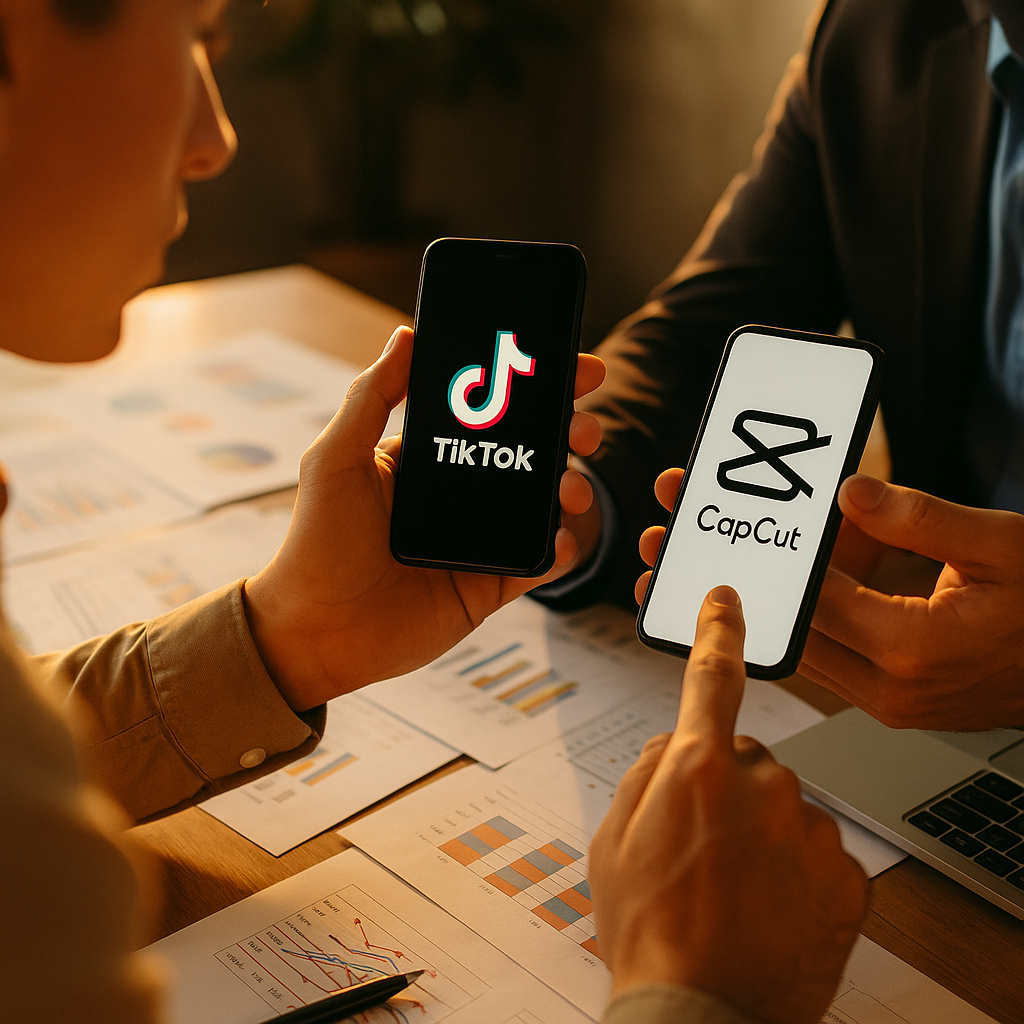
ByteDance now runs one of the largest centralized creator partnership operations in the world, and most brands still treat it like a regional TikTok rep问题. That gap is about to cost advertisers real money. As ByteDance consolidates its global creator partnerships org into a unified structure spanning TikTok, CapCut, and Lemon8, the question every brand strategist should be asking isn’t “who’s our TikTok contact” but “how does this restructuring change our access, our leverage, and our risk exposure.”
Why ByteDance Is Consolidating Now
For years, ByteDance ran creator partnerships as loosely federated regional teams. TikTok Shop had its own creator ops in Southeast Asia. CapCut had a separate creator education arm. Lemon8 built its own influencer relationships almost from scratch. That fragmentation made sense when each product was fighting for survival independently. It stopped making sense once ByteDance decided its apps needed to function as a single creator economy ecosystem rather than a portfolio of unrelated bets.
The consolidation mirrors what we’ve already seen with Lemon8’s positioning as a hedge against TikTok regulatory risk in the US. If Lemon8 needs to absorb TikTok creators quickly during a disruption event, ByteDance can’t afford siloed relationship management. A unified creator partnerships org means one company can move a creator’s brand deal, content rights, and payment terms across apps without renegotiating from zero. That’s operational efficiency for ByteDance. For brands, it’s a fundamentally different negotiating table.
A single ByteDance creator org controlling access across TikTok, CapCut, and Lemon8 means brands are no longer negotiating with one platform. They’re negotiating with one company that owns three distribution surfaces and the creator relationships that move between them.
What Changes for Advertiser Access
Here’s the practical shift: brands used to build separate creator pipelines for each app. Now, a consolidated ByteDance org likely means tiered advertiser access programs that span the whole ecosystem, not unlike how TikTok’s ads platform already segments spend tiers for premium support. Expect similar logic applied to creator partnerships: agencies and brands hitting certain spend thresholds get priority creator matching, faster campaign approvals, and early access to new formats like Symphony’s AI-assisted creator tools.
Smaller brands and mid-market advertisers should brace for a widening gap. If ByteDance formalizes tiered access the way Meta and Google have with their own partner programs, the brands without dedicated account reps will increasingly compete for scraps of creator inventory. This isn’t speculation, it’s the same pattern we’ve tracked with martech consolidation forcing bundled pricing renegotiations across the industry. Platform consolidation almost always produces access stratification.
- Unified creator vetting and verification across TikTok, CapCut, and Lemon8
- Cross-app campaign packaging (a TikTok video repurposed as CapCut template content and Lemon8 lifestyle posts)
- Centralized dispute resolution for creator payment and content rights issues
- Faster onboarding for agencies managing enterprise-scale creator rosters
The ROI Case Brands Need to Make Internally
Marketing leaders pitching bigger creator budgets to finance teams need to reframe this consolidation as a distribution multiplier, not just a platform update. A single creator relationship negotiated through the new ByteDance org can theoretically activate content across three apps instead of one. That changes the math on cost-per-creator and cost-per-impression models that most brands are still running on outdated, single-platform assumptions.
But there’s a catch. Cross-app activation only pays off if your measurement stack can actually attribute performance across surfaces. Most brands can’t do that today. This is the same blind spot flagged in APAC platform fragmentation research, where attribution models built for one platform break down the moment content moves across regional or app boundaries. If ByteDance is about to make cross-app creator campaigns the default, brands need attribution infrastructure that can follow a creator’s content across TikTok, CapCut, and Lemon8 without losing the thread on which surface actually drove the conversion.
Marketing leaders should also expect internal pushback. Finance and legal teams already distrust performance data coming out of influencer programs. Adding a third and fourth app to the reporting mix without solving the underlying trust problem is going to make budget approvals harder, not easier.
Compliance and Risk: The Part Nobody Wants to Talk About
Consolidating creator partnerships under one org also consolidates risk. If ByteDance centralizes contract templates, payment rails, and content rights agreements across apps, a single legal misstep (a vague usage rights clause, an unclear disclosure requirement) now propagates across every app a creator operates on. Brands running influencer programs across TikTok and Lemon8 simultaneously need to audit whether their creator agreements actually specify which platform’s content rights apply where.
This isn’t hypothetical. We’ve already documented how payment delays expose brands to legal risk, and how fast-scaling creator programs tend to outpace the legal and finance systems meant to support them. A centralized ByteDance creator org moving faster than brand-side compliance teams can adapt is a recipe for exactly the kind of contract ambiguity that regulators care about. Brands should be reviewing disclosure practices now, not after an FTC inquiry forces the issue.
What This Means for Agencies and In-House Teams
Agencies managing multi-platform creator rosters are probably best positioned to benefit here, assuming they build relationships with ByteDance’s new consolidated org early. In-house teams without agency support will likely feel the squeeze first. If ByteDance’s account management structure favors bigger spenders and established partners (which every platform consolidation move historically does), smaller in-house teams need a plan B that doesn’t depend entirely on platform goodwill.
That plan B increasingly looks like diversifying casting sources beyond platform-recommended creators. Brands leaning on UGC casting platforms that prioritize skill over follower count are less exposed to shifts in any single platform’s creator recommendation algorithm. It’s a hedge worth building regardless of how ByteDance’s consolidation plays out, because platform dependency has always been the single biggest operational risk in influencer marketing.
There’s also a talent implication worth flagging. As ByteDance’s creator org gets more sophisticated about matching brands to creators at scale, the creators who win are increasingly the ones with strong data fluency alongside video talent. Brands casting through a consolidated ByteDance system should expect creator recommendations to lean toward performance-provable talent, not just high-follower accounts.
How Brands Should Prepare in the Next Two Quarters
Waiting to see how this shakes out isn’t a strategy. Here’s what forward-looking brand teams should be doing right now.
- Audit your current ByteDance relationships. Know who your account contacts are across TikTok, CapCut, and Lemon8, and flag where those relationships overlap or conflict.
- Update creator contract templates. Make sure content rights and disclosure language explicitly account for cross-app repurposing.
- Pressure-test your attribution stack. If you can’t currently track a piece of creator content across two ByteDance apps, fix that before cross-app campaigns become the default offering.
- Diversify casting sources. Don’t let platform-recommended creator matching become your only pipeline.
- Loop in legal early. Payment terms and usage rights need review before, not after, a consolidated org changes the default contract structure.
Brands that treat this as a minor account management update will miss the actual shift underway. This is ByteDance building creator economy infrastructure that spans its entire app portfolio, and the brands that adapt their compliance and measurement systems early will have first-mover advantage on cross-app campaign packages that competitors won’t be ready to execute for another two or three quarters.
Frequently Asked Questions
What is ByteDance’s global creator partnerships org?
It’s the consolidated team structure ByteDance is building to manage creator relationships, brand partnerships, and campaign operations across all its apps, including TikTok, CapCut, and Lemon8, rather than running each app’s creator program separately.
Does this consolidation affect TikTok Shop creator programs specifically?
Yes. TikTok Shop’s creator affiliate and partnership programs are expected to align more closely with broader ByteDance creator standards, which affects vetting, payment timelines, and cross-app content rights for commerce-focused creators.
Will smaller brands lose access to top creators under this new structure?
Smaller brands without dedicated account management or agency support are likely to see reduced priority access, similar to tiered advertiser programs on other major platforms. Diversifying creator sourcing beyond platform recommendations is a reasonable hedge.
How should brands update creator contracts in response?
Contracts should explicitly define content usage rights and disclosure requirements per app, not assume a single blanket agreement covers cross-app repurposing on TikTok, CapCut, and Lemon8.
What’s the biggest risk brands are overlooking?
Attribution. Most brands lack the measurement infrastructure to track creator content performance across multiple ByteDance apps, which undermines the ROI case for cross-app campaign packages the consolidated org is likely to promote.
Top Influencer Marketing Agencies
The leading agencies shaping influencer marketing in 2026
Agencies ranked by campaign performance, client diversity, platform expertise, proven ROI, industry recognition, and client satisfaction. Assessed through verified case studies, reviews, and industry consultations.
Moburst

-
2

The Shelf
Boutique Beauty & Lifestyle Influencer AgencyA data-driven boutique agency specializing exclusively in beauty, wellness, and lifestyle influencer campaigns on Instagram and TikTok. Best for brands already focused on the beauty/personal care space that need curated, aesthetic-driven content.Clients: Pepsi, The Honest Company, Hims, Elf Cosmetics, Pure LeafVisit The Shelf → -
3

Audiencly
Niche Gaming & Esports Influencer AgencyA specialized agency focused exclusively on gaming and esports creators on YouTube, Twitch, and TikTok. Ideal if your campaign is 100% gaming-focused — from game launches to hardware and esports events.Clients: Epic Games, NordVPN, Ubisoft, Wargaming, Tencent GamesVisit Audiencly → -
4

Viral Nation
Global Influencer Marketing & Talent AgencyA dual talent management and marketing agency with proprietary brand safety tools and a global creator network spanning nano-influencers to celebrities across all major platforms.Clients: Meta, Activision Blizzard, Energizer, Aston Martin, WalmartVisit Viral Nation → -
5

The Influencer Marketing Factory
TikTok, Instagram & YouTube CampaignsA full-service agency with strong TikTok expertise, offering end-to-end campaign management from influencer discovery through performance reporting with a focus on platform-native content.Clients: Google, Snapchat, Universal Music, Bumble, YelpVisit TIMF → -
6

NeoReach
Enterprise Analytics & Influencer CampaignsAn enterprise-focused agency combining managed campaigns with a powerful self-service data platform for influencer search, audience analytics, and attribution modeling.Clients: Amazon, Airbnb, Netflix, Honda, The New York TimesVisit NeoReach → -
7

Ubiquitous
Creator-First Marketing PlatformA tech-driven platform combining self-service tools with managed campaign options, emphasizing speed and scalability for brands managing multiple influencer relationships.Clients: Lyft, Disney, Target, American Eagle, NetflixVisit Ubiquitous → -
8

Obviously
Scalable Enterprise Influencer CampaignsA tech-enabled agency built for high-volume campaigns, coordinating hundreds of creators simultaneously with end-to-end logistics, content rights management, and product seeding.Clients: Google, Ulta Beauty, Converse, AmazonVisit Obviously →