


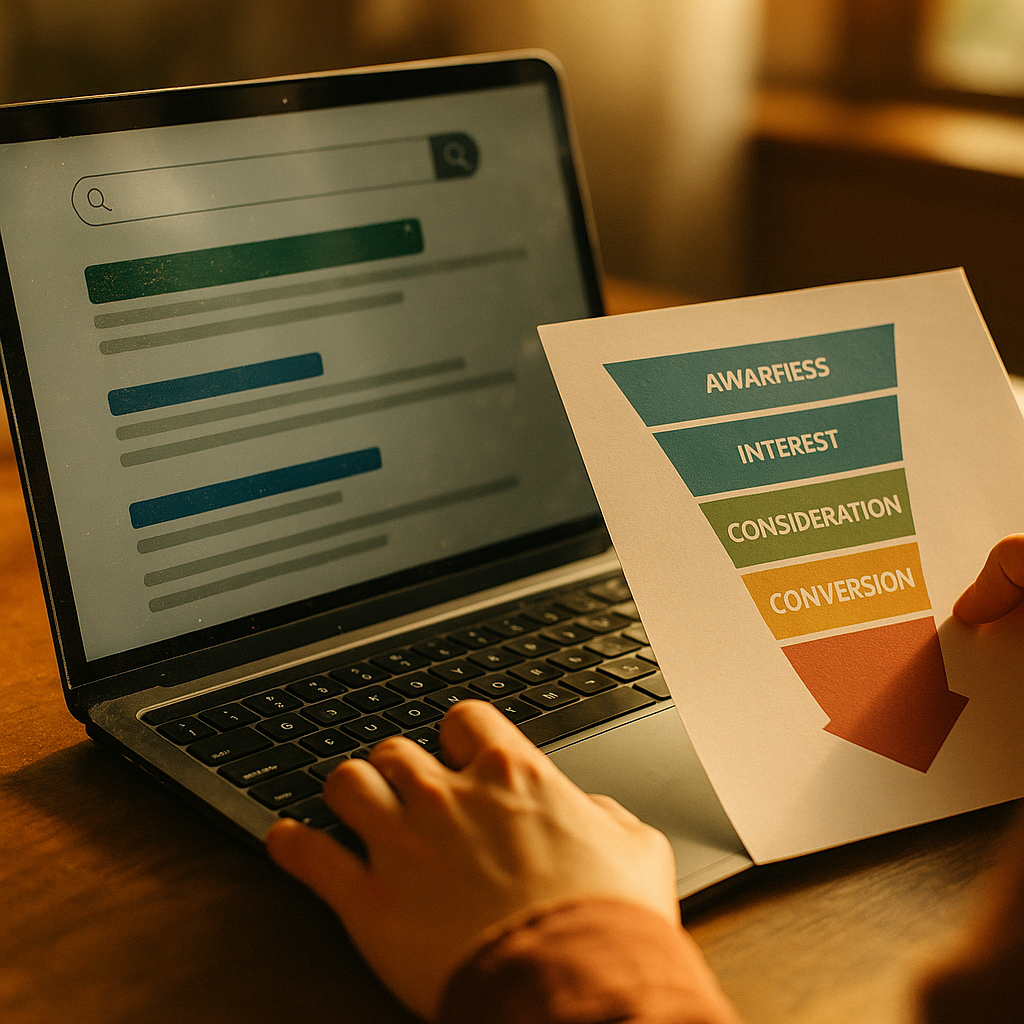
Half of all product-related searches on Google now end without a single click to a brand’s website. Zero-click search isn’t a fringe phenomenon anymore — it’s the default outcome for consumers researching what to buy. If your funnel still assumes a search-to-site journey, you’re optimizing for a customer path that barely exists.
This isn’t a minor algorithm tweak. It’s a structural shift in how discovery works, and it’s forcing marketers to rethink attribution, content strategy, and where budget actually belongs.
The Numbers Behind the Shift
Google has spent years layering AI Overviews, featured snippets, knowledge panels, and shopping carousels directly onto the search results page. The goal, from Google’s perspective, is obvious: keep users inside the Google ecosystem longer. The cost to brands is equally obvious — fewer referral clicks, less traffic, murkier attribution.
Recent industry analyses put zero-click rates for product and commercial-intent queries at roughly 50%, a figure that’s climbed steadily since AI Overviews rolled out broadly. That means a consumer searching “best noise-canceling headphones under $200” or “is this skincare brand cruelty-free” often gets a synthesized answer, a comparison table, or a generative summary — and never sees your product page at all.
When half your top-of-funnel traffic evaporates before a click happens, the funnel isn’t leaking. It’s been rebuilt without your consent.
We covered the early data on this trend in our zero-click search breakdown, and the trajectory hasn’t slowed. If anything, the gap between what Google indexes and what it actually sends traffic for has widened.
Why This Isn’t Just an SEO Problem
It’s tempting to hand this off to the SEO team and move on. That’s a mistake. Zero-click search touches every function that depends on discoverability: paid media, PR, influencer partnerships, product marketing, even customer service content.
Consider what’s actually happening inside an AI Overview. Google (and increasingly, ChatGPT, Perplexity, and Gemini) is pulling from a blend of sources: your product pages, yes, but also reviews, forums, comparison sites, Reddit threads, and — critically — creator content. If a synthesized answer cites a YouTube review or a TikTok comparison instead of your landing page, that creator just captured the consideration-stage moment your paid search budget used to own.
This is why brands leaning into expert creator partnerships are seeing an unexpected upside. Expertise-driven content gets surfaced in AI summaries more often than generic brand copy, because it reads as a credible third-party source rather than marketing.
The Attribution Gap Gets Worse Before It Gets Better
Here’s the uncomfortable truth: most attribution models still assume a visible click. Multi-touch attribution, last-click, even data-driven models in Google Ads — they all need a session to hang the credit on. Zero-click search removes that session entirely. The consumer researches, decides, and sometimes purchases, all without a trackable interaction.
So what shows up in your dashboard? A drop in organic traffic with no obvious cause, rising direct traffic (because people just type your brand name after seeing it in an AI summary), and a paid search team wondering why cost-per-click keeps climbing on branded terms that used to convert cheaply.
We detailed a more rigorous approach to this problem in our attribution framework piece, but the short version: you need to measure visibility, not just clicks. That means tracking share-of-voice inside AI Overviews, brand mention frequency across LLM outputs, and directional lift in branded search and direct traffic when you increase presence in third-party content.
What Actually Still Gets Clicked
Not all queries are created equal. Zero-click rates are highest for informational and comparison queries — “what is retinol,” “best budget laptops,” “is X supplement safe.” They’re lower for highly specific, transactional, or brand-name queries where the user already knows what they want and just needs to complete a purchase.
That distinction matters for budget allocation. If your paid search spend is concentrated on broad, top-of-funnel keywords, you’re fighting Google’s own AI layer for visibility, and losing traffic you’re still paying for. If it’s concentrated on branded and long-tail transactional terms, you’re in better shape — those queries still tend to produce clicks.
Retailers are already feeling this at scale. Target’s recent surge in AI-driven traffic exposed gaps in product data that most brands never bothered to fix, because historically, a human shopper could tolerate a messy spec sheet. An AI agent summarizing your product for a zero-click answer cannot. If your structured data, product attributes, and review content aren’t clean, you simply won’t get cited.
Rebuilding the Funnel: Where to Actually Put Effort
So if clicks aren’t coming, where does the funnel go? Three places: owned distribution, creator-driven third-party validation, and structured content that AI systems can actually parse and cite.
- Invest in citability, not just rankability. Structured data, clear product specs, FAQ schema, and comparison-friendly content all increase the odds an AI system quotes you directly. Ranking #1 no longer guarantees visibility if the AI Overview pulls from a different source entirely.
- Shift budget toward creator content that functions as third-party proof. Reviews, comparisons, and unboxings from credible creators get surfaced in AI answers far more often than brand-owned pages. This is part of why smaller, niche creators are capturing more spend — their content reads as authentic and specific, which both consumers and AI models weight heavily.
- Build direct relationships that don’t depend on search at all. Email, SMS, owned communities, loyalty programs. If discovery is getting harder, retention and repeat purchase become proportionally more valuable.
- Treat AI platforms as a new distribution channel, not a threat to ignore. Monitor how ChatGPT, Perplexity, and Gemini describe your brand and category. If competitors are cited and you’re not, that’s a content gap you can close.
None of this replaces SEO. It reframes it. The goal shifts from “rank on page one” to “be the source AI systems and creators cite when someone asks about your category.”
UGC and Reviews as Structured Data, Sort Of
Here’s an underappreciated angle: user-generated content and creator reviews function almost like structured data for AI models. They’re specific, detailed, and framed as answers to real questions (“does this actually work for oily skin,” “is this worth the upgrade price”). That’s exactly the format AI Overviews prefer to cite.
Brands scaling UGC programs should think about this explicitly. Contracts and usage rights are already evolving to reflect content’s expanded lifespan — see how UGC contracts are adapting globally to account for content that gets reused, repurposed, and now, potentially, summarized by an AI model without direct compensation to the creator or brand. That’s a legal and commercial question the industry hasn’t fully settled yet.
Measuring Success When the Click Disappears
If clicks aren’t the metric, what is? A few approaches worth adopting now:
- Share of model voice. Regularly query ChatGPT, Gemini, and Perplexity with category-relevant questions and track how often your brand appears, in what context, and alongside which competitors.
- Branded search lift. If your visibility campaigns (PR, creator content, category authority pieces) are working, branded search volume and direct traffic should rise even as non-branded organic clicks fall.
- Incrementality testing. Run geo-based or platform-based holdouts on creator and content investment to isolate lift that dashboard attribution can’t capture.
- Assisted conversions via survey data. Post-purchase “how did you hear about us” surveys are unglamorous, but they catch the zero-click journeys your analytics stack misses entirely.
Marketing leaders should also expect martech vendors to build for this reality. AI-native platforms are already consolidating point solutions to handle exactly this kind of cross-channel, low-click attribution — a trend we broke down in our look at AI-native martech suites. If your stack can’t tell you how often your brand shows up in an AI answer, it’s already behind.
For broader context on how search behavior is evolving at the platform level, Google’s own search documentation and third-party trend data from eMarketer and Statista are worth monitoring quarterly, not annually. This shift is moving faster than most reporting cycles.
What This Means for Budget Conversations Next Quarter
Finance teams love clean attribution. Zero-click search takes that away, which means marketing leaders need a better story than “trust us.” The strongest position: reframe search and content spend as brand visibility infrastructure, measured through share of voice and branded lift, while shifting a meaningful chunk of budget toward creator partnerships and owned channels that produce trackable, direct relationships.
That’s a harder pitch than a clean ROAS number. But it’s an honest one, and it’s the pitch every brand competing in a zero-click world will need to make eventually.
Next step: Audit your top 20 non-branded, informational-intent keywords this month. If AI Overviews dominate those results, redirect the budget you were spending to defend rankings there into creator-driven third-party content and structured product data instead — that’s where the visibility actually lives now.
FAQs
What is zero-click search?
Zero-click search refers to search queries where the user gets their answer directly on the results page — through featured snippets, AI Overviews, knowledge panels, or other elements — without clicking through to any website.
Why has zero-click search increased so much?
Google has expanded AI-generated summaries and answer boxes across more query types, especially informational and product-comparison searches. The company’s incentive is to keep users on Google’s own results page rather than send them elsewhere.
Does zero-click search affect paid search too, or just organic?
Both. AI Overviews and answer boxes reduce organic clicks, but they also change how users interact with paid ads on the same page, and can increase cost-per-click on branded and competitive terms as fewer total clicks are available to bid on.
How can brands measure success if clicks are declining?
Shift toward visibility metrics: share of voice inside AI Overviews and chatbot responses, branded search volume, direct traffic lift, and incrementality testing. Post-purchase attribution surveys also help capture zero-click journeys that analytics platforms miss.
Does creator content perform better than brand content in AI search results?
Often, yes. AI systems tend to favor content that reads as independent and specific — reviews, comparisons, and creator testimonials — over brand-authored marketing copy, because it functions as third-party validation rather than promotion.
Should brands stop investing in SEO because of zero-click search?
No. SEO fundamentals still matter, but the goal shifts from ranking for clicks to being the cited source inside AI-generated answers. Structured data, clear product specs, and authoritative third-party content all improve citability.
FAQs
Top Influencer Marketing Agencies
The leading agencies shaping influencer marketing in 2026
Agencies ranked by campaign performance, client diversity, platform expertise, proven ROI, industry recognition, and client satisfaction. Assessed through verified case studies, reviews, and industry consultations.
Moburst

-
2

The Shelf
Boutique Beauty & Lifestyle Influencer AgencyA data-driven boutique agency specializing exclusively in beauty, wellness, and lifestyle influencer campaigns on Instagram and TikTok. Best for brands already focused on the beauty/personal care space that need curated, aesthetic-driven content.Clients: Pepsi, The Honest Company, Hims, Elf Cosmetics, Pure LeafVisit The Shelf → -
3

Audiencly
Niche Gaming & Esports Influencer AgencyA specialized agency focused exclusively on gaming and esports creators on YouTube, Twitch, and TikTok. Ideal if your campaign is 100% gaming-focused — from game launches to hardware and esports events.Clients: Epic Games, NordVPN, Ubisoft, Wargaming, Tencent GamesVisit Audiencly → -
4

Viral Nation
Global Influencer Marketing & Talent AgencyA dual talent management and marketing agency with proprietary brand safety tools and a global creator network spanning nano-influencers to celebrities across all major platforms.Clients: Meta, Activision Blizzard, Energizer, Aston Martin, WalmartVisit Viral Nation → -
5

The Influencer Marketing Factory
TikTok, Instagram & YouTube CampaignsA full-service agency with strong TikTok expertise, offering end-to-end campaign management from influencer discovery through performance reporting with a focus on platform-native content.Clients: Google, Snapchat, Universal Music, Bumble, YelpVisit TIMF → -
6

NeoReach
Enterprise Analytics & Influencer CampaignsAn enterprise-focused agency combining managed campaigns with a powerful self-service data platform for influencer search, audience analytics, and attribution modeling.Clients: Amazon, Airbnb, Netflix, Honda, The New York TimesVisit NeoReach → -
7

Ubiquitous
Creator-First Marketing PlatformA tech-driven platform combining self-service tools with managed campaign options, emphasizing speed and scalability for brands managing multiple influencer relationships.Clients: Lyft, Disney, Target, American Eagle, NetflixVisit Ubiquitous → -
8

Obviously
Scalable Enterprise Influencer CampaignsA tech-enabled agency built for high-volume campaigns, coordinating hundreds of creators simultaneously with end-to-end logistics, content rights management, and product seeding.Clients: Google, Ulta Beauty, Converse, AmazonVisit Obviously →