


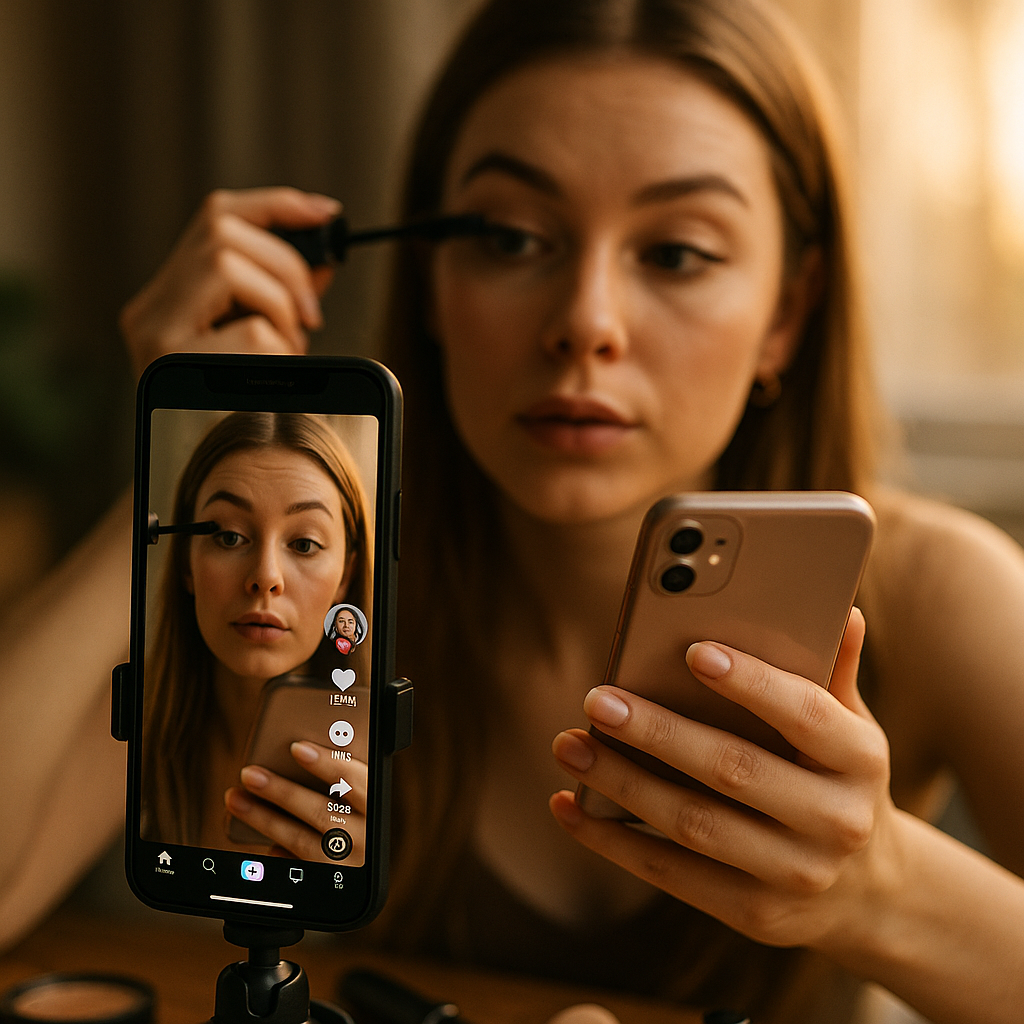
A creator with 4,000 followers just outsold a beauty brand’s own paid campaign featuring a 2-million-follower influencer. That’s not an anomaly anymore. It’s the discovery-led algorithm at work, and it’s quietly rewriting how beauty brands should allocate influencer budgets in 2026.
TikTok never cared much about follower count. What’s changed is how aggressively that indifference now rewards (or punishes) beauty brands still buying reach the old way.
The Follower Count Illusion Is Finally Collapsing
For years, beauty marketers treated follower count as a proxy for influence. It was easy to buy, easy to report to the CMO, and easy to compare across creators. It was also, increasingly, a lie.
TikTok’s recommendation system doesn’t distribute content based on audience size. It distributes based on completion rate, rewatches, shares, and how fast a video earns engagement in its first few hundred impressions. A creator with 6,000 followers can outperform one with 600,000 if their content resonates in that critical early window. Sprout Social and other social analytics firms have documented this pattern repeatedly: engagement velocity, not audience size, predicts reach on TikTok far better than it does on Instagram or YouTube.
That’s a structural difference, not a minor algorithm tweak. Instagram’s Explore and Reels still lean partly on existing follower relationships and prior account performance. TikTok’s For You Page treats almost every video as a fresh audition. For beauty brands, this means a nano-creator testing a new serum in their bathroom lighting has the same shot at going viral as a paid celebrity partnership, sometimes a better shot, because raw, low-production content often signals authenticity to the algorithm and to viewers.
On TikTok, a 4,000-follower beauty creator with strong watch-through rates can out-distribute a 2-million-follower account with weak engagement. Reach is earned per video, not inherited from audience size.
Why Beauty Specifically Is Ground Zero
Beauty is uniquely suited to discovery-led distribution, and that’s not an accident. Skincare and makeup content is visual, demonstrable, and endlessly remixable: swatch videos, get-ready-with-me formats, dupe comparisons, “does this actually work” testing series. These formats generate the exact engagement signals TikTok’s algorithm hunts for, high completion rates, comment debates, duet chains.
Compare that to categories like B2B software or financial services, where content is harder to make instantly watchable. Beauty doesn’t have that problem. A single well-shot lip liner swatch can rack up completion rates north of 80%, and TikTok’s system notices immediately.
This is also why beauty brands were early and disproportionate winners on TikTok Shop. The platform’s shoppable video infrastructure meshes naturally with a category where seeing is believing. Our earlier coverage of the TikTok Shop’s forecasted growth flagged CPG and beauty as the categories most likely to shift media dollars away from traditional paid social, and that trend has only accelerated.
What “Engagement-Over-Follower-Count” Actually Rewards
- Watch-through rate: Does the viewer finish the video, or bounce in the first three seconds?
- Rewatch behavior: Tutorial and technique content that gets replayed signals high value to the algorithm.
- Comment velocity: Debate-driving content (“is this dupe actually better?”) outperforms polished, uncontroversial posts.
- Share-to-DM ratio: Private shares are a stronger signal than public likes, and beauty content, especially “you need to see this” product finds, gets shared privately at high rates.
- Save rate: Tutorials and routines get saved for later reference, which TikTok treats as a strong quality signal.
None of these metrics correlate cleanly with follower count. A brand that’s still briefing creators purely on follower tier is optimizing for the wrong scoreboard.
What This Means for Budget Allocation
Here’s the uncomfortable part for a lot of beauty marketing teams: the old tiered influencer model (celebrity, macro, micro, nano, in descending budget order) doesn’t map cleanly onto discovery-led distribution. Spending 70% of a campaign budget on a single macro-influencer partnership makes sense if you’re buying guaranteed impressions. It makes a lot less sense if the algorithm doesn’t care how many people follow that creator.
The smarter allocation, and what leading beauty brands are already doing, is running higher volumes of smaller creator partnerships and letting engagement data pick the winners in real time. Seed a product to thirty micro and nano creators, watch which three or four pieces of content the algorithm starts pushing organically within 48 hours, then put paid amplification behind those specific videos rather than the creators themselves.
This is essentially performance marketing logic applied to influencer seeding, and it requires a different measurement cadence than a traditional campaign brief.
This is exactly the shift our piece on testing frequency as a KPI gets at: brands winning on TikTok right now aren’t the ones with the biggest single bet, they’re the ones running the most tests per week and reallocating fastest when a piece of content shows early velocity.
The Operational Cost Nobody Talks About
Running thirty micro-creator briefs instead of one celebrity contract sounds cheaper. It isn’t automatically simpler. It requires contract management, content rights tracking, payment processing, and disclosure compliance at a scale most beauty marketing teams weren’t staffed for two years ago. This is part of why agencies are hiring data analysts at a rapid clip, and why platforms have shifted their competitive positioning toward operations rather than pure discovery. Our coverage of how influencer platforms now compete on payments rather than discovery tools explains why: discovery is commoditized, but paying and managing 200 micro-creators at scale is still genuinely hard.
Brands that underestimate this operational layer end up with a discovery win and a fulfillment mess: viral video, no inventory plan, delayed creator payments, and a compliance headache when the FTC comes asking about disclosure consistency across dozens of accounts.
Risk and Compliance Don’t Disappear Just Because Reach Is Democratized
A wider, more distributed creator roster means a wider disclosure surface. Every one of those thirty micro-creators needs to follow FTC endorsement guidelines just as strictly as a celebrity partner would. The FTC’s endorsement guidance doesn’t scale down for smaller accounts, and regulators have shown increasing willingness to enforce against brands, not just creators, when disclosure is inconsistent.
TikTok itself has been tightening governance around commerce activity, which beauty brands running high-volume creator programs need to track closely. Recent moves detailed in our reporting on TikTok’s ID verification crackdown and posting caps tied to identity checks both point in the same direction: the platform is professionalizing its creator commerce infrastructure, and brands leaning on high-volume, low-oversight seeding models need compliance workflows that can keep pace.
Is This Just a TikTok Thing, or Is It Spreading?
Worth asking, because the answer changes how much you should restructure your team around this. Instagram has been publicly pushing Reels toward a more discovery-driven model, and Meta executives have talked openly about reducing the weight of follower graphs in favor of interest-based recommendation, something documented in eMarketer’s platform coverage. YouTube Shorts is following a similar trajectory.
So no, this isn’t purely a TikTok phenomenon, but TikTok is clearly the furthest along, and beauty is the category proving it out fastest. Brands that build their measurement and creator-vetting processes around engagement-first logic now will be better positioned as Instagram and YouTube continue drifting the same direction. Brands still built entirely around follower-tier buying will need to rebuild that infrastructure eventually anyway. Better to do it on your own timeline than a platform’s.
This also connects to a broader shift in how discovery works across digital channels generally. As we’ve covered in relation to zero-click search and AI-driven discovery, the throughline across search and social right now is the same: distribution is increasingly decoupled from owned audience size, and increasingly tied to real-time relevance signals. Beauty brands figuring this out on TikTok are, whether they realize it or not, building muscle they’ll need everywhere else too.
What Beauty Brands Should Actually Do Next
Stop briefing by follower tier. Start briefing by content format and hook strength, then let engagement data during the first 48 hours tell you where to put money. Build a seeding program wide enough to generate statistically meaningful engagement signals (think dozens of creators, not three), and have the payment and compliance infrastructure ready before you scale it, not after your first viral moment creates a backlog.
The brands winning beauty on TikTok right now aren’t picking creators. They’re picking content, after the algorithm has already told them which content works.
Frequently Asked Questions
Why does TikTok favor engagement over follower count in beauty content specifically?
Beauty content is highly visual and demonstrable, which produces strong completion rates, rewatches, and shares, the exact signals TikTok’s recommendation system prioritizes regardless of an account’s follower size.
Should beauty brands stop working with large-follower influencers entirely?
No. Large creators still offer brand awareness and credibility value. But brands should stop assuming follower count guarantees algorithmic reach, and should test content broadly across creator sizes before concentrating spend.
How many creators should a beauty brand seed to see engagement patterns emerge?
There’s no fixed number, but most brands running discovery-led programs seed dozens of creators per product launch to generate enough content variations for engagement data to reveal genuine winners.
Does this discovery-led model apply outside of TikTok?
Increasingly, yes. Instagram Reels and YouTube Shorts have both moved toward interest-based recommendation systems that reduce reliance on existing follower relationships, though TikTok remains furthest along in this shift.
What compliance risks come with running high-volume micro-creator programs?
FTC endorsement disclosure requirements apply equally to creators of any size. Brands running large creator rosters need consistent disclosure enforcement across every partner, not just their largest or most visible ones.
Visible FAQ
See above.
Top Influencer Marketing Agencies
The leading agencies shaping influencer marketing in 2026
Agencies ranked by campaign performance, client diversity, platform expertise, proven ROI, industry recognition, and client satisfaction. Assessed through verified case studies, reviews, and industry consultations.
Moburst

-
2

The Shelf
Boutique Beauty & Lifestyle Influencer AgencyA data-driven boutique agency specializing exclusively in beauty, wellness, and lifestyle influencer campaigns on Instagram and TikTok. Best for brands already focused on the beauty/personal care space that need curated, aesthetic-driven content.Clients: Pepsi, The Honest Company, Hims, Elf Cosmetics, Pure LeafVisit The Shelf → -
3

Audiencly
Niche Gaming & Esports Influencer AgencyA specialized agency focused exclusively on gaming and esports creators on YouTube, Twitch, and TikTok. Ideal if your campaign is 100% gaming-focused — from game launches to hardware and esports events.Clients: Epic Games, NordVPN, Ubisoft, Wargaming, Tencent GamesVisit Audiencly → -
4

Viral Nation
Global Influencer Marketing & Talent AgencyA dual talent management and marketing agency with proprietary brand safety tools and a global creator network spanning nano-influencers to celebrities across all major platforms.Clients: Meta, Activision Blizzard, Energizer, Aston Martin, WalmartVisit Viral Nation → -
5

The Influencer Marketing Factory
TikTok, Instagram & YouTube CampaignsA full-service agency with strong TikTok expertise, offering end-to-end campaign management from influencer discovery through performance reporting with a focus on platform-native content.Clients: Google, Snapchat, Universal Music, Bumble, YelpVisit TIMF → -
6

NeoReach
Enterprise Analytics & Influencer CampaignsAn enterprise-focused agency combining managed campaigns with a powerful self-service data platform for influencer search, audience analytics, and attribution modeling.Clients: Amazon, Airbnb, Netflix, Honda, The New York TimesVisit NeoReach → -
7

Ubiquitous
Creator-First Marketing PlatformA tech-driven platform combining self-service tools with managed campaign options, emphasizing speed and scalability for brands managing multiple influencer relationships.Clients: Lyft, Disney, Target, American Eagle, NetflixVisit Ubiquitous → -
8

Obviously
Scalable Enterprise Influencer CampaignsA tech-enabled agency built for high-volume campaigns, coordinating hundreds of creators simultaneously with end-to-end logistics, content rights management, and product seeding.Clients: Google, Ulta Beauty, Converse, AmazonVisit Obviously →