


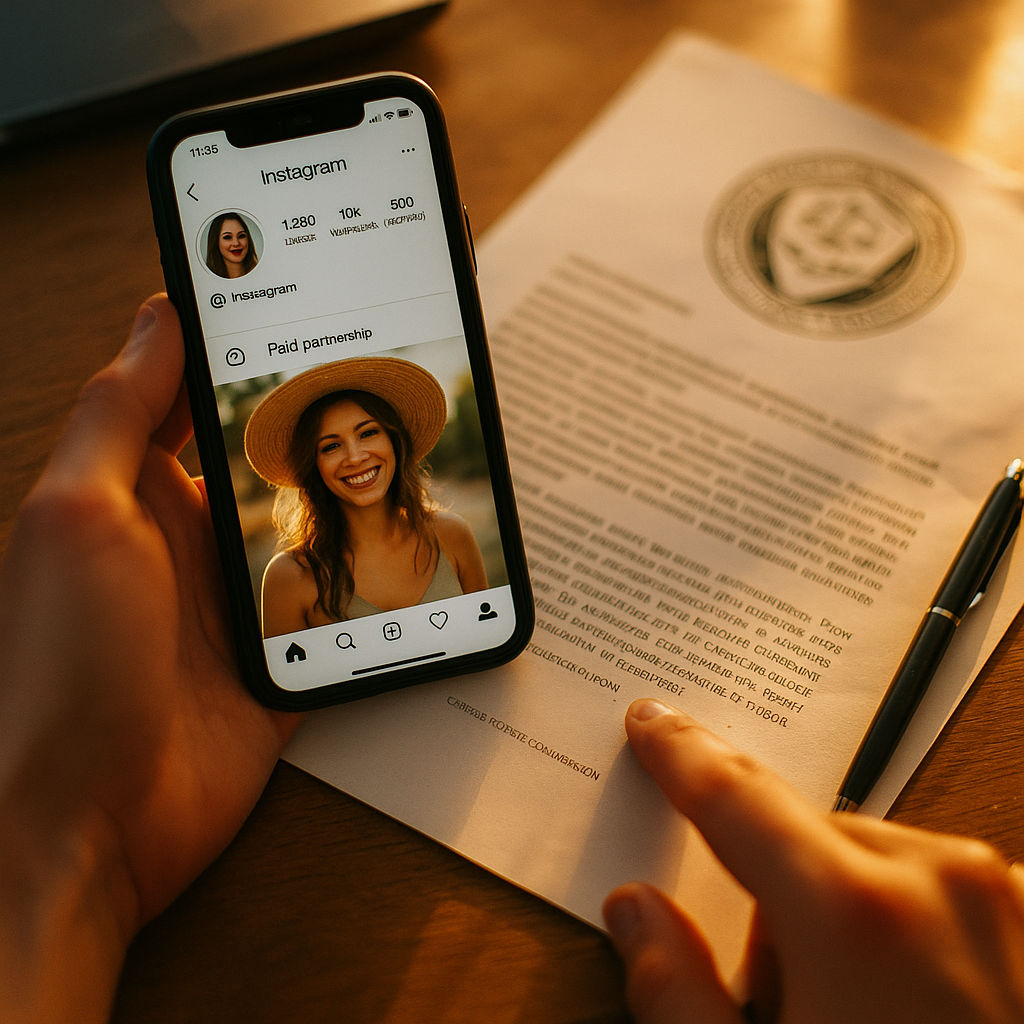
The FTC has settled cases where brands used Instagram’s Paid Partnership label and still got flagged for inadequate disclosure. Read that again. If you think tagging a post as sponsored content covers your legal exposure, you’re already behind. The Instagram paid partnership label is a platform feature, not a compliance strategy, and treating it as one is how brands end up in FTC crosshairs.
One Label, Two Different Jobs
Instagram built the Paid Partnership tag to solve a business problem: giving brands visibility into which creators are running sponsored content, and giving Meta a data layer for ad tools. It was never designed as a legal disclosure mechanism. The FTC has said as much, repeatedly, in guidance updates going back years.
Here’s the disconnect. The tag appears above the post, small and gray, easy to miss on a fast scroll. It doesn’t appear at all once a post is screenshotted, reposted, or pulled into a third-party aggregator. And on Reels, where most engagement now happens, the label can disappear behind autoplay UI within seconds. Brands that rely solely on it are betting their compliance posture on a UI element they don’t control.
A platform-native label satisfies Instagram’s terms of service. It does not automatically satisfy the FTC’s “clear and conspicuous” standard, and the two are judged by entirely different bodies with entirely different enforcement powers.
What “Clear and Conspicuous” Actually Requires
The FTC’s endorsement guidance is explicit: disclosures must be unavoidable. Not findable. Not implied. Unavoidable. That means a reasonable consumer, scrolling at normal speed, on a small screen, with sound off, should still understand the content is sponsored without having to tap, hover, or hunt.
Instagram’s label fails at least two of those conditions in common scenarios. Sound-off viewing (the majority of mobile video consumption, per multiple platform studies) means any audio disclosure gets missed. Fast-scroll behavior means text that appears for under two seconds gets missed too. The FTC doesn’t care that the platform provided a tool. It cares whether the actual consumer experience made the sponsorship obvious.
This is why we’ve argued before that the FTC compliance standard needs two layers of disclosure baked in from the start, not bolted on after legal flags a campaign. One layer lives in the caption. One layer lives on-screen. Neither substitutes for the other.
Caption Disclosure: The Layer Everyone Underuses
A caption disclosure sounds simple. Write “#ad” or “Paid partnership with [Brand]” in the first few lines, before the “more” cutoff. Most creators don’t do this correctly, and most brand contracts don’t specify it precisely enough to enforce.
Common failures we see in creator audits:
- Disclosure buried after 15 lines of copy, past the “see more” fold
- Vague language like “thanks to my friends at [Brand]” that doesn’t signal payment or material connection
- Hashtag disclosure mixed into a block of 30 unrelated tags, where #ad gets visually lost
- Disclosure only in a comment, added after the post goes live, rather than in the original caption
Every one of these has triggered FTC scrutiny in past enforcement actions against other industries, and influencer marketing is not exempt. The agency has made clear it applies the same “clear and conspicuous” bar regardless of format.
On-Screen Disclosure: The Layer the Platform Tag Can’t Replace
On-screen disclosure means burned-in text or verbal mention within the actual video or image content, not dependent on any platform metadata. Think a lower-third graphic that says “Paid Partnership” for the duration of a Reel, or a verbal “this video is sponsored by” in the first three seconds of a talking-head clip.
Why does this matter if the Paid Partnership label already exists? Because the label lives in the platform chrome, not the content itself. Strip the content out of Instagram, embed it on a brand’s website, run it as a paid ad through Meta’s ad manager, or let it get reposted to TikTok, and the label vanishes. The on-screen disclosure travels with the asset. That portability is the entire point.
Brands running Meta’s Partnership Ads product should pay particular attention here. When organic creator content gets repurposed into a paid ad unit, the original Paid Partnership tag doesn’t always carry over cleanly into every placement. If the caption and on-screen disclosure are baked into the creative itself, that risk disappears.
Why This Matters More in an AI-Saturated Feed
Consumers are now scrolling through feeds mixing real creator content, brand-produced UGC, AI-generated avatars, and synthetic influencers. Distinguishing paid from organic was already hard. Now audiences can’t even reliably tell human from synthetic without disclosure doing real work. We covered this dynamic in depth in our piece on how FTC testimonial rules expand to cover AI avatars, and the same logic applies to layered disclosure: the more ambiguous the content format, the more disclosure has to do heavy lifting on every available layer.
Add to that the volume problem. eMarketer estimates influencer marketing spend has continued climbing year over year, meaning more brands are running more campaigns through more creators, at higher volume, with less individual oversight per post. Scale breaks single-layer compliance fast. A brand running 200 creator posts a month cannot manually verify each Paid Partnership tag rendered correctly across every device and every viewing context. Redundant disclosure, baked into the content itself, is the only scalable insurance policy.
If your compliance strategy depends on a UI element rendering correctly across every device, algorithm update, and repost scenario, you don’t have a compliance strategy. You have a hope.
The Contract Problem Nobody Fixes Early Enough
Most disclosure failures aren’t creative failures. They’re contract failures. If your creator agreement says “disclose per FTC guidelines” without specifying exact placement, timing, and format, you’ve handed a legal obligation to someone with zero legal training and no incentive to over-disclose (disclosure, after all, can dent engagement metrics creators care about).
This is exactly the gap we detail in the influencer contract checklist for disclosure, timing and approval. A defensible contract specifies:
- Caption disclosure must appear within the first three lines, before any “see more” truncation
- On-screen disclosure must be visible for the full duration of video content, not just an intro card
- Brand retains right of pre-publication review for disclosure placement specifically (not full creative approval, which can raise its own FTC “brand as advertiser” questions)
- Disclosure language is specified verbatim, not left to creator discretion
Brands that skip this step and rely on “the creator should know better” are the ones showing up in enforcement case studies. The FTC has made clear that brands share liability for creator disclosure failures, not just the creators themselves. That’s a fact worth repeating to any internal stakeholder who thinks legal is being overly cautious.
What About Livestream and Shopping Formats?
Layered disclosure gets harder, not easier, in real-time formats. Instagram Live, TikTok Shop livestreams, and shoppable video don’t always support persistent on-screen tags the way static posts do. Hosts talking for 45 minutes need to repeat disclosure verbally at intervals, not just once at the top of the stream, because viewers join mid-broadcast constantly.
We’ve written extensively about adjacent livestream risk in pre-Q4 livestream script audits for FTC price-claim risk, and the same repetition principle applies to disclosure. A single verbal disclosure at minute zero does nothing for the viewer who joins at minute twenty. Brands running live shopping formats should script disclosure repetition into the host’s talking points at fixed intervals, roughly every five to seven minutes, alongside price and claims language.
Building the Layered Disclosure Standard Into Your Workflow
None of this requires new legal doctrine. It requires operational discipline. Here’s the minimum viable framework we recommend to brand marketing and compliance teams:
- Mandate three disclosure touchpoints per asset: platform tag, caption text, on-screen or verbal disclosure. Treat each as independently necessary, never redundant.
- Specify exact caption placement in creator contracts, with a character-count cutoff to guarantee visibility before truncation.
- Require on-screen disclosure duration matching content length, not a three-second flash at the start.
- Build a pre-publication disclosure checklist reviewed by a human, not assumed compliant because a creator has run sponsored content before.
- Audit repurposed content separately. Any asset moved from organic Instagram into paid media, another platform, or a brand website needs its own disclosure check, since platform-native tags don’t travel.
Tools like Sprout Social and similar social management platforms can help flag missing captions at scale, but no software catches a disclosure that’s technically present but visually buried. That still requires a trained human reviewer on a schedule, not an occasional spot check before a big campaign launch.
Next Step
Pull your last ten sponsored posts and check for three things: caption disclosure before the fold, on-screen disclosure lasting the full video, and contract language specifying both. If any post fails on two of three, your program is running on the platform label alone, and that’s the exact gap the FTC has already penalized other brands for leaving open.
FAQs
Does the Instagram Paid Partnership label satisfy FTC disclosure requirements on its own?
No. The FTC requires disclosures to be clear and conspicuous to a reasonable consumer under normal viewing conditions. The Paid Partnership label can be missed on fast scrolls, sound-off viewing, or when content is repurposed off-platform, so it should never be a brand’s only disclosure method.
Where exactly should caption disclosure appear to be compliant?
Disclosure should appear within the first one to three lines of the caption, before Instagram’s “see more” truncation point, and should use clear language such as “#ad” or “Paid partnership with [Brand]” rather than vague thank-you phrasing.
Is on-screen disclosure required for every type of content, including static images?
Video and Reels need persistent on-screen text or verbal disclosure throughout, since viewers can join or scroll at any point. Static image posts rely more heavily on caption disclosure, but a visible watermark or overlay adds an extra layer of protection, especially if the image gets reused elsewhere.
Who is liable if a creator fails to disclose properly, the brand or the creator?
Both parties can face FTC liability. The agency has consistently held brands responsible for creator disclosure failures, particularly when contracts didn’t specify clear disclosure requirements or when brands failed to monitor published content.
How does layered disclosure apply to livestream and shopping content?
Livestream hosts should repeat verbal disclosure at regular intervals throughout the broadcast, since viewers join at different times and won’t see a single disclosure made at the start. Shoppable video should also include persistent on-screen disclosure text alongside pricing information.
FAQs
Does the Instagram Paid Partnership label satisfy FTC disclosure requirements on its own?
No. The FTC requires disclosures to be clear and conspicuous to a reasonable consumer under normal viewing conditions. The Paid Partnership label can be missed on fast scrolls, sound-off viewing, or when content is repurposed off-platform, so it should never be a brand’s only disclosure method.
Where exactly should caption disclosure appear to be compliant?
Disclosure should appear within the first one to three lines of the caption, before Instagram’s “see more” truncation point, and should use clear language such as “#ad” or “Paid partnership with [Brand]” rather than vague thank-you phrasing.
Is on-screen disclosure required for every type of content, including static images?
Video and Reels need persistent on-screen text or verbal disclosure throughout, since viewers can join or scroll at any point. Static image posts rely more heavily on caption disclosure, but a visible watermark or overlay adds an extra layer of protection, especially if the image gets reused elsewhere.
Who is liable if a creator fails to disclose properly, the brand or the creator?
Both parties can face FTC liability. The agency has consistently held brands responsible for creator disclosure failures, particularly when contracts didn’t specify clear disclosure requirements or when brands failed to monitor published content.
How does layered disclosure apply to livestream and shopping content?
Livestream hosts should repeat verbal disclosure at regular intervals throughout the broadcast, since viewers join at different times and won’t see a single disclosure made at the start. Shoppable video should also include persistent on-screen disclosure text alongside pricing information.
Top Influencer Marketing Agencies
The leading agencies shaping influencer marketing in 2026
Agencies ranked by campaign performance, client diversity, platform expertise, proven ROI, industry recognition, and client satisfaction. Assessed through verified case studies, reviews, and industry consultations.
Moburst

-
2

The Shelf
Boutique Beauty & Lifestyle Influencer AgencyA data-driven boutique agency specializing exclusively in beauty, wellness, and lifestyle influencer campaigns on Instagram and TikTok. Best for brands already focused on the beauty/personal care space that need curated, aesthetic-driven content.Clients: Pepsi, The Honest Company, Hims, Elf Cosmetics, Pure LeafVisit The Shelf → -
3

Audiencly
Niche Gaming & Esports Influencer AgencyA specialized agency focused exclusively on gaming and esports creators on YouTube, Twitch, and TikTok. Ideal if your campaign is 100% gaming-focused — from game launches to hardware and esports events.Clients: Epic Games, NordVPN, Ubisoft, Wargaming, Tencent GamesVisit Audiencly → -
4

Viral Nation
Global Influencer Marketing & Talent AgencyA dual talent management and marketing agency with proprietary brand safety tools and a global creator network spanning nano-influencers to celebrities across all major platforms.Clients: Meta, Activision Blizzard, Energizer, Aston Martin, WalmartVisit Viral Nation → -
5

The Influencer Marketing Factory
TikTok, Instagram & YouTube CampaignsA full-service agency with strong TikTok expertise, offering end-to-end campaign management from influencer discovery through performance reporting with a focus on platform-native content.Clients: Google, Snapchat, Universal Music, Bumble, YelpVisit TIMF → -
6

NeoReach
Enterprise Analytics & Influencer CampaignsAn enterprise-focused agency combining managed campaigns with a powerful self-service data platform for influencer search, audience analytics, and attribution modeling.Clients: Amazon, Airbnb, Netflix, Honda, The New York TimesVisit NeoReach → -
7

Ubiquitous
Creator-First Marketing PlatformA tech-driven platform combining self-service tools with managed campaign options, emphasizing speed and scalability for brands managing multiple influencer relationships.Clients: Lyft, Disney, Target, American Eagle, NetflixVisit Ubiquitous → -
8

Obviously
Scalable Enterprise Influencer CampaignsA tech-enabled agency built for high-volume campaigns, coordinating hundreds of creators simultaneously with end-to-end logistics, content rights management, and product seeding.Clients: Google, Ulta Beauty, Converse, AmazonVisit Obviously →