


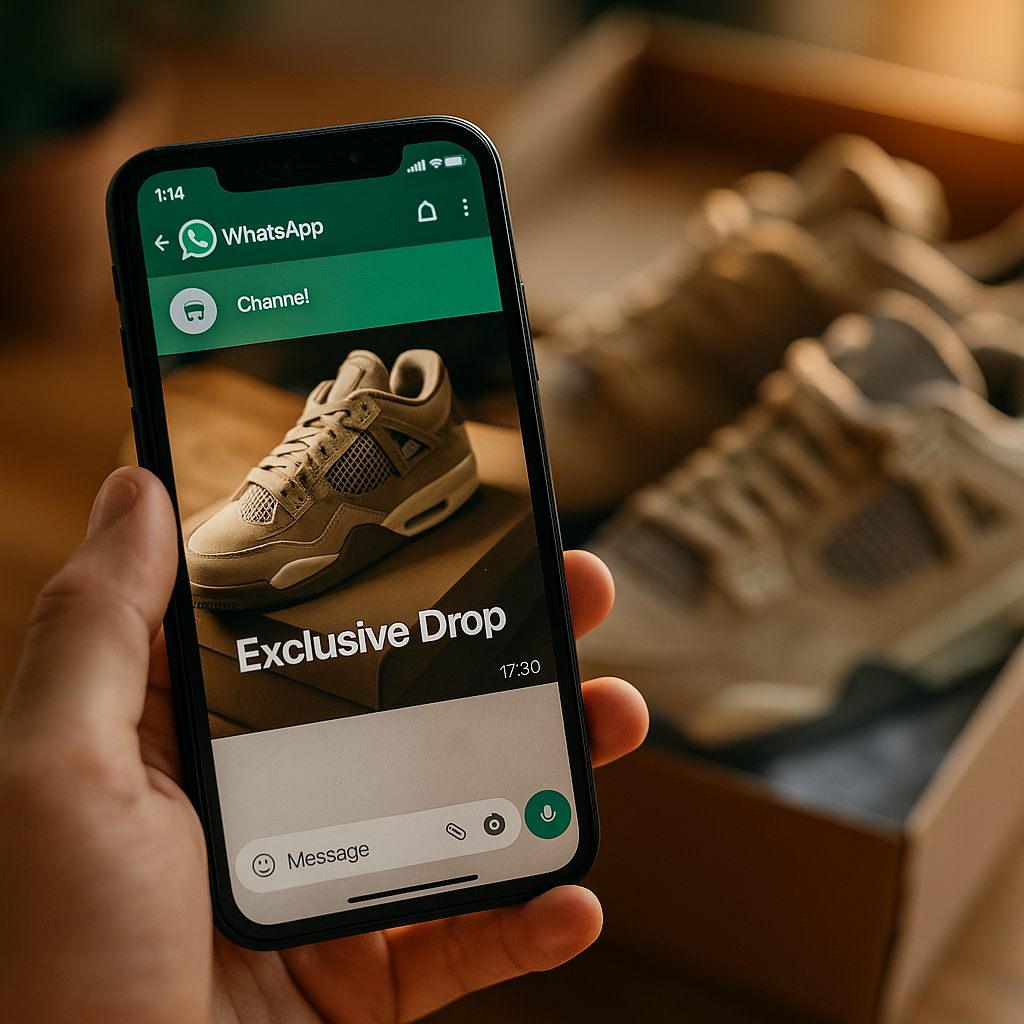
A Playbook For Using WhatsApp Channels For Exclusive Product Drops can help you turn attention into action without fighting noisy algorithms. In 2025, customers expect speed, clarity, and real access—especially for limited releases. WhatsApp Channels offer broadcast-style reach with a familiar inbox experience and strong intent. The brands winning drops plan every step, measure outcomes, and iterate—are you ready?
WhatsApp Channels strategy: define goals, audience, and drop model
Before you post anything, decide what “success” means for your drop. Exclusive releases are not just announcements; they are controlled experiences designed to create demand while protecting brand trust. A clear WhatsApp Channels strategy starts with three decisions:
- Primary goal: revenue (sell-through in minutes), acquisition (new customers), retention (VIP reorders), or research (validate demand).
- Audience tiering: VIP customers, high-intent prospects, local audiences, or category fans. Avoid sending every drop to everyone.
- Drop model: first-come-first-served, waitlist/lottery, staged access (VIP first, then general), or region-based windows.
Match the model to your constraints. If inventory is tiny and demand is huge, a waitlist or lottery protects the customer experience and reduces support tickets. If the goal is fast cashflow, a first-come-first-served drop with tight communication works well—provided your checkout can handle traffic.
Define operating metrics upfront so you can improve after each release:
- Channel growth rate (net new followers per week)
- Drop conversion rate (purchases ÷ unique link clicks)
- Time-to-sell-through (minutes/hours)
- Support load (refunds, address changes, “where is my order” volume)
- Opt-out/complaint signals (qualitative feedback and negative replies where applicable)
EEAT note: document your assumptions (inventory, production lead times, shipping SLAs, and customer support capacity). A reliable drop cadence depends more on operations than hype.
Exclusive product drops: build the offer, scarcity rules, and trust signals
Most drops fail because the offer is fuzzy. Exclusive product drops need simple rules customers can understand instantly. Build the drop around one clear promise and remove friction:
- What’s exclusive? Limited quantity, limited time, limited colorway, early access, or bundled value.
- Who gets access? Channel followers, VIP segment, or verified previous buyers.
- How long? A window (for example, 30–120 minutes) or until sold out.
- What happens if it sells out? Back-in-stock waitlist, next drop priority, or alternative product recommendation.
Scarcity must be verifiable. Avoid vague language like “limited” if you routinely restock. Instead, state the rules plainly: “1,200 units total. Max 2 per customer. Ships within 48 hours.” That clarity reduces distrust, chargebacks, and customer support churn.
Add trust signals customers look for before clicking “buy”:
- Transparent shipping and returns: shipping regions, cutoff times, return window, and how refunds are handled.
- Authenticity protection: official domain links only, no payment requests inside WhatsApp, and guidance to avoid scams.
- Product proof: short video, close-up images, specs, sizing info, and what’s included in the box.
Answer follow-up questions inside the drop message sequence: sizing, compatibility, warranty, whether discount codes apply, and how to change an order. If you don’t, customers will ask anyway—at the worst possible moment.
WhatsApp broadcast marketing: channel setup, verification, and discovery
WhatsApp broadcast marketing works best when the channel looks official, consistent, and easy to verify. Treat setup like a storefront opening.
- Name and description: include your brand and the specific value (e.g., “early access drops,” “members-only restocks,” “local pickup alerts”).
- Branding: use a recognizable logo and consistent visual style so screenshots still look credible.
- Posting cadence: set expectations (for example, “2–4 updates per week + drop alerts”).
- Safety guidance: state that you will never request payment in chat and will only link to your official domain.
Make discovery intentional. Channels can grow fast, but “random followers” rarely convert on limited drops. Drive qualified opt-ins from:
- Checkout and post-purchase pages: “Join for early access and restocks.”
- Email/SMS: invite loyal segments who already buy quickly.
- Social and creator partnerships: use a simple CTA and one trackable link per partner.
- In-store QR codes: ideal for local drops and pickup windows.
Keep your channel content “evergreen useful,” not just promotional. Share sizing guidance, care tips, behind-the-scenes product development, and restock timelines. This boosts retention so followers don’t mute you between drops.
Limited-edition launch plan: timeline, content sequence, and automation
A repeatable limited-edition launch plan turns drops into a system. Use a simple timeline that reduces surprises and keeps customers informed.
7–10 days before:
- Tease the category and benefit (not every detail).
- Collect intent: “React/click to join the waitlist.”
- Publish key constraints early: quantity range, max units per customer, shipping regions.
72–48 hours before:
- Reveal full product details: price, specs, colorways, and shipping cutoff.
- Answer objections: sizing/fit, compatibility, warranty, return policy.
- Share one clear “how to buy” step-by-step.
24 hours before:
- Post an exact drop time with timezone clarity.
- Explain fairness rules: max quantity, anti-bot limits, and what happens if the site queues.
- Provide a single canonical link destination (avoid multiple competing links).
Drop day (T-minus 30 minutes):
- Reminder with the buying steps and the “official link only” warning.
- Optional: a short product demo clip and one customer quote if you have permission.
Drop moment:
- Send one message with the purchase link, price, and shipping promise.
- Keep it scannable: headline, 3 bullets, link, and one support option.
After the drop (15–60 minutes):
- Post live status: “In stock / low stock / sold out.”
- If sold out, give the next step: waitlist, restock window, or alternative product.
24–72 hours after:
- Confirm shipping progress and timelines.
- Offer order-help links: address edits, cancellations policy, and support hours.
- Ask one feedback question to improve the next drop.
Automation tip: use trackable links (UTMs) and a dedicated landing page that can switch states: “Coming soon” → “Live” → “Sold out” → “Join waitlist.” This prevents broken journeys when inventory changes quickly.
Product drop engagement: creative formats, segmentation, and community cues
Product drop engagement is not about sending more messages; it’s about sending the right message at the right time. WhatsApp Channels support rich media—use it to reduce uncertainty and increase confidence.
High-performing formats for drops:
- Short demo video: show scale, texture, and real-life use in under 20 seconds.
- One image, clear overlay text: “Drop time,” “price,” “max 2,” “ships in 48h.”
- Behind-the-scenes: production, quality checks, packaging—signals authenticity and care.
- FAQ mini-cards: returns, sizing, shipping, what’s included.
Segmentation is where many brands leave money on the table. Channels are broadcast-first, so create segmentation through entry paths and link-based behavior:
- Different join links: VIP, local pickup, category interest—each points to the same channel but tags intent in your analytics.
- Preference capture: link to a simple preference page (“I want alerts for: A / B / C”).
- Staged access: announce VIP early access inside the channel but gate the purchase link with a customer-specific code or authenticated account.
Community cues matter even in a broadcast environment. Show that real people buy and receive products:
- Post-delivery UGC: request photos after delivery and repost with permission.
- Fulfillment updates: “All orders from the drop have shipped” builds confidence for future drops.
- Consistency: drops at predictable times reduce missed launches and angry messages.
Keep frequency disciplined. If you train followers to expect irrelevant posts, they mute you—and you lose the moment that matters.
WhatsApp commerce analytics: attribution, testing, and risk management
WhatsApp commerce analytics should answer three questions: who joined, who clicked, and who purchased. Even without perfect user-level attribution, you can run a tight measurement loop.
Set up a measurement stack that fits your maturity:
- Trackable links: UTMs for every post and every partner, plus unique landing pages for major drops.
- On-site analytics: measure sessions, add-to-cart rate, conversion rate, and revenue per session from WhatsApp traffic.
- Inventory timestamps: log when “low stock” begins and when “sold out” occurs to benchmark urgency.
- Support metrics: ticket volume during drop windows and top issues by category.
Run simple tests that compound over time:
- Creative A/B: video-first vs image-first, headline wording, and “ships by” promise clarity.
- Timing: weekday vs weekend, lunchtime vs evening, and local timezone optimization.
- Offer structure: bundle vs standalone, free shipping threshold, or VIP early access duration.
Risk management protects EEAT and your customer relationships:
- Scam prevention: repeat “official link only,” avoid URL shorteners if they reduce trust, and keep your domain consistent.
- Operational limits: don’t promise same-day shipping if you can’t hit it; late shipments erase future drop performance.
- Fairness controls: enforce purchase limits, watch for duplicate orders, and clearly explain cancellations.
- Compliance and privacy: follow your region’s marketing consent rules for cross-channel promotion and clearly state how preferences are used.
After every drop, write a short “drop report”: what you expected, what happened, what broke, what customers asked, and what you’ll change. This is how you build repeatable advantage instead of one-off wins.
FAQs
Are WhatsApp Channels better than WhatsApp groups for product drops?
Channels are better for scalable one-to-many announcements because followers receive updates without the noise of group chats. Groups can work for small VIP communities, but they require heavier moderation and can overwhelm members during high-traffic drops.
How often should I post in a WhatsApp Channel if I only do occasional drops?
Post consistently enough to stay relevant—typically 2–4 useful updates per week—then increase frequency around a drop. If you disappear for weeks, followers forget why they joined and miss your next launch.
What should be in the drop message to maximize conversions?
Use a clear headline, price, exact drop time (with timezone), purchase limit, shipping promise, and one official link. Add one short proof element (image or micro-video) and a single path for order help.
How do I prevent complaints if the product sells out fast?
Set expectations early: limited quantity, max units per customer, and what happens when it sells out. Offer a waitlist, a defined restock plan (if real), or a comparable alternative so customers still have a next step.
Can I run VIP early access through a WhatsApp Channel?
Yes. Announce VIP early access in the channel, then gate checkout through authenticated accounts, unique access codes, or private landing pages. Keep rules transparent so non-VIP followers understand when general access opens.
What’s the safest way to share links in WhatsApp Channels?
Use your official domain, keep link destinations consistent, and avoid asking for payment in messages. Repeat a short safety reminder before each drop so customers know what legitimate communication looks like.
WhatsApp Channels can become a reliable engine for drops when you treat them like an owned media product: clear rules, consistent value, and operational discipline. Build trust with transparent scarcity, publish a repeatable launch timeline, and measure every step from join to purchase to delivery. The takeaway for 2025: a calm, well-instrumented channel will outperform hype when inventory is limited.
Top Influencer Marketing Agencies
The leading agencies shaping influencer marketing in 2026
Agencies ranked by campaign performance, client diversity, platform expertise, proven ROI, industry recognition, and client satisfaction. Assessed through verified case studies, reviews, and industry consultations.
Moburst

-
2

The Shelf
Boutique Beauty & Lifestyle Influencer AgencyA data-driven boutique agency specializing exclusively in beauty, wellness, and lifestyle influencer campaigns on Instagram and TikTok. Best for brands already focused on the beauty/personal care space that need curated, aesthetic-driven content.Clients: Pepsi, The Honest Company, Hims, Elf Cosmetics, Pure LeafVisit The Shelf → -
3

Audiencly
Niche Gaming & Esports Influencer AgencyA specialized agency focused exclusively on gaming and esports creators on YouTube, Twitch, and TikTok. Ideal if your campaign is 100% gaming-focused — from game launches to hardware and esports events.Clients: Epic Games, NordVPN, Ubisoft, Wargaming, Tencent GamesVisit Audiencly → -
4

Viral Nation
Global Influencer Marketing & Talent AgencyA dual talent management and marketing agency with proprietary brand safety tools and a global creator network spanning nano-influencers to celebrities across all major platforms.Clients: Meta, Activision Blizzard, Energizer, Aston Martin, WalmartVisit Viral Nation → -
5

The Influencer Marketing Factory
TikTok, Instagram & YouTube CampaignsA full-service agency with strong TikTok expertise, offering end-to-end campaign management from influencer discovery through performance reporting with a focus on platform-native content.Clients: Google, Snapchat, Universal Music, Bumble, YelpVisit TIMF → -
6

NeoReach
Enterprise Analytics & Influencer CampaignsAn enterprise-focused agency combining managed campaigns with a powerful self-service data platform for influencer search, audience analytics, and attribution modeling.Clients: Amazon, Airbnb, Netflix, Honda, The New York TimesVisit NeoReach → -
7

Ubiquitous
Creator-First Marketing PlatformA tech-driven platform combining self-service tools with managed campaign options, emphasizing speed and scalability for brands managing multiple influencer relationships.Clients: Lyft, Disney, Target, American Eagle, NetflixVisit Ubiquitous → -
8

Obviously
Scalable Enterprise Influencer CampaignsA tech-enabled agency built for high-volume campaigns, coordinating hundreds of creators simultaneously with end-to-end logistics, content rights management, and product seeding.Clients: Google, Ulta Beauty, Converse, AmazonVisit Obviously →