


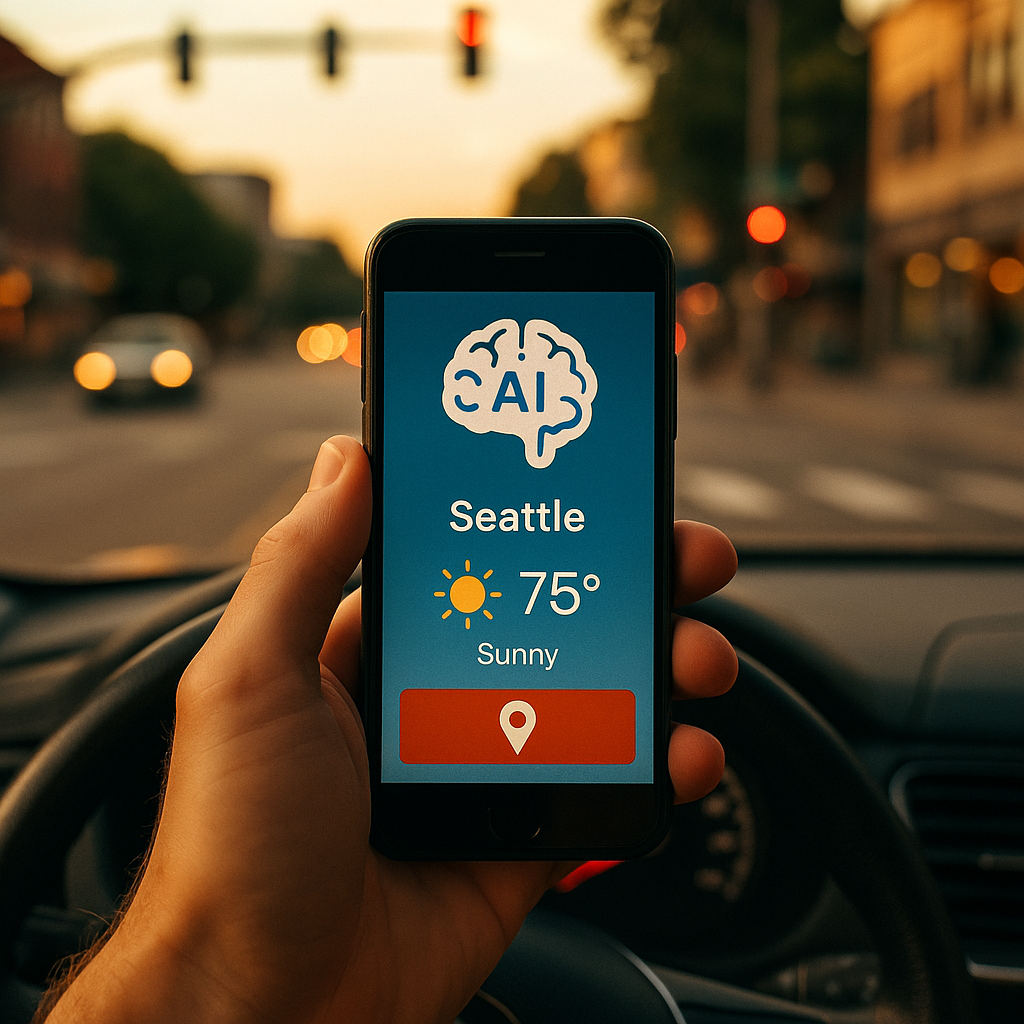
In 2025, advertisers face rising expectations for relevance across every screen. Using AI To Personalize Dynamic Creative Based On Weather And Location turns real-world context into timely messages that feel useful rather than intrusive. When the weather shifts or a customer moves between neighborhoods, AI can select the best offer, image, and copy in milliseconds—if you design it correctly. Want to see what “correctly” looks like?
AI-driven dynamic creative optimization: what it is and why it works
AI-driven dynamic creative optimization (DCO) combines automated decisioning with modular ad assets (headlines, visuals, CTAs, offers) to assemble the best version for each impression. Instead of producing one “average” ad, you produce a creative system that adapts to context such as temperature, precipitation, pollen levels, time of day, and the viewer’s approximate location.
Why this works in practice:
- Context increases relevance: People act differently in heat waves, rain, snow, or sudden temperature drops. Creative that matches the moment reduces friction.
- AI scales complexity: Once you introduce multiple locations and weather states, manual trafficking becomes error-prone. AI helps choose combinations that are likely to perform.
- Learning compounds over time: Models improve as they observe outcomes by weather type, geography, device, and placement—assuming you feed them clean data and stable naming conventions.
It’s important to separate two ideas: dynamic assembly (building an ad from approved parts) and dynamic decisioning (selecting which parts to show). Weather-and-location personalization needs both. If your brand team approves only one hero image, the “dynamic” part is limited to copy tweaks. If your data is thin, the decisioning will be noisy. The best programs start with strong modular creative and a simple decision framework, then evolve into more sophisticated optimization.
Weather-based advertising: turning forecasts into creative triggers
Weather-based advertising uses real-time conditions or short-range forecasts to adjust creative. The key is to define triggers that are meaningful for the product and the customer, not just “it’s sunny.” Good triggers tie weather to intent or need.
Common weather signals you can translate into creative logic:
- Temperature bands (e.g., <5°C, 5–15°C, 15–25°C, >25°C) to shift apparel, beverages, HVAC, and beauty messaging.
- Precipitation type and intensity (light rain vs. heavy rain vs. snow) to promote delivery, outerwear, tires, or indoor entertainment.
- Humidity and heat index to adjust skincare, deodorant, hydration, and cooling products.
- Air quality and pollen to tailor wellness, filters, allergy products, and “indoor-safe” recommendations.
- Wind and storm alerts for home improvement, insurance education, backup power, and emergency supplies (handled carefully to avoid fear-based creative).
AI’s role is not to “notice it’s raining.” A rules engine can do that. AI helps by learning which creative components work best under each weather state, for each audience segment and channel. For example, in light rain, a food delivery brand may learn that “fast delivery” outperforms “free delivery” in dense urban areas, while the reverse holds in suburban zones.
Reader follow-up: Should you use real-time weather or forecast? Use both when it makes sense. Real-time conditions are great for immediacy (“Rainy afternoon? Stay in.”). Forecasts are strong for planning behavior (“Heat wave this weekend—prep now”). Build guardrails so forecasts don’t create mismatches if the weather changes: keep copy flexible and avoid overly specific promises unless you can update frequently.
Location-based personalization: geo signals without crossing privacy lines
Location-based personalization tailors creative using coarse location signals such as city, DMA/region, or a store catchment area. In 2025, the best practice is to rely on privacy-respecting methods: approximate location derived from consented signals, platform-provided location segments, or contextual placement targeting—rather than attempting to identify individuals.
High-value ways to use location responsibly:
- Local inventory and availability: Show “In stock near you” only when your feeds confirm it.
- Store distance bands: Creative differs for 1–3 miles vs. 10–20 miles (e.g., “Pick up in 30 minutes” vs. “Free shipping”).
- Regional preferences: Adjust featured categories by climate and culture (outerwear vs. swim, spicy vs. mild, etc.).
- Local proof points: Mention service coverage, delivery windows, or local ratings where permitted.
Location becomes even more powerful when paired with weather. “Snow in Denver” and “snow in Atlanta” are not the same marketing moment. AI can learn different creative responses because consumer readiness, infrastructure, and product needs vary dramatically by region.
Reader follow-up: Can you do this without GPS? Yes. Many channels support city/region targeting, and many ad platforms provide aggregated location segments. The creative can still adapt at the region level, which is often enough to drive lift without increasing privacy risk.
Real-time creative automation: the stack, data, and governance you need
Real-time creative automation requires more than an AI model. It’s a workflow: ingest signals, apply decisioning, assemble creative, serve, measure, and learn—while keeping brand and compliance teams comfortable.
A practical architecture looks like this:
- Signal layer: Weather API (current + forecast), location resolution (city/region), time, device, and optionally first-party context (e.g., loyalty tier) where consented.
- Decision layer: Rules for eligibility (hard constraints) + model-driven selection (soft optimization). Keep rules simple and auditable.
- Creative layer: Modular templates with locked brand elements (logo, typography, disclaimers) and swappable components (headline, image, offer, CTA).
- Feed layer: Product/offer feeds, store hours, inventory, delivery ETAs, pricing, and legal text variants.
- Measurement layer: Clean event taxonomy, conversion definitions, and holdout testing where possible.
Governance is where many programs fail. Use these controls:
- Pre-approval libraries: Every headline, claim, and promo must be approved before the AI can use it.
- Brand safety constraints: Prohibit certain pairings (e.g., “storm” language with sensitive categories) and enforce tone rules.
- Audit trails: Log which signals triggered which creative components for each impression (at an aggregated level where required).
- Fallback logic: If the weather API fails or location is unknown, serve a default creative that still performs.
Reader follow-up: Is this only for big brands? No. Many platforms and creative tools now support template-based DCO. The differentiator is disciplined data and a small, well-structured asset set. You can start with 20–40 approved variants and still create thousands of combinations responsibly.
Predictive personalization strategies: use cases that drive measurable lift
Predictive personalization strategies go beyond “if raining, show umbrella.” They anticipate needs and choose creative that aligns with likely behavior. The best use cases connect context to a clear business objective and define what “better” means before launch.
High-performing use cases by industry:
- Retail and ecommerce: Shift category emphasis by temperature and precipitation; promote curbside pickup during heavy rain; adjust creative to local inventory and delivery cutoffs.
- QSR and grocery: Increase hot beverage and comfort food messaging in cold snaps; promote grilling bundles on warm weekends; switch to delivery value propositions during storms.
- Travel and hospitality: Promote indoor amenities when rain is forecast; highlight flexible booking when storms threaten; tailor imagery to the user’s departure region and destination climate.
- Auto and mobility: Emphasize safety and traction in snow; highlight AC service in heat; tailor offers to regional service centers and appointment availability.
- CPG and health: Adjust hydration, sun care, and allergy messaging using heat index, UV, and pollen signals; keep claims compliant and avoid implying medical outcomes.
How AI typically makes decisions:
- Ranking: Score each eligible creative variant for the current context and pick the top one.
- Multi-armed bandits: Balance exploration (testing) and exploitation (using winners) to learn faster than standard A/B tests.
- Constraints: Enforce frequency, fairness, budget pacing, and brand rules so the model cannot “cheat” by over-serving a single variant.
Reader follow-up: How do you avoid overfitting to weird weather events? Use weather “buckets” rather than exact values, set minimum data thresholds before declaring winners, and keep a small percentage of traffic in exploration mode. Also, maintain a stable control creative to detect whether changes are truly incremental.
Performance measurement and compliance: proving value while building trust
Performance measurement must isolate the effect of weather-and-location personalization from other variables. In 2025, that means combining platform reporting with incrementality-minded design and privacy-aware data handling.
Measurement methods that work in the real world:
- Geo holdouts: Keep certain matched regions on a static creative while others receive dynamic personalization, then compare lift.
- Time-sliced tests: Alternate dynamic vs. static by time windows within the same regions, controlling for daypart.
- Creative-level reporting: Track performance by module and combination (headline A + image C + offer B) to learn what drives results.
- Model monitoring: Watch for drift (a module that suddenly stops working) and for API/data outages that could bias outcomes.
Key KPIs to align on upfront:
- Upper funnel: View-through rate, engagement, qualified site visits.
- Mid funnel: Add-to-cart, store locator use, “check availability,” lead form completion.
- Lower funnel: Conversion rate, CPA/ROAS, in-store visits where measured and permitted.
Compliance and trust are non-negotiable, especially when using location signals:
- Consent and transparency: Use consented data where required, rely on aggregated signals, and keep privacy notices accurate.
- Data minimization: Only collect what you need to make the creative decision; avoid storing precise location unless truly necessary and permitted.
- Sensitive moments: Avoid exploitative creative around disasters or emergencies. Create a policy for severe weather events (pause, switch to neutral messaging, or provide helpful information).
Reader follow-up: What’s a realistic timeline to prove value? Many teams see directional results within a few weeks if traffic is sufficient and creative modules are well designed. For confident lift estimates, plan for a full testing cycle across multiple weather patterns and regions, with clear stop/go criteria.
FAQs
What is the primary benefit of weather- and location-personalized creative?
The main benefit is higher relevance at the moment of decision. When your message matches local conditions and nearby availability, you reduce friction and improve the chance the viewer takes the next step.
Do I need a large creative library to start?
No. Start with a small set of approved modules (for example, 3–5 headlines, 3–5 images, 2–3 offers, and a few CTAs). AI performs best when options are distinct, on-brand, and mapped to clear triggers.
Which weather data should I use: current conditions or forecast?
Use current conditions for immediacy and short-range forecasts for planning behaviors. Keep your copy flexible and implement fallback rules so you never show overly specific messaging when data is missing or conditions change.
How do I personalize by location without risking privacy issues?
Use coarse regions (city, metro, or DMA), platform-provided segments, and consented first-party data. Avoid attempting to identify individuals and avoid storing precise location unless you have a clear, permitted need.
How do I measure incrementality?
Use geo holdouts or time-sliced tests to compare dynamic versus static creative under similar conditions. Pair this with creative-level reporting so you can pinpoint which modules and triggers drive lift.
What are common mistakes that reduce performance?
Common issues include vague triggers (“sunny” without a behavioral link), too many similar variants, weak governance (unapproved claims slipping in), unreliable feeds (inventory mismatches), and no control group to validate lift.
AI personalization based on weather and location works when you treat it as a governed system: reliable signals, modular creative, clear rules, and measured learning loops. In 2025, the winners won’t be the brands with the most variants, but the ones that align context with genuine customer needs and prove incrementality with disciplined testing. Build small, validate fast, and scale only what you can audit.
Top Influencer Marketing Agencies
The leading agencies shaping influencer marketing in 2026
Agencies ranked by campaign performance, client diversity, platform expertise, proven ROI, industry recognition, and client satisfaction. Assessed through verified case studies, reviews, and industry consultations.
Moburst

-
2

The Shelf
Boutique Beauty & Lifestyle Influencer AgencyA data-driven boutique agency specializing exclusively in beauty, wellness, and lifestyle influencer campaigns on Instagram and TikTok. Best for brands already focused on the beauty/personal care space that need curated, aesthetic-driven content.Clients: Pepsi, The Honest Company, Hims, Elf Cosmetics, Pure LeafVisit The Shelf → -
3

Audiencly
Niche Gaming & Esports Influencer AgencyA specialized agency focused exclusively on gaming and esports creators on YouTube, Twitch, and TikTok. Ideal if your campaign is 100% gaming-focused — from game launches to hardware and esports events.Clients: Epic Games, NordVPN, Ubisoft, Wargaming, Tencent GamesVisit Audiencly → -
4

Viral Nation
Global Influencer Marketing & Talent AgencyA dual talent management and marketing agency with proprietary brand safety tools and a global creator network spanning nano-influencers to celebrities across all major platforms.Clients: Meta, Activision Blizzard, Energizer, Aston Martin, WalmartVisit Viral Nation → -
5

The Influencer Marketing Factory
TikTok, Instagram & YouTube CampaignsA full-service agency with strong TikTok expertise, offering end-to-end campaign management from influencer discovery through performance reporting with a focus on platform-native content.Clients: Google, Snapchat, Universal Music, Bumble, YelpVisit TIMF → -
6

NeoReach
Enterprise Analytics & Influencer CampaignsAn enterprise-focused agency combining managed campaigns with a powerful self-service data platform for influencer search, audience analytics, and attribution modeling.Clients: Amazon, Airbnb, Netflix, Honda, The New York TimesVisit NeoReach → -
7

Ubiquitous
Creator-First Marketing PlatformA tech-driven platform combining self-service tools with managed campaign options, emphasizing speed and scalability for brands managing multiple influencer relationships.Clients: Lyft, Disney, Target, American Eagle, NetflixVisit Ubiquitous → -
8

Obviously
Scalable Enterprise Influencer CampaignsA tech-enabled agency built for high-volume campaigns, coordinating hundreds of creators simultaneously with end-to-end logistics, content rights management, and product seeding.Clients: Google, Ulta Beauty, Converse, AmazonVisit Obviously →