


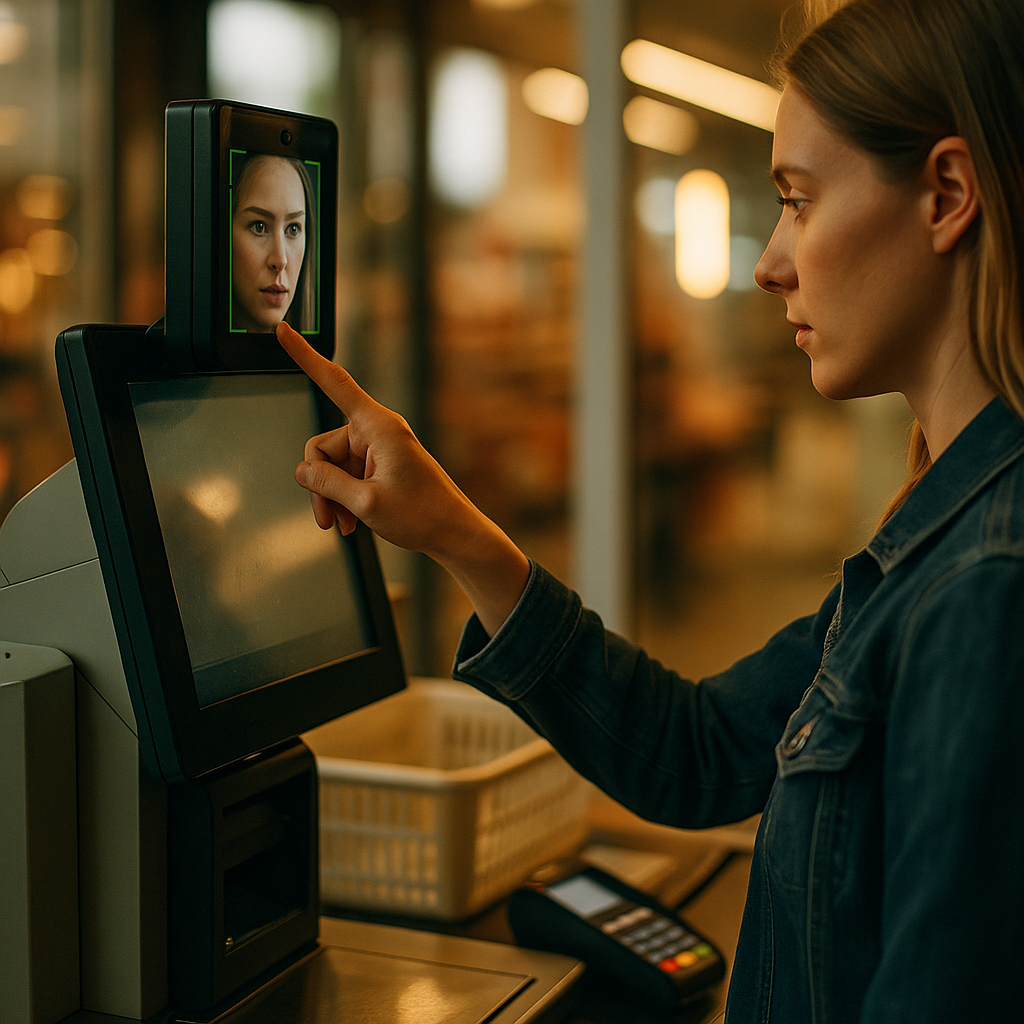
Understanding Regulatory Shifts In Biometric Data Collection For Retailers has become a board-level issue in 2025, as facial recognition, fingerprint time clocks, and voice analytics move from “nice-to-have” to operational essentials. Regulators and plaintiffs now treat biometric identifiers as high-risk data, with strict consent and retention rules. Retailers that act early can keep innovation moving while avoiding costly enforcement—so what changed?
Regulatory trends for biometric compliance in retail
Retailers are navigating a fast-tightening environment shaped by three converging forces: expanded privacy statutes, tougher enforcement posture, and rising consumer expectations about surveillance. Biometric data—such as face geometry templates, fingerprints, iris scans, voiceprints, and gait patterns—gets elevated treatment because it is persistent, hard to change, and can be used for identification at scale.
What “regulatory shifts” look like in practice in 2025
- Broader definitions: More laws treat “biometric identifiers” and “biometric information” to include derived templates and embeddings, not just raw images or recordings.
- Stricter notice and consent mechanics: Consent must be specific, informed, and documented. “Implied consent” via signage alone is increasingly risky, especially for customers.
- Purpose limitation: Collect only what is necessary for clearly stated purposes (loss prevention, access control, workforce timekeeping), and avoid incompatible secondary uses (marketing profiling, emotion inference) without fresh permissions.
- Retention and deletion mandates: Many regimes require a public retention schedule and deletion when the initial purpose ends or after a defined time period.
- Vendor accountability: Retailers are expected to flow down requirements through contracts, audit suppliers, and verify sub-processor controls.
Retail leaders often ask: Is a camera system “biometric” if it only detects faces? The answer depends on whether the system creates or uses a template to identify or authenticate a person. If it performs identification, verification, or persistent tracking tied to an individual, assume biometric obligations apply and confirm with counsel.
Biometric privacy laws and consent requirements
In 2025, the compliance center of gravity is consent and transparency. For employees, power imbalances make “voluntary” consent harder to defend. For customers, surprise collection is the fastest path to complaints and litigation. The safest operational posture is to treat biometric collection as an opt-in program unless a narrow legal basis clearly supports a different approach.
Key consent and notice expectations retailers should meet
- Layered notice: Provide short-form signage at the point of collection and a detailed policy accessible via QR code and online.
- Express consent where required: Use written or electronic acknowledgments that are stored, time-stamped, and linked to the stated purpose.
- Separate consents by purpose: For example, one consent for employee time clocks, another for secure area access, and a separate opt-in for any customer-facing recognition program.
- Meaningful alternatives: Offer non-biometric options where feasible (badge, PIN, manual clock-in) to reduce coercion risk.
- Plain language: Explain what is collected (template vs image), how it is used, who it is shared with, retention period, and how to request deletion.
Follow-up question retailers ask: Can we rely on “legitimate interests” or “security needs” instead of consent? Sometimes, but you must document a balancing test, implement strong safeguards, and ensure local law recognizes that basis for biometrics. For many U.S. state frameworks and sector-specific rules, consent remains the lowest-risk approach.
Retail facial recognition regulation and surveillance limits
Facial recognition sits at the center of regulatory scrutiny because it enables identification at scale, can produce discriminatory outcomes if misused, and can chill customer behavior. In retail, the most common use cases are loss prevention (identifying repeat offenders), VIP recognition, and frictionless checkout. Each carries different risk and typically triggers different legal requirements.
Common regulatory constraints emerging in 2025
- Use-case scrutiny: Loss prevention may be defensible with tight controls; marketing personalization based on face recognition is more likely to draw enforcement.
- Accuracy and bias expectations: Regulators increasingly expect testing, monitoring, and documented remediation, especially when outcomes could deny service or trigger security responses.
- Human-in-the-loop review: Automated “match” results should not be treated as fact without trained staff review and escalation protocols.
- No function creep: If cameras are installed for safety and later repurposed for identification, you must reassess notice, consent, and risk.
- Children and sensitive locations: Higher standards apply when minors may be involved or collection occurs near sensitive areas (pharmacies, clinics, financial service counters).
Practical guidance for store operations
Build a written “facial recognition rules of use” playbook: when a match may be generated, what confidence thresholds apply, what staff can do (observe, verify, approach, call security), and what they must never do (public accusations, denial of service solely on an algorithmic output). This shifts the system from a black box to a controlled security process.
Employee biometric timekeeping compliance and workplace monitoring
Employee biometrics are widely used for timekeeping and access control, but they still pose serious compliance exposure. Regulators and courts often focus on whether the employer gave clear written disclosures, obtained valid authorization, and implemented retention and security controls. Because employees typically cannot “walk away” from workplace requirements, retailers should apply additional safeguards.
Operational best practices for workforce biometrics
- Minimize collection: Prefer template-based systems that do not store raw fingerprints or images.
- Offer alternatives: Provide PIN/badge options for employees who object, have disabilities, or have religious concerns.
- Limit purpose: Use biometrics strictly for timekeeping/access—not performance analytics or behavioral scoring—unless you have a separate legal basis and notice.
- Union and works council coordination: Where applicable, engage early, document agreements, and incorporate training and grievance pathways.
- Role-based access: Restrict who can administer biometric systems; log every admin action.
Follow-up question: Does a photo badge system count as biometric data? Usually not by itself, but if the badge photo is used with software that creates a facial template for identification or tracking, it can become biometric processing. The technology’s function—not the file type—drives the obligation.
Biometric data security, retention policies, and vendor risk management
Even when notice and consent are handled correctly, retailers can still fail on security and lifecycle controls. Biometric breaches carry outsized harm because individuals cannot easily replace their face or fingerprint. Regulators expect “security by design” and disciplined retention practices that reduce the amount of sensitive data stored.
Security controls regulators expect in 2025
- Encryption and key management: Encrypt templates in transit and at rest; separate keys from data; rotate keys on a defined schedule.
- Template protection: Use irreversible or cancellable template techniques where feasible, reducing the value of stolen data.
- Segmentation: Keep biometric systems isolated from general POS and marketing networks.
- Monitoring: Centralized logging, anomaly detection for admin actions, and alerting on bulk exports.
- Incident readiness: A tested response plan that addresses biometric-specific harms, notification triggers, and vendor coordination.
Retention and deletion: where retailers often get it wrong
- No public schedule: Policies exist internally but are not communicated in a way that meets statutory requirements.
- Undefined “end of purpose”: For example, keeping customer watchlists indefinitely without periodic revalidation.
- Vendor retention mismatch: The retailer deletes locally, but the vendor retains templates in backups or for model improvement.
Vendor and contract essentials
- Clear role definition: Specify whether the vendor is a processor/service provider and prohibit independent use of biometric data.
- No training without permission: Ban using retailer data to train models unless expressly authorized and legally supported.
- Sub-processor controls: Require approval rights, flow-down obligations, and audit mechanisms.
- Deletion SLAs: Specify deletion timelines, including backups, and require written certification of deletion.
- Security assurances: Independent assessments and right to review summaries of controls relevant to biometric processing.
Biometric impact assessments and practical compliance roadmap
Retailers that succeed in 2025 treat biometrics as a governed program, not a point solution. The most efficient path is a repeatable process that pairs legal analysis with operational controls, then proves compliance with documentation. This approach also supports EEAT: it shows thoughtful risk evaluation, accountable decision-making, and measurable safeguards.
A pragmatic roadmap retailers can implement now
- Inventory biometric use cases: Identify every location, device, and vendor touching biometric identifiers or templates (stores, warehouses, HQ, mobile apps, kiosks).
- Map data flows: Document collection points, processing steps, sharing, storage regions, and deletion paths.
- Run a biometric impact assessment: Evaluate necessity, proportionality, alternatives, discrimination risk, security posture, and consumer expectations. Record decisions and mitigation actions.
- Update notices and consent: Align signage, employee forms, online policies, and customer opt-in experiences with the actual system behavior.
- Implement governance: Assign an accountable owner, define escalation paths, train store teams, and create a change-management trigger for any new biometric feature.
- Test and audit: Conduct periodic reviews of retention deletion, access logs, vendor compliance, and accuracy thresholds; document outcomes and fixes.
Answering a common executive question: How do we keep loss prevention effective without over-collecting? Start with narrow watchlists, strict enrollment standards (documented incidents), short retention, tight access, and a policy that prohibits action based solely on an algorithmic match. This preserves value while lowering legal and reputational risk.
FAQs
What counts as biometric data in retail operations?
Biometric data includes identifiers and derived templates used to identify or authenticate a person, such as facial templates, fingerprints, iris scans, voiceprints, and similar measurements. If a system creates a template or performs identification/verification, treat it as biometric processing even if you also store images or video.
Do retailers need consent for in-store facial recognition?
Often, yes. Requirements vary by jurisdiction and use case, but express notice and consent are frequently the safest route—especially when identifying customers. Where another legal basis may apply, retailers still need transparent notice, a documented justification, and strong safeguards.
Is posting a sign at the store entrance enough?
Signage helps but is rarely sufficient alone for higher-risk biometric uses. Retailers should combine signage with a detailed policy, clear explanations of purposes and retention, and an opt-in mechanism where required. For employees, written authorizations and alternatives reduce coercion concerns.
How long can a retailer keep biometric templates?
Keep biometric data only as long as necessary for the stated purpose and consistent with your published retention schedule. Many regimes expect deletion when the purpose ends (for example, when employment ends or when a customer opts out) and require deletion to include vendor systems and backups within defined timelines.
Can our biometric vendor use our data to improve its algorithms?
Not without explicit contractual permission and a lawful basis that matches your notices and consents. Retailers should default to prohibiting model training on their biometric data unless they can clearly justify it, disclose it, and control it through enforceable contract terms.
What are the biggest compliance risks for retailers in 2025?
The most common risks are collecting without valid consent or clear notice, keeping data too long, using biometrics for new purposes without reassessment, weak vendor controls, and taking adverse actions based solely on automated matches. A documented impact assessment and disciplined governance program reduce all of these.
Regulatory pressure in 2025 is pushing retailers to treat biometrics as sensitive, high-risk data with strict consent, retention, and security expectations. The safest strategy is to narrow use cases, document necessity through impact assessments, publish clear notices, and enforce deletion across vendors and backups. Retailers that operationalize these controls can keep security and convenience benefits—without turning innovation into liability.
Top Influencer Marketing Agencies
The leading agencies shaping influencer marketing in 2026
Agencies ranked by campaign performance, client diversity, platform expertise, proven ROI, industry recognition, and client satisfaction. Assessed through verified case studies, reviews, and industry consultations.
Moburst

-
2

The Shelf
Boutique Beauty & Lifestyle Influencer AgencyA data-driven boutique agency specializing exclusively in beauty, wellness, and lifestyle influencer campaigns on Instagram and TikTok. Best for brands already focused on the beauty/personal care space that need curated, aesthetic-driven content.Clients: Pepsi, The Honest Company, Hims, Elf Cosmetics, Pure LeafVisit The Shelf → -
3

Audiencly
Niche Gaming & Esports Influencer AgencyA specialized agency focused exclusively on gaming and esports creators on YouTube, Twitch, and TikTok. Ideal if your campaign is 100% gaming-focused — from game launches to hardware and esports events.Clients: Epic Games, NordVPN, Ubisoft, Wargaming, Tencent GamesVisit Audiencly → -
4

Viral Nation
Global Influencer Marketing & Talent AgencyA dual talent management and marketing agency with proprietary brand safety tools and a global creator network spanning nano-influencers to celebrities across all major platforms.Clients: Meta, Activision Blizzard, Energizer, Aston Martin, WalmartVisit Viral Nation → -
5

The Influencer Marketing Factory
TikTok, Instagram & YouTube CampaignsA full-service agency with strong TikTok expertise, offering end-to-end campaign management from influencer discovery through performance reporting with a focus on platform-native content.Clients: Google, Snapchat, Universal Music, Bumble, YelpVisit TIMF → -
6

NeoReach
Enterprise Analytics & Influencer CampaignsAn enterprise-focused agency combining managed campaigns with a powerful self-service data platform for influencer search, audience analytics, and attribution modeling.Clients: Amazon, Airbnb, Netflix, Honda, The New York TimesVisit NeoReach → -
7

Ubiquitous
Creator-First Marketing PlatformA tech-driven platform combining self-service tools with managed campaign options, emphasizing speed and scalability for brands managing multiple influencer relationships.Clients: Lyft, Disney, Target, American Eagle, NetflixVisit Ubiquitous → -
8

Obviously
Scalable Enterprise Influencer CampaignsA tech-enabled agency built for high-volume campaigns, coordinating hundreds of creators simultaneously with end-to-end logistics, content rights management, and product seeding.Clients: Google, Ulta Beauty, Converse, AmazonVisit Obviously →