


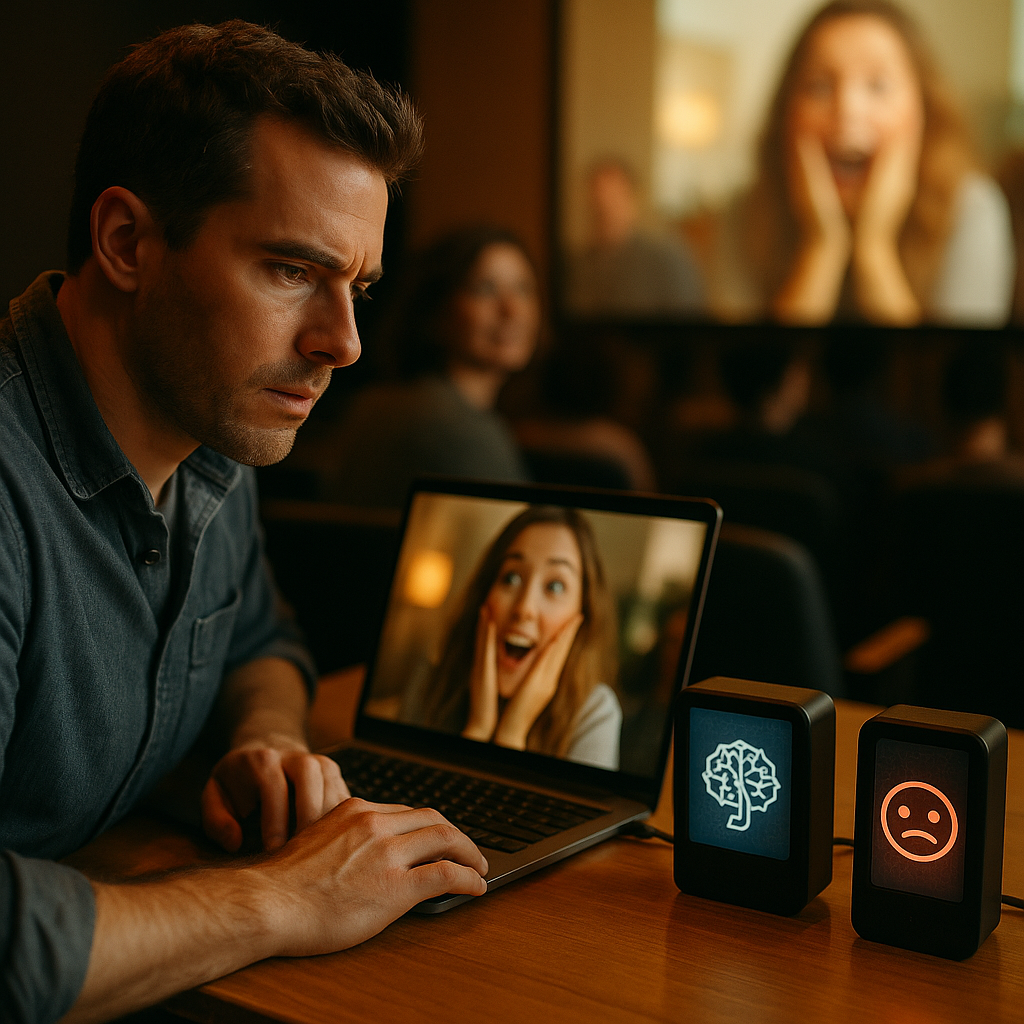
In 2025, creative teams face a tougher reality: bold concepts can win attention fast, but a single misread can trigger backlash just as quickly. Using Swarm AI To Predict Audience Reactions To High-Risk Creative gives marketers a way to test volatility before they spend heavily or go live. This approach blends human judgment with machine guidance—so you can move faster with fewer surprises. What if your riskiest idea became your safest bet?
Swarm AI for marketing research: what it is and why it matters
Swarm AI is a decision-optimization approach that coordinates many human inputs in real time to produce a single, collective prediction. Think of it as structured, technology-mediated group intelligence: instead of collecting isolated survey responses and averaging them, Swarm AI orchestrates participants to converge on an outcome while they continuously adjust based on what the group “pull” suggests.
This matters for marketing research because traditional methods often struggle with high-risk creative: provocative humor, political references, sensitive cultural cues, polarizing spokespeople, or unconventional product claims. These ideas don’t fail in average ways; they fail in sudden, nonlinear ways. A standard concept test might show “slightly above average” purchase intent while missing a small but highly vocal subgroup that can dominate the conversation post-launch.
Swarm methods aim to surface that hidden volatility. In practice, you use a curated set of participants—customers, category users, brand loyalists, detractors, cultural insiders, or frontline staff—and ask them to make predictions and judgments through a real-time interface. The system captures not only what people choose, but how strongly the group converges or fractures. That pattern of convergence becomes a signal: high confidence and alignment suggests stability; persistent oscillation or factioning suggests controversy risk.
Marketing leaders care because the cost of being wrong has increased. A “bad” high-risk campaign is not just wasted media—it can trigger retailer pushback, partner withdrawals, employee friction, and longer-term brand trust erosion. Swarm AI doesn’t remove risk, but it can help you quantify it earlier and choose where to lean in, where to revise, and where to stop.
Audience reaction prediction: why high-risk creative breaks traditional testing
Most concept tests were designed for incremental creative, where audience responses are relatively smooth and normally distributed. High-risk creative behaves differently for four reasons:
- Polarization hides in averages. A mean score can look acceptable while masking strong negative pockets that later fuel complaints, bad reviews, or boycott calls.
- Context changes interpretation. The same line reads as edgy, insulting, or hilarious depending on region, identity, current events, and platform norms.
- Social dynamics shape real-world outcomes. Post-launch reaction isn’t just individual taste; it’s amplification, pile-ons, meme-ification, and influencer framing.
- Speed matters. By the time a weekly tracker flags issues, narratives have already formed.
Swarm-based audience reaction prediction is useful because it introduces controlled social dynamics before launch. Participants see the “direction” of the group as they deliberate in real time, which makes it easier to surface whether discomfort is widespread, whether a misunderstanding can be clarified, or whether the concept triggers moral outrage that no amount of copyediting will fix.
It also helps answer the questions stakeholders actually ask in 2025: “Will this spark negative headlines?” “Will our core buyers defend us?” “Will the joke land on short-form video?” “Is the risk localized to one segment or platform?” You can design swarm prompts around these decision points instead of relying on generic favorability metrics.
High-risk advertising insights: how swarms identify backlash, virality, and brand fit
To predict reactions to high-risk advertising, you need more than “like/dislike.” You need diagnostic insight: what people think will happen when the public encounters the creative, and why. Swarm AI sessions can be structured to reveal three critical outcomes:
1) Backlash probability and triggers
Instead of asking “Is it offensive?”, you ask participants to predict outcomes such as: “Probability of negative trend on platform X,” “Likelihood of complaints to customer support,” or “Chance of being framed as ‘out of touch.’” Then you run follow-up swarm questions to isolate the trigger: tone, casting, a specific phrase, a visual symbol, or a missing disclaimer.
2) Virality mechanics (positive and negative)
High-risk creative often aims for earned reach. Swarm prompts can distinguish between “people will share because it’s funny” versus “people will share to criticize.” You can also test how it spreads: as a sound bite, a screenshot, a stitch/duet, or a headline. That insight feeds directly into editing choices—tightening a line, changing the first three seconds, or preemptively adding context in captions.
3) Brand fit under pressure
Many campaigns look “on brand” in a deck but fail under public scrutiny. Swarms can evaluate whether the creative is credible given the brand’s history, pricing, and prior statements. A key move is to include participants who know the category well and participants who are skeptical of the brand. If both groups converge on “they’ve earned the right to say this,” the risk profile improves. If skeptics dominate the narrative, you may need to shift the messenger, tone, or claim substantiation.
Practical tip: run separate swarms by segment (core buyers, lapsed users, non-users) and compare convergence strength. A concept that delights core fans but alarms non-users may be acceptable for retention channels and dangerous for broad-reach TV or homepage takeovers.
Predictive market testing: a practical workflow for creative teams in 2025
Swarm AI works best when you integrate it into a repeatable workflow, not as a one-off novelty. Here’s a practical predictive market testing process that fits modern production timelines:
- Step 1: Define the risk hypothesis. Write down what could go wrong: “Perceived as insensitive,” “Claim challenged,” “Talent controversy,” “Platform policy violation,” or “Misread as political.” This prevents vague debates later.
- Step 2: Prepare creative stimuli at the right fidelity. For early-stage testing, use animatics, scripts, or storyboards—enough to convey tone and pacing. For late-stage testing, use near-final edits, since micro-timing often drives offense or humor.
- Step 3: Recruit intentionally, not broadly. Include cultural insiders where relevant, category super-users, and “edge case” viewers who are likely to interpret harshly. Document inclusion criteria for transparency.
- Step 4: Run a swarm session plus short debrief. Use real-time swarm questions for predictions (what will happen) and a brief structured survey or interview for rationales (why it will happen). The combination improves actionability.
- Step 5: Translate results into decisions. Map outcomes to actions: edit, add context, platform-limit, segment-target, or kill. Avoid “let’s be careful” conclusions—force a choice.
- Step 6: Re-test only what changed. If you revise the opening line and on-screen text, re-swarm those components. This keeps cycles fast and reduces research fatigue.
Teams often ask, “How many participants do we need?” The useful answer is: enough to represent the interpretive risk, not just demographic quotas. For a potentially sensitive cultural reference, 15 carefully chosen participants can outperform a generic 300-person survey. For mass-market humor, you may need multiple swarms across regions and age groups to catch differences in comedic norms.
Another common question: “Isn’t this just groupthink?” Swarm design should include countermeasures: segment-specific swarms, balanced recruitment, and prompts that ask for probability estimates rather than moral judgments. You can also run parallel “adversarial” swarms—one tasked with predicting praise, the other with predicting criticism—then compare convergence and reasoning.
Human-in-the-loop analytics: governance, bias control, and EEAT-ready evidence
High-risk decisions require credibility. A swarm result is only as trustworthy as the process behind it. In 2025, marketers also need documentation that can stand up to internal review, partner scrutiny, and regulatory expectations. That’s where human-in-the-loop analytics and EEAT-aligned practice matter.
Experience: Use participants with lived experience when the creative touches identity, health, or safety. For example, if you’re referencing disability, include people who live with disability and advocates who understand common pitfalls in representation.
Expertise: Pair swarms with expert review when claims or compliance are involved. Medical, financial, and legal constraints should be checked by qualified professionals. Swarm output can highlight confusion, but experts determine what must change to meet policy or law.
Authoritativeness: Keep a clear audit trail: recruitment criteria, prompts, stimuli versions, and decision rules. If a senior leader asks why you limited a campaign to certain channels, you can show the risk signals and the reasoning.
Trustworthiness: Address bias directly. Swarms can amplify dominant voices if recruitment is unbalanced. Control this by:
- Pre-registering the key questions and success metrics before running sessions.
- Using multiple swarms instead of one mixed room when power dynamics might distort results.
- Monitoring segment drift (e.g., if one subgroup consistently predicts outrage while another predicts indifference, treat that as a targeting decision, not a sampling error).
- Separating “harm” from “discomfort.” Some creative is meant to challenge norms; your job is to identify whether it causes real harm, reputational damage, or simply sparks debate among receptive audiences.
Finally, don’t oversell certainty. Swarm AI can improve directional accuracy and reveal fragility, but it is not a guarantee. Write your outcomes as probability ranges and include “conditions for success,” such as “works if launched with creator partnerships” or “fails if cut into a six-second version.” This builds stakeholder trust and leads to smarter rollout plans.
Creative risk management: integrating swarm predictions into launch, targeting, and crisis planning
The biggest value comes when you treat swarm insights as inputs to creative risk management, not as a pass/fail score. Use results to shape how you launch:
- Channel strategy: If swarms predict misinterpretation on short-form video, adjust the opening frame, add captions, or shift to placements where context is preserved.
- Targeting and sequencing: Launch first to segments likely to understand and advocate, then expand once you validate sentiment and comment themes.
- Message scaffolding: Add a clarifying line, a product proof point, or a “why we’re saying this” statement in owned media to reduce ambiguity.
- Community management readiness: Prepare response templates based on predicted criticism categories. Train social teams on what to ignore, what to answer, and what to escalate.
- Influencer and partner alignment: If swarms predict a narrative risk, brief partners with context and Q&A so they don’t unintentionally amplify the wrong interpretation.
A useful follow-up question is, “When should we avoid high-risk creative entirely?” Swarm outputs can reveal when the concept depends on misunderstanding, stereotyping, or a claim you can’t defend. If the strongest consensus is “this will be framed as deceptive or harmful,” the right move is to change direction, not to hope the internet is kind.
Conversely, if swarms show polarization but also strong advocacy potential, you can proceed with controlled scope: narrower targeting, clearer framing, and a measured earned-media plan. That is how you keep bold work bold without turning it reckless.
FAQs about Swarm AI and predicting reactions to high-risk creative
What types of “high-risk creative” benefit most from Swarm AI testing?
Creative that relies on tone, satire, cultural references, identity cues, or strong claims benefits most. If a small change in wording could flip the meaning, a swarm can quickly expose that fragility.
How is Swarm AI different from a focus group?
A focus group produces qualitative discussion that can be skewed by confident speakers. A swarm produces a quantified collective prediction in real time, capturing convergence, confidence, and factioning—then you can add a short debrief for explanations.
Can Swarm AI predict backlash reliably?
It can improve early detection of backlash risk and identify the likely trigger themes, but it should be treated as probabilistic. Combine swarm results with platform policy checks, brand safety review, and expert compliance review when applicable.
How fast can teams run a swarm-based test?
With prepared stimuli and a vetted panel, teams can run sessions quickly and iterate within typical creative timelines. The key is to predefine the questions and decision thresholds so results translate into action.
Do we need separate swarms for different audience segments?
Often, yes. Segment-specific swarms prevent one group’s norms from overpowering another’s and help you decide targeting, sequencing, and platform mix based on where the creative is understood versus misread.
What metrics should we look at besides the final predicted outcome?
Look at convergence strength, time-to-convergence, persistence of splits, and the specific criticism or praise themes that participants predict will dominate comments and headlines. Those diagnostics tell you what to change.
Swarm AI can make high-risk creative less of a gamble by revealing how audiences are likely to interpret, amplify, or attack an idea before it reaches the public. In 2025, the winning teams treat swarm outputs as actionable probabilities, not verdicts, and combine them with expert review and clear documentation. The takeaway: use swarms to spot fragility early, then adjust targeting, framing, and rollout so bold work lands as intended.
Top Influencer Marketing Agencies
The leading agencies shaping influencer marketing in 2026
Agencies ranked by campaign performance, client diversity, platform expertise, proven ROI, industry recognition, and client satisfaction. Assessed through verified case studies, reviews, and industry consultations.
Moburst

-
2

The Shelf
Boutique Beauty & Lifestyle Influencer AgencyA data-driven boutique agency specializing exclusively in beauty, wellness, and lifestyle influencer campaigns on Instagram and TikTok. Best for brands already focused on the beauty/personal care space that need curated, aesthetic-driven content.Clients: Pepsi, The Honest Company, Hims, Elf Cosmetics, Pure LeafVisit The Shelf → -
3

Audiencly
Niche Gaming & Esports Influencer AgencyA specialized agency focused exclusively on gaming and esports creators on YouTube, Twitch, and TikTok. Ideal if your campaign is 100% gaming-focused — from game launches to hardware and esports events.Clients: Epic Games, NordVPN, Ubisoft, Wargaming, Tencent GamesVisit Audiencly → -
4

Viral Nation
Global Influencer Marketing & Talent AgencyA dual talent management and marketing agency with proprietary brand safety tools and a global creator network spanning nano-influencers to celebrities across all major platforms.Clients: Meta, Activision Blizzard, Energizer, Aston Martin, WalmartVisit Viral Nation → -
5

The Influencer Marketing Factory
TikTok, Instagram & YouTube CampaignsA full-service agency with strong TikTok expertise, offering end-to-end campaign management from influencer discovery through performance reporting with a focus on platform-native content.Clients: Google, Snapchat, Universal Music, Bumble, YelpVisit TIMF → -
6

NeoReach
Enterprise Analytics & Influencer CampaignsAn enterprise-focused agency combining managed campaigns with a powerful self-service data platform for influencer search, audience analytics, and attribution modeling.Clients: Amazon, Airbnb, Netflix, Honda, The New York TimesVisit NeoReach → -
7

Ubiquitous
Creator-First Marketing PlatformA tech-driven platform combining self-service tools with managed campaign options, emphasizing speed and scalability for brands managing multiple influencer relationships.Clients: Lyft, Disney, Target, American Eagle, NetflixVisit Ubiquitous → -
8

Obviously
Scalable Enterprise Influencer CampaignsA tech-enabled agency built for high-volume campaigns, coordinating hundreds of creators simultaneously with end-to-end logistics, content rights management, and product seeding.Clients: Google, Ulta Beauty, Converse, AmazonVisit Obviously →