


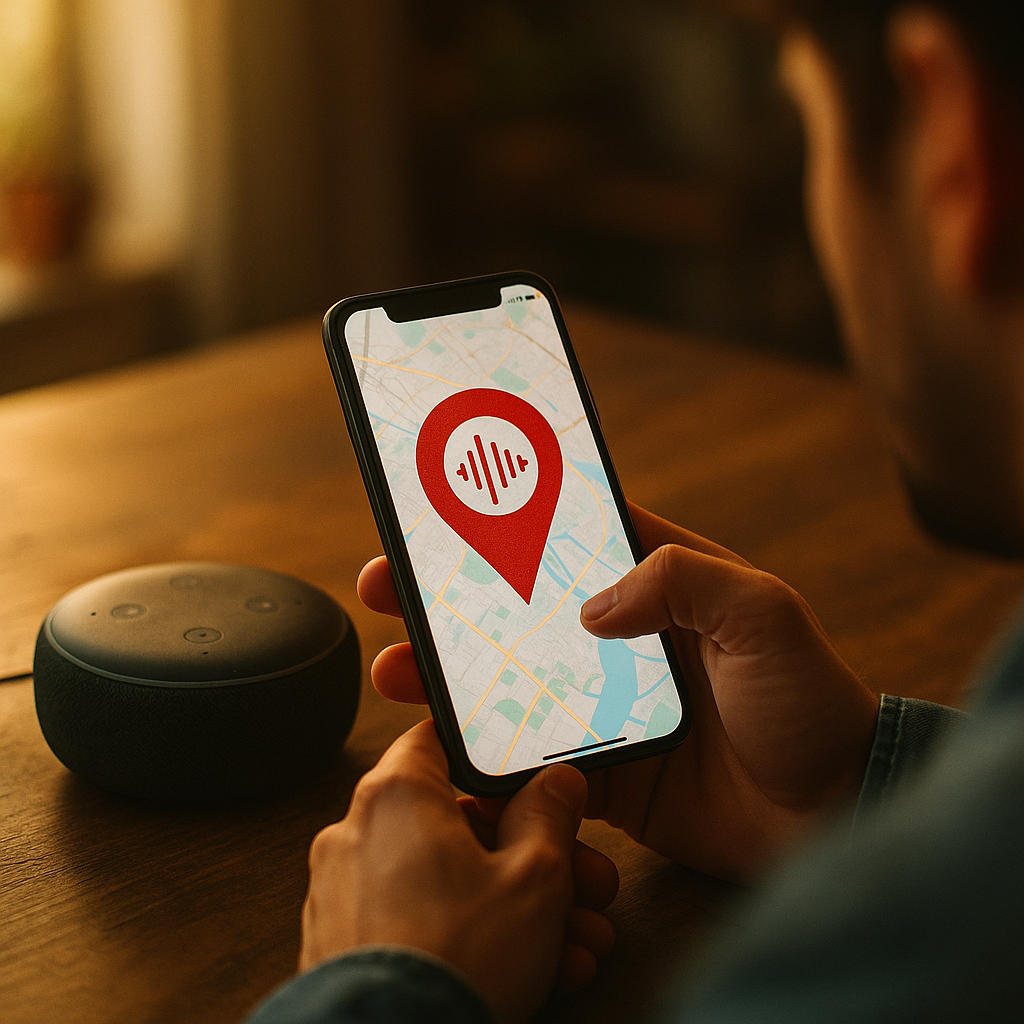
Wearable smart pins are reshaping how people discover brands: hands-free, screenless, and often always-on. This playbook for audio first marketing on wearable smart pins shows how to earn attention with sound, not scrolls. You’ll learn what to say, when to say it, and how to measure outcomes without breaking trust. Ready to build campaigns people actually hear?
Audio-first marketing strategy for wearable smart pins
Smart pins sit at the intersection of voice assistants, ambient computing, and micro-wearables. That changes the marketing contract: you can’t rely on visuals, and you can’t interrupt without consequences. An effective audio-first strategy starts with permission, relevance, and brevity.
Define the role of audio in the customer journey. On pins, audio works best for moments where eyes are busy and intent is high: commuting, cooking, walking, exercising, working on tasks. Build use cases around these contexts rather than forcing existing ad formats into a new channel.
Choose your primary interaction model:
- On-demand: The user asks, taps, or triggers a command (“Find a nearby store,” “Reorder,” “Track my delivery”). This is the safest and most trusted path.
- Event-driven: Notifications tied to a meaningful event (order shipped, appointment in 30 minutes, price drop you opted into). These can perform well if frequency is tightly controlled.
- Context-aware: Suggestions based on user state (calendar, location, activity) but only with explicit consent. For marketing, treat this as high-risk/high-reward and default to conservative rules.
Establish a “three-second promise.” In the first three seconds, the user must understand why the message matters. If you can’t state the benefit that quickly, the message belongs elsewhere.
Answer the likely follow-up: “Do I need an app?” In 2025, many pins rely on a companion app for setup, permissions, and account linking. Plan for a lightweight onboarding path inside the app, but design the core experience to work through audio interactions that feel native to the pin.
Voice UX and sonic branding on smart pins
Audio-first doesn’t mean “make everything a podcast.” It means designing voice experiences with the same rigor as product UX. Your goal is to be understood instantly, remembered accurately, and dismissed easily when the user isn’t interested.
Build a reusable voice script system:
- Intent line: One sentence that states the purpose (“Your refill is ready to ship”).
- Value line: One sentence that explains the benefit (“Arrives by Friday if you confirm today”).
- Action choice: Two options maximum (“Say ‘confirm’ or ‘remind me tomorrow’”).
Use constrained choices. Pins are not ideal for complex menus. Offer binary or ternary decisions, then follow up only if the user engages. This reduces cognitive load and improves completion rates.
Create a sonic identity that supports trust. Short earcons (brief, consistent tones) can signal your brand without speaking your name repeatedly. Keep them subtle and consistent across touchpoints. Avoid loud stingers or long intros; pins live close to the body, and overbearing audio feels invasive.
Design for interruption and recovery. People will be interrupted by real life. Ensure every audio experience can resume gracefully: “Want me to repeat that?” or “I can send a summary to your phone.”
Accessibility is performance. Clear articulation, plain language, and optional text summaries help everyone, not just users with hearing differences. If the ecosystem supports it, offer adjustable speech rate and a “quiet mode.”
Consent, privacy, and trust signals for wearable marketing
Wearable pins feel intimate. That intimacy amplifies both effectiveness and risk. Trust is not a branding exercise; it’s an engineering and policy decision that shows up in every prompt, permission, and notification.
Set consent at the feature level. Instead of one blanket opt-in, ask for permissions in context:
- Order updates and receipts
- Personalized offers
- Location-based suggestions
- Calendar-based reminders
Use progressive disclosure. Start with the lowest-risk value (transactional updates), then earn the right to ask for higher-sensitivity permissions. This mirrors how people build trust in real relationships.
Make data use understandable in one breath. If you can’t explain it clearly, you shouldn’t collect it. Example: “We use your location only when you ask for nearby options. You can turn it off anytime.”
Offer immediate control. Every marketing message should include a quick exit: “Say ‘stop offers’” or “Mute for a week.” Control reduces annoyance and improves long-term retention.
Answer the likely follow-up: “Can we do personalization without being creepy?” Yes—use first-party signals tied to explicit actions (purchases, saved preferences, opt-in categories) rather than inferred sensitive attributes. Personalize the timing and utility more than the content. “Now is a good time to reorder” often lands better than “We know you’re at the gym.”
Demonstrate EEAT in-channel. State who the brand is, why the message is sent, and how to verify it. Simple trust signals—order numbers, recognizable sender identity, and a confirmable path in the companion app—reduce fraud concerns.
Content formats and micro-audio ads for smart pins
Pins reward content that is compact, helpful, and actionable. Think “micro-audio” rather than “audio ads.” The best-performing formats are closer to utilities than commercials.
High-fit formats:
- Action prompts: “Your cart items are in stock. Want to checkout?”
- Service updates: “Your technician is 10 minutes away.”
- Guided moments: 15–30 seconds of coaching (“Breathe in…”) tied to a product or membership the user already has.
- Local confirmation: “Store is open until 8. Want directions?”
- Post-purchase onboarding: “Want a 20-second setup checklist?”
Keep offers specific. Pins are not a browsing channel. Replace broad brand campaigns with narrow, relevant offers tied to a clear next step. “20% off summer collection” is vague; “Save 15% on refill filters you bought last time—confirm to reorder” is precise.
Ad length and pacing. Aim for 8–20 seconds for most prompts. If you must go longer, break it into steps with explicit permission: “Want the quick version or the full details?”
Design for the “no”. A good pin experience respects refusal. Provide graceful declines: “No thanks,” “Later,” “Not interested,” and “Mute.” Track declines as valuable feedback, not failure.
Answer the likely follow-up: “Can we repurpose podcast content?” You can, but only after adapting it. Extract one actionable idea, remove intros, remove sponsor reads, and add a single clear choice. If it can’t become a single decision point, it doesn’t belong on a pin.
Distribution, partnerships, and campaign orchestration on wearable pins
In 2025, access to pin users typically comes through a mix of owned experiences (your app/account), platform integrations, and device-maker ecosystems. Your distribution plan should prioritize durable access over short-term reach.
Start with owned surfaces:
- Account-linked experiences (membership, reorder, support)
- Transactional messaging that earns opt-ins
- Preference center in the companion app (topics, frequency, quiet hours)
Layer in partnerships where your product naturally fits an audio interaction:
- Retailers and delivery services for order status and substitutions
- Mobility and travel partners for itinerary changes and upgrades
- Health and wellness platforms for guided routines (only with explicit consent)
Orchestrate across channels. Pins rarely operate alone. Use them to trigger or confirm actions, then hand off detail to other channels:
- Pin: “Want to see the three options?”
- Phone: Visual comparison
- Email: Receipt and policy details
Frequency management is a growth lever. Set caps by user and by category. A simple rule: if the message isn’t time-sensitive or user-requested, it should not bypass quiet hours. Build a “relevance ladder” so only top-tier messages reach the pin audio layer.
Prepare for failure modes: poor connectivity, noisy environments, speech recognition errors. Provide fallbacks: “I can send this to your phone” or “Tap to confirm.” Reliability is part of brand credibility.
Measurement and optimization for audio-first wearable campaigns
Analytics for smart pins must balance business outcomes with user trust. Measure what matters, minimize what you collect, and connect signals to real value.
Define success metrics by intent:
- Transactional: confirmation rate, time to completion, support deflection, repeat purchases
- Engagement: opt-in rate, mute rate, “stop” commands, repeat listens (if supported)
- Experience quality: error rate, fallback usage, “repeat” requests, abandonment points
Use controlled experiments. A/B test scripts, timing windows, and call-to-action phrasing. On pins, tiny changes matter: swapping “buy now” to “confirm reorder” can shift perception from pushy to helpful.
Optimize for long-term retention, not just immediate conversions. Track indicators of fatigue: rising mute rates, declining opt-ins, and increased “stop” commands. Build alerting so you catch annoyance early.
Attribute responsibly. Pins often act as an assist, not the final click. Use incrementality tests where possible, and combine device events with privacy-safe conversion reporting from your owned systems.
Answer the likely follow-up: “How do we prove ROI?” Start with a narrow, high-intent use case such as reorder prompts, appointment confirmations, or shipping updates. These tie directly to measurable outcomes (reduced churn, fewer support contacts, increased repeat orders). Then expand to opt-in offers only after you’ve established trust and baseline performance.
FAQs about audio first marketing on wearable smart pins
What makes wearable smart pins different from voice assistants in speakers?
Pins travel with the user and support hands-free moments outside the home. That makes context and timing more important, and it raises the standard for privacy and interruption control.
How long should an audio message be on a smart pin?
Most high-performing prompts fit in 8–20 seconds. If you need more, ask permission to continue and offer a “send to phone” option for details.
Do smart pin campaigns require personalization to work?
No. Utility and timing often outperform deep personalization. Start with user-requested and transactional experiences, then add opt-in preferences like categories and frequency.
How do we prevent audio messages from feeling intrusive?
Use explicit opt-ins, strict frequency caps, quiet hours, and a one-step way to mute or stop offers. Lead with a clear benefit in the first three seconds.
What industries are best suited to audio-first marketing on pins?
Commerce with reorders, subscriptions, travel updates, local retail, healthcare administration (appointments), and services with scheduling all fit well—especially when the pin reduces friction.
How do we handle compliance and user trust?
Collect minimal data, explain use clearly, and provide user controls. Keep sensitive features off by default and verify messages through an account-linked companion app.
Audio-first campaigns on smart pins succeed when they behave like a helpful assistant instead of a loudspeaker. Anchor your strategy in consent, design micro-audio scripts that resolve into one clear action, and orchestrate details to the phone when needed. Measure outcomes and fatigue signals with equal discipline. The takeaway: earn the right to speak, then make every second count.
Top Influencer Marketing Agencies
The leading agencies shaping influencer marketing in 2026
Agencies ranked by campaign performance, client diversity, platform expertise, proven ROI, industry recognition, and client satisfaction. Assessed through verified case studies, reviews, and industry consultations.
Moburst

-
2

The Shelf
Boutique Beauty & Lifestyle Influencer AgencyA data-driven boutique agency specializing exclusively in beauty, wellness, and lifestyle influencer campaigns on Instagram and TikTok. Best for brands already focused on the beauty/personal care space that need curated, aesthetic-driven content.Clients: Pepsi, The Honest Company, Hims, Elf Cosmetics, Pure LeafVisit The Shelf → -
3

Audiencly
Niche Gaming & Esports Influencer AgencyA specialized agency focused exclusively on gaming and esports creators on YouTube, Twitch, and TikTok. Ideal if your campaign is 100% gaming-focused — from game launches to hardware and esports events.Clients: Epic Games, NordVPN, Ubisoft, Wargaming, Tencent GamesVisit Audiencly → -
4

Viral Nation
Global Influencer Marketing & Talent AgencyA dual talent management and marketing agency with proprietary brand safety tools and a global creator network spanning nano-influencers to celebrities across all major platforms.Clients: Meta, Activision Blizzard, Energizer, Aston Martin, WalmartVisit Viral Nation → -
5

The Influencer Marketing Factory
TikTok, Instagram & YouTube CampaignsA full-service agency with strong TikTok expertise, offering end-to-end campaign management from influencer discovery through performance reporting with a focus on platform-native content.Clients: Google, Snapchat, Universal Music, Bumble, YelpVisit TIMF → -
6

NeoReach
Enterprise Analytics & Influencer CampaignsAn enterprise-focused agency combining managed campaigns with a powerful self-service data platform for influencer search, audience analytics, and attribution modeling.Clients: Amazon, Airbnb, Netflix, Honda, The New York TimesVisit NeoReach → -
7

Ubiquitous
Creator-First Marketing PlatformA tech-driven platform combining self-service tools with managed campaign options, emphasizing speed and scalability for brands managing multiple influencer relationships.Clients: Lyft, Disney, Target, American Eagle, NetflixVisit Ubiquitous → -
8

Obviously
Scalable Enterprise Influencer CampaignsA tech-enabled agency built for high-volume campaigns, coordinating hundreds of creators simultaneously with end-to-end logistics, content rights management, and product seeding.Clients: Google, Ulta Beauty, Converse, AmazonVisit Obviously →