


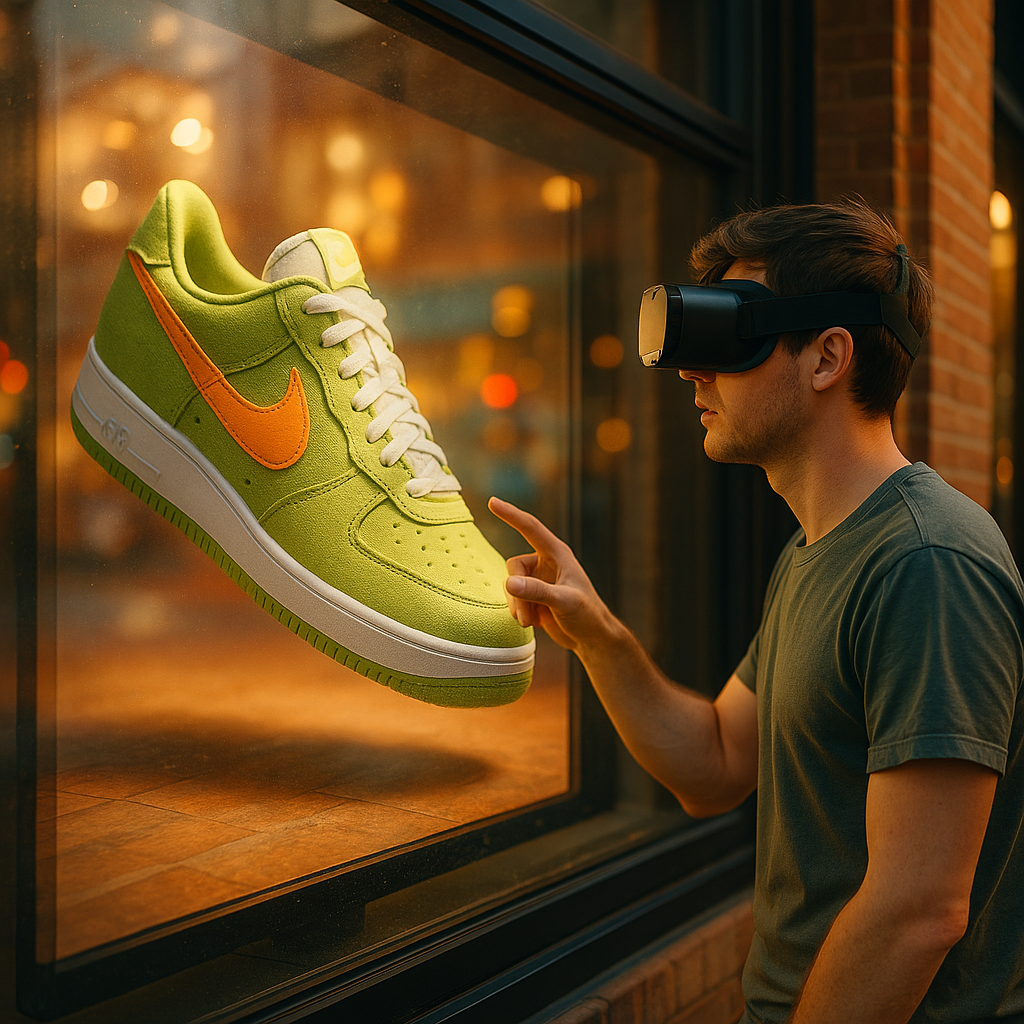
The Science of Visual Anchoring in 3D Immersive Advertisements is reshaping how brands earn attention inside spatial media. Instead of forcing a message, effective campaigns pin meaning to stable cues the brain naturally trusts—depth, motion, and context—so viewers understand and remember faster. This article breaks down the science, the design levers, and the measurement playbook you can use now—ready to see why “where” matters as much as “what”?
Visual anchoring principles: how the brain decides what is “real” in 3D
Visual anchoring is the process by which the brain stabilizes perception by locking onto reliable cues in a scene. In immersive environments—AR, VR, mixed reality, volumetric video, and 3D web experiences—anchoring is not a decorative choice. It is a perceptual requirement. When anchors are strong, users feel oriented, objects feel believable, and branded elements become easier to interpret and recall.
Several systems work together to create this “reality check”:
- Depth inference: The brain combines binocular disparity, perspective, shading, and relative size to infer distance. If an ad object violates these cues—floating at an impossible depth or scaling oddly—attention shifts from message to confusion.
- Predictive processing: Perception constantly predicts what should happen next. In 3D ads, smooth continuity of position, lighting, and physics strengthens prediction and reduces cognitive effort, freeing capacity for the brand story.
- Sensorimotor consistency: When users move their head or device, the world should update correctly. Stable anchors reduce mismatch between expected and observed motion, supporting comfort and trust.
- Figure–ground separation: The brain prioritizes objects that read as “figure” against a stable “ground.” Anchors clarify which elements are important and which are contextual, helping brand elements pop without shouting.
For advertisers, the practical takeaway is simple: anchoring is comprehension. If the viewer must work to decode spatial placement, the message loses. If placement feels inevitable, the message lands quickly.
Depth cues and spatial perception: building believable brand presence
3D immersive ads succeed when the branded object behaves like it belongs. That sense of belonging comes from layered depth cues that agree with each other. Relying on one cue (for example, a drop shadow) can fail in dynamic scenes. Using multiple cues creates redundancy—exactly what perception prefers.
Design tactics that strengthen spatial perception:
- Occlusion with intent: Let real or virtual scene elements partially cover the ad object when appropriate. Correct occlusion is one of the strongest “this is in the world” signals. Use it to make products feel present, not pasted on.
- Ground contact and support: Objects should rest on surfaces with accurate contact shadows, subtle bounce lighting, and consistent scale. If an item hovers, make it a deliberate creative idea with clear physics rules (for example, a magnetized platform).
- Parallax correctness: As the user moves, near objects should shift more than far objects. If parallax is off, viewers often report discomfort or “cheapness,” even if they can’t name the cause.
- Lighting coherence: Match the direction, softness, and color temperature of scene lighting. In AR, environment light estimation is a core technical requirement; in VR, you control lighting—so inconsistency is purely a craft problem.
- Scale references: Add nearby objects of known size (furniture, hands, doorways) to anchor product scale. A car in a living room becomes a gag unless the experience clearly signals a miniature or a portal.
Readers often ask: “Do we always need photorealism?” No. Stylization works well when it is internally consistent. A toon-shaded product can anchor strongly if its shadows, motion, and interaction rules match the world it inhabits.
Attention and memory: why anchors improve recall and reduce cognitive load
Immersive formats can overwhelm users with novelty—new controls, new viewpoints, and new expectations. Visual anchoring reduces this burden by giving the brain stable reference points, which improves attention allocation and memory encoding.
From a cognitive standpoint, anchoring supports performance in three ways:
- Faster orientation: When users quickly understand “where they are,” they spend less time scanning aimlessly and more time engaging the content. In ad terms, this means earlier brand comprehension and fewer drop-offs.
- Selective attention: Anchors create hierarchy. A stable environmental anchor (room, street, stadium) allows the branded object to be the salient “figure.” Without hierarchy, attention fragments across competing stimuli.
- Better encoding: Memory favors distinct items tied to context. When a product is spatially “attached” to a meaningful location or action (placing a sneaker on a track line, pouring a drink into a glass the user holds), it gains associative hooks.
Practical creative implications for 2025 campaigns:
- Use fewer, stronger anchors: One reliable world anchor plus one brand anchor often beats five weak cues. Over-instrumenting the scene can feel busy and reduce comprehension.
- Stabilize the brand early: Introduce the brand object in a low-motion moment, then increase dynamism. Early stability helps users calibrate scale and depth.
- Design for micro-decisions: Users ask, “Can I touch it? Can I walk around it? What happens if I look away?” Clear anchors answer these questions without instructions.
Another common follow-up: “Will anchoring make the ad less noticeable?” Done well, it does the opposite. It reduces perceptual friction, so attention can move from “Is this glitching?” to “This is interesting.”
AR/VR interaction design: anchoring through motion, handoffs, and affordances
In immersive ads, interaction is often the difference between passive viewing and active persuasion. Visual anchoring must extend to how objects respond—because interaction is a promise. If the user expects a response and gets none (or a delayed one), trust drops.
Key interaction patterns that improve anchoring:
- Affordances that match the medium: In AR on a phone, users expect tap, drag, pinch, and camera movement. In VR, they expect gaze, controller, and hand tracking. Use the most native interaction first, then layer advanced options.
- Motion with purpose: Motion attracts attention, but motion without meaning erodes credibility. Tie animation to user intent (hover highlight on gaze, subtle spin on selection) and to physics (damped movement, easing, inertia).
- State continuity: If a user places an object, it should stay placed. If they resize it, it should keep that size unless the scene changes for a clear reason. Continuity is anchoring’s behavioral twin.
- Handoff moments: If the ad transitions from AR try-on to a 3D product explainer, carry an anchor across the boundary—color palette, object position, or a persistent “home” point—so the user does not feel reset.
- Comfort-first movement: In VR, avoid forcing rapid camera motion. Instead, anchor content to stable world geometry and let users move themselves. Comfort supports dwell time, which supports message absorption.
When teams ask, “How interactive should it be?” the best answer is: interactive enough to prove value. If interaction does not reveal information, demonstrate fit, or personalize an outcome, it is likely distraction.
Measurement and experimentation: eye tracking, dwell time, and brand lift in immersive media
Anchoring is measurable. In 2025, the strongest programs treat immersive ads as experiments: define hypotheses, instrument the experience, and iterate based on behavioral and brand outcomes. This is also where EEAT matters: being transparent about what you measured and why builds credibility with stakeholders.
Useful metrics and what they indicate:
- Dwell time by scene region: Longer dwell near the brand object can indicate effective anchoring, but validate quality by checking whether users progress through intended steps or stall in confusion.
- Interaction completion rate: A high rate of successful placements, try-ons, or product explorations suggests anchors and affordances are clear.
- Error signals: Repeated reposition attempts, excessive resizing, or rapid camera swings can signal weak anchoring or scale mismatch.
- Attention proxies: In VR, gaze and head pose; in AR, camera framing and object proximity. Where privacy rules allow, aggregate patterns to see whether anchors guide attention as designed.
- Brand outcomes: Ad recall, message comprehension, purchase intent, and incremental lift. Treat these as the “why” behind the “what” of behavior.
Testing framework you can apply immediately:
- Define one anchoring hypothesis: Example: “Adding correct occlusion and contact shadows will increase product exploration by 15%.”
- Create two variants: Keep everything else identical to isolate the anchoring lever.
- Pre-register success metrics internally: Decide in advance which metric determines a winner to avoid post-hoc storytelling.
- Segment by device and context: Phone AR in bright outdoor conditions differs from indoor use; VR seated differs from room-scale.
- Validate with qualitative notes: Short user interviews reveal whether people felt “grounded,” “confused,” or “impressed,” helping you interpret numbers.
One more follow-up readers usually have: “Is eye tracking required?” No. It helps, but you can learn a lot from interaction paths, camera framing, and completion time—especially if your anchors are designed around clear user goals.
Creative strategy and ethics: trust, disclosure, and accessible immersion
Effective anchoring increases believability, which raises an ethical responsibility: viewers should understand when they are seeing advertising and what is simulated. Strong creative in 2025 pairs persuasive design with transparent, user-respecting practices.
Best practices that support trust and accessibility:
- Clear ad disclosure: Make sponsorship explicit without interrupting flow. In immersive environments, subtle but persistent disclosure often works better than a single fleeting label.
- Respect personal space: In AR, avoid placing objects too close to the user’s face by default. In VR, avoid sudden intrusions into near-field space unless the user initiates it.
- Comfort and safety constraints: Provide easy reset, pause, and exit options. If an object is anchored to the floor, ensure it does not encourage unsafe movement in tight spaces.
- Accessible interaction: Offer alternative inputs (tap instead of pinch; gaze dwell instead of fine motor gestures). Keep text legible at typical viewing distances and avoid critical info conveyed only by color.
- Data minimization: If you collect spatial mapping or gaze-related signals, collect the minimum needed, process securely, and explain in plain language. Trust is a performance metric.
From an EEAT perspective, teams should document design decisions and testing results. When you can show that anchors improved comprehension, comfort, and outcomes—without dark patterns—you build durable credibility with both users and partners.
FAQs: Visual anchoring in 3D immersive advertising
What is visual anchoring in immersive ads?
It is the use of stable perceptual cues—depth, occlusion, lighting, scale, and consistent motion—to make virtual branded elements feel grounded in a scene so users can understand and engage without confusion.
Is visual anchoring more important in AR than in VR?
It is critical in both. AR must match the real world’s lighting and geometry, while VR must maintain internal consistency and comfort. AR failures often look “fake,” VR failures often feel “wrong.”
What are the most effective anchoring cues to prioritize?
Prioritize occlusion, ground contact, correct scale, and coherent lighting. Then refine parallax, material response, and interaction feedback. These cues work together to create believability.
How do I know if my immersive ad is poorly anchored?
Look for high reposition attempts, short dwell time, frequent drop-offs at the first interaction, user comments about “floating” or “glitchy” objects, and inconsistent camera framing that suggests users are searching for a stable view.
Can stylized 3D ads anchor well without realism?
Yes. Anchoring depends on consistency, not realism. Stylized visuals can anchor strongly if scale, motion, occlusion logic, and interaction states behave predictably.
What tools can measure anchoring performance without eye tracking?
Use interaction analytics (placement success, completion rate), camera framing and distance to object, time-to-first-action, heatmaps based on view direction, and short in-context surveys measuring comprehension and comfort.
Visual anchoring turns immersive advertising from a novelty into a reliable communication channel. When depth cues agree, motion follows clear rules, and interactions preserve continuity, users feel oriented and the brand message becomes effortless to process. In 2025, the winning approach pairs this perceptual science with ethical disclosure, accessible design, and disciplined measurement. Build strong anchors first, then amplify creativity—your audience will stay longer and remember more.
Top Influencer Marketing Agencies
The leading agencies shaping influencer marketing in 2026
Agencies ranked by campaign performance, client diversity, platform expertise, proven ROI, industry recognition, and client satisfaction. Assessed through verified case studies, reviews, and industry consultations.
Moburst

-
2

The Shelf
Boutique Beauty & Lifestyle Influencer AgencyA data-driven boutique agency specializing exclusively in beauty, wellness, and lifestyle influencer campaigns on Instagram and TikTok. Best for brands already focused on the beauty/personal care space that need curated, aesthetic-driven content.Clients: Pepsi, The Honest Company, Hims, Elf Cosmetics, Pure LeafVisit The Shelf → -
3

Audiencly
Niche Gaming & Esports Influencer AgencyA specialized agency focused exclusively on gaming and esports creators on YouTube, Twitch, and TikTok. Ideal if your campaign is 100% gaming-focused — from game launches to hardware and esports events.Clients: Epic Games, NordVPN, Ubisoft, Wargaming, Tencent GamesVisit Audiencly → -
4

Viral Nation
Global Influencer Marketing & Talent AgencyA dual talent management and marketing agency with proprietary brand safety tools and a global creator network spanning nano-influencers to celebrities across all major platforms.Clients: Meta, Activision Blizzard, Energizer, Aston Martin, WalmartVisit Viral Nation → -
5

The Influencer Marketing Factory
TikTok, Instagram & YouTube CampaignsA full-service agency with strong TikTok expertise, offering end-to-end campaign management from influencer discovery through performance reporting with a focus on platform-native content.Clients: Google, Snapchat, Universal Music, Bumble, YelpVisit TIMF → -
6

NeoReach
Enterprise Analytics & Influencer CampaignsAn enterprise-focused agency combining managed campaigns with a powerful self-service data platform for influencer search, audience analytics, and attribution modeling.Clients: Amazon, Airbnb, Netflix, Honda, The New York TimesVisit NeoReach → -
7

Ubiquitous
Creator-First Marketing PlatformA tech-driven platform combining self-service tools with managed campaign options, emphasizing speed and scalability for brands managing multiple influencer relationships.Clients: Lyft, Disney, Target, American Eagle, NetflixVisit Ubiquitous → -
8

Obviously
Scalable Enterprise Influencer CampaignsA tech-enabled agency built for high-volume campaigns, coordinating hundreds of creators simultaneously with end-to-end logistics, content rights management, and product seeding.Clients: Google, Ulta Beauty, Converse, AmazonVisit Obviously →