


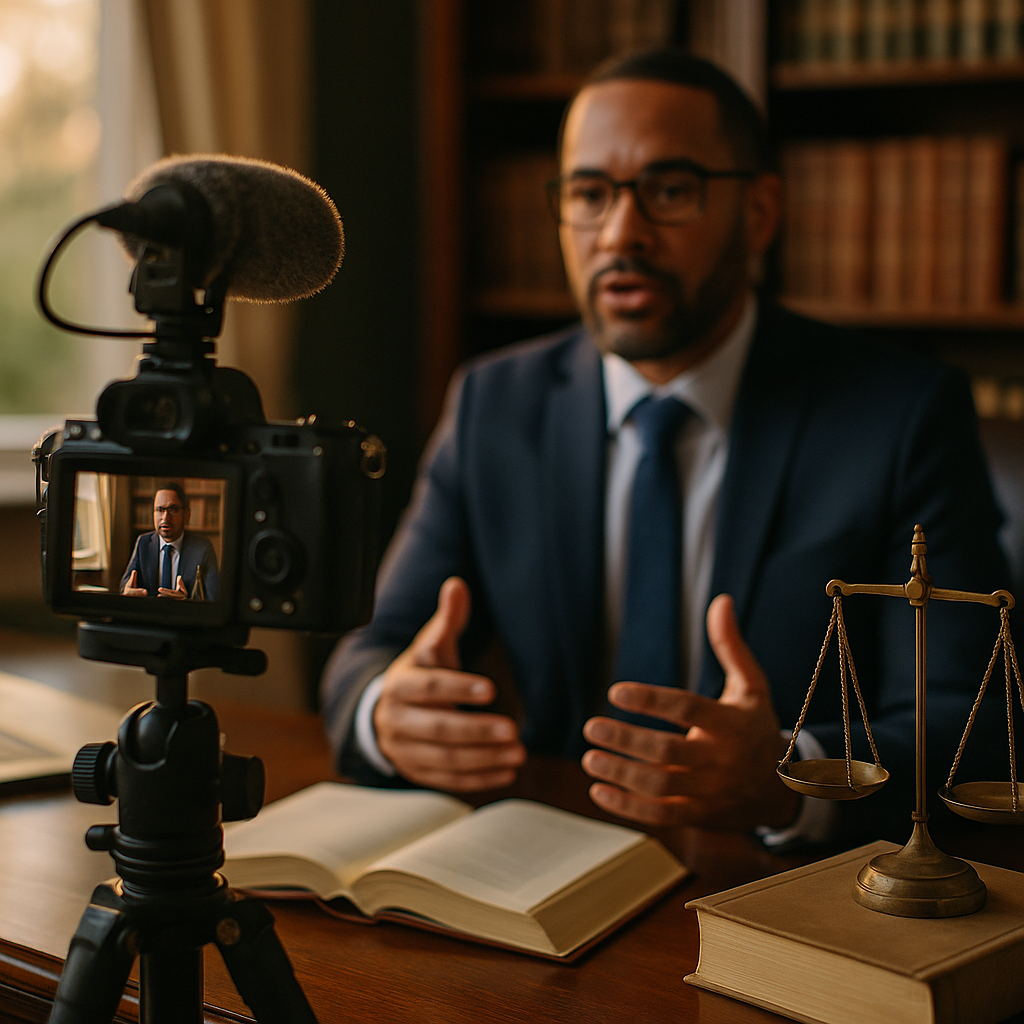
In 2025, law firms compete for attention in a crowded digital space, where trust and clarity win clients. This case study on educational short form documentaries shows how one mid-sized firm used brief, story-driven videos to explain complex legal issues, build credibility, and generate qualified consultations. The results were measurable, repeatable, and surprisingly fast—so what changed when they stopped “marketing” and started teaching?
Educational video marketing for law firms: The firm, the challenge, and the opportunity
Firm profile: A mid-sized regional practice with strong capability in personal injury, employment, and small-business litigation. The firm had an experienced team, solid outcomes, and positive reviews, but online growth had plateaued.
The challenge: Their website was informative but dense. Blog posts ranked for some terms, yet visitors often bounced before contacting the firm. Social posts received low engagement, and paid search costs were rising.
What clients were telling them: Intake staff noticed a recurring pattern: potential clients arrived anxious, confused about timelines, and unsure whether their situation “counted.” Many asked the same questions, and when answers were not clear, they delayed action.
The opportunity: The firm realized it didn’t need louder ads; it needed clearer education. Short-form documentaries offered a way to demonstrate expertise, show real process, and address hesitation—without giving legal advice or making unrealistic promises.
Strategic decision: Replace generic promotional content with a series of educational, narrative-driven mini-documentaries that show how legal problems unfold, how decisions get made, and what outcomes can realistically look like.
Short form legal documentaries: The content strategy and production approach
The firm created a content format they called “3-Minute Case Files.” Each episode was a documentary-style story, not a commercial. The goal was to make the viewer feel informed and capable of taking the next step.
Core format (60–180 seconds):
- Cold open: A relatable moment (“You just got fired after reporting safety issues—what now?”).
- What the law generally considers: High-level legal framework, no individualized advice.
- What evidence matters: Documents, timelines, witnesses, and common mistakes.
- What the process looks like: Investigation, demand/negotiation, litigation triggers.
- Clear next step: “If this resembles your situation, document X and speak with counsel.”
Topics chosen from real demand signals: They mined intake call notes, Google Search Console queries, and the top questions attorneys heard in consultations. That ensured the series matched actual intent instead of assumptions.
Production choices that supported EEAT:
- On-camera attorneys: Episodes featured attorneys who practice in the relevant area, introduced with credentials and focus.
- Process visuals: B-roll of document review, courtroom corridors (no active matters), and anonymized sample timelines.
- Plain-language scripts: Written to be understood on first pass; legal terms were defined in context.
- Compliance guardrails: Prominent statements that the video is for general information, not legal advice, and outcomes vary.
Volume and cadence: Two episodes per month for three months, then one per month plus short clips cut from each episode. This prevented a “launch spike” followed by silence, which often undermines trust.
Where the videos lived: The firm hosted full episodes on its website and primary video channel, then distributed shorter cuts on social platforms. Each episode had a matching page with a transcript, key takeaways, and a relevant intake form.
Law firm brand authority: How the documentaries built trust and demonstrated expertise
Most firms claim they are “experienced” and “aggressive.” This firm demonstrated competence by showing the thinking behind decisions. That shift mattered because potential clients often evaluate a lawyer’s fit before they evaluate price.
How the series established authority without overpromising:
- Scenario realism: Episodes focused on common, messy fact patterns rather than perfect textbook cases.
- Risk disclosure: Attorneys explained what can go wrong—missed deadlines, weak documentation, conflicting testimony—so viewers saw balanced guidance.
- Evidence-first framing: “Here’s what we would need to evaluate” replaced “Here’s what we can win.”
- Ethical clarity: Each episode clarified that only a consultation can assess a specific claim.
Trust accelerators embedded in the content:
- Attorney bylines and credentials: Each episode and webpage listed the attorney’s role, practice focus, and relevant admissions.
- Editorial review: A second attorney reviewed each script for accuracy and jurisdictional caution.
- Client privacy protection: Stories were composites or anonymized scenarios; no identifiable client details were used.
Answering follow-up questions inside the content: The firm anticipated what viewers ask next—fees, timelines, what to bring, and what not to do. By addressing those questions in the video and on the page, the firm reduced anxiety and improved intake readiness.
Legal content SEO: Distribution, on-page optimization, and discoverability
The documentaries succeeded because they weren’t treated as “social-only.” The firm built a search-friendly education library where each video served a clear query intent and supported a next action.
On-page SEO framework for each episode:
- Dedicated episode page: One topic per page, with a transcript and a short summary for quick scanning.
- Internal linking: Each page linked to related practice pages and 2–3 supporting articles (“what to document,” “how long claims take,” “what mediation is”).
- FAQ blocks on the page: Questions mirrored what people search and what intake receives daily.
- Clear calls-to-action: “Request a consultation” plus a checklist download (“What to Gather Before You Call”).
Distribution plan that matched user intent:
- Search-driven: Episodes targeting informational queries were built to capture early-stage research and move viewers toward consultation readiness.
- Community-driven: Some episodes were shared with local business groups and professional associations when topics aligned (employment documentation, contract disputes).
- Email nurture: Leads who weren’t ready received a short series of educational episodes addressing common concerns.
Why this worked in a competitive SERP: Many competing pages were generic. These episode pages were specific, comprehensive, and supported by real attorney presence, which signaled helpfulness and credibility. The transcript also made the content accessible and indexable.
Client acquisition for attorneys: Results, metrics, and what changed in intake quality
The firm set up measurement before publishing the first episode. They tracked performance at three layers: visibility (reach and traffic), engagement (watch time and page depth), and conversion (consultations and qualified matters).
Key performance indicators they monitored:
- Qualified consultation requests: Form fills and calls that met pre-set criteria (jurisdiction, practice fit, timeline).
- Conversion rate by source: Video-page visitors versus blog-only visitors.
- Intake readiness: Whether callers had key documents, understood timelines, and could describe events clearly.
- Cycle time to decision: How quickly prospects booked after first touch.
Observed outcomes (directional, not guarantees): The firm saw higher engagement on episode pages than on standard articles, and a noticeable lift in consultation quality. Intake staff reported fewer “basic” calls and more conversations that started mid-funnel: prospects referenced episodes, used correct terminology, and asked more specific questions.
What improved and why:
- Better-fit leads: People self-selected after watching the process and hearing limitations.
- Lower friction: The documentaries normalized legal steps, reducing fear of “getting it wrong.”
- Clearer expectations: Because episodes discussed timelines and uncertainties, fewer prospects expected instant outcomes.
Practical intake insight: The firm embedded a “Before you call” checklist below every video. Prospects arrived with dates, names, documents, and a timeline. That shortened initial calls and improved attorneys’ ability to assess matters quickly.
Attorney thought leadership: Replicable lessons, safeguards, and a step-by-step playbook
This approach worked because it was systematic and ethical. The firm treated education as a product: consistent format, rigorous review, and clear conversion paths.
Replicable lessons:
- Teach the decision-making, not just the rule: People hire lawyers when they understand what happens next.
- Use real intake patterns to pick topics: If your staff answers it daily, it deserves an episode.
- Make the “what to do now” concrete: Viewers should leave with an action checklist, not vague reassurance.
- Show constraints: Explaining limitations builds trust and reduces bad-fit leads.
Safeguards for legal and ethical compliance:
- Avoid outcome claims: Do not imply guaranteed results; emphasize that facts and jurisdiction matter.
- Use a clear disclaimer: General information only, no attorney-client relationship, consult a lawyer for advice.
- Protect confidentiality: Use composites or hypothetical scenarios unless you have explicit, documented consent.
- Confirm local advertising rules: Ensure each jurisdiction’s requirements for attorney advertising are met.
Simple playbook to start in 30 days:
- Week 1: Collect 25 intake questions and group into 5 themes.
- Week 2: Write two scripts with an evidence checklist and a process timeline.
- Week 3: Film in one half-day with one attorney and one staff member.
- Week 4: Publish with transcripts, internal links, and a topic-specific consultation form.
What to budget for: The firm kept production modest—clean audio, stable camera, and strong editing. The educational structure carried the impact more than cinematic effects.
FAQs
What is an educational short form documentary for a law firm?
An educational short form documentary is a brief, story-driven video (often 1–3 minutes) that explains a legal issue through a realistic scenario and shows how lawyers evaluate facts, evidence, and next steps. It prioritizes general education over promotion.
How is this different from a typical law firm video ad?
Instead of slogans and promises, the documentary format teaches: what matters, what to document, what timelines look like, and where people make mistakes. It builds trust by showing reasoning and constraints, not just confidence.
Do these videos create attorney-client relationships or legal advice risk?
Not if handled correctly. Use clear disclaimers, keep content general, avoid directing viewers to take specific legal action based on their facts, and encourage consultations for individualized advice. Have an attorney review scripts before publishing.
Which practice areas work best with short form documentaries?
Practice areas with high consumer confusion and recurring questions perform well—employment disputes, personal injury steps and timelines, landlord-tenant issues, small-business contract conflicts, and probate basics. The best topics come directly from intake patterns.
Where should a firm publish these videos for the best ROI?
Publish on a dedicated website page with a transcript and a clear call-to-action, then distribute shorter clips on social channels. The website page is critical for SEO, accessibility, and conversion tracking.
How do you measure success beyond views?
Track qualified consultations, conversion rate from episode pages, call quality indicators (preparedness, documentation, practice fit), and time-to-book. Views can be misleading; intake outcomes and lead quality are the clearest signals.
By turning legal knowledge into a consistent series of short, documentary-style lessons, this firm improved discoverability, trust, and intake quality in 2025. The key was not flashy production or aggressive claims, but a repeatable education system: real questions, clear processes, attorney-led explanations, and search-friendly pages with transcripts and next steps. Teach well, and the right clients find you—and arrive ready to act.
Top Influencer Marketing Agencies
The leading agencies shaping influencer marketing in 2026
Agencies ranked by campaign performance, client diversity, platform expertise, proven ROI, industry recognition, and client satisfaction. Assessed through verified case studies, reviews, and industry consultations.
Moburst

-
2

The Shelf
Boutique Beauty & Lifestyle Influencer AgencyA data-driven boutique agency specializing exclusively in beauty, wellness, and lifestyle influencer campaigns on Instagram and TikTok. Best for brands already focused on the beauty/personal care space that need curated, aesthetic-driven content.Clients: Pepsi, The Honest Company, Hims, Elf Cosmetics, Pure LeafVisit The Shelf → -
3

Audiencly
Niche Gaming & Esports Influencer AgencyA specialized agency focused exclusively on gaming and esports creators on YouTube, Twitch, and TikTok. Ideal if your campaign is 100% gaming-focused — from game launches to hardware and esports events.Clients: Epic Games, NordVPN, Ubisoft, Wargaming, Tencent GamesVisit Audiencly → -
4

Viral Nation
Global Influencer Marketing & Talent AgencyA dual talent management and marketing agency with proprietary brand safety tools and a global creator network spanning nano-influencers to celebrities across all major platforms.Clients: Meta, Activision Blizzard, Energizer, Aston Martin, WalmartVisit Viral Nation → -
5

The Influencer Marketing Factory
TikTok, Instagram & YouTube CampaignsA full-service agency with strong TikTok expertise, offering end-to-end campaign management from influencer discovery through performance reporting with a focus on platform-native content.Clients: Google, Snapchat, Universal Music, Bumble, YelpVisit TIMF → -
6

NeoReach
Enterprise Analytics & Influencer CampaignsAn enterprise-focused agency combining managed campaigns with a powerful self-service data platform for influencer search, audience analytics, and attribution modeling.Clients: Amazon, Airbnb, Netflix, Honda, The New York TimesVisit NeoReach → -
7

Ubiquitous
Creator-First Marketing PlatformA tech-driven platform combining self-service tools with managed campaign options, emphasizing speed and scalability for brands managing multiple influencer relationships.Clients: Lyft, Disney, Target, American Eagle, NetflixVisit Ubiquitous → -
8

Obviously
Scalable Enterprise Influencer CampaignsA tech-enabled agency built for high-volume campaigns, coordinating hundreds of creators simultaneously with end-to-end logistics, content rights management, and product seeding.Clients: Google, Ulta Beauty, Converse, AmazonVisit Obviously →