


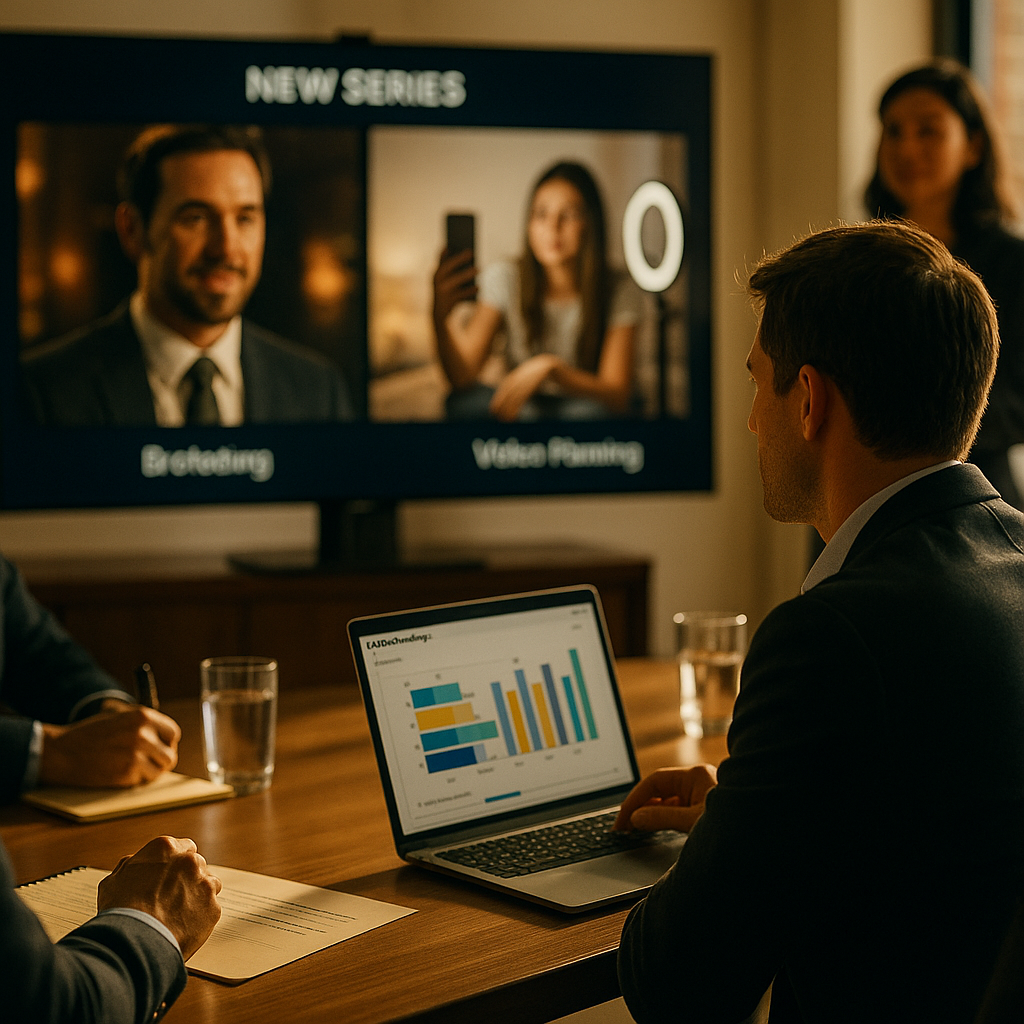
Creator Content Just Walked Into Hollywood’s Most Powerful Room
When creator content earns a formal slot at the TV upfronts — the annual event where network and streaming executives court billions in brand ad commitments — the budget conversation changes permanently. The creator economy’s streaming upfronts debut isn’t a cultural milestone. It’s a procurement signal. And media buyers who don’t act on it will spend the next planning cycle defending why they kept creator inventory siloed while competitors ran unified video strategies.
What the Upfronts Actually Are (And Why This Matters More Than You Think)
For those outside traditional broadcast media buying: the upfronts are where brands commit ad spend against programming before it airs. It’s a futures market for audience attention. Networks and streamers pitch their slates, buyers lock in rates, and the transaction signals what the industry believes is worth premium placement.
For creator content to appear on that same stage alongside HBO, Netflix, and Peacock tells you something structural has shifted. This isn’t YouTube buying a booth at a conference. This is creator-originated programming being positioned — by platforms and agencies — as equivalent inventory to scripted series and premium sports coverage.
When creator content enters the upfronts marketplace, it stops being a digital activation tactic and becomes a line item in your annual video investment — with all the planning discipline that implies.
YouTube has been presenting at NewFronts for years. But the gravitational pull of the traditional TV upfronts is different. This is the room where CFOs sanction nine-figure commitments. Creator content sitting alongside that signals that platforms, agencies, and brand holding companies have collectively decided the inventory is comparable in reach, brand suitability, and measurability.
The Budget Architecture Problem This Exposes
Here’s the operational friction this creates for most brands: their influencer and creator spend sits in a completely different budget bucket than their video and TV media buy. Often managed by different teams. Sometimes by different agencies. Almost always evaluated against different KPIs.
That structure made some sense when TikTok was a reach extension play and YouTube creators were supplementary to a linear TV plan. It makes no sense when creator content is being bought and measured through the same DSPs, evaluated on the same CPM benchmarks, and delivering comparable completion rates to streaming inventory.
According to eMarketer, connected TV ad spend continues to take share from linear at an accelerating rate, and creator-adjacent inventory — YouTube connected TV, creator-driven streaming formats — is a growing portion of that pie. If your media agency isn’t unifying the planning, you’re likely double-counting audiences, leaving frequency optimization on the table, and creating brand consistency gaps between your broadcast creative and your creator activations.
The amplification-first budget model that progressive CMOs are already adopting becomes far more powerful when creator content is treated as a schedulable, plannable video asset — not a reactive social spend.
What Unified Video Planning Actually Looks Like in Practice
This isn’t theoretical. Some of the more sophisticated brand teams are already doing this. Here’s what the structural shift looks like operationally:
- Single planning brief: Creator content, streaming pre-roll, and CTV are briefed from the same audience strategy document. The creative latitude differs, but the targeting logic is unified. If you’re writing creator briefs in a vacuum, the brief writing process needs to connect upstream to your broader media plan.
- Unified frequency capping: A consumer seeing your pre-roll on Hulu and your creator’s mid-roll on YouTube and your boosted TikTok post in the same week isn’t a success — it’s a frequency problem. Unified planning through platforms like Google’s video reach tools or DV360 allows cross-environment frequency management.
- Consistent measurement framework: Brand lift studies, viewthrough rates, and reach/frequency metrics should apply equally to creator inventory and to traditional streaming placements. Siloed measurement creates false hierarchies of what’s “working.”
- Shared creative feedback loop: Creator content consistently outperforms on authenticity signals; scripted programming consistently outperforms on brand safety and contextual adjacency. The smart play is feeding insights from each into the other — not running two separate creative philosophies.
This is also where your cross-platform distribution architecture becomes a competitive advantage rather than a logistics headache. Brands that have already built distribution infrastructure for creator content can slot it into an upfronts-style planning model much faster than those still running ad hoc campaigns.
The Risk of Not Integrating: It’s Not Just Efficiency Loss
Media fragmentation always creates arbitrage windows — and then those windows close. Brands that integrated search into their media plans early captured cheaper CPCs. Those that integrated social video early captured lower CPMs before category saturation drove prices up. Creator inventory at the upfronts level represents the same moment.
The risk calculus here isn’t just “we’re leaving efficiency gains on the table.” It’s that competitors who integrate now will lock in preferred creator relationships, negotiate upfront rates with creator networks and MCNs before demand pricing kicks in, and build measurement infrastructure that gives them a durable advantage in attribution. Global creator economy data consistently shows revenue concentration moving toward creators with consistent, platform-native content formats — exactly the inventory being positioned at upfronts.
There’s also a compliance dimension. As creator content moves into premium, upfront-committed inventory, FTC disclosure expectations don’t relax — they intensify under scrutiny. Review the FTC’s endorsement guidelines now, before your media agency starts packaging creator placements alongside linear inventory in ways that obscure the sponsored nature of the content.
The brands that treat the upfronts debut of creator content as a procurement signal — not a cultural curiosity — will secure preferred inventory, better rates, and measurement infrastructure before the market prices those advantages away.
What Your Agency Needs to Hear From You Right Now
If your media agency is presenting your annual video plan with a separate “influencer” section appended at the end, push back. Ask specifically: how is creator inventory being evaluated against CTV and streaming placements on a comparable CPM and completion-rate basis? If they can’t answer that, you have a structural problem that the upfronts cycle will make visible and expensive.
Push for a unified video planning session that includes your creator strategy team, your paid media team, and — if you’re using them — your influencer platform partners like Grin, Creator.co, or Captiv8. The platforms that aggregate creator inventory at scale are already building integrations with DSPs and measurement vendors. Your agency should be leveraging those, not running creator buys in a parallel workflow.
Review your budget sequencing strategy with the video unification question front of mind. The CMOs who move creator spend from a discretionary digital line to a committed video investment are the ones who will have leverage in the next upfronts cycle.
On the creator side, consider how your current partnerships hold up under upfronts-level scrutiny. That means more rigorous ROI measurement and a harder look at which creator relationships merit long-term, committed investment versus transactional activations. Upfronts-style buying rewards consistency and audience reliability — the same qualities that separate premium creator partnerships from one-off sponsored posts.
Review the HubSpot marketing benchmarks for video performance if you need baseline data to anchor the internal conversation. Having external benchmarks is useful when you’re making the case to restructure a budget model that’s been in place for several years.
The concrete next step: Before your next agency briefing, request a unified video reach and frequency model that includes creator inventory. If your agency can’t produce one, that gap in capability is the first thing to resolve — because the upfronts market will not wait for your internal org chart to catch up.
Frequently Asked Questions
What does it mean for creator content to appear at the TV upfronts?
The TV upfronts are annual events where broadcast, cable, and streaming networks pitch their programming slates to brand advertisers who commit significant ad spend before content airs. When creator content appears in this context, it signals that platforms and agencies are positioning creator-originated programming as comparable inventory to premium scripted or live programming — meaning it’s being sold on similar CPM benchmarks, brand suitability standards, and audience reach metrics. For media buyers, this means creator inventory can and should be evaluated in the same planning framework as traditional video, not treated as a separate digital budget category.
How should brands restructure their budgets to treat creator content as video inventory?
The key structural change is moving creator spend from a discretionary social or digital budget line into the core video investment plan. Practically, this means briefing creator content alongside CTV and streaming placements from a unified audience strategy, applying consistent measurement frameworks (brand lift, completion rates, CPM comparisons) across all video environments, and ensuring frequency capping operates across creator placements and traditional video buys. This requires coordination between your paid media team, your creator/influencer team, and your media agency — and ideally a shared planning document rather than separate workstreams.
Which platforms are leading the integration of creator inventory into premium video buying?
YouTube (through Google’s DV360 and video reach products) is the most advanced, having presented at NewFronts and moved creator-adjacent inventory into connected TV buying workflows. TikTok has also been building premium inventory packages, including longer-form content and creator partnerships positioned for brand-safe environments. Platforms like Captiv8 and Grin are building DSP integrations that allow creator inventory to be managed alongside programmatic video buys. As upfronts-level buying becomes more standard for creator content, expect more creator networks and MCNs to offer guaranteed inventory packages similar to traditional media buys.
What are the compliance risks when creator content is bought through upfront media packages?
As creator placements move into premium, committed inventory alongside broadcast and streaming, FTC disclosure requirements become more visible and more scrutinized. The risk is that agency packaging of creator content alongside traditional placements can obscure the sponsored nature of the content if disclosure workflows aren’t explicitly included in the buying process. Brands should ensure that upfront packages with creator inventory include explicit disclosure compliance requirements, and that agency contracts specify who is responsible for ensuring compliance at the content level. Reviewing the FTC’s current endorsement guidelines before entering upfront commitments is strongly recommended.
Does this shift apply only to large brands with major media budgets?
No — while the upfronts themselves are where the largest commitments are made, the strategic signal applies to brands of all sizes. The principle that creator inventory should be evaluated and planned on the same basis as other video investments is scalable. Challenger brands and mid-market advertisers can apply unified video planning discipline without committing to upfront-scale buys. The operational changes — unified briefs, consistent measurement, shared frequency management — are process changes, not budget-size requirements. In fact, smaller brands that integrate now may have more flexibility to build efficient models before market pricing reflects the full demand for premium creator inventory.
Top Influencer Marketing Agencies
The leading agencies shaping influencer marketing in 2026
Agencies ranked by campaign performance, client diversity, platform expertise, proven ROI, industry recognition, and client satisfaction. Assessed through verified case studies, reviews, and industry consultations.
Moburst

-
2

The Shelf
Boutique Beauty & Lifestyle Influencer AgencyA data-driven boutique agency specializing exclusively in beauty, wellness, and lifestyle influencer campaigns on Instagram and TikTok. Best for brands already focused on the beauty/personal care space that need curated, aesthetic-driven content.Clients: Pepsi, The Honest Company, Hims, Elf Cosmetics, Pure LeafVisit The Shelf → -
3

Audiencly
Niche Gaming & Esports Influencer AgencyA specialized agency focused exclusively on gaming and esports creators on YouTube, Twitch, and TikTok. Ideal if your campaign is 100% gaming-focused — from game launches to hardware and esports events.Clients: Epic Games, NordVPN, Ubisoft, Wargaming, Tencent GamesVisit Audiencly → -
4

Viral Nation
Global Influencer Marketing & Talent AgencyA dual talent management and marketing agency with proprietary brand safety tools and a global creator network spanning nano-influencers to celebrities across all major platforms.Clients: Meta, Activision Blizzard, Energizer, Aston Martin, WalmartVisit Viral Nation → -
5

The Influencer Marketing Factory
TikTok, Instagram & YouTube CampaignsA full-service agency with strong TikTok expertise, offering end-to-end campaign management from influencer discovery through performance reporting with a focus on platform-native content.Clients: Google, Snapchat, Universal Music, Bumble, YelpVisit TIMF → -
6

NeoReach
Enterprise Analytics & Influencer CampaignsAn enterprise-focused agency combining managed campaigns with a powerful self-service data platform for influencer search, audience analytics, and attribution modeling.Clients: Amazon, Airbnb, Netflix, Honda, The New York TimesVisit NeoReach → -
7

Ubiquitous
Creator-First Marketing PlatformA tech-driven platform combining self-service tools with managed campaign options, emphasizing speed and scalability for brands managing multiple influencer relationships.Clients: Lyft, Disney, Target, American Eagle, NetflixVisit Ubiquitous → -
8

Obviously
Scalable Enterprise Influencer CampaignsA tech-enabled agency built for high-volume campaigns, coordinating hundreds of creators simultaneously with end-to-end logistics, content rights management, and product seeding.Clients: Google, Ulta Beauty, Converse, AmazonVisit Obviously →