


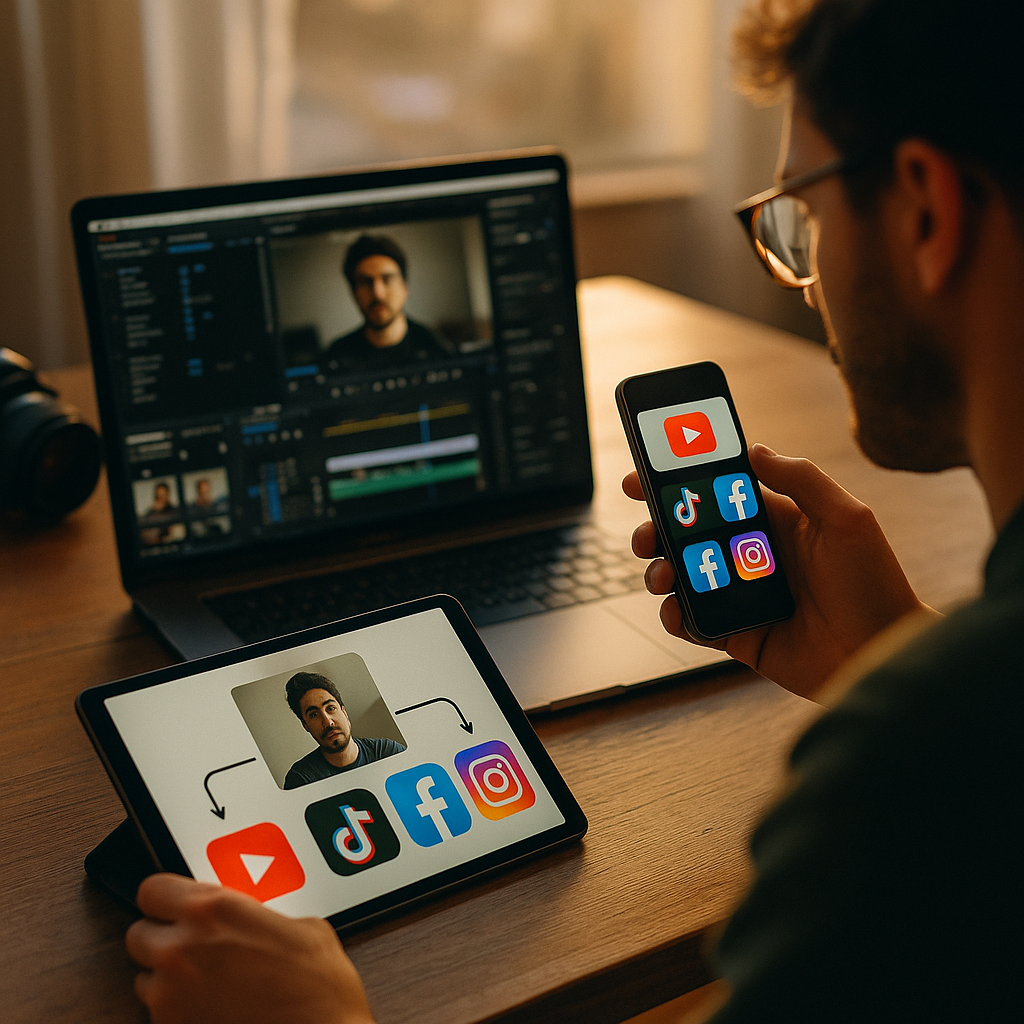
Most creator campaigns are leaving 60–70% of their potential reach untouched — not because the content is weak, but because the distribution architecture was never designed. Cross-platform creator distribution architecture fixes that.
The Core Problem: Great Content, Broken Distribution
A creator posts a strong piece of content. It earns solid organic engagement in the first 48 hours, then disappears into the algorithm’s memory hole. The brand team celebrates the views, calls it a win, and moves on. Meanwhile, the same audience that watched that video is browsing YouTube Shorts, searching on Google, and scrolling Instagram Reels — completely untouched by the campaign.
This is the operational failure hiding inside most influencer programs. The content strategy gets all the attention. The distribution strategy gets none.
True cross-platform creator distribution architecture isn’t about repurposing content — it’s about building a deliberate, sequenced system where organic posts, paid boosts, and search-optimized assets work as a unified machine. Each layer amplifies the one before it. Each platform plays a specific funnel role.
Mapping Platforms to Funnel Stages
Before you touch a budget line or brief a creator, assign every platform a job. Treating TikTok, Instagram, YouTube, and Search as interchangeable is how campaigns end up with redundant spend and no measurable outcomes.
Here’s how high-performing brand teams are structuring platform roles right now:
- TikTok: Top-of-funnel discovery and cultural relevance. Algorithm-driven reach at low CPMs. Best for net-new audience acquisition and emotional resonance testing.
- Instagram (Reels + Stories): Mid-funnel nurture and social proof. Audiences here are warmer. Stories drive direct clicks; Reels extend TikTok-proven content to an Instagram-native audience.
- YouTube (long-form + Shorts): Mid-to-lower funnel intent. Long-form creator content builds category authority. Shorts capture retargeted viewers with higher purchase intent.
- Search (Google + AI-assisted): Bottom-of-funnel capture. Paid search, SEO-optimized creator review content, and AI search visibility close deals that social opened.
If your current creator program is TikTok-only or Instagram-centric, you’re running a top-of-funnel machine with no bottom-funnel catch. Check how your cross-platform distribution strategy is currently structured before building amplification on top of a broken foundation.
The Layering Logic: Organic First, Paid Always Ready
The framework operates in three distinct layers, each one conditional on the performance signal from the previous layer. This is not a waterfall — it’s a trigger-based architecture.
Layer 1 — Organic Seeding (Days 1–3): Creator posts natively on their primary platform. No paid spend yet. The goal is to gather real performance signals: watch time, save rate, share rate, and comment sentiment. These signals are your creative validation data.
Layer 2 — Selective Paid Amplification (Days 3–10): Only content that clears defined performance thresholds gets boosted. This is not a gut call — it’s a rule. Set your thresholds before launch: for TikTok, a 15%+ completion rate and 3%+ engagement rate are reasonable baseline filters. For Instagram Reels, look at saves per impression. Understanding when to boost creator posts for incremental reach versus organic tail performance is one of the most operationally underrated decisions in this architecture.
Layer 3 — Cross-Platform Extension (Days 7–21): Validated creative gets adapted and redistributed. TikTok winners move to Instagram Reels and YouTube Shorts. Long-form YouTube reviews get clipped for Shorts and embedded in landing pages for search benefit. Creator testimonials get trafficked as paid display units on Google.
The brands seeing the highest blended ROAS from creator programs aren’t spending more on creators — they’re spending smarter on amplifying the content that already proved itself.
Building Your Paid Boost Decision Engine
This is where most brand teams lose momentum. They either boost everything (waste) or boost nothing (missed opportunity). You need a documented decision matrix that removes subjectivity from the process.
Define three zones before any creative goes live:
- Green Zone: Content hits engagement thresholds within 24 hours → immediate boost authorization at pre-approved budget. No additional sign-off required.
- Yellow Zone: Content is trending toward thresholds but not there → hold and re-evaluate at 48 hours. Small test boost of $150–$300 to accelerate the signal.
- Red Zone: Content underperforms significantly → no paid spend. Diagnose whether it’s a creative or algorithm issue before iteration. This is a different conversation than a distribution failure, and understanding why creator campaigns underperform separates the creative problem from the distribution problem.
Pre-approve these budget bands with finance before the campaign launches. Real-time boost decisions die in approval queues. The automation of paid boost triggers is increasingly viable via platforms like Meta’s Business tools and third-party systems such as Tradeswell or Rockerbox, which can fire boost rules automatically based on performance data feeds.
Search as the Underused Closer
Here’s what most influencer planning decks ignore entirely: search is where buying decisions get finalized. A consumer sees your product on TikTok, gets curious, and immediately Googles it or asks an AI assistant. If your brand has no presence at that moment, a competitor’s creator content — or a negative Reddit thread — fills the gap.
Search integration into creator distribution architecture requires two moves. First, brief creators to produce at least one long-form review or comparison video on YouTube with SEO-optimized titles, descriptions, and spoken keywords. Google’s indexing of YouTube content is direct; a creator’s review video can rank for high-intent product queries within weeks. Second, layer branded search ads to intercept users who’ve been exposed to your creator content on social. The lift in branded search volume from a well-distributed creator campaign is measurable and attributable — use it.
AI search visibility is the emerging frontier here. Creator-generated content, particularly detailed YouTube reviews and written blog-style posts, is increasingly surfaced by AI answer engines like Perplexity and Google AI Overviews. Brands building for AI search visibility through creator programs right now are positioning for a channel that will only grow in influence.
Budget Architecture: Splitting Creator Fees From Amplification
This is the structural decision that determines whether the framework actually works at scale. If your entire influencer budget sits in a single line item — “creator fees” — you’re already constrained. Cross-platform distribution architecture requires a distinct amplification budget, separated from talent costs from the start.
A workable starting model: allocate 60–65% of total campaign budget to creator fees and content production, 25–30% to paid amplification across platforms, and 8–12% to search (both paid search and SEO-adjacent content investment). This isn’t dogma — it shifts based on category, margin, and campaign objective. But the principle is fixed: amplification must be pre-funded, not funded from leftover budget after creator fees.
Brands that pre-fund amplification budgets independently of creator fees see 2–3x higher measurable return on the same total spend, because they’re not forced to choose between paying creators and extending reach.
For a deeper look at how budget splits evolve as programs scale, the amplification-first budget model is worth benchmarking against your current allocation. If you’re managing a smaller or challenger brand with tighter resources, the micro-creator network budget model offers a leaner structural alternative.
Measurement: What to Track Across the Full Funnel
The measurement framework has to match the distribution architecture. A single engagement rate metric doesn’t tell you whether the system is working across all four layers.
Track these by platform role:
- TikTok (Awareness): Reach, video completion rate, earned media value per post, branded hashtag volume lift
- Instagram (Nurture): Story swipe-up rate, save rate on Reels, retargeting audience growth rate
- YouTube (Intent): Organic search impressions driven by creator videos, watch time, traffic to landing pages from video descriptions
- Search (Conversion): Branded search volume lift, conversion rate on paid search interception, review content ranking positions
Blended cost-per-acquisition — across creator fees, amplification spend, and search investment — is your north-star metric. If you’re not tracking CAC at the campaign level with all costs included, you’re optimizing individual channels while the overall economics stay invisible. Running a proper creator performance score against vanity metrics is what separates programs that scale from programs that plateau.
Platform-side tools like TikTok Ads Manager and eMarketer’s benchmarks give you category-level comparison data. Third-party attribution tools — Northbeam, Triple Whale, and Rockerbox are the current leading options — connect creator touchpoints to downstream conversion events across platforms in a way native dashboards cannot.
Don’t forget FTC disclosure compliance across all boosted and organic creator posts. When paid amplification is applied to organic creator content — particularly on platforms like TikTok and Instagram — disclosure requirements change. Paid boost + original disclosure label is not always sufficient depending on how the amplified post is served. Get legal review before you scale.
Start Here, Not Everywhere
If you’re building this architecture from scratch, don’t attempt all four platforms simultaneously in the first campaign. Run TikTok organic seeding paired with Instagram paid amplification as your initial two-layer test. Validate your boost decision thresholds, document what Green Zone content looks like for your category, and build the search layer in campaign two. Incremental complexity compounds — rushing to all four platforms before you have signal data is how budgets disappear without learnings.
FAQs
What is cross-platform creator distribution architecture?
It’s a campaign planning framework that assigns specific funnel roles to different platforms — TikTok, Instagram, YouTube, and Search — and layers organic creator posts with paid amplification in a sequenced, trigger-based system. The goal is to maximize measurable performance across awareness, nurture, intent, and conversion stages rather than treating all platforms as equivalent reach vehicles.
How do you decide which creator content to boost?
Set performance thresholds before the campaign launches — for example, a 15%+ video completion rate and 3%+ engagement rate on TikTok within 24–48 hours. Content that clears these thresholds automatically qualifies for paid amplification. Content that doesn’t is held or cut. This removes subjective decision-making and prevents wasted spend on content that hasn’t validated organically.
How should amplification budget be separated from creator fees?
Amplification budget must be its own line item, not drawn from leftover creator fee budget. A practical starting ratio is 60–65% of total campaign budget for creator fees, 25–30% for paid amplification across platforms, and 8–12% for search. Pre-funding amplification before the campaign launches is a prerequisite for the framework to function as designed.
Why is search included in a creator distribution strategy?
Search is where purchase intent gets acted on. Consumers exposed to creator content on social frequently search for the product immediately after. Without a presence at that moment — through SEO-optimized YouTube reviews, branded paid search ads, or AI search-optimized content — competitors or negative content fill the gap. Search is the bottom-funnel layer that converts the awareness built by social creator content.
What measurement metrics should brands track across this framework?
Track platform-specific metrics aligned to funnel role: reach and completion rate on TikTok, save rate and story swipe-up on Instagram, organic search impressions and watch time on YouTube, and branded search volume lift plus conversion rate on Search. Blended cost-per-acquisition — including all creator fees, amplification spend, and search investment — is the north-star metric that ties the entire framework together.
Top Influencer Marketing Agencies
The leading agencies shaping influencer marketing in 2026
Agencies ranked by campaign performance, client diversity, platform expertise, proven ROI, industry recognition, and client satisfaction. Assessed through verified case studies, reviews, and industry consultations.
Moburst

-
2

The Shelf
Boutique Beauty & Lifestyle Influencer AgencyA data-driven boutique agency specializing exclusively in beauty, wellness, and lifestyle influencer campaigns on Instagram and TikTok. Best for brands already focused on the beauty/personal care space that need curated, aesthetic-driven content.Clients: Pepsi, The Honest Company, Hims, Elf Cosmetics, Pure LeafVisit The Shelf → -
3

Audiencly
Niche Gaming & Esports Influencer AgencyA specialized agency focused exclusively on gaming and esports creators on YouTube, Twitch, and TikTok. Ideal if your campaign is 100% gaming-focused — from game launches to hardware and esports events.Clients: Epic Games, NordVPN, Ubisoft, Wargaming, Tencent GamesVisit Audiencly → -
4

Viral Nation
Global Influencer Marketing & Talent AgencyA dual talent management and marketing agency with proprietary brand safety tools and a global creator network spanning nano-influencers to celebrities across all major platforms.Clients: Meta, Activision Blizzard, Energizer, Aston Martin, WalmartVisit Viral Nation → -
5

The Influencer Marketing Factory
TikTok, Instagram & YouTube CampaignsA full-service agency with strong TikTok expertise, offering end-to-end campaign management from influencer discovery through performance reporting with a focus on platform-native content.Clients: Google, Snapchat, Universal Music, Bumble, YelpVisit TIMF → -
6

NeoReach
Enterprise Analytics & Influencer CampaignsAn enterprise-focused agency combining managed campaigns with a powerful self-service data platform for influencer search, audience analytics, and attribution modeling.Clients: Amazon, Airbnb, Netflix, Honda, The New York TimesVisit NeoReach → -
7

Ubiquitous
Creator-First Marketing PlatformA tech-driven platform combining self-service tools with managed campaign options, emphasizing speed and scalability for brands managing multiple influencer relationships.Clients: Lyft, Disney, Target, American Eagle, NetflixVisit Ubiquitous → -
8

Obviously
Scalable Enterprise Influencer CampaignsA tech-enabled agency built for high-volume campaigns, coordinating hundreds of creators simultaneously with end-to-end logistics, content rights management, and product seeding.Clients: Google, Ulta Beauty, Converse, AmazonVisit Obviously →