


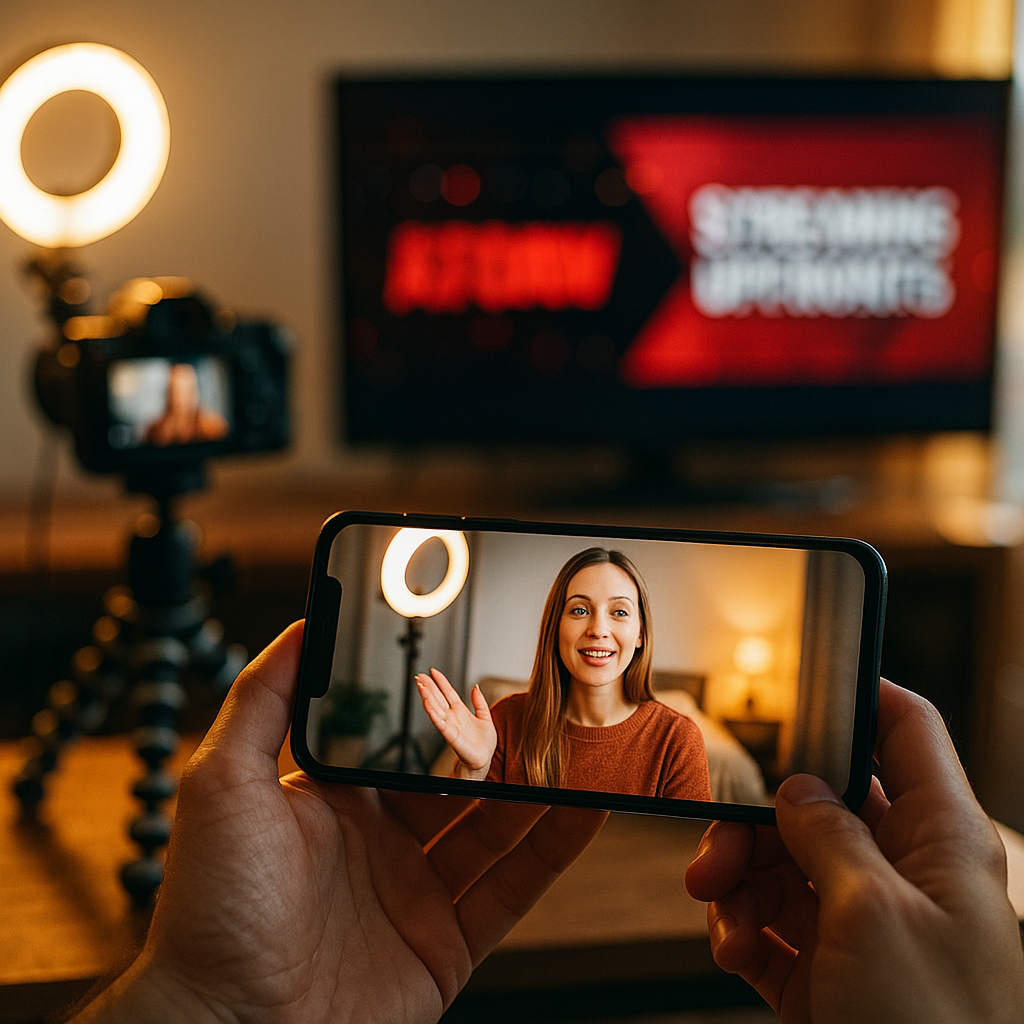
Upfront commitments are locking brands into yesterday’s viewing habits. With over 60% of Gen Z and Millennial video consumption now happening on mobile, the real question isn’t whether to invest in ad-supported streaming — it’s whether your inventory allocation model is built for where attention actually lives.
The Upfront Model Has a Mobile Blind Spot
Traditional TV upfront deals were engineered for a world where audiences gathered around a single screen at a predictable time. That world is gone. Today’s 18–34 demographic is fractured across YouTube, TikTok, Netflix’s ad-supported tier, Amazon Prime Video ads, and Peacock — often consuming all five in a single evening on a 6-inch screen.
The upfront model rewards volume and certainty. Brands lock in CPMs months in advance for guaranteed GRP delivery. For broad reach against 35+ audiences, that logic still holds. But for mobile-first youth segments, guaranteed impressions against linear or even connected TV inventory increasingly means paying premium prices for attention that is already elsewhere.
The smarter allocation question isn’t “How much of my video budget goes to streaming?” It’s “Which streaming environments are my audience actually choosing, and how close to creator context can I get while I’m there?”
Creator-Adjacent vs. Creator-Integrated: Know the Difference
This distinction matters enormously for budget allocation. Creator-adjacent placements are standard pre-roll or mid-roll ads that run alongside creator content — you’re borrowing the creator’s audience without any direct association. Creator-integrated placements involve the creator themselves, whether through a paid partnership, a YouTube Brand Connect deal, or TikTok’s Pulse program, which places your brand’s ad directly after top-performing creator content in a user’s feed.
TikTok Pulse Premiere, which allows brands to appear directly after content from premium publisher and creator partners, consistently shows higher brand recall than standard in-feed ads — not because the ad itself is different, but because the contextual trust transfer from the creator is doing real work.
YouTube’s approach is even more layered. Through Google Ads and YouTube Select, brands can target specific content lineups — sports, entertainment, beauty — and appear alongside verified top-performing videos. That’s a significant upgrade from blind programmatic inventory on a CTV device. But it’s still not the same as a creator who actively acknowledges your brand. Understanding that spectrum helps you allocate accordingly.
For brands building cross-platform distribution strategies, the practical framework is a tiered one: creator-integrated at the top (highest CPM, highest trust transfer), creator-adjacent in the middle (contextual relevance without direct association), and broad ad-supported streaming at the base (reach and frequency at scale).
Platform Mechanics You Need to Understand Before You Allocate
YouTube: The platform’s ad-supported inventory is the most sophisticated in the creator space. Skippable TrueView, non-skippable bumpers, and masthead placements each serve different funnel stages. YouTube Select Lineups give brand safety and contextual targeting without requiring an individual creator relationship. YouTube Brand Connect formalizes creator partnerships with measurement hooks. The CPMs are higher than many streaming alternatives, but the mobile-first consumption pattern and search intent layer make it defensible for younger audiences.
TikTok: TikTok for Business has matured its ad products considerably. TopView, Brand Takeover, and Pulse are the flagship formats. The critical insight for brand strategists is that TikTok’s algorithm doesn’t distinguish between organic creator content and paid ads in the way that YouTube’s does — which means a well-crafted brand ad can achieve organic-feeling distribution if it clears the engagement threshold. Pulse specifically solves the creator-adjacency problem by positioning your ad after proven viral content. The audience skews younger and the attention is genuine, but attribution remains more complex than YouTube.
Netflix, Amazon, Peacock, Max ad-supported tiers: These are the battleground for upfront reallocation dollars. Netflix’s ad-supported tier crossed 40 million monthly active users globally, and eMarketer projects continued growth. The inventory is premium, brand-safe, and increasingly programmatic-accessible. But here’s the catch: the creator-adjacency is minimal. You’re running next to produced content, not creator-generated content. For awareness objectives against a slightly older skew within the 18–34 bracket, that’s appropriate. For authentic engagement with truly mobile-first Gen Z, it’s not enough on its own.
How to Structure the Allocation Decision
Most brands are making this decision with the wrong starting inputs. The question is rarely “streaming upfronts vs. creator platforms” in isolation — it’s about what combination of environments delivers the right CPM efficiency, contextual alignment, and measurement capability for your specific audience segment.
A practical evaluation framework for mobile-first youth targeting:
- Audience verification: Does the platform provide age-validated, mobile-specific impression data? YouTube and TikTok do. Many AVOD tiers are still working toward better mobile segmentation.
- Contextual proximity to creator content: How close is your ad to content the audience actively chose? Pre-roll on a YouTube creator video scores high. Mid-break in a Netflix original scores lower on creator proximity, though higher on brand safety.
- Commitment flexibility: Upfront streaming deals typically require 12-month commitments with limited cancellation windows. YouTube and TikTok campaign structures can be adjusted monthly. For brands navigating budget sequencing challenges, that flexibility has real dollar value.
- Measurement depth: Can you connect ad exposure to downstream behavior, not just reach and frequency? TikTok’s attribution window challenges are well-documented. YouTube’s integration with Google Analytics 4 gives it a structural advantage for full-funnel measurement.
- Creator amplification optionality: Can you take a paid placement and amplify it with a creator partnership later? YouTube Brand Connect makes this possible. Understanding when to boost creator posts for incremental reach is part of this decision architecture.
The brands winning with mobile-first audiences aren’t choosing between upfronts and creator platforms — they’re using upfront commitments for reach scale and creator-adjacent inventory for contextual resonance, treating them as complementary layers rather than competing line items.
The Upfront Commitment Case — When It Still Applies
Don’t dismiss upfront streaming deals entirely. For brands with large brand awareness objectives, guaranteed CPM floors on premium ad-supported streaming tiers offer predictability that programmatic cannot. Netflix and Amazon Prime Video ads offer brand safety controls, high-quality production environments, and audience data from first-party subscription profiles — which in a post-cookie world is genuinely valuable.
The calculus shifts when your target skews under 28, is primarily mobile, and consumes video in short-form bursts rather than long-form sessions. That’s when over-indexing on streaming upfronts becomes a misallocation. If your audience is primarily 30–34 and you’re selling a considered-purchase product, a streaming upfront that delivers high-quality environments with first-party data may well outperform fragmented creator-adjacent buys on TikTok.
The discipline is in the segmentation. Don’t apply a single allocation model across audiences that have materially different consumption patterns. For brands building creator amplification into their revenue architecture, the streaming layer should be informed by creator performance data, not siloed from it.
Operational Risks to Price In
Creator-adjacent and creator-integrated inventory comes with operational overhead that upfront deals don’t. Brand safety adjacency on YouTube requires active monitoring — you’re running next to creator content, which is inherently less predictable than a studio-produced Netflix series. TikTok’s content moderation environment is improving but still requires vigilance. Building internal processes or agency workflows to manage this is a real cost. Factor it into your effective CPM calculation.
There are also rights and data ownership considerations that differ significantly across environments. FTC disclosure requirements apply to creator-integrated placements in ways that standard ad buys don’t trigger. Contracts with creators for amplified content need clear data usage clauses, especially when retargeting audiences built from creator-adjacent engagement. For guidance on structuring these agreements, the data ownership clauses conversation is worth having before you commit budget.
Measurement standardization is also unresolved. YouTube, TikTok, and ad-supported streaming tiers each use different attribution windows, viewability standards, and reach deduplication methodologies. Statista data consistently shows that brands who attempt cross-platform video measurement without a unified framework dramatically overcount reach and undercount frequency. Using a third-party measurement partner — Nielsen One, iSpot.tv, or VideoAmp — is no longer optional if you’re allocating serious budget across these environments.
If you’re scaling a creator program alongside these paid placements, maintaining quality control at scale becomes a parallel operational challenge that deserves its own resource line.
Making the Allocation Decision: The Practical Next Step
Run a 90-day parallel test: hold your existing upfront streaming commitments, carve out 15–20% of your video budget for creator-adjacent placements on YouTube Select and TikTok Pulse, and measure both against a unified third-party attribution baseline — not platform-reported metrics. The data will tell you what your audience’s actual viewing environment looks like, and that beats any media plan built on assumptions.
Frequently Asked Questions
What is a creator-adjacent ad placement, and how is it different from a standard streaming ad?
A creator-adjacent placement is an ad that runs directly before, during, or after creator-generated content on platforms like YouTube or TikTok. The key difference from a standard streaming ad is context: the audience has actively chosen to watch that creator’s content, which means attention levels and trust transfer to adjacent advertising tend to be higher. Standard streaming ads on Netflix or Amazon run alongside produced studio content, which offers brand safety and a premium environment but lacks that direct creator audience relationship.
Should brands abandon streaming upfront commitments in favor of creator platforms?
Not wholesale. Streaming upfronts still offer predictable CPMs, guaranteed delivery, and premium brand-safe environments that are defensible for awareness objectives across 30+ audiences. The strategic shift is in recognizing that younger, mobile-first audiences under 28 consume video differently — in shorter bursts, on mobile, and increasingly through creator-driven content. For those segments, over-indexing on streaming upfronts is a misallocation. A blended model — streaming upfronts for scale, creator-adjacent inventory for contextual resonance — is the operationally sound approach for most brands.
How does TikTok Pulse differ from standard TikTok in-feed ads for brand adjacency?
Standard TikTok in-feed ads are inserted into the For You Page based on audience targeting signals, with no guaranteed relationship to the surrounding content. TikTok Pulse places your brand’s ad directly after top-performing content — either from creators in specific categories or from premium publisher partners — guaranteeing placement next to proven high-engagement content. This contextual proximity to content the algorithm has already validated as engaging drives measurably higher brand recall compared to standard in-feed placements.
What measurement approach should brands use when running across YouTube, TikTok, and streaming tiers simultaneously?
Platform-reported metrics are not sufficient for cross-environment measurement because each platform uses different attribution windows, viewability standards, and reach deduplication logic. Brands running across these environments should use a unified third-party measurement partner — Nielsen One, iSpot.tv, or VideoAmp are the current industry standard options — to normalize reach, frequency, and attribution data across all environments. Without this, cross-platform reach is typically overcounted and frequency is undercounted, leading to flawed budget allocation decisions.
How much operational overhead does creator-adjacent inventory add compared to an upfront streaming buy?
Meaningfully more. Upfront streaming deals are relatively set-and-manage once booked, with predictable delivery and built-in brand safety protocols. Creator-adjacent inventory on YouTube and TikTok requires active brand safety monitoring, more granular campaign management, and — if the strategy includes creator-integrated placements — contracting, briefing, compliance review, and amplification workflows. This operational cost should be factored into effective CPM comparisons. Many brands find that creator-adjacent programs require 20–30% more internal or agency management time per dollar spent compared to traditional streaming upfronts.
Top Influencer Marketing Agencies
The leading agencies shaping influencer marketing in 2026
Agencies ranked by campaign performance, client diversity, platform expertise, proven ROI, industry recognition, and client satisfaction. Assessed through verified case studies, reviews, and industry consultations.
Moburst

-
2

The Shelf
Boutique Beauty & Lifestyle Influencer AgencyA data-driven boutique agency specializing exclusively in beauty, wellness, and lifestyle influencer campaigns on Instagram and TikTok. Best for brands already focused on the beauty/personal care space that need curated, aesthetic-driven content.Clients: Pepsi, The Honest Company, Hims, Elf Cosmetics, Pure LeafVisit The Shelf → -
3

Audiencly
Niche Gaming & Esports Influencer AgencyA specialized agency focused exclusively on gaming and esports creators on YouTube, Twitch, and TikTok. Ideal if your campaign is 100% gaming-focused — from game launches to hardware and esports events.Clients: Epic Games, NordVPN, Ubisoft, Wargaming, Tencent GamesVisit Audiencly → -
4

Viral Nation
Global Influencer Marketing & Talent AgencyA dual talent management and marketing agency with proprietary brand safety tools and a global creator network spanning nano-influencers to celebrities across all major platforms.Clients: Meta, Activision Blizzard, Energizer, Aston Martin, WalmartVisit Viral Nation → -
5

The Influencer Marketing Factory
TikTok, Instagram & YouTube CampaignsA full-service agency with strong TikTok expertise, offering end-to-end campaign management from influencer discovery through performance reporting with a focus on platform-native content.Clients: Google, Snapchat, Universal Music, Bumble, YelpVisit TIMF → -
6

NeoReach
Enterprise Analytics & Influencer CampaignsAn enterprise-focused agency combining managed campaigns with a powerful self-service data platform for influencer search, audience analytics, and attribution modeling.Clients: Amazon, Airbnb, Netflix, Honda, The New York TimesVisit NeoReach → -
7

Ubiquitous
Creator-First Marketing PlatformA tech-driven platform combining self-service tools with managed campaign options, emphasizing speed and scalability for brands managing multiple influencer relationships.Clients: Lyft, Disney, Target, American Eagle, NetflixVisit Ubiquitous → -
8

Obviously
Scalable Enterprise Influencer CampaignsA tech-enabled agency built for high-volume campaigns, coordinating hundreds of creators simultaneously with end-to-end logistics, content rights management, and product seeding.Clients: Google, Ulta Beauty, Converse, AmazonVisit Obviously →