


One Creator. Network-Level Ad Dollars. Everything Changes.
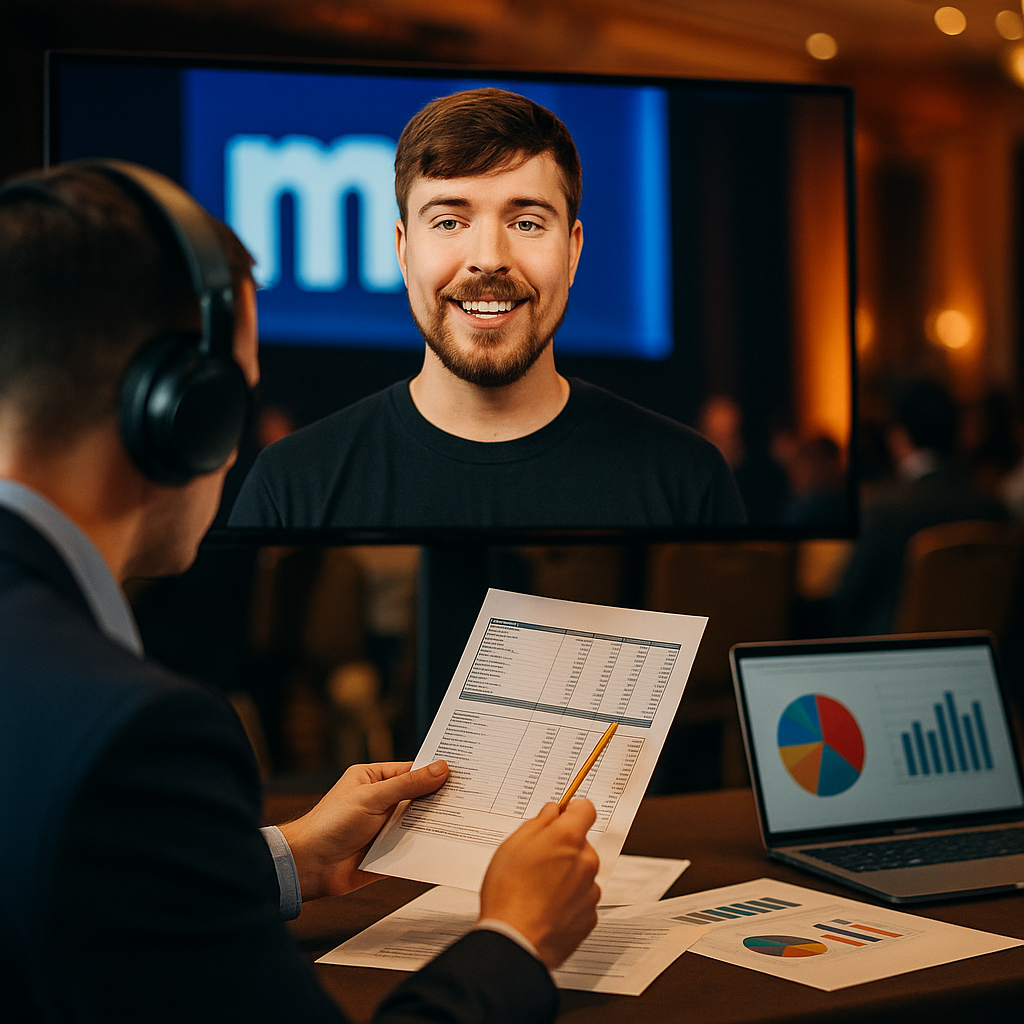
When a single YouTube creator commands a presentation slot at the TV Upfronts — the same rooms where NBC, Disney, and Netflix pitch billions in annual ad commitments — something structural has shifted. MrBeast at the Upfronts isn’t a novelty act. It’s a signal that brand video budget architecture needs to be rebuilt from scratch, and media buyers who treat creator channel inventory as a supplemental line item are already operating with an outdated model.
What the Upfronts Actually Represent (and Why This Matters)
The Upfronts are not a marketing conference. They are a commitment marketplace — where advertisers lock in guaranteed inventory, negotiate CPMs ahead of the broadcast season, and signal where their premium video dollars are going. Historically, that meant network television. Then streaming muscled in. Now, for the first time, a creator is sitting at the same table.
MrBeast’s channel generates north of 40 billion views annually across his network of properties. For context, that outpaces the combined primetime audience of several legacy broadcast networks. His content skews heavily toward the 13–34 demographic that linear TV has been hemorrhaging for a decade. When advertisers are paying $40–$65 CPMs for NFL adjacency on linear, and MrBeast’s YouTube inventory is being packaged and pitched at comparable or more favorable rates with demonstrably better audience verification — the calculus for media buyers gets uncomfortable fast.
A creator presenting at the TV Upfronts isn’t just a PR moment — it’s a direct challenge to how media agencies have traditionally siloed “influencer” spend away from premium video budgets. That silo needs to collapse.
The relevant comparison isn’t “MrBeast vs. a YouTube pre-roll buy.” It’s “MrBeast vs. a Thursday Night Football adjacency” or “MrBeast vs. a Hulu tentpole sponsorship.” That’s the frame media buyers need to adopt. If you’re evaluating his inventory through an influencer marketing lens, you’re using the wrong rubric entirely.
How Creator Inventory Differs from Linear and Streaming — and Why the Differences Are Features
Let’s be direct about the structural differences, because they cut both ways.
Audience verification is more granular. YouTube’s attribution infrastructure — first-party data, Google Ads integration, viewthrough and engagement signals — gives brands more measurable lift data than Nielsen panels or co-viewing estimates. A brand running a mid-roll integration on a MrBeast video gets post-lift survey capability, demographic breakdown by logged-in user, and conversion path data that a 30-second network spot simply cannot provide.
Brand safety controls differ significantly. Linear television has contextual adjacency risk (what airs before and after your spot), while creator content carries talent risk. One viral controversy can crater the value of a pre-negotiated integration. That’s not hypothetical — it’s a budget line item for risk-adjusted CPM modeling. Smart media buyers are building creator whitelisting strategy into their framework before any Upfront-style commitment is made.
Inventory scarcity is real but differently structured. Network Upfronts involve fixed broadcast schedules. Creator inventory is tied to upload cadence, production scale, and platform algorithm dynamics. MrBeast’s main channel posts roughly 1–3 times per month at the tentpole level. That’s a very different inventory model than 52 weeks of primetime. Brands need to understand they’re buying concentrated, high-impact placements — not steady-state reach.
For brands building annual plans, the implication is that YouTube Upfronts versus streaming commitments is now a live strategic question, not a theoretical one. The answer depends heavily on your category, audience age skew, and whether you need sustained frequency or peak cultural impact.
Rebuilding Video Budget Architecture: A Framework for Media Buyers
Here’s the operational question: if you’re a media buyer with a $50M annual video budget, how do you now model creator channel inventory alongside linear and streaming commitments?
Start by collapsing the three-bucket problem. Most agencies still operate with separate budget owners for linear TV, digital video (which includes streaming and YouTube), and influencer marketing. MrBeast at the Upfronts exposes the absurdity of that structure. A creator with network-level reach, packaged inventory, upfront commitment structures, and brand safety protocols belongs in the premium video bucket — not the influencer bucket.
The practical remodeling looks like this:
- Premium Video Tier (30–40% of video budget): Linear TV adjacencies, streaming tentpole sponsorships, and top-tier creator channel packages (Upfront-committed, integrated placements with dedicated segments). MrBeast fits here.
- Programmatic and Mid-Tier Video (30–40%): YouTube reserved buys, streaming mid-roll, connected TV programmatic. Reach and frequency optimization.
- Creator Performance Layer (20–30%): Mid-tier and niche creator integrations, performance-based deals, short-form activation. This is where your YouTube paid partnership strategy and creator brief infrastructure lives.
The key shift: creator inventory at the premium tier requires the same rigor as network buys. That means upfront deal structure, guaranteed delivery clauses, creative approval workflows, audience verification minimums, and post-campaign measurement against the same KPIs you’d apply to a streaming sponsorship.
It also means your understanding of how streaming platforms compete for Gen Z attention becomes directly relevant to how you position a creator commitment. These aren’t parallel tracks anymore — they’re competing for the same budget line.
The Measurement Problem Nobody Wants to Solve
Here’s where things get genuinely complicated for media buyers. Linear TV buys are measured against GRPs, Nielsen ratings, and reach/frequency models that have been standardized for decades. Streaming buys are increasingly measured on impression delivery with co-viewing adjustments. Creator channel inventory doesn’t have a clean universal currency yet.
YouTube provides view counts, watch time, and audience demographics. But guaranteed delivery in the Upfront sense — committing to a specific reach number against a defined demographic at a contracted CPM — is still an evolving capability. MrBeast’s team and YouTube are clearly working toward packaging that meets traditional media buying requirements, but brands making large upfront commitments should be asking hard questions about make-good provisions, delivery guarantees, and third-party measurement verification.
eMarketer has tracked digital video ad spend surpassing linear TV in total volume, but the measurement infrastructure for creator-specific inventory hasn’t kept pace with the spend reallocation. That gap is where deals go sideways.
Brands should also be aware that YouTube Premium subscribers don’t see ads — a structural blind spot in reach modeling that becomes material when you’re buying against audience size projections. Premium subscriber penetration among MrBeast’s core demographic (affluent younger viewers) is meaningfully higher than the platform average. That affects effective reach calculations significantly.
Risk Modeling for Upfront-Style Creator Commitments
Committing budget upfront to a creator — even one at network scale — carries concentrated talent risk that diversified linear or streaming buys don’t. One brand safety incident, one controversy, one platform policy shift can impair the entire commitment.
Best practice for any upfront creator commitment above $1M:
- Require morality and conduct clauses with specific triggers and termination rights.
- Build production risk provisions — what happens if the creator delays or cancels a planned video?
- Negotiate exclusivity carve-outs for your category across the commitment window.
- Require third-party audience measurement (DoubleVerify, DoubleVerify or Integral Ad Science) for viewability and brand safety verification.
- Structure payment against delivery milestones, not signature date.
This isn’t about distrust — it’s about applying the same financial discipline you’d apply to any $1M+ media commitment. Agencies that have built paid-first creator deal structures are already ahead on this governance curve.
The brands best positioned for Upfront-level creator commitments are those that have already operationalized creator risk governance at the mid-tier — they’ve built the muscle before the stakes got this high.
What This Means for Your Next Planning Cycle
MrBeast at the Upfronts is a harbinger, not an anomaly. Expect more top-tier creators — and eventually creator-owned media networks — to pursue Upfront positioning as YouTube, Patreon, and platform infrastructure mature to support guaranteed inventory products. The IAB is actively developing measurement standards for creator inventory that will accelerate institutional buying confidence.
Media buyers who adapt their budget architecture now — collapsing the influencer/digital video silo, building creator governance frameworks, and applying premium video measurement standards to top-tier creator buys — will have a structural advantage when these deals become standard practice. Those who wait for the industry to fully standardize will be negotiating from a position of ignorance.
The FTC’s endorsement guidelines also apply with full force to Upfront-style integrations — disclosure obligations don’t diminish because the deal is larger or more “media-like.” That’s a compliance checkpoint your legal team needs to own before deal execution, not after.
Your immediate next step: In your next planning meeting, pull MrBeast’s viewership data alongside your current linear and streaming reach numbers for the 18–34 demographic. Run the CPM comparison on a like-for-like basis. Then ask your team whether your budget structure would even allow you to buy him at the Upfront level — and if not, fix that structural problem first.
Frequently Asked Questions
What does it mean for a creator to present at the TV Upfronts?
The TV Upfronts are an annual marketplace where media owners pitch advertisers on premium inventory commitments, typically structured around guaranteed reach, CPM negotiations, and advance budget reservations. A creator presenting at the Upfronts — as MrBeast has — means that creator’s channel inventory is being positioned and packaged at the same level of institutional credibility as network television or streaming platforms. It signals that major brands are being asked to consider creator channel spend as a premium video budget line item, not a supplemental influencer activation.
How should media buyers model creator channel inventory against linear TV and streaming buys?
Creator inventory at the top tier should be moved into the premium video budget category alongside linear and streaming commitments. Media buyers should apply consistent evaluation criteria: CPM on a verified audience basis, reach against target demographic, brand safety protocol equivalence, delivery guarantees, and post-campaign measurement. The key difference is that creator inventory is concentrated around upload cadence rather than a broadcast schedule, so reach modeling must account for that structural distinction rather than assuming linear frequency equivalence.
What are the biggest risks of committing to creator inventory at an Upfront level?
The primary risks are concentrated talent risk (a single creator controversy can impair the entire commitment), production delivery risk (creator content schedules are less predictable than broadcast schedules), and measurement gap risk (creator inventory doesn’t yet have a universally standardized audience currency equivalent to Nielsen GRPs). These risks are manageable with proper contract governance — morality clauses, delivery milestones, third-party measurement requirements, and exclusivity provisions — but they require the same legal and procurement rigor as any large media commitment.
Does MrBeast’s YouTube audience size actually compare to broadcast TV audiences?
On a total view volume basis, yes. MrBeast’s network generates tens of billions of views annually, which exceeds primetime audiences of several legacy broadcast networks on a cumulative basis. However, the comparison requires adjustment: YouTube views are global and not all monetizable in the same way as US-focused linear TV reach, and YouTube Premium subscribers don’t see ads. For US-only, 18–34 demographic reach against a defined CPM, MrBeast’s main channel inventory is genuinely competitive with or superior to most linear alternatives in that demographic — which is precisely why the Upfront positioning is credible.
How do FTC disclosure requirements apply to Upfront-style creator integrations?
FTC endorsement and disclosure guidelines apply to all paid creator integrations regardless of deal size or structure. An Upfront-committed integration — where a brand pays for a dedicated segment within a creator’s video — requires clear and conspicuous disclosure that the content is a paid partnership. The integration’s “media-like” positioning does not reduce disclosure obligations. Brands should ensure disclosure language is specified in the deal contract and reviewed by legal counsel familiar with current FTC guidance before any content goes live.
Top Influencer Marketing Agencies
The leading agencies shaping influencer marketing in 2026
Agencies ranked by campaign performance, client diversity, platform expertise, proven ROI, industry recognition, and client satisfaction. Assessed through verified case studies, reviews, and industry consultations.
Moburst

-
2

The Shelf
Boutique Beauty & Lifestyle Influencer AgencyA data-driven boutique agency specializing exclusively in beauty, wellness, and lifestyle influencer campaigns on Instagram and TikTok. Best for brands already focused on the beauty/personal care space that need curated, aesthetic-driven content.Clients: Pepsi, The Honest Company, Hims, Elf Cosmetics, Pure LeafVisit The Shelf → -
3

Audiencly
Niche Gaming & Esports Influencer AgencyA specialized agency focused exclusively on gaming and esports creators on YouTube, Twitch, and TikTok. Ideal if your campaign is 100% gaming-focused — from game launches to hardware and esports events.Clients: Epic Games, NordVPN, Ubisoft, Wargaming, Tencent GamesVisit Audiencly → -
4

Viral Nation
Global Influencer Marketing & Talent AgencyA dual talent management and marketing agency with proprietary brand safety tools and a global creator network spanning nano-influencers to celebrities across all major platforms.Clients: Meta, Activision Blizzard, Energizer, Aston Martin, WalmartVisit Viral Nation → -
5

The Influencer Marketing Factory
TikTok, Instagram & YouTube CampaignsA full-service agency with strong TikTok expertise, offering end-to-end campaign management from influencer discovery through performance reporting with a focus on platform-native content.Clients: Google, Snapchat, Universal Music, Bumble, YelpVisit TIMF → -
6

NeoReach
Enterprise Analytics & Influencer CampaignsAn enterprise-focused agency combining managed campaigns with a powerful self-service data platform for influencer search, audience analytics, and attribution modeling.Clients: Amazon, Airbnb, Netflix, Honda, The New York TimesVisit NeoReach → -
7

Ubiquitous
Creator-First Marketing PlatformA tech-driven platform combining self-service tools with managed campaign options, emphasizing speed and scalability for brands managing multiple influencer relationships.Clients: Lyft, Disney, Target, American Eagle, NetflixVisit Ubiquitous → -
8

Obviously
Scalable Enterprise Influencer CampaignsA tech-enabled agency built for high-volume campaigns, coordinating hundreds of creators simultaneously with end-to-end logistics, content rights management, and product seeding.Clients: Google, Ulta Beauty, Converse, AmazonVisit Obviously →