


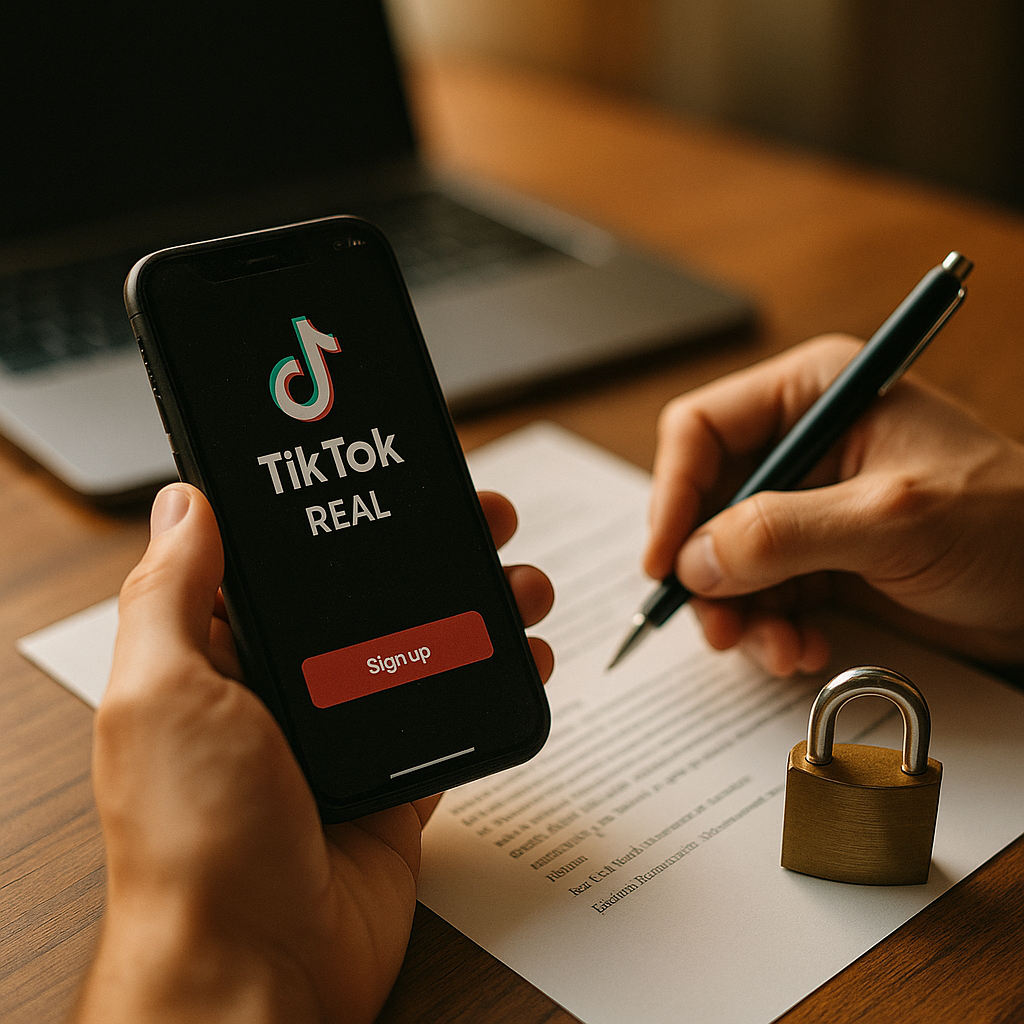
Counterfeits already account for an estimated 10–20% of product listings in some TikTok Shop categories. If your brand isn’t inside the TikTok Real program, you’re not protected — and the window to join before systemic credibility damage sets in is narrowing fast.
What TikTok Real Actually Does (and Why the 100-Partner Cap Matters)
TikTok Real is TikTok Shop’s IP verification and brand authentication initiative. Approved brands receive a verified badge, counterfeit-removal priority, and merchant authorization controls that let them flag unauthorized sellers. The program launched with a tight cohort — roughly 100 partners — skewed toward enterprise brands with existing TikTok Shop relationships and mature IP portfolios.
That exclusivity isn’t permanent. TikTok has signaled incremental expansion, and brands that arrive with application-ready documentation will move to the front of the queue. Brands that wait? They’re effectively running TikTok Shop commerce with no floor under their product credibility.
Every week a brand operates on TikTok Shop without IP protection infrastructure is a week counterfeit sellers can capture purchase intent, dilute reviews, and train the algorithm to surface cheaper imitations above authentic listings.
To understand the broader context of how TikTok is managing brand integrity at the platform level, the TikTok Real IP verification guide is the clearest starting framework for brand teams assessing their current exposure.
The Documentation Stack You Need Before You Apply
This is where most brands stall. They assume their legal team can pull together a trademark certificate and call it done. TikTok Real requires a more operationally complete package.
Core IP Documentation
- Registered trademark certificates covering your primary markets — US, UK, EU, and any APAC territory where you’re driving TikTok Shop revenue
- Trademark status documentation showing active registration, not pending or lapsed filings
- Brand logo files in vector format with usage rights documentation
- Patent registrations if your product has design or utility patents that counterfeiters typically replicate
Brand and Commercial Evidence
- Proof of authentic TikTok Shop merchant account ownership — the account must be verified and trading
- Authorized reseller agreements if you operate through third-party sellers on the platform
- Product authentication documentation: barcodes, SKU registrations, and packaging specifications that TikTok’s enforcement team can use to differentiate your product from counterfeits
- Historical infringement evidence — screenshots, order records, and complaint logs documenting prior counterfeit activity on TikTok Shop or other platforms
The infringement evidence portfolio is underestimated. Program managers have explicitly noted that demonstrated harm — not just theoretical risk — accelerates approval. If you haven’t been logging counterfeit sightings, start now. Use a structured spreadsheet: date, URL, product similarity score, price differential, and any customer complaint data tied to confusion between your product and the fake.
Merchant Authorization Infrastructure: Build It Before You Need It
Joining TikTok Real without merchant authorization infrastructure in place is like getting a security system installed but leaving the monitoring service disconnected. The badge protects nothing if you can’t operationalize takedowns.
Merchant authorization infrastructure has three layers:
1. Internal IP ownership mapping. Before TikTok can act on a complaint, you need a clear internal record of which entity owns which trademark in which territory. Multinational brands frequently have IP distributed across holding companies, regional subsidiaries, or licensing agreements. Consolidate that into a single IP ownership document that maps trademark registration numbers to commercial entities and territories. Legal counsel should sign off on this before submission.
2. Designated brand protection contacts. TikTok Real requires a named point of contact for enforcement escalations. This should not be a generic legal inbox. Designate an individual — ideally someone at the intersection of legal, e-commerce operations, and brand marketing — with authority to approve takedown requests and respond within 48 hours. Response latency is tracked.
3. Monitoring and reporting tooling. Manual surveillance doesn’t scale on a platform moving at TikTok’s velocity. Tools like Red Points or Marqvision automate counterfeit detection across TikTok Shop listings, flagging unauthorized sellers and lookalike product pages in near real-time. Brands already using these platforms will have a ready-made infringement evidence trail when they apply — which dramatically strengthens the application.
If you’re also running creator commerce programming on TikTok Shop, make sure your creator authorization framework integrates with this infrastructure. Unauthorized affiliate posts can inadvertently amplify counterfeit listings. Your TikTok Shop creator briefs should explicitly reference authorized product links and verified seller pages to close that gap.
How to Structure the Application Itself
TikTok Real applications are reviewed by TikTok’s Trust and Safety and Commerce Policy teams. They’re not marketing teams. The application needs to speak operational fluency, not brand storytelling.
Structure your submission package in three sections:
Section 1: IP Portfolio Summary. One-page executive overview of your trademark portfolio, jurisdictions covered, and registration status. Attach supporting certificates as appendices. Prioritize markets where your TikTok Shop GMV is highest.
Section 2: Infringement Evidence Dossier. Curated evidence of counterfeit activity on TikTok Shop or closely adjacent platforms. Include at minimum 10–15 documented instances with dates, URLs, and product comparisons. If you have customer complaint data linking confusion to counterfeit products, include it — this is high-value evidence.
Section 3: Operational Readiness Statement. A concise document demonstrating your merchant authorization infrastructure: named contacts, monitoring tooling in place, authorized reseller list, and response time commitment. This section signals to TikTok that approving you won’t create operational overhead for their enforcement team.
TikTok’s review teams move faster on applications that reduce their own operational burden. Brands that arrive with monitoring infrastructure already running, named contacts designated, and an organized infringement dossier are signaling low-friction partnership — which matters when the program is capacity-constrained.
The TikTok for Business portal and the TikTok IP policy documentation should be reviewed in parallel — your application framing should mirror the language and categories used in TikTok’s own IP framework.
Platform Context: Why This Is More Urgent Than Most Brand Teams Realize
TikTok Shop’s GMV trajectory is aggressive. eMarketer projects TikTok Shop to exceed $20 billion in US GMV within the next two years. As transaction volume scales, so does counterfeit opportunity. The economics are straightforward: high-velocity discovery content + frictionless in-app checkout + insufficient IP enforcement = a counterfeiter’s optimal operating environment.
The brands most at risk aren’t necessarily the largest. Mid-market brands in beauty, supplements, and consumer electronics — categories where product differentiation is visual and price sensitivity is high — are disproportionately targeted. If your product has a distinctive design, packaging, or formula that a factory can replicate at 40% of your price point, you are a target.
Regulatory pressure is also building. FTC guidelines on deceptive commerce practices increasingly apply to platforms facilitating counterfeit sales, and brands that can demonstrate active IP protection measures are better positioned in any regulatory scrutiny scenario. Separately, EU market dynamics are compounding the challenge — EU regulations are reshaping platform dynamics in ways that affect how TikTok manages compliance obligations across markets.
For brands running serious creator commerce programs, the risk compounds. If a creator posts content driving purchase intent to a counterfeit listing — even unknowingly — your brand absorbs the reputational cost. Getting your creator commerce content strategy and your IP protection strategy aligned isn’t optional at this point.
Timing Your Entry: Don’t Wait for the Next Cohort Announcement
TikTok hasn’t published a fixed expansion timeline for TikTok Real. What’s known is that cohort additions have happened quietly, with brands already in active communication with TikTok Shop account managers getting early access to application windows.
If you don’t have a dedicated TikTok Shop account manager relationship, that’s the first operational gap to close — independent of the TikTok Real application itself. Request a formal account review meeting and put IP protection on the agenda explicitly. Frame it in terms of GMV protection, not just legal compliance. TikTok Shop is a commerce platform; speak commerce fluency.
Prepare your documentation stack now, even if an application window isn’t publicly open. Brands that arrive at a cohort expansion window with a complete submission package — IP dossier, infringement evidence, operational readiness documentation — will move through review faster than brands starting from scratch under deadline pressure.
The counterfeit threat on TikTok Shop isn’t a future risk scenario. It’s an active erosion happening in real time. Your next step is concrete: audit your trademark registration status across TikTok’s key markets this week, identify your IP protection point of contact, and begin logging any counterfeit activity you’ve already observed. The application is a formality for brands that do the preparation work upfront.
Frequently Asked Questions
What is the TikTok Real program and who is it for?
TikTok Real is TikTok Shop’s official IP verification and brand authentication initiative. It gives approved brands a verified badge, priority counterfeit removal, and merchant authorization controls to flag unauthorized sellers. The program is designed for brand owners — not resellers — who sell authentic products on TikTok Shop and hold registered trademark rights in their operating markets.
How do brands outside the initial 100-partner cohort apply to join TikTok Real?
There is no single public application portal. Brands gain access through their TikTok Shop account manager relationships or through the TikTok for Business portal when expansion windows open. The most effective path is maintaining an active account manager relationship, signaling interest in IP protection formally, and having a complete documentation package — trademark certificates, infringement evidence, and operational readiness documentation — ready to submit when a cohort window opens.
What documentation does a brand need to apply for TikTok Real?
At minimum: registered trademark certificates in your key markets, proof of active TikTok Shop merchant account ownership, authorized reseller agreements if applicable, product authentication documentation (barcodes, SKU registrations, packaging specs), and a curated infringement evidence dossier with 10–15 or more documented counterfeit instances including dates, URLs, and product comparisons. Operational readiness documentation — named contacts, monitoring tooling, response time commitments — significantly strengthens an application.
What is merchant authorization infrastructure and why does it matter for TikTok Real?
Merchant authorization infrastructure refers to the internal systems and processes that allow a brand to operationalize IP enforcement on TikTok Shop. This includes a clear IP ownership map across territories, designated brand protection contacts with authority to approve takedowns, and automated monitoring tooling (such as Red Points or Marqvision) that detects counterfeit listings in near real-time. TikTok’s review teams prioritize brands that demonstrate this infrastructure is already in place, because it reduces the operational burden on TikTok’s own enforcement teams.
How serious is the counterfeit problem on TikTok Shop?
Counterfeits are estimated to represent 10–20% of product listings in high-risk categories such as beauty, supplements, and consumer electronics. As TikTok Shop’s GMV scales — eMarketer projects it to exceed $20 billion in US GMV within two years — the counterfeit opportunity scales proportionally. Brands without IP protection on the platform face risks including review dilution, algorithm displacement by cheaper imitations, customer confusion, and reputational harm if creators inadvertently drive purchase intent toward counterfeit listings.
Can small or mid-market brands realistically join TikTok Real?
Yes. The program is not exclusively for enterprise brands, and mid-market brands in high-counterfeit categories are arguably at greater risk and have a stronger case for admission. The key requirements are registered trademark ownership and documented evidence of infringement activity — both of which are achievable for any brand of substantive size operating on TikTok Shop. A well-prepared application with a complete documentation stack is more important than company size.
Top Influencer Marketing Agencies
The leading agencies shaping influencer marketing in 2026
Agencies ranked by campaign performance, client diversity, platform expertise, proven ROI, industry recognition, and client satisfaction. Assessed through verified case studies, reviews, and industry consultations.
Moburst

-
2

The Shelf
Boutique Beauty & Lifestyle Influencer AgencyA data-driven boutique agency specializing exclusively in beauty, wellness, and lifestyle influencer campaigns on Instagram and TikTok. Best for brands already focused on the beauty/personal care space that need curated, aesthetic-driven content.Clients: Pepsi, The Honest Company, Hims, Elf Cosmetics, Pure LeafVisit The Shelf → -
3

Audiencly
Niche Gaming & Esports Influencer AgencyA specialized agency focused exclusively on gaming and esports creators on YouTube, Twitch, and TikTok. Ideal if your campaign is 100% gaming-focused — from game launches to hardware and esports events.Clients: Epic Games, NordVPN, Ubisoft, Wargaming, Tencent GamesVisit Audiencly → -
4

Viral Nation
Global Influencer Marketing & Talent AgencyA dual talent management and marketing agency with proprietary brand safety tools and a global creator network spanning nano-influencers to celebrities across all major platforms.Clients: Meta, Activision Blizzard, Energizer, Aston Martin, WalmartVisit Viral Nation → -
5

The Influencer Marketing Factory
TikTok, Instagram & YouTube CampaignsA full-service agency with strong TikTok expertise, offering end-to-end campaign management from influencer discovery through performance reporting with a focus on platform-native content.Clients: Google, Snapchat, Universal Music, Bumble, YelpVisit TIMF → -
6

NeoReach
Enterprise Analytics & Influencer CampaignsAn enterprise-focused agency combining managed campaigns with a powerful self-service data platform for influencer search, audience analytics, and attribution modeling.Clients: Amazon, Airbnb, Netflix, Honda, The New York TimesVisit NeoReach → -
7

Ubiquitous
Creator-First Marketing PlatformA tech-driven platform combining self-service tools with managed campaign options, emphasizing speed and scalability for brands managing multiple influencer relationships.Clients: Lyft, Disney, Target, American Eagle, NetflixVisit Ubiquitous → -
8

Obviously
Scalable Enterprise Influencer CampaignsA tech-enabled agency built for high-volume campaigns, coordinating hundreds of creators simultaneously with end-to-end logistics, content rights management, and product seeding.Clients: Google, Ulta Beauty, Converse, AmazonVisit Obviously →