


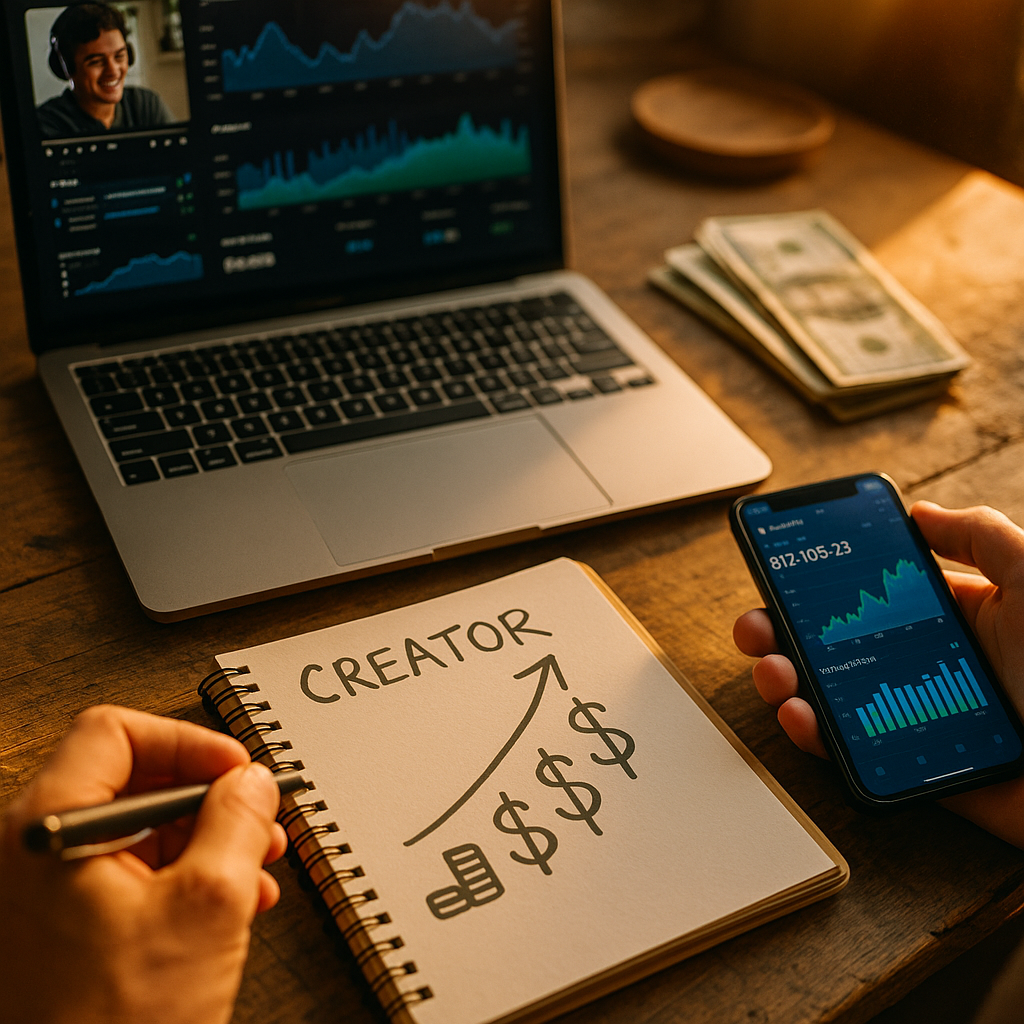
Most Creator Assets Die After the First 48 Hours. They Shouldn’t.
Brands collectively leave millions in unrealized revenue on the table by treating creator content as a one-and-done social event. The multi-channel creator amplification playbook changes that math — but only if you execute the sequence correctly. Here’s how to extract maximum revenue yield from every single creator asset you commission.
Why Sequence Matters More Than Budget
The instinct is to throw paid spend at a creator post the moment it goes live. That impulse costs you. Organic signals — saves, shares, comments in the first window — are the algorithm’s primary quality indicator. If you flood a post with paid traffic before it has established organic credibility, you dilute the engagement rate, confuse the platform’s relevance scoring, and ultimately pay more per click than if you had waited.
According to Sprout Social‘s engagement research, content that earns strong organic interaction in the first two hours sees dramatically better paid performance when boosted subsequently — because the platform treats it as validated content rather than cold creative. Sequence isn’t a minor operational preference. It’s a structural cost driver.
Understanding why creator campaigns underperform often comes down to exactly this mismatch: brands optimize the creative side obsessively but ignore the deployment timeline.
Phase 1 — The Organic Window (Hours 0–48)
Let the post breathe. Your job in the first 48 hours is not to amplify — it’s to monitor and qualify. Track saves-to-reach ratio, comment sentiment, and click-through on any link in bio or swipe-up. These data points tell you whether the asset is worth amplifying at all, and which audience segments responded most authentically.
During this window, activate the creator’s own community engagement. Brief them in advance to respond to early comments, reshare to Stories, and pin the post if the platform allows. This is inexpensive, effective, and entirely within organic guidelines. A creator who engages actively in the first 24 hours can extend organic reach by 30–60% without a single paid dollar spent.
Also critical: this is when your social listening tools — Brandwatch, Sprinklr, or similar — should be flagging any brand safety concerns before you commit paid budget behind the asset. Catching a problem at hour 12 organic is a minor inconvenience. Catching it at hour 72 after a $20,000 paid boost is a crisis.
Phase 2 — Paid Boost Activation (Hours 48–120)
Now you amplify. But not all high-performing organic posts deserve the same boost structure. Use your 48-hour data to segment your creative into three tiers: hero assets (top 20% by engagement quality), support assets (middle performers worth modest amplification), and archive assets (low organic signal — do not boost).
For hero assets, launch dark post campaigns using the creator’s handle via whitelisting or partnership ad tools on Meta and TikTok. This retains the social proof from organic engagement while allowing precise audience targeting your brand account controls. The economics here are meaningfully better than boosting from your brand page — lower CPMs, higher relevance scores, better conversion rates.
Whitelisted creator content consistently outperforms equivalent brand-page ads in conversion rate by 20–40%, largely because users are more receptive to peer-framed creative than overt brand messaging.
On TikTok specifically, TikTok Spark Ads let you boost existing organic posts directly — preserving comment threads and share counts that add social credibility at scale. For brands running TikTok Shop integrations, this is where the paid-to-purchase funnel compresses most effectively. If you want a framework for structuring this spend, the automated paid boost trigger approach removes the manual guesswork from timing decisions entirely.
Set boost duration intentionally. Most brands run paid behind creator content for 7 days maximum. The sweet spot for DTC brands is often 5–6 days: long enough to cycle through full audience segments, short enough to avoid creative fatigue degrading your CPM.
Phase 3 — Search Integration
This is the step most brands skip entirely, and it represents some of the highest-leverage work in the playbook.
Creator content — especially YouTube long-form and TikTok video — generates indexable signals that influence both traditional Google search and AI-powered search engines. A creator who produces a genuine, detailed review of your product is creating a durable search asset, not just a social moment. If your SEO team isn’t briefing creators on target keywords and topical angles before production, you’re missing a compounding return.
Specifically: ensure creator content addresses the exact questions your customers type into search. Use tools like Semrush or Google Search Console to identify high-intent queries in your category. Brief creators to answer those questions naturally within their content. The result is a video or post that performs socially and ranks — or at minimum, contributes to your brand’s topical authority in AI-generated summaries.
The emerging discipline of Generative Engine Optimization (GEO) treats creator content as a feed for AI search visibility. Brands running a full-funnel GEM creator program are already treating creator output as structured content that feeds both social algorithms and AI search surfaces simultaneously. This is not theoretical — it’s operational infrastructure that mid-market and enterprise brands are building right now.
Phase 4 — E-Commerce Landing Page Deployment
The final phase closes the loop between awareness and revenue. Your creator content should never land on a generic product page.
Build creator-specific landing pages — or at minimum, URL-tracked pages that mirror the aesthetic and messaging of the creator’s content. If a creator has framed your product as a morning routine essential, the landing page they drive to should reinforce that framing, not redirect to a clinical product description page your e-commerce team wrote six months ago. The cognitive disconnect between creator content and brand landing pages is one of the most measurable conversion killers in influencer commerce.
Use UTM parameters and platform pixel data to connect creator-driven traffic to downstream purchase events. Tools like Triple Whale, Northbeam, or Rockerbox can attribute revenue back to specific creator assets — not just campaigns — giving you the granular CPS data you need to make reinvestment decisions. That blended cost-per-sale model is what separates brands that know their creator ROI from those who are guessing.
For TikTok Shop and Instagram Shopping integrations, the landing page can be the shoppable post itself — but you still need the tracking infrastructure in place to measure post-click behavior. Native checkout is fast; attribution gaps are the price you pay if you don’t instrument it properly from day one.
Creator-specific landing pages with content-matched messaging routinely convert at 2–3x the rate of generic product pages receiving the same traffic source.
Sequencing at Scale: The Operational Reality
Running this four-phase sequence for a single creator once is straightforward. Running it across a 50-creator roster simultaneously requires infrastructure. That means standardized creative briefs with SEO requirements baked in, automated boost trigger logic, templatized landing page builds, and a measurement stack that consolidates social, paid, search, and commerce data into one revenue view.
Brands that scale creator infrastructure proactively avoid the operational collapse that happens when a campaign overperforms and the team can’t respond fast enough to capitalize. And from a budget architecture perspective, understanding how amplification-first budget models allocate spend across phases is essential for CMOs building sustainable programs — not just one-off activations.
The brands extracting the highest revenue yield from creator content in this environment aren’t necessarily the ones with the biggest creator budgets. They’re the ones who treat every asset like a multi-channel media property from the moment a brief is written. That mindset shift — from social post to structured revenue asset — is the real unlock.
Audit your last five creator campaigns against this four-phase sequence. Identify which phase your program consistently skips, fix that gap first, and measure the revenue delta over the next quarter.
Frequently Asked Questions
How long should brands wait before boosting a creator post?
The standard recommendation is 48 hours, but the real trigger is engagement quality, not just time. If a post hits strong saves-to-reach ratios and clean comment sentiment within 24 hours, some brands move to boost at that point. The key is that organic signals have had time to register with the platform algorithm before paid traffic is introduced. Boosting too early risks inflating reach without engagement, which actively damages the post’s relevance score and raises your CPMs.
What metrics qualify a creator post as a hero asset worth boosting?
There’s no universal threshold, but strong indicators include a saves rate above 3% of reach, a comment-to-view ratio in the top quartile of your recent content benchmarks, and positive sentiment in early comments. For DTC brands, any organic post that drives measurable link-in-bio clicks within 24 hours without any paid spend is a strong boost candidate. Tier your assets before committing budget — not every post earns paid amplification.
How do you build creator-specific landing pages without a massive dev lift?
Tools like Shogun, Replo, or Unbounce allow non-technical teams to build and launch creator-matched pages quickly using templates. The minimum requirement is a unique UTM-tracked URL, messaging that mirrors the creator’s framing, and a product module that matches what the creator featured. A full custom build is ideal but not necessary to capture the conversion benefit — even a lightly customized page outperforms a generic product page when the traffic source is creator content.
Can creator content genuinely influence search rankings?
Yes, particularly YouTube long-form video, which Google indexes directly. TikTok video is increasingly surfaced in Google’s video search results as well. Beyond direct ranking, creator content that addresses high-intent queries contributes to your brand’s topical authority — a factor in how AI-powered search engines like Google’s AI Overviews and Perplexity represent your brand in generated summaries. Briefing creators on target keywords isn’t just an SEO tactic; it’s becoming a core component of search visibility strategy.
How should paid boost budget be sized relative to creator fees?
A common benchmark among performance-oriented brands is to allocate amplification spend equal to or greater than the creator fee itself for hero assets. If a creator costs $5,000 for a deliverable, budget $5,000–$10,000 in paid boost for top-performing posts. The amplification-to-fee ratio is one of the clearest signals of whether a brand is treating creator content as a media asset or just a social post. Brands that under-invest in amplification relative to creator fees consistently see lower blended ROI from their programs.
Top Influencer Marketing Agencies
The leading agencies shaping influencer marketing in 2026
Agencies ranked by campaign performance, client diversity, platform expertise, proven ROI, industry recognition, and client satisfaction. Assessed through verified case studies, reviews, and industry consultations.
Moburst

-
2

The Shelf
Boutique Beauty & Lifestyle Influencer AgencyA data-driven boutique agency specializing exclusively in beauty, wellness, and lifestyle influencer campaigns on Instagram and TikTok. Best for brands already focused on the beauty/personal care space that need curated, aesthetic-driven content.Clients: Pepsi, The Honest Company, Hims, Elf Cosmetics, Pure LeafVisit The Shelf → -
3

Audiencly
Niche Gaming & Esports Influencer AgencyA specialized agency focused exclusively on gaming and esports creators on YouTube, Twitch, and TikTok. Ideal if your campaign is 100% gaming-focused — from game launches to hardware and esports events.Clients: Epic Games, NordVPN, Ubisoft, Wargaming, Tencent GamesVisit Audiencly → -
4

Viral Nation
Global Influencer Marketing & Talent AgencyA dual talent management and marketing agency with proprietary brand safety tools and a global creator network spanning nano-influencers to celebrities across all major platforms.Clients: Meta, Activision Blizzard, Energizer, Aston Martin, WalmartVisit Viral Nation → -
5

The Influencer Marketing Factory
TikTok, Instagram & YouTube CampaignsA full-service agency with strong TikTok expertise, offering end-to-end campaign management from influencer discovery through performance reporting with a focus on platform-native content.Clients: Google, Snapchat, Universal Music, Bumble, YelpVisit TIMF → -
6

NeoReach
Enterprise Analytics & Influencer CampaignsAn enterprise-focused agency combining managed campaigns with a powerful self-service data platform for influencer search, audience analytics, and attribution modeling.Clients: Amazon, Airbnb, Netflix, Honda, The New York TimesVisit NeoReach → -
7

Ubiquitous
Creator-First Marketing PlatformA tech-driven platform combining self-service tools with managed campaign options, emphasizing speed and scalability for brands managing multiple influencer relationships.Clients: Lyft, Disney, Target, American Eagle, NetflixVisit Ubiquitous → -
8

Obviously
Scalable Enterprise Influencer CampaignsA tech-enabled agency built for high-volume campaigns, coordinating hundreds of creators simultaneously with end-to-end logistics, content rights management, and product seeding.Clients: Google, Ulta Beauty, Converse, AmazonVisit Obviously →