


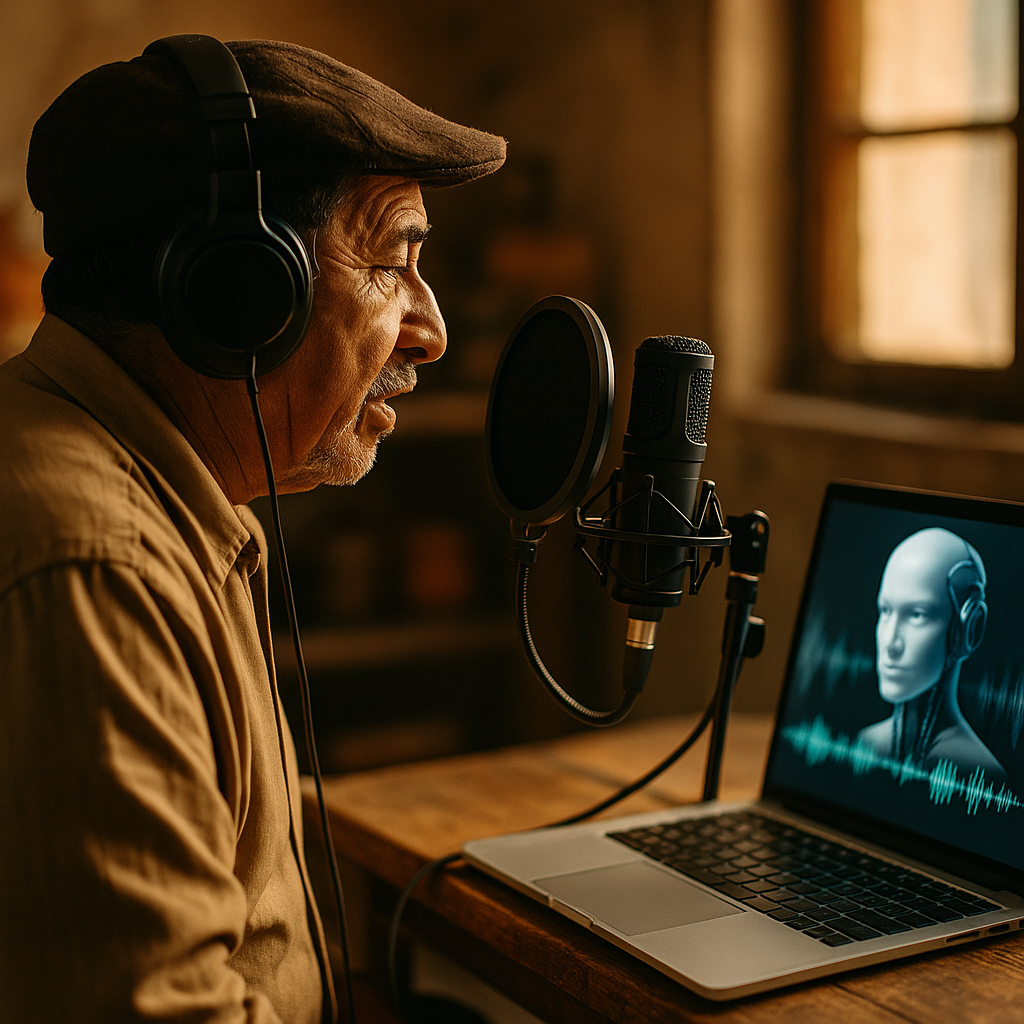
Using AI to Personalize Synthetic Voiceovers for Local Dialect Accuracy is changing how brands, educators, and creators speak to audiences in 2025. Instead of generic narration, teams can deliver region-specific pronunciation, rhythm, and vocabulary at scale. The result is clearer communication and stronger trust—when done responsibly and with linguistic care. So how do you build dialect-accurate voiceovers without losing authenticity?
Why local dialect accuracy matters for regional audiences
Local dialect isn’t a “nice-to-have” detail; it directly affects comprehension, credibility, and conversion. When a voiceover mispronounces place names, uses the wrong stress pattern, or chooses unfamiliar phrasing, listeners notice immediately. That friction can undermine the message, especially in high-trust contexts such as healthcare instructions, public service announcements, financial explainers, and training content.
Dialect accuracy includes more than accent. It covers:
- Phonetics and pronunciation: correct vowels, consonants, stress, and intonation contours.
- Lexicon: region-appropriate word choice (including everyday terms, not just slang).
- Prosody: pacing, pausing, and emphasis that matches local speech patterns.
- Register: formal vs. informal tone that fits cultural expectations.
Organizations also face operational constraints. Producing multiple localized voice tracks with human talent can be slow, expensive, and hard to update. AI voice systems can help—if teams treat dialect as a linguistic target to validate, not as a cosmetic effect to “spray on.” The goal is intelligibility and respect, not caricature.
AI voice cloning and speech synthesis: what’s possible in 2025
Modern speech synthesis systems generate natural-sounding audio by combining high-quality text-to-speech modeling with style controls. Many platforms now support speaker adaptation (matching a target voice) and accent/dialect conditioning (shaping pronunciation and prosody). Used correctly, these tools can produce localized variants without rebuilding a full recording pipeline for each region.
In practical terms, teams can:
- Create a consistent brand narrator voice and generate multiple localized dialect outputs.
- Adjust speech rate, pitch range, energy, and emphasis for region-appropriate delivery.
- Introduce localized terminology and approved translations while keeping timing consistent for video.
- Rapidly update scripts and regenerate audio for product changes, policy updates, or A/B tests.
However, “possible” does not mean “automatic.” Dialect accuracy still requires a language-specific process. Even strong models can drift on:
- Proper nouns (streets, towns, surnames).
- Loanwords and code-switching patterns common in local speech.
- Homographs where pronunciation depends on context.
- Emotion and intent, where the same sentence can sound polite, abrupt, or sarcastic depending on prosody.
If you are choosing tooling in 2025, evaluate vendors on transparent controls (pronunciation dictionaries, SSML support, phoneme-level edits), multilingual coverage, and documented safeguards around consent and misuse. Ask to hear difficult samples: addresses, customer support dialogs, disclaimers, and fast-paced explainer narration.
Dialect training data and linguistic QA for authentic localization
Dialects are learned through exposure, and the same is true for models. To reach reliable results, you need structured inputs and a quality process that resembles professional localization—plus linguistic review.
Start with a clear dialect definition. “Spanish” or “English” is not enough. Specify the region and target audience (for example, urban vs. rural, formal broadcast vs. conversational social content). Then build a “dialect pack” that the whole team can follow.
Recommended components for a dialect pack:
- Pronunciation lexicon: a list of place names, brand terms, people’s names, and product vocabulary with approved pronunciations.
- Preferred phrasing: region-appropriate terms (and banned terms) for key concepts.
- Prosody notes: pacing guidelines, typical sentence melody, and formality cues.
- Reference audio: short, consented samples of native speakers for calibration and review.
Linguistic QA is where many projects succeed or fail. Build review stages that include:
- Native speaker review for pronunciation, tone, and cultural appropriateness.
- Back-to-script checks to ensure the audio matches approved text exactly (critical for legal or medical content).
- Comprehension testing with small in-market panels for high-impact campaigns.
Plan for iteration. You will find recurring issues—like a specific vowel shift or incorrect stress on common street suffixes. Capture those in your pronunciation rules so each new project gets better. If your vendor supports phoneme-level overrides, use them to lock down high-risk words rather than re-generating full takes repeatedly.
Pronunciation modeling and SSML controls for regional speech patterns
To achieve consistent dialect accuracy, you need predictable controls. Two practical levers are pronunciation modeling (phoneme overrides and dictionaries) and structured markup (often SSML) that guides how the engine speaks.
Pronunciation control typically includes:
- Custom dictionaries to set canonical pronunciations for brand and local terms.
- Phoneme tags for one-off corrections, especially for proper nouns or foreign words.
- Word stress and syllabification support, when available, to match local stress patterns.
SSML-style delivery control can help align the voice with regional expectations:
- Pauses that reflect natural phrasing and improve clarity.
- Emphasis for key terms, avoiding over-emphasis that can sound unnatural.
- Speaking rate tuned to local norms (and to listener needs, such as accessibility).
- Numbers and dates formatted for local reading conventions.
Answering a common follow-up: Do you need SSML for everything? No. Use it selectively for places where engines often fail—addresses, disclaimers, lists, and terms that must be spoken consistently across episodes. Over-markup can produce robotic delivery.
Also, create a “stress test script” before production. Include difficult items: neighborhood names, local sports teams, transit stops, culturally specific references, and typical customer questions. Evaluate outputs with native reviewers and lock in the best-performing voice configuration before generating hundreds of assets.
Ethical consent, privacy, and compliance in localized voice projects
Trust is part of dialect accuracy. If audiences suspect deception or misuse, even a perfect accent can backfire. Ethical production is also a risk management requirement for brands.
Key practices:
- Documented consent for any voice cloning or voice likeness use, including scope, duration, and allowed channels.
- Clear disclosure where appropriate, especially in regulated or sensitive contexts (public services, healthcare, political content).
- Data minimization: collect only the voice data you need, store it securely, and control access.
- Misuse safeguards: vendor-side controls to prevent unauthorized cloning and to detect suspicious use cases.
- Rights management: contracts that specify ownership of generated outputs and limits on re-training.
Another follow-up readers often have: Is it unethical to use AI for dialects? Not inherently. The ethical risk comes from impersonation, stereotyping, and lack of consent. The responsible approach is to use AI to increase access and localization quality while maintaining transparency and cultural respect.
Build an internal checklist for every localized voiceover project: consent verified, dialect pack approved, reviewer identified, high-risk terms locked, and a final sign-off step for compliance. This is practical EEAT: expertise in linguistics, experience in localization workflows, authoritative review, and trustworthy governance.
Workflow and ROI: scaling multilingual localization with synthetic voiceovers
The strongest results come from a repeatable workflow that connects scriptwriting, localization, generation, QA, and distribution. AI helps most when it reduces rework and accelerates updates without sacrificing accuracy.
A scalable workflow:
- Script design for speech: write for listening, not reading; keep sentences clear; avoid dense clauses.
- Localization and transcreation: adapt meaning and register for the region rather than translating literally.
- Dialect pack application: enforce preferred terms and pronunciations.
- Voice generation: use pre-approved voice settings; apply targeted SSML/phoneme fixes.
- Linguistic QA: native review plus technical checks (timing, loudness, file specs).
- Release and monitoring: track audience feedback, comprehension metrics, and support tickets.
Measuring ROI should go beyond “cost per minute.” Track outcomes tied to accuracy:
- Fewer clarifications in support channels due to clearer instructions.
- Higher completion rates for training modules and onboarding videos.
- Improved engagement on localized ads where relevance is clear within the first seconds.
- Faster update cycles when content changes weekly or daily.
If your team worries that AI will replace human voice talent, position it correctly: synthetic voiceovers are best for scale, frequent updates, and long-tail content. Human talent remains ideal for flagship campaigns, nuanced performances, and culturally sensitive storytelling. Many organizations use a hybrid approach: human for hero assets, AI for localized variants and updates—while keeping linguistic reviewers involved throughout.
FAQs: AI synthetic voiceovers and local dialect accuracy
How do I choose the right dialect for my audience?
Define the target region and listener context (broadcast, customer support, education). Validate with local stakeholders or native reviewers, and avoid assuming one “standard” dialect represents all listeners.
Can AI match regional pronunciation of place names reliably?
Yes, with controls. Use a pronunciation dictionary for recurring names and phoneme overrides for exceptions. Always run a stress test script and have native speakers approve the final pronunciations.
Do I need voice cloning to achieve dialect accuracy?
No. Dialect accuracy can be achieved with high-quality text-to-speech voices plus dialect conditioning and pronunciation controls. Voice cloning is mainly for matching a specific narrator identity and requires stricter consent and governance.
What’s the difference between accent and dialect in voiceovers?
Accent focuses on pronunciation. Dialect includes pronunciation plus vocabulary, grammar choices, and cultural register. For authenticity, address both—especially vocabulary and tone.
How can I prevent stereotyping when generating dialect voiceovers?
Use native linguistic reviewers, define acceptable register and tone in a dialect pack, and avoid exaggerated features. Prioritize clarity and respect over “strong” accent effects.
Is it necessary to disclose that a voiceover is AI-generated?
It depends on context, regulations, and audience expectations. For sensitive or regulated topics, disclosure often supports trust. Regardless, ensure you have consent for any voice likeness and maintain clear internal documentation.
AI can deliver dialect-accurate voiceovers at scale in 2025, but quality comes from process, not promises. Define the target dialect, build a pronunciation and phrasing standard, and validate outputs with native linguistic QA. Use SSML and phoneme controls only where they add consistency. Pair strong governance with measurable outcomes, and you’ll localize faster while sounding genuinely local—without compromising trust.
Top Influencer Marketing Agencies
The leading agencies shaping influencer marketing in 2026
Agencies ranked by campaign performance, client diversity, platform expertise, proven ROI, industry recognition, and client satisfaction. Assessed through verified case studies, reviews, and industry consultations.
Moburst

-
2

The Shelf
Boutique Beauty & Lifestyle Influencer AgencyA data-driven boutique agency specializing exclusively in beauty, wellness, and lifestyle influencer campaigns on Instagram and TikTok. Best for brands already focused on the beauty/personal care space that need curated, aesthetic-driven content.Clients: Pepsi, The Honest Company, Hims, Elf Cosmetics, Pure LeafVisit The Shelf → -
3

Audiencly
Niche Gaming & Esports Influencer AgencyA specialized agency focused exclusively on gaming and esports creators on YouTube, Twitch, and TikTok. Ideal if your campaign is 100% gaming-focused — from game launches to hardware and esports events.Clients: Epic Games, NordVPN, Ubisoft, Wargaming, Tencent GamesVisit Audiencly → -
4

Viral Nation
Global Influencer Marketing & Talent AgencyA dual talent management and marketing agency with proprietary brand safety tools and a global creator network spanning nano-influencers to celebrities across all major platforms.Clients: Meta, Activision Blizzard, Energizer, Aston Martin, WalmartVisit Viral Nation → -
5

The Influencer Marketing Factory
TikTok, Instagram & YouTube CampaignsA full-service agency with strong TikTok expertise, offering end-to-end campaign management from influencer discovery through performance reporting with a focus on platform-native content.Clients: Google, Snapchat, Universal Music, Bumble, YelpVisit TIMF → -
6

NeoReach
Enterprise Analytics & Influencer CampaignsAn enterprise-focused agency combining managed campaigns with a powerful self-service data platform for influencer search, audience analytics, and attribution modeling.Clients: Amazon, Airbnb, Netflix, Honda, The New York TimesVisit NeoReach → -
7

Ubiquitous
Creator-First Marketing PlatformA tech-driven platform combining self-service tools with managed campaign options, emphasizing speed and scalability for brands managing multiple influencer relationships.Clients: Lyft, Disney, Target, American Eagle, NetflixVisit Ubiquitous → -
8

Obviously
Scalable Enterprise Influencer CampaignsA tech-enabled agency built for high-volume campaigns, coordinating hundreds of creators simultaneously with end-to-end logistics, content rights management, and product seeding.Clients: Google, Ulta Beauty, Converse, AmazonVisit Obviously →