


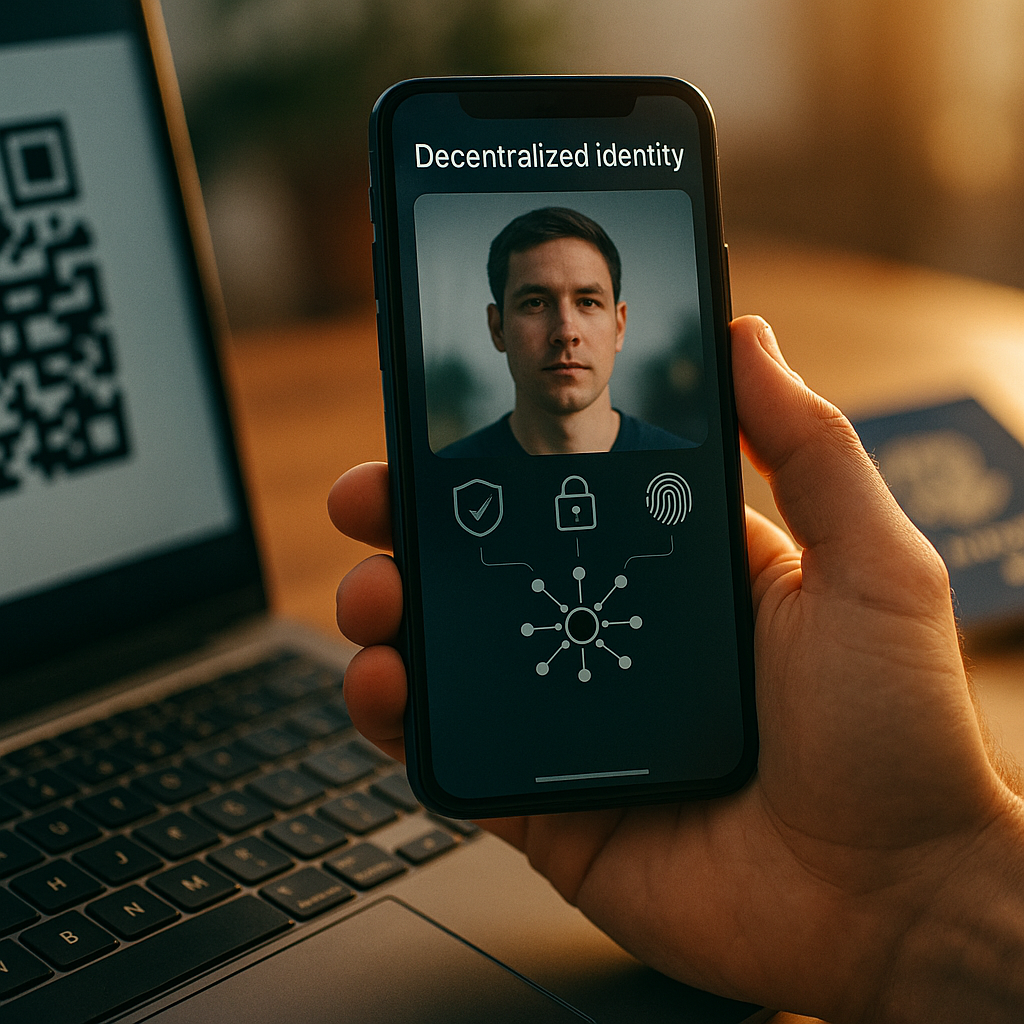
In 2025, brands face rising fraud, stricter privacy expectations, and customers who want easier logins without giving up control. Decentralized identity solutions are moving from pilot projects to strategic roadmaps because they reduce data exposure while improving sign-in experiences across channels. The shift is not just technical; it changes how trust, consent, and loyalty work—so what’s driving it now?
Customer-controlled identity and privacy expectations
Customers have become more deliberate about what personal data they share, with whom, and for what purpose. They also expect transparency: clear explanations, simple controls, and the ability to withdraw consent without penalty. Centralized identity stacks—where a brand stores and manages large user datasets—struggle to meet these expectations without piling on complex consent tooling and risk.
Decentralized identity approaches flip the default. Instead of brands holding everything, customers hold verifiable information (often in a digital wallet) and present only what’s needed for a given interaction. That “data minimization” posture aligns with modern privacy principles and reduces the surface area of personal data brands must secure.
For brands, the practical upside is straightforward: fewer copies of sensitive attributes in internal systems, fewer places data can leak, and less friction when customers want to manage permissions. For customers, the value is equally direct: more control, fewer repetitive forms, and clearer boundaries between identity proof and ongoing marketing permissions.
Follow-up question brands ask: “Will customers actually use it?” Adoption is strongest when decentralized identity is introduced as a convenience feature—faster onboarding, instant age or eligibility checks, passwordless sign-in—rather than as a philosophical shift. When it saves time and reduces form-filling, usage rises.
Fraud reduction and account takeover protection
Fraud has evolved into a high-velocity, automated problem. Credential stuffing, synthetic identities, and account takeover attempts keep rising in sophistication, while traditional defenses often rely on collecting more data and adding more friction. That’s a losing trade-off for many consumer brands that live and die by conversion rates.
Decentralized identity can help by enabling stronger proof without forcing brands to store the underlying documents or attributes. Verifiable credentials allow a trusted issuer (such as a financial institution, employer, school, or regulated identity provider) to attest to specific claims—like “over a certain age,” “resident of a region,” or “account holder verified”—and the user presents that proof to the brand.
This model reduces reliance on weak signals like passwords and easily replayed personal details. It also supports cryptographic integrity: brands can verify the credential’s authenticity and whether it has been revoked, without calling back to the issuer in every case. That can reduce exposure to man-in-the-middle attacks and tampered identity documents.
Common follow-up: “Does decentralized identity stop fraud completely?” No. It changes the battleground. Brands still need device intelligence, behavioral monitoring, rate limiting, and strong security operations. The advantage is that decentralized identity can harden the identity layer—so attackers can’t simply reuse breached passwords or fabricate easy-to-spoof identity attributes.
Regulatory compliance and data minimization
Regulators and consumers increasingly expect brands to justify data collection and demonstrate responsible handling. Compliance is no longer only a legal checkbox; it’s part of brand trust. When a company stores large volumes of personally identifiable information, every new integration, vendor, and analytics pipeline becomes a potential liability.
Decentralized identity helps brands align with data minimization by reducing how much they must collect and retain. Instead of copying a passport scan into a database, a brand can request a narrow claim—such as age eligibility—without learning the full birthdate or document number. Instead of storing an address forever, a brand can ask for proof of residency when required and avoid retaining it beyond what’s necessary.
This approach also supports clearer governance. Brands can define what proofs are required for specific transactions and record that a verified claim was presented, rather than storing the raw sensitive data itself. It’s easier to explain to auditors, easier to document in privacy notices, and easier to manage over time as requirements shift.
Follow-up: “Will this work across all jurisdictions?” Not uniformly. Brands still need local legal review, especially for regulated industries like finance, healthcare, and telecom. The strategic trend is to engineer identity flows that reduce data retention by default, then add jurisdiction-specific controls only when required.
Interoperability with digital wallets and verifiable credentials
Brands are moving toward decentralized identity in 2025 because the ecosystem is becoming more usable. Digital wallets, verifiable credentials, and standardized verification methods are making it feasible to create cross-channel identity journeys that don’t depend on a single vendor or a single login database.
Interoperability matters because customers don’t want a different identity experience for every brand. They want a consistent way to prove claims and sign in across apps, sites, and in-store experiences. When wallets can store multiple credentials—membership status, payment-related verification, age or eligibility proofs—brands can reduce onboarding friction and accelerate repeat purchases.
For brands, verifiable credentials can also streamline partner ecosystems. Consider a marketplace verifying sellers, a delivery platform verifying couriers, or an event organizer verifying ticket entitlements. Instead of manual checks and duplicative KYC processes, credentials can be issued once and verified many times, with revocation support when status changes.
Follow-up: “Does interoperability mean giving up brand control?” Not necessarily. Brands can still control the experience design, risk rules, and the claims they accept. The difference is that trust can be anchored in cryptographic proofs and reputable issuers rather than in repeated data collection.
- Faster onboarding: fewer form fields and fewer document uploads.
- Higher assurance options: stronger verification for high-risk actions.
- Reusable proofs: customers avoid repeating the same checks across services.
Passwordless authentication and better user experience
Login friction is a silent revenue killer. Password resets, failed MFA, and account lockouts increase support costs and push users to abandon sessions. At the same time, weak authentication exposes brands to account takeover losses and reputational damage.
Decentralized identity supports passwordless patterns by shifting authentication toward cryptographic methods and user-held credentials. Instead of “something you know” (a password), the customer can authenticate with “something you have” (a secure wallet or device key) and, when needed, “something you are” (biometric unlock on the device). The brand verifies the proof without needing to store the customer’s secrets.
Beyond login, decentralized identity can improve key moments in the journey:
- Checkout: confirm eligibility, address, or loyalty tier without repeating data entry.
- Account recovery: reduce risky email-based resets by using stronger re-verification.
- Support: verify the customer quickly without asking for sensitive personal details.
Follow-up: “Will passwordless confuse customers?” It can if introduced abruptly. The best rollouts offer choice: keep existing sign-in methods while promoting passwordless as the faster, safer option. Clear UX copy and a smooth recovery path are essential.
Operational efficiency and lower breach impact
Security leaders are under pressure to reduce both probability and impact of incidents. In centralized identity models, the identity database becomes a high-value target. Even with strong security controls, a breach can expose large volumes of personal data and trigger long, expensive remediation cycles.
Decentralized identity reduces breach impact by limiting what brands store. If a brand only stores minimal identifiers and transaction records—while customers present verifiable claims when needed—there is less sensitive data to steal. That doesn’t eliminate risk, but it can materially change the blast radius.
There’s also an efficiency angle. Identity operations are costly: document review queues, repeated KYC for returning customers, and constant tuning of fraud rules. Verifiable credentials can reduce repeat verification and enable step-up checks only when risk warrants it. Over time, that can lower support load, improve conversion, and reduce manual review costs.
Follow-up: “Is decentralized identity expensive to implement?” It can be, if treated as a full replacement overnight. Brands tend to see the best ROI by starting with one high-value use case—age verification, passwordless login for loyalty members, seller onboarding—then expanding as internal teams build expertise and as wallet adoption grows.
FAQs
What is decentralized identity in simple terms?
It’s an approach where customers hold their identity information and present verified proofs to brands when needed, instead of brands storing large amounts of personal data in centralized databases.
Do brands need a blockchain to use decentralized identity?
No. Some decentralized identity systems use distributed ledgers for public keys or revocation registries, but others work without blockchain. The core concept is verifiable, cryptographically signed credentials and customer-controlled presentation.
How does decentralized identity improve privacy?
It supports data minimization by letting customers share only necessary claims (for example, eligibility) rather than full documents or excessive personal details. Brands can verify authenticity without keeping sensitive source data.
Will decentralized identity replace single sign-on (SSO) and social logins?
It may complement or reduce reliance on them, especially for higher-assurance use cases. Many brands will run hybrid models where decentralized identity is an option for passwordless sign-in or step-up verification.
What are the biggest risks for brands adopting decentralized identity?
Key risks include poor user experience, unclear governance around which issuers and credentials to trust, integration complexity, and inadequate fallback and recovery flows. These are manageable with phased rollout, clear policies, and strong security review.
Which use cases are best to start with?
High-friction or high-risk flows deliver the fastest value: age or eligibility checks, loyalty/member login upgrades, seller/partner onboarding, and account recovery for high-value accounts.
Brands are moving toward decentralized identity because it fits today’s reality: customers demand control, regulators expect restraint, and attackers exploit centralized data stores. By verifying claims instead of collecting everything, companies can reduce fraud exposure and improve login and onboarding experiences. The takeaway is practical—start with one measurable use case, build trust frameworks, and scale as adoption grows.
Top Influencer Marketing Agencies
The leading agencies shaping influencer marketing in 2026
Agencies ranked by campaign performance, client diversity, platform expertise, proven ROI, industry recognition, and client satisfaction. Assessed through verified case studies, reviews, and industry consultations.
Moburst

-
2

The Shelf
Boutique Beauty & Lifestyle Influencer AgencyA data-driven boutique agency specializing exclusively in beauty, wellness, and lifestyle influencer campaigns on Instagram and TikTok. Best for brands already focused on the beauty/personal care space that need curated, aesthetic-driven content.Clients: Pepsi, The Honest Company, Hims, Elf Cosmetics, Pure LeafVisit The Shelf → -
3

Audiencly
Niche Gaming & Esports Influencer AgencyA specialized agency focused exclusively on gaming and esports creators on YouTube, Twitch, and TikTok. Ideal if your campaign is 100% gaming-focused — from game launches to hardware and esports events.Clients: Epic Games, NordVPN, Ubisoft, Wargaming, Tencent GamesVisit Audiencly → -
4

Viral Nation
Global Influencer Marketing & Talent AgencyA dual talent management and marketing agency with proprietary brand safety tools and a global creator network spanning nano-influencers to celebrities across all major platforms.Clients: Meta, Activision Blizzard, Energizer, Aston Martin, WalmartVisit Viral Nation → -
5

The Influencer Marketing Factory
TikTok, Instagram & YouTube CampaignsA full-service agency with strong TikTok expertise, offering end-to-end campaign management from influencer discovery through performance reporting with a focus on platform-native content.Clients: Google, Snapchat, Universal Music, Bumble, YelpVisit TIMF → -
6

NeoReach
Enterprise Analytics & Influencer CampaignsAn enterprise-focused agency combining managed campaigns with a powerful self-service data platform for influencer search, audience analytics, and attribution modeling.Clients: Amazon, Airbnb, Netflix, Honda, The New York TimesVisit NeoReach → -
7

Ubiquitous
Creator-First Marketing PlatformA tech-driven platform combining self-service tools with managed campaign options, emphasizing speed and scalability for brands managing multiple influencer relationships.Clients: Lyft, Disney, Target, American Eagle, NetflixVisit Ubiquitous → -
8

Obviously
Scalable Enterprise Influencer CampaignsA tech-enabled agency built for high-volume campaigns, coordinating hundreds of creators simultaneously with end-to-end logistics, content rights management, and product seeding.Clients: Google, Ulta Beauty, Converse, AmazonVisit Obviously →