


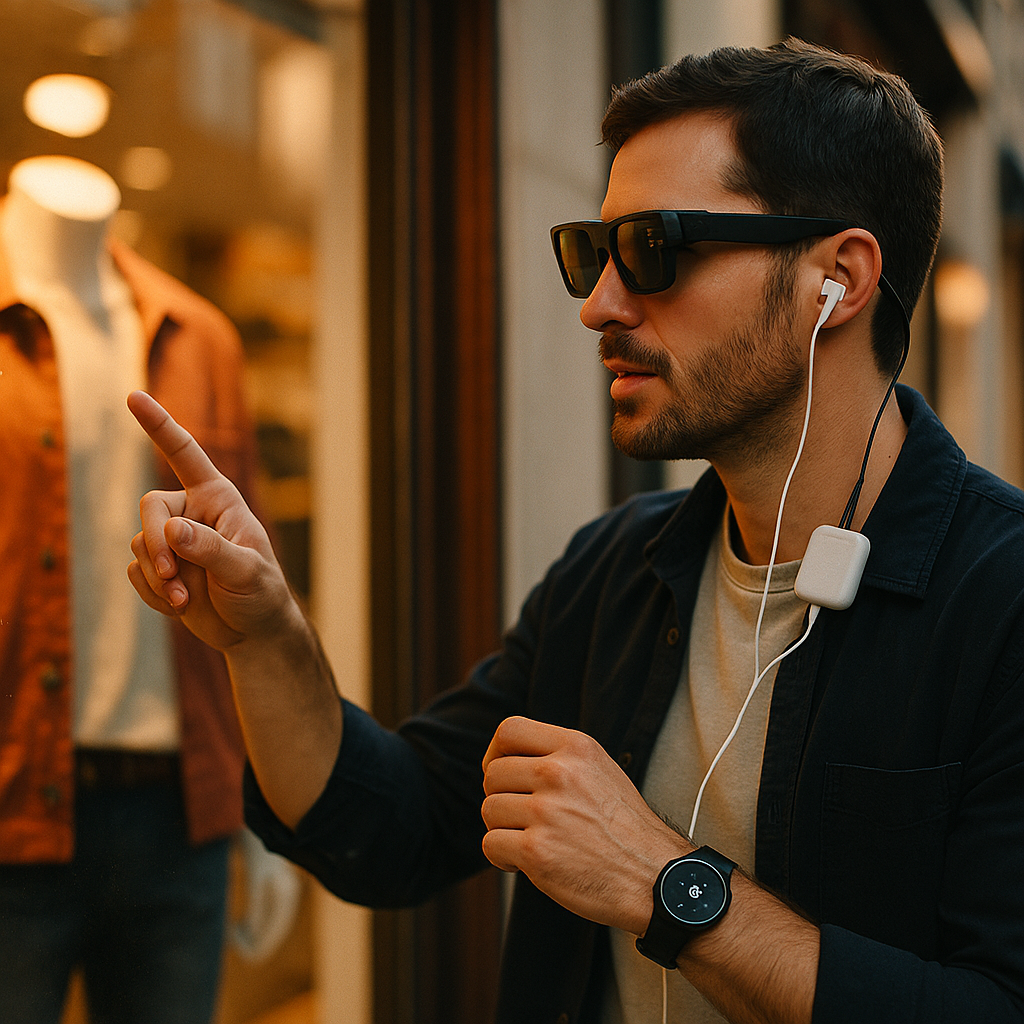
Wearable AI devices are moving brand discovery from screens to real life, changing how people notice, compare, and trust products in the moment. In 2025, voice-first assistants, smart glasses, rings, and earbuds compress the journey from curiosity to purchase into seconds. Marketers and product teams must adapt to new signals, new interfaces, and new rules of persuasion—before attention shifts again. Ready to see what changes first?
Wearable AI devices and ambient computing
Wearables are no longer “small phones.” They are context engines. When AI runs continuously on or near the body, it can interpret environment, movement, location, calendar context, and even conversational intent. This shift matters because brand discovery typically begins with a trigger: a need, a problem, or a moment of inspiration. Wearables move triggers from deliberate search to ambient discovery, where suggestions arrive proactively.
Ambient computing means the interface disappears, but the assistance remains. In practice, that looks like:
- Earbuds that answer product questions hands-free while you browse a store aisle.
- Smart glasses that overlay ratings, ingredient flags, or compatibility notes when you look at an item.
- Rings and watches that nudge you with “you’re low on X” reminders, tied to shopping lists and preferred merchants.
Because the interaction cost drops, people ask more micro-questions. Instead of “best running shoes,” they ask “is this model good for wide feet and asphalt?” Instead of “coffee subscriptions,” they ask “which one is low-acid and ships every two weeks?” Brands that win in this environment provide clear, structured answers that an assistant can summarize instantly.
Follow-up question readers often ask: Does this replace search? Not entirely. It rearranges it. Traditional search still supports research-heavy decisions, but wearables capture more of the “in-the-moment” decisions: replenishment, impulse buys, and local choices.
Voice-first shopping and conversational search
Wearables accelerate voice-first shopping because voice is the lowest-friction input when your hands and eyes are busy. That changes discovery habits in three important ways:
- Fewer options are heard. A screen can show 20 results; an assistant typically reads 1–3. That concentrates demand.
- Preference memory becomes a gatekeeper. Assistants remember brand likes, allergies, sizes, and budget limits, then filter choices accordingly.
- Questions become iterative. People refine with follow-ups (“cheaper,” “more sustainable,” “available today”), so brands must support fast comparisons.
To stay discoverable, brands need content that answers conversational intent. That includes short, verifiable claims an assistant can repeat without sounding like an ad. Examples include precise compatibility (“works with X ecosystem”), measurable performance (“battery lasts up to N hours under typical use”), and transparent policies (“free returns within N days”).
Expect “zero-click” outcomes to rise: the assistant may place an order or add to cart without sending the user to a website. This makes assistant-ready product data essential: clean attributes, accurate inventory feeds, consistent naming, and a clear value proposition that survives summarization.
Follow-up question: How does a brand influence assistant answers ethically? By publishing accurate specs, providing plain-language explanations, earning third-party validation, and avoiding manipulative phrasing. The assistant’s trust model increasingly penalizes inconsistency.
Smart glasses product discovery and visual context
Smart glasses product discovery introduces a new habit: people will “look to search.” Visual input adds context that text queries often miss. When the device recognizes an object, it can surface brand alternatives, price ranges, reviews, and even usage tips. This is not just about identifying a product; it’s about interpreting suitability.
Key discovery scenarios emerging in 2025 include:
- In-store overlays: sustainability labels, allergen warnings, and deal comparisons shown at the shelf.
- At-home “what is this?” moments: identifying parts, refills, compatible accessories, or maintenance needs.
- Try-before-you-buy guidance: fit checks, color matching, and “pairs well with” suggestions.
This changes brand strategy because packaging, design language, and on-product information become machine-readable signals. Clear model identifiers, scannable markings, and consistent visual assets improve recognition accuracy. Brands should also publish reference images and product schemas so computer vision systems match correctly and reduce misattribution.
Follow-up question: Will ads appear in glasses overlays? Some will, but users will reject anything that interrupts. The winning approach will look like utility: comparisons, coupons users request, and warnings that protect them from poor choices. “Helpful” will outperform “loud.”
Personalized recommendations and AI brand assistants
Wearables push discovery toward personalized recommendations powered by an on-going user model: preferences, routines, biometrics, and contextual constraints. This makes discovery less about browsing and more about curated shortlists.
For brands, personalization changes the battleground from broad awareness to eligibility. The assistant decides which brands are “allowed” into a shortlist based on fit for purpose. Brands can improve eligibility by:
- Clarifying who the product is for (and who it is not for), using plain language and structured attributes.
- Offering configuration guidance that reduces returns (sizes, compatibility, setup steps).
- Providing durable proof through certifications, lab tests, and expert endorsements that can be cited.
- Maintaining consistent signals across retail listings, brand sites, support docs, and reviews.
AI brand assistants will also emerge on the brand side: wearable-friendly experiences that help customers decide without forcing a screen session. Think “ask your earbuds to check refill compatibility” or “ask your watch to reorder the same shade.” The brands that build these experiences responsibly create loyalty without trapping users.
Follow-up question: Does personalization reduce discovery of new brands? It can, if the model over-weights past behavior. To counter this, assistants often introduce controlled exploration (“a new option similar to what you like”). New brands can earn these slots by aligning tightly with known preferences and demonstrating high trust signals early.
Privacy, trust, and wearable data governance
Because wearables are intimate—always-on microphones, cameras, location, and health signals—privacy and trust become central to brand discovery. In 2025, people increasingly choose brands that respect boundaries because the cost of a mistake is higher than a bad ad; it can feel like surveillance.
Brands influence discovery through trust-building behaviors that also align with Google’s EEAT principles:
- Experience: publish practical guidance created by real practitioners (e.g., fit tips from product specialists, maintenance steps from technicians).
- Expertise: cite qualified reviewers and technical authors, and use clear standards for testing claims.
- Authoritativeness: earn reputable certifications and media validations, and link to verifiable documentation.
- Trust: explain data practices in plain language, minimize collection, and allow meaningful controls.
From a governance standpoint, wearable-driven discovery raises questions users care about:
- What data is used to recommend brands?
- Is that data stored, shared, or sold?
- Can I opt out without losing core functionality?
Brands that answer these directly—on product pages, in app onboarding, and in support documentation—reduce friction. They also lower the chance that assistants downgrade them due to unclear policies or poor user sentiment.
Follow-up question: Do privacy-friendly brands get a discovery advantage? Yes, especially when assistants incorporate safety filters and user-defined preferences like “only recommend brands with strong privacy policies” or “avoid retargeting-heavy merchants.” Trust becomes a feature.
Marketing strategy for wearable-first brand discovery
To win in wearable-first discovery, brands must be legible to machines and persuasive to humans in under a few seconds. That requires a shift in content, data, and measurement.
1) Build assistant-readable product truth. Create a single source of product facts: specs, compatibility, ingredients, warranty, safety notes, and FAQs. Keep it consistent across channels. When assistants detect contradictions, they hesitate—or they choose another brand.
2) Design for summarization. Wearables often present brief answers. Provide “answer-first” copy blocks that can stand alone: what it is, who it’s for, top differentiators, proof, and constraints. Avoid vague superlatives that cannot be verified.
3) Invest in local and real-time signals. Wearables thrive on immediacy: “near me,” “in stock now,” “ready for pickup,” “fits my device.” Accurate inventory, store hours, and fulfillment options directly shape whether you appear as a viable choice.
4) Optimize for multimodal discovery. Use strong visual identifiers, consistent packaging, and high-quality images. For products likely to be recognized in the wild, ensure model names and variants are easy to distinguish visually and textually.
5) Measure what changes, not what’s familiar. Traditional attribution will miss many wearable moments. Add metrics that capture assistant-driven influence: share of assistant shortlists, voice query coverage, “compare” request rate, reorder rate, and customer support deflection (how often wearable guidance resolves questions without a ticket).
Follow-up question: What should small brands prioritize first? Start with clean product data, tight positioning (“who it’s for”), and credible proof (reviews, certifications, transparent policies). Wearable discovery rewards clarity more than budget.
FAQs
How will wearable AI devices change brand discovery compared with mobile search?
Wearables make discovery more contextual and conversational. Instead of typing broad queries, users ask narrow, situational questions and expect immediate recommendations. Fewer options are shown or read aloud, so being eligible for shortlists matters more than ranking for generic keywords.
Will smart glasses reduce the role of packaging and shelf placement?
No. Packaging becomes even more important because computer vision relies on visible identifiers. Shelf placement still influences what people look at first, and glasses can amplify that moment with overlays like comparisons, warnings, and reviews.
What content helps a brand appear in voice and assistant recommendations?
Accurate, structured product attributes; clear “who it’s for” statements; concise benefit summaries; transparent policies; and trustworthy proof such as certifications and expert reviews. Content should answer common follow-up questions: compatibility, sizing, safety, availability, and returns.
How can brands maintain trust when wearables use sensitive data?
Minimize data collection, explain practices in plain language, provide user controls, and avoid hidden sharing. Consistent, verifiable claims and responsive support also improve trust signals that influence both users and AI assistants.
Are paid placements likely to dominate wearable brand discovery?
Paid placements may appear, but utility-based results will win long term because wearables are interruptive by nature. Assistants and users will favor recommendations that are relevant, verifiable, and aligned with preferences, especially for high-consideration purchases.
What’s the biggest risk for brands in wearable-first discovery?
Inconsistency. If specs, pricing, availability, or policies vary across channels, assistants may exclude the brand to avoid giving wrong information. A reliable product truth layer and disciplined updates reduce this risk.
Wearables are turning brand discovery into a continuous, context-aware conversation that happens while people live their lives, not while they browse. In 2025, winning brands make themselves easy for AI to verify, summarize, and recommend—without sacrificing user trust. The takeaway: invest in clean product data, assistant-ready answers, and privacy-forward practices so your brand stays discoverable in moments that matter.
Top Influencer Marketing Agencies
The leading agencies shaping influencer marketing in 2026
Agencies ranked by campaign performance, client diversity, platform expertise, proven ROI, industry recognition, and client satisfaction. Assessed through verified case studies, reviews, and industry consultations.
Moburst

-
2

The Shelf
Boutique Beauty & Lifestyle Influencer AgencyA data-driven boutique agency specializing exclusively in beauty, wellness, and lifestyle influencer campaigns on Instagram and TikTok. Best for brands already focused on the beauty/personal care space that need curated, aesthetic-driven content.Clients: Pepsi, The Honest Company, Hims, Elf Cosmetics, Pure LeafVisit The Shelf → -
3

Audiencly
Niche Gaming & Esports Influencer AgencyA specialized agency focused exclusively on gaming and esports creators on YouTube, Twitch, and TikTok. Ideal if your campaign is 100% gaming-focused — from game launches to hardware and esports events.Clients: Epic Games, NordVPN, Ubisoft, Wargaming, Tencent GamesVisit Audiencly → -
4

Viral Nation
Global Influencer Marketing & Talent AgencyA dual talent management and marketing agency with proprietary brand safety tools and a global creator network spanning nano-influencers to celebrities across all major platforms.Clients: Meta, Activision Blizzard, Energizer, Aston Martin, WalmartVisit Viral Nation → -
5

The Influencer Marketing Factory
TikTok, Instagram & YouTube CampaignsA full-service agency with strong TikTok expertise, offering end-to-end campaign management from influencer discovery through performance reporting with a focus on platform-native content.Clients: Google, Snapchat, Universal Music, Bumble, YelpVisit TIMF → -
6

NeoReach
Enterprise Analytics & Influencer CampaignsAn enterprise-focused agency combining managed campaigns with a powerful self-service data platform for influencer search, audience analytics, and attribution modeling.Clients: Amazon, Airbnb, Netflix, Honda, The New York TimesVisit NeoReach → -
7

Ubiquitous
Creator-First Marketing PlatformA tech-driven platform combining self-service tools with managed campaign options, emphasizing speed and scalability for brands managing multiple influencer relationships.Clients: Lyft, Disney, Target, American Eagle, NetflixVisit Ubiquitous → -
8

Obviously
Scalable Enterprise Influencer CampaignsA tech-enabled agency built for high-volume campaigns, coordinating hundreds of creators simultaneously with end-to-end logistics, content rights management, and product seeding.Clients: Google, Ulta Beauty, Converse, AmazonVisit Obviously →