


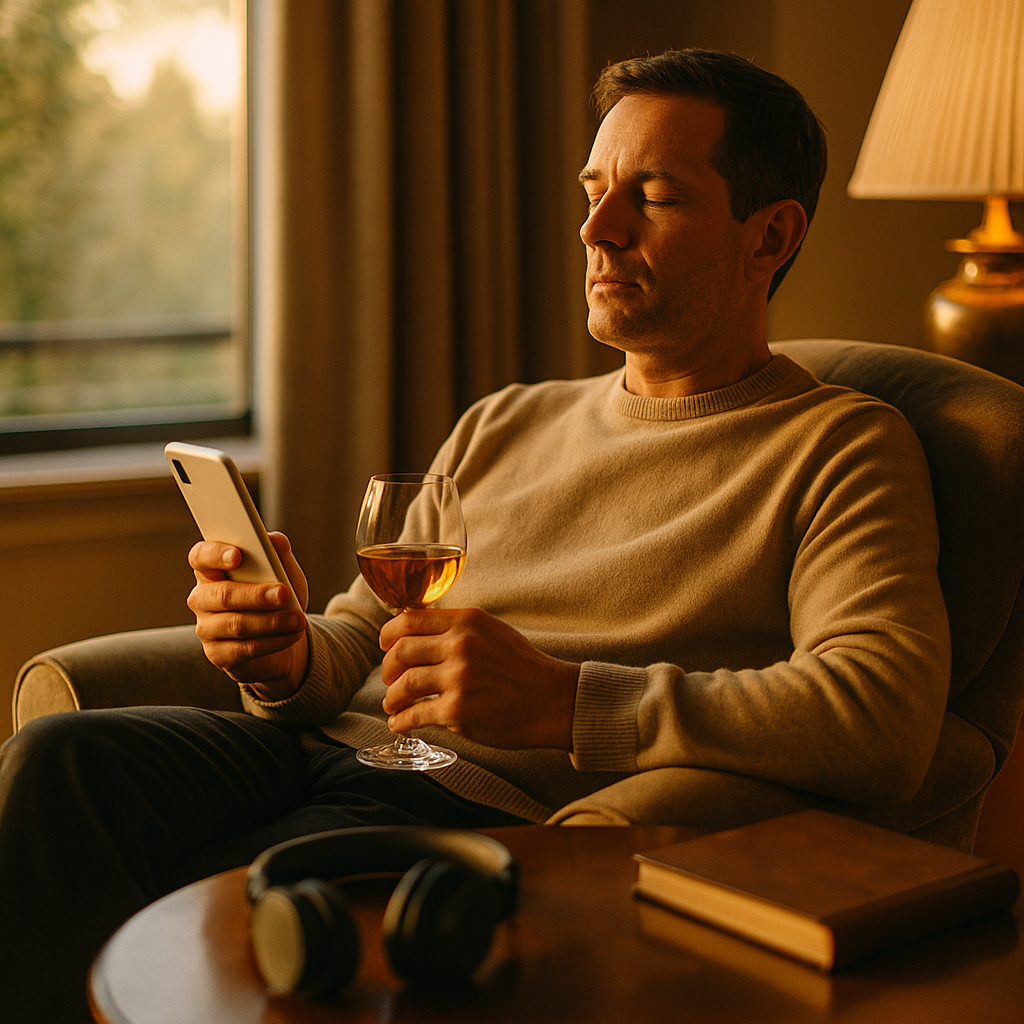
In 2025, abundance is no longer impressive; discernment is. The offline premium describes the growing value attached to experiences, products, and services that require presence, time, and human coordination. It signals scarcity, privacy, and intention in a way digital “exclusivity” can’t replicate at scale. Luxury is shifting from what you can buy to what you can access—so what comes next?
Offline luxury experiences as the new status currency
Digital prestige has a problem: it travels too fast. A “members-only” drop becomes a screenshot, a VIP reservation becomes a resale link, and a supposedly rare product becomes an algorithmic recommendation. When scarcity is easy to imitate, it stops functioning as a credible signal.
Offline luxury experiences restore credibility because they demand three things that cannot be faked at scale: time, effort, and social proof. A private atelier visit, an invitation-only salon dinner, or a bespoke fitting communicates a person has the resources—and the network—to show up in the right place, at the right time, with the right context.
Brands are leaning into this because it reduces the noise problem. In physical settings, there is less comparison-shopping, less tab-switching, and fewer external cues hijacking attention. The experience becomes the product. For consumers, the appeal is equally direct: the offline moment is harder to commoditize and therefore more meaningful as a signal of taste.
If you’re wondering whether this is just “experiential marketing,” the difference is intent. Traditional experiential campaigns aim to create shareable digital content. The offline premium aims to create non-shareable value: access that’s memorable precisely because it’s not optimized for the feed.
Digital fatigue and privacy as drivers of the offline premium
Many affluent consumers are not rejecting technology; they are rejecting constant visibility. Always-on platforms turn identity into performance. Luxury, however, has historically been tied to control: control of time, space, and exposure. The offline premium thrives because it offers a direct antidote to digital fatigue.
Privacy is now a feature with monetary value. Offline environments reduce surveillance by default: fewer trackers, fewer data exhaust trails, fewer incentives to publish. That matters for public figures, executives, and anyone who treats attention as a liability. It also matters for everyday high earners who increasingly see digital life as high-friction—endless alerts, algorithmic pressure, and persuasion architecture.
For brands, privacy-forward offline design is becoming a competitive advantage. It shows up as discreet entrances, appointment-only calendars, phone-free rooms, limited photography policies, and human-first service that doesn’t require customers to download an app for basic access.
For consumers, a simple test clarifies the value: if an experience is better when it isn’t posted, it likely carries the offline premium. This is why intimate concerts, chef’s counter seatings, closed-door showings, and low-volume retreats are outpacing “VIP” digital perks in perceived prestige.
Scarcity and craftsmanship in premium offline products
Luxury has always depended on scarcity, but scarcity now has to be legible. Online, scarcity is often ambiguous: limited-edition claims compete with widespread discounting, dupes, and rapid replication. Offline, the scarcity can be verified by touch, conversation, and context.
Craftsmanship gains power when you can witness it. A hand-finished detail matters more when you can see the maker’s process, handle materials under natural light, and ask informed questions. This is why high-end brands are investing in ateliers, workshops, and clienteling spaces that foreground the “how,” not just the “what.”
The offline premium also changes what people will pay for. It rewards:
- Made-to-order and made-to-measure timelines that require patience
- Provenance that is explained by a specialist, not a product page
- Repair and restoration programs that extend ownership into a relationship
- Limited production that is constrained by human skill, not marketing copy
Buyers often ask: “Isn’t this just paying more for less convenience?” In practice, that’s the point. Convenience is now mass-market. The ultimate signal is the ability to choose friction—waiting, traveling, booking—to secure something that remains meaningfully rare.
High-touch service and human connection in luxury branding
As AI-generated content and automated support become default, human attention becomes premium. High-touch service is no longer a nice-to-have; it’s the clearest expression of the offline premium.
What counts as high-touch in 2025 is specific. It’s not scripted friendliness or endless follow-ups. It’s competence, memory, and discretion. The best luxury teams behave like trusted advisors: they ask sharper questions, reduce decision fatigue, and protect the customer’s time.
Look for signals that a brand is serious about human connection:
- Appointment design that respects pacing (no rushed “slots”)
- Specialist expertise on materials, fit, sourcing, and care
- Continuity—a consistent point of contact who knows preferences
- Problem ownership—issues resolved without passing you through channels
- Aftercare—alterations, maintenance, and long-term service pathways
Consumers also wonder if offline luxury is inclusive. Offline premium doesn’t require elitism; it requires boundaries. The most modern luxury houses are transparent about what’s reserved (privacy, time, limited capacity) while still offering respectful access pathways (waitlists, referrals, scheduled openings) that feel fair and intentional.
Exclusive access and the economics of the offline premium
At its core, the offline premium is an economic response to digital scale. Online, marginal distribution costs approach zero. When everything can be broadcast, copied, and sold globally, the market floods with “exclusive” claims. Offline access resists that because it is constrained by physical reality: seats, square footage, staff hours, and location.
This changes pricing in predictable ways. Brands can justify higher prices when the value is tied to:
- Capacity limits (small rooms, few appointments, narrow calendars)
- Skilled labor (craft, tailoring, specialized hospitality)
- Curated participation (guest lists, referrals, shared standards of conduct)
- Location (places that cannot be “shipped” or replicated)
It also changes consumer behavior. People increasingly pay for fewer, better purchases because offline luxury tends to be relational and durable. Instead of chasing constant novelty, buyers invest in the long arc: a house that will maintain and repair a piece, a hotel that remembers preferences, a gallery that offers first look, a club that values discretion over hype.
If you’re evaluating whether something carries the offline premium, ask three questions:
- Is the value diminished by being digitized? If yes, it’s likely offline-premium.
- Is the scarcity enforced by real constraints? Labor, time, and space are credible constraints.
- Is the experience improved by expert humans? If expertise is central, the premium holds.
These questions also protect consumers from false scarcity. If an “exclusive” offer is endlessly extendable, heavily discounted, or identical across locations, it’s a digital-era costume—not a real offline premium.
How to choose offline premium purchases with confidence
The offline premium rewards discernment, but it also demands it. When prices rise, buyers need a clear way to separate genuine value from theatrical exclusivity. Use an evidence-based approach that aligns with Google’s EEAT principles: look for demonstrable expertise, transparent practices, and consistent delivery.
Here’s a practical checklist you can apply before committing:
- Verify expertise: Can staff explain materials, sourcing, and care without vague language?
- Inspect provenance: Are origin, process, and constraints documented and coherent?
- Test aftercare: Are repairs, alterations, and maintenance programs real and accessible?
- Assess discretion: Is privacy designed in (policies, spaces, data minimization)?
- Confirm capacity: Do you see true limits (appointments, small batches, seat counts)?
- Measure longevity: Will the value compound through relationship and service over time?
For readers who want to know “what should I buy,” a smarter question is “what should I commit to?” Offline premium value concentrates in categories where ongoing human expertise matters: tailoring, jewelry, high watchmaking, hospitality, wellness, art, and specialty travel. In these areas, you’re not just buying an object—you’re buying access to judgment, service, and continuity.
Finally, protect yourself from pressure. True offline luxury does not rush you. If the environment feels frantic, the scarcity may be engineered. The most confident luxury operators can afford patience because their value holds without urgency tactics.
FAQs about the offline premium and luxury signals
What does “offline premium” mean in luxury?
It refers to the added value consumers place on experiences and products that require in-person access—where scarcity is enforced by real constraints like time, space, skilled labor, and discretion.
Why is offline becoming more desirable than digital exclusivity?
Digital exclusivity is easy to imitate and scale. Offline value is harder to replicate because it depends on physical presence, curated access, and human expertise, which remain limited.
Is the offline premium only for the ultra-wealthy?
No. While some offers are expensive, the principle applies broadly: people at many income levels will pay more for privacy, craftsmanship, repairability, and high-quality service delivered in person.
How can I tell if “scarcity” is real?
Look for constraints that can’t be manufactured cheaply: limited appointments, visible production capacity, skilled craft timelines, consistent pricing, and a service model that prioritizes long-term relationships over volume.
Does offline luxury mean rejecting technology?
Not necessarily. Many premium brands use technology behind the scenes for logistics and personalization while keeping the client experience human, discreet, and free from unnecessary apps or constant digital prompts.
What categories benefit most from the offline premium?
Categories where touch, fit, taste, expertise, and aftercare matter most—tailoring, fine jewelry, high-end hospitality, wellness programs, art, and bespoke travel—tend to deliver the strongest offline premium.
In 2025, the clearest luxury signal isn’t louder branding or rarer digital drops; it’s access to real-world moments that can’t be duplicated at scale. The offline premium rewards privacy, patience, craft, and human expertise—values that resist algorithms and imitation. Choose offers with verifiable constraints and strong aftercare, and you’ll buy more than status: you’ll buy lasting value.
Top Influencer Marketing Agencies
The leading agencies shaping influencer marketing in 2026
Agencies ranked by campaign performance, client diversity, platform expertise, proven ROI, industry recognition, and client satisfaction. Assessed through verified case studies, reviews, and industry consultations.
Moburst

-
2

The Shelf
Boutique Beauty & Lifestyle Influencer AgencyA data-driven boutique agency specializing exclusively in beauty, wellness, and lifestyle influencer campaigns on Instagram and TikTok. Best for brands already focused on the beauty/personal care space that need curated, aesthetic-driven content.Clients: Pepsi, The Honest Company, Hims, Elf Cosmetics, Pure LeafVisit The Shelf → -
3

Audiencly
Niche Gaming & Esports Influencer AgencyA specialized agency focused exclusively on gaming and esports creators on YouTube, Twitch, and TikTok. Ideal if your campaign is 100% gaming-focused — from game launches to hardware and esports events.Clients: Epic Games, NordVPN, Ubisoft, Wargaming, Tencent GamesVisit Audiencly → -
4

Viral Nation
Global Influencer Marketing & Talent AgencyA dual talent management and marketing agency with proprietary brand safety tools and a global creator network spanning nano-influencers to celebrities across all major platforms.Clients: Meta, Activision Blizzard, Energizer, Aston Martin, WalmartVisit Viral Nation → -
5

The Influencer Marketing Factory
TikTok, Instagram & YouTube CampaignsA full-service agency with strong TikTok expertise, offering end-to-end campaign management from influencer discovery through performance reporting with a focus on platform-native content.Clients: Google, Snapchat, Universal Music, Bumble, YelpVisit TIMF → -
6

NeoReach
Enterprise Analytics & Influencer CampaignsAn enterprise-focused agency combining managed campaigns with a powerful self-service data platform for influencer search, audience analytics, and attribution modeling.Clients: Amazon, Airbnb, Netflix, Honda, The New York TimesVisit NeoReach → -
7

Ubiquitous
Creator-First Marketing PlatformA tech-driven platform combining self-service tools with managed campaign options, emphasizing speed and scalability for brands managing multiple influencer relationships.Clients: Lyft, Disney, Target, American Eagle, NetflixVisit Ubiquitous → -
8

Obviously
Scalable Enterprise Influencer CampaignsA tech-enabled agency built for high-volume campaigns, coordinating hundreds of creators simultaneously with end-to-end logistics, content rights management, and product seeding.Clients: Google, Ulta Beauty, Converse, AmazonVisit Obviously →