


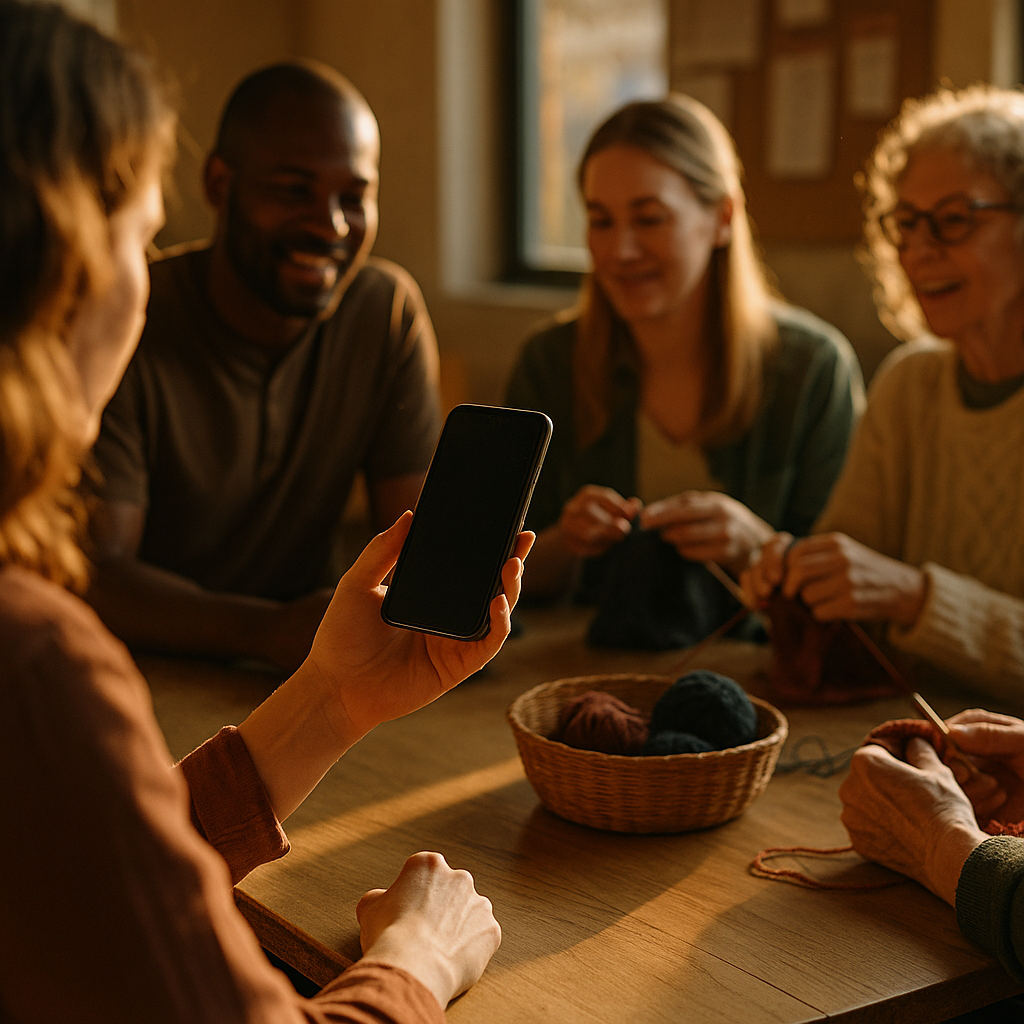
In 2025, many people feel drained by feeds engineered for speed, outrage, and endless scrolling. A different model is gaining traction: slow social, where conversations unfold over time and membership is earned, not assumed. These spaces emphasize intention, context, and trust—often by adding friction on purpose. Why would anyone choose less convenience online?
What “slow social” means in 2025
Slow social describes online interaction designed for depth rather than velocity. Instead of maximizing time-on-site through constant novelty, slow social platforms and groups prioritize meaningful exchange: longer posts, slower reply cycles, clearer norms, and deliberate membership boundaries.
This shift is not nostalgia. It is a practical response to how mainstream social media incentives work. When attention is the product, the system rewards frequency, polarization, and simplified takes. Slow social changes the incentive structure by making it harder to post impulsively and easier to build shared context.
Typical slow social design choices include:
- Asynchronous conversation (threads that last days or weeks rather than minutes).
- Context-first posting (prompts, templates, or required summaries that reduce misinterpretation).
- Limited virality (no public reshare loops, smaller discovery surfaces, and less algorithmic amplification).
- Smaller, stable groups (membership caps, cohorts, or topic-specific rooms).
- Norms and moderation up front (clear rules, visible enforcement, and onboarding that explains culture).
Slow social does not mean “quiet” or “exclusive for the sake of it.” It means the environment is structured so that people can show up with care, accountability, and enough time to think. That structure is often delivered through high-friction community design.
High friction communities: why barriers can improve trust
High friction online communities intentionally add steps that filter behavior and raise the cost of low-quality participation. In an open feed, the cheapest move is to post quickly, take a side, and chase engagement. In a high-friction space, the cheapest move becomes reading first, learning norms, and contributing thoughtfully.
Friction works when it serves a purpose: protecting members’ attention, preventing spam, and setting expectations about conduct. Done well, it creates psychological safety without sacrificing honest disagreement.
Common friction mechanisms include:
- Application or referral gates (short forms, sponsor invites, or identity verification).
- Onboarding sequences (required reading, introductory posts, or mentorship/buddy systems).
- Posting cooldowns (limits for new members, time delays before first post, or rate limits).
- Structured prompts (templates such as “claim + evidence + uncertainty + question”).
- Topic boundaries (clear channel purposes, moving off-topic posts, and searchable knowledge bases).
- Consequences with receipts (transparent moderation notes, warnings, and appeal paths).
Readers often ask whether friction just reduces growth. It can. But many communities now optimize for retention, trust, and member outcomes rather than sheer reach. If a group exists to support professional practice, health behavior change, local organizing, or specialized learning, lower churn and higher signal matter more than viral expansion.
The key is proportionality: add only as much friction as needed to protect the mission. When friction becomes arbitrary, it turns into gatekeeping and undermines community legitimacy.
The attention economy backlash driving private networks
The rise of slow social is also a backlash against the attention economy dynamics that shape large platforms. Many users have learned the hard way that “free” reach often comes with hidden costs: reduced privacy, higher stress, and distorted perception of what others believe.
In 2025, this backlash shows up in three behavioral shifts:
- People choose smaller surfaces where the audience is clearer and reputations persist.
- People prefer semi-private or private networks that are harder to scrape, harder to game, and less likely to be used as content mines.
- People value moderation quality the way they value hygiene in a restaurant: not glamorous, but decisive.
Another driver is the reality of synthetic content. As generative AI has made it easier to produce high-volume posts, comments, and even fake personas, communities that rely on open participation face increased noise and manipulation risk. High-friction communities respond with identity and intent checks, clearer provenance of expertise, and norms that favor lived experience or verifiable practice over performative posting.
Follow-up question: does private mean safer? Not automatically. Private groups can still become toxic or misinformed. The difference is that well-run private networks can enforce standards consistently, limit bad-faith participation, and create feedback loops where members feel responsible for the space.
Deliberate onboarding and moderation: the new community infrastructure
Slow social succeeds when the operational backbone is strong. The most effective communities treat onboarding, governance, and moderation as core infrastructure—similar to product design or customer support.
To align with Google’s EEAT expectations for helpful content, communities increasingly formalize the signals of experience, expertise, authoritativeness, and trust:
- Experience: members share what they have done, not just what they think. Many groups encourage case studies, post-mortems, and “here’s what worked” write-ups.
- Expertise: subject-matter knowledge is made legible through profiles, portfolios, credential verification where appropriate, and peer endorsement.
- Authoritativeness: rules are not vibes. They are documented, consistently applied, and updated based on community learning.
- Trust: privacy controls, clear data handling, and transparent moderation actions build long-term confidence.
Practical governance elements that readers can borrow:
- Write a community constitution: purpose, membership criteria, what “good” looks like, and what is out of bounds.
- Create a moderation ladder: gentle nudge → warning → temporary mute → removal, with an appeal process.
- Use a “read first” library: pinned norms, canonical answers, and a searchable archive to prevent repetitive debates.
- Separate “support” from “debate” spaces: people seeking help should not be forced into performative argument.
- Measure outcomes: track member retention, unanswered questions, time-to-first-meaningful-post, and reported incidents.
Many founders worry that strict moderation suppresses speech. In practice, consistent norms typically increase participation from members who would otherwise stay silent. The goal is not ideological uniformity; it is behavioral clarity.
Design patterns for intentional communities that scale without losing soul
Slow social does not reject growth; it rejects uncontrolled growth. The most resilient intentional communities scale through structure rather than constant expansion. Instead of one giant room, they build systems that preserve context and accountability.
Patterns that work in 2025:
- Cohorts and seasons: fixed-time programs or discussion arcs with start and end dates, which reduce chaos and encourage follow-through.
- Small-group cells: groups of 6–12 for deeper trust, with optional cross-cell gatherings.
- Contributor pathways: clear routes from newcomer → regular → trusted contributor → moderator, based on behavior and helpfulness.
- “Publish then discuss” rituals: members post considered notes first, then open a slower comment window to prevent pile-ons.
- Quality filters: upvote systems that reward usefulness, plus editor-curated highlights rather than pure popularity rankings.
- Offline reinforcement: local meetups, workshops, or co-working sessions that strengthen accountability and reduce dehumanization.
Answering a common follow-up: can these communities still be discoverable? Yes—many use public-facing “front porches” (newsletters, podcasts, open articles, or read-only forums) while keeping the “living room” gated. This preserves inbound interest without sacrificing member safety.
Another concern is diversity of thought. High friction can unintentionally narrow membership. Communities counter this by making the barrier about intent and conduct, not insider status: clear criteria, low-cost scholarships for paid groups, and onboarding that welcomes newcomers without forcing them to perform expertise.
Benefits and tradeoffs: mental health, knowledge quality, and belonging
The appeal of slow social is concrete. Members often report better conversations, less stress, and stronger belonging. But the tradeoffs are real, and honest communities name them.
Benefits:
- Higher signal-to-noise: fewer drive-by comments, more informed questions, and less repetition due to shared archives.
- More durable relationships: stable identity and norms encourage continuity and mutual support.
- Better learning: long-form explanations, critiques with context, and slower feedback loops improve skill building.
- Reduced performativity: less pressure to post constantly, more room for nuance and uncertainty.
- Safer participation: clear consequences reduce harassment and targeted campaigns.
Tradeoffs:
- Slower discovery: fewer viral spikes means growth relies on reputation and referrals.
- More operational load: onboarding, moderation, and governance require consistent effort and trained leaders.
- Risk of insularity: without intentional bridges, communities can become echo chambers.
- Access barriers: applications and paywalls can exclude people who would benefit most.
The best slow social spaces treat these tradeoffs as design constraints. They build outward-facing publishing, invite guest experts, run cross-community exchanges, and maintain strong standards for evidence and respectful disagreement.
FAQs
What is the difference between slow social and “just using social media less”?
Using social media less is a personal habit change. Slow social is a system design choice: platforms or communities intentionally structure interaction to favor depth, context, and trust through asynchronous pacing, norms, and friction.
Are high friction online communities the same as paywalled communities?
No. Payment is one type of friction, but not the only one. Many high-friction spaces are free and rely on onboarding, referrals, identity checks, and strict moderation. The goal is behavior quality and safety, not monetization.
How do slow social communities prevent misinformation?
They combine clear evidence norms, active moderation, and slower posting mechanics that reduce pile-ons. Many also encourage sourcing, require disclosures of uncertainty, and elevate experienced practitioners through contributor pathways.
What platforms support slow social best?
Tools matter less than governance, but features like threaded discussions, searchable archives, role-based permissions, and onboarding automation help. Many communities choose forum-style platforms, private group chat with strong moderation controls, or hybrid models with a public newsletter and a gated discussion space.
How can I start a high-trust community without becoming a full-time moderator?
Start small, write clear norms, and build a contributor-to-moderator pathway early. Use templates for common moderation actions, appoint co-moderators with defined responsibilities, and limit early growth so culture forms before scale.
Do high friction communities exclude newcomers or underrepresented voices?
They can if barriers are based on insider status. Healthy communities set barriers around intent and conduct, offer transparent criteria, provide scholarships or free tiers when paid, and use onboarding that teaches norms without demanding prior expertise.
Slow social and high-friction online communities are rising because people want trust, context, and better outcomes—not more noise. In 2025, the winning formula is deliberate design: thoughtful pacing, clear norms, and accountable moderation, supported by transparent governance. The takeaway is simple: add friction where it protects members and mission, and remove friction where it blocks genuine participation.
Top Influencer Marketing Agencies
The leading agencies shaping influencer marketing in 2026
Agencies ranked by campaign performance, client diversity, platform expertise, proven ROI, industry recognition, and client satisfaction. Assessed through verified case studies, reviews, and industry consultations.
Moburst

-
2

The Shelf
Boutique Beauty & Lifestyle Influencer AgencyA data-driven boutique agency specializing exclusively in beauty, wellness, and lifestyle influencer campaigns on Instagram and TikTok. Best for brands already focused on the beauty/personal care space that need curated, aesthetic-driven content.Clients: Pepsi, The Honest Company, Hims, Elf Cosmetics, Pure LeafVisit The Shelf → -
3

Audiencly
Niche Gaming & Esports Influencer AgencyA specialized agency focused exclusively on gaming and esports creators on YouTube, Twitch, and TikTok. Ideal if your campaign is 100% gaming-focused — from game launches to hardware and esports events.Clients: Epic Games, NordVPN, Ubisoft, Wargaming, Tencent GamesVisit Audiencly → -
4

Viral Nation
Global Influencer Marketing & Talent AgencyA dual talent management and marketing agency with proprietary brand safety tools and a global creator network spanning nano-influencers to celebrities across all major platforms.Clients: Meta, Activision Blizzard, Energizer, Aston Martin, WalmartVisit Viral Nation → -
5

The Influencer Marketing Factory
TikTok, Instagram & YouTube CampaignsA full-service agency with strong TikTok expertise, offering end-to-end campaign management from influencer discovery through performance reporting with a focus on platform-native content.Clients: Google, Snapchat, Universal Music, Bumble, YelpVisit TIMF → -
6

NeoReach
Enterprise Analytics & Influencer CampaignsAn enterprise-focused agency combining managed campaigns with a powerful self-service data platform for influencer search, audience analytics, and attribution modeling.Clients: Amazon, Airbnb, Netflix, Honda, The New York TimesVisit NeoReach → -
7

Ubiquitous
Creator-First Marketing PlatformA tech-driven platform combining self-service tools with managed campaign options, emphasizing speed and scalability for brands managing multiple influencer relationships.Clients: Lyft, Disney, Target, American Eagle, NetflixVisit Ubiquitous → -
8

Obviously
Scalable Enterprise Influencer CampaignsA tech-enabled agency built for high-volume campaigns, coordinating hundreds of creators simultaneously with end-to-end logistics, content rights management, and product seeding.Clients: Google, Ulta Beauty, Converse, AmazonVisit Obviously →