


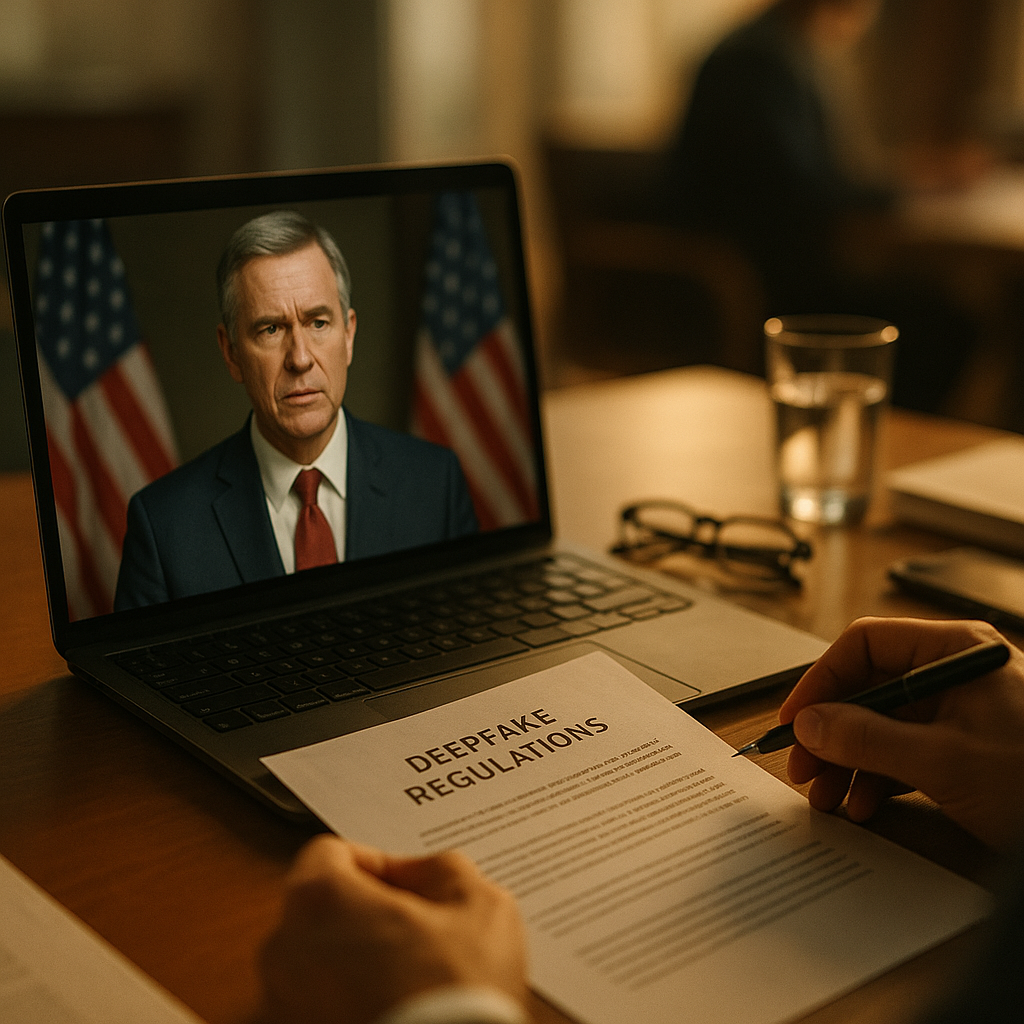
In 2025, synthetic media has become a standard tool in political persuasion, but it also raises legal and ethical landmines. Compliance Rules for Deepfake Disclosure in Advocacy Ads now shape how campaigns, nonprofits, unions, and issue groups can use AI-generated audio, video, and images without misleading voters. This guide explains the rules, practical workflows, and documentation you need to stay compliant—before your next ad goes live.
Deepfake disclosure laws and definitions
Advocacy advertisers face a fast-evolving patchwork of rules because “deepfake,” “synthetic media,” and “materially deceptive media” are defined differently across jurisdictions and platforms. Your first compliance task is to classify what you made and where it will run.
What typically triggers a disclosure requirement
- AI-generated or materially altered media depicting a real person saying or doing something they did not say or do.
- Real footage edited in a way that changes meaning (for example, swapping audio, adding fabricated context, or splicing reactions).
- Voice cloning used to imitate a recognizable public figure, candidate, or official.
- Synthetic “documentary-style” content presented as authentic news or archival material.
What often does not trigger deepfake-specific disclosure (though other rules may still apply)
- Obvious parody or satire where a reasonable viewer would not interpret it as factual, especially if labeled.
- Cosmetic edits that do not materially change meaning (color correction, cropping, subtitles), depending on local definitions.
- Stock avatars or fully fictional characters that are not presented as real people or real events.
Why definitions matter for advocacy ads even when you are not “a campaign”
Many rules apply to election-related communications broadly, including issue advocacy that references candidates, elected officials, ballot measures, or voting processes. If your ad can reasonably influence an election outcome, treat it as political creative from a disclosure standpoint and confirm whether additional sponsor disclaimers apply.
Practical takeaway: Build an internal taxonomy: “synthetic,” “edited,” and “authentic.” Tag each asset at the source-file level (project file plus final render) so disclosures and approvals become repeatable.
Political advertising compliance requirements for advocacy groups
Deepfake disclosure is not a standalone obligation. It typically sits beside sponsor identification, recordkeeping, and electioneering rules. In 2025, enforcement pressure comes from regulators, litigants, and platforms—often simultaneously—so your compliance plan should assume multiple reviewers.
Core compliance elements to expect
- Clear disclosure in the ad if AI-generated or materially altered content depicts real people or events in a deceptive way.
- Sponsor attribution (the “who paid for this” element), including the legal entity name and, in some jurisdictions, additional contact information.
- Placement and readability standards for on-screen text: size, contrast, duration, and proximity to the synthetic content.
- Audio disclosure for radio, podcasts, and audio-forward placements where visual text is ineffective.
- Timing restrictions around elections in some jurisdictions, especially for content that depicts candidates near voting dates.
Where advocacy advertisers most often slip
- Using a small “AI-generated” label that is unreadable on mobile or disappears before it can be processed.
- Labeling only the landing page rather than the creative itself, even when the rule expects in-ad disclosure.
- Assuming that because an ad is “issue advocacy,” it does not count as election-related.
- Relying on influencer posts or “organic” distribution without applying ad-grade disclosure discipline.
Answering the follow-up question: does a disclaimer protect you if the ad is still misleading?
Not necessarily. Many standards focus on whether a viewer could be materially misled despite the label. Use disclosure as one layer, not a license to misrepresent. Substantiate factual claims, avoid fabricated quotes, and preserve a defensible basis for the message.
Synthetic media labeling standards across platforms
Even if you comply with jurisdictional law, the platform may impose stricter rules. In practice, platform policies often determine what gets approved, what gets limited, and what gets removed. Advocacy advertisers should treat platform standards as part of “release-ready” creative.
Common platform expectations in 2025
- Upfront disclosure that content is AI-generated or digitally altered when it depicts real people or realistic events.
- Political content verification and identity checks for entities running election-related ads.
- Restricted targeting or additional review for sensitive categories like elections, governance, immigration, public safety, or health.
- Metadata and provenance signals (such as content credentials) where supported, plus truthful answers to “synthetic media” prompts during upload.
How to make labels effective rather than cosmetic
- Put the disclosure near the claim: if the synthetic segment is a “candidate clip,” the label should appear during that segment.
- Use plain language: “AI-generated video” or “Digitally altered audio” outperforms vague labels like “synthetic content.”
- Design for mobile: adequate font size, high contrast, and enough screen time for an average viewer to read.
- Repeat when necessary: for long-form video, restate at the beginning and before/within synthetic sequences.
Operational note: Keep a “platform matrix” that maps each channel to its disclosure format rules (text overlay, spoken line, caption, description field). Update the matrix quarterly and whenever major policy updates drop.
Election integrity and deceptive media risk management
Deepfake disclosure is about more than satisfying a checkbox; it is part of election integrity risk management. Advocacy groups that handle this well reduce the chance of takedowns, investigations, reputational damage, and emergency injunctions that can halt messaging at the worst possible moment.
Build a risk-based approval workflow
- Tier 1 (low risk): fictional avatars, generic AI visuals, or dramatizations with no real person likeness and no realistic depiction of actual events.
- Tier 2 (moderate risk): edited real footage or AI voiceovers that could be mistaken for real if not labeled.
- Tier 3 (high risk): synthetic or altered depictions of candidates, officials, polling processes, vote counting, emergencies, or anything that could suppress turnout or create confusion.
Controls that materially reduce risk
- Pre-production legal review for Tier 2–3 concepts, not just final edits.
- Source-of-truth documentation: archive prompts, model/version, training rights for any custom model, and a change log of edits.
- Claims substantiation file: citations, transcripts, and supporting records for factual assertions, especially comparative claims about candidates or policies.
- Audience harm checks: ensure content does not misstate election logistics (dates, locations, eligibility) and does not impersonate election officials.
- Rapid response plan: escalation contacts, platform appeal templates, and a “pause and replace” creative kit with compliant alternates.
Answering the follow-up question: can you use deepfakes for “educational” advocacy?
You can, but treat it as high-risk if it depicts real people or realistic events. Use prominent disclosures, avoid fabricated quotes, and ensure the educational purpose is not undermined by a misleading presentation. If the content simulates a scenario, say so clearly: “Dramatization created with AI.”
AI transparency documentation and audit readiness
When disputes arise, the groups that win are the groups that can show their work. In 2025, audit readiness means you can quickly prove whether content was synthetic, how it was produced, what disclosures ran, and which approvals were granted.
Maintain an “AI transparency packet” for each creative
- Creative brief with objective, audience, jurisdictions, and distribution plan.
- Asset lineage: original files, intermediate edits, and final exports with hashes or version IDs.
- Generation log: tools used, model/version, prompts, and settings for synthetic generation.
- Talent and likeness rights: releases, licenses, and restrictions, especially for voice cloning or realistic likeness use.
- Disclosure proofs: screenshots and timecodes showing on-screen labels; script lines for audio disclosures; copy for captions/description fields.
- Approval trail: who reviewed, when, and what issues were resolved (legal, compliance, brand, platform policy).
How long should you keep records?
Retention depends on local election and advertising rules, contractual obligations, and litigation risk. A conservative practice is to retain packets through the entire election cycle plus any applicable dispute window. Align retention with counsel’s guidance and your organization’s document retention policy, and ensure holds can be applied quickly if complaints arise.
Make compliance measurable
- Pre-flight checklist completion rate before launch.
- Platform rejection rate and root-cause categories.
- Time-to-remediation for disclosure fixes.
- Incident log for complaints, takedowns, and corrections.
Best practices for advocacy ad disclosures and creative design
Effective disclosure balances clarity with persuasion. The goal is not to bury the label; it is to preserve trust while still communicating your message. When you design disclosures as part of the creative, you reduce the chance that last-minute compliance edits degrade performance.
Disclosure language that works
- For synthetic video: “AI-generated video.”
- For altered footage: “Digitally altered video.”
- For voice cloning: “AI-generated voice.”
- For dramatizations: “Dramatization created with AI. Not actual events.”
Placement and timing guidelines
- Start-of-ad label when synthetic content appears early or sets the narrative.
- In-scene label during every synthetic segment that could be confused as real.
- End card reinforcement summarizing disclosure plus sponsor attribution where required.
Don’t forget accessibility
- Captions for disclosed audio lines and accurate transcripts for video.
- High-contrast text and adequate on-screen duration for viewers with low vision.
- Language localization where you target multilingual communities; disclosures should appear in the language of the ad.
Answering the follow-up question: will disclosures reduce ad performance?
Sometimes they reduce initial curiosity, but they often improve long-term credibility and reduce negative feedback, reporting, and takedowns. In advocacy, continuity matters; a removed ad performs at zero. A compliant ad that stays live typically wins.
FAQs on compliance rules for deepfake disclosure in advocacy ads
-
Do I need a deepfake disclosure if I use AI only for background images?
If the AI background does not depict real people or realistic events in a misleading way, a deepfake-specific disclosure may not be required. Still, confirm platform policies and ensure you do not imply the background is real documentary footage.
-
Is a disclaimer in the caption enough, or must it appear in the video?
Many rules and platform standards expect an in-ad disclosure when synthetic or altered media could mislead. Use on-screen text for video and a spoken disclosure for audio placements, then add caption text as a backup.
-
What if the deepfake is clearly satirical?
Satire can reduce deception risk, but it is not a universal exemption. If a reasonable viewer could still be misled, add a clear “satire” or “parody” label and avoid fabricating quotes that look like factual admissions.
-
Can I use an AI voice that sounds like a public figure if I do not name them?
This is high-risk. If the voice is recognizable, you may trigger likeness and impersonation concerns, plus deepfake disclosure obligations. Use a distinct voice, secure permissions when needed, and label any AI-generated voice clearly.
-
How do I handle short-form ads where there is little time for text?
Use concise wording (“AI-generated video”) with high contrast, place it during the synthetic moment, and keep it on screen long enough to read. If the platform supports it, add an additional disclosure tag in the upload flow and caption.
-
What documentation should we keep in case of a complaint?
Keep the final ad, version history, generation logs, substantiation for claims, proof of the disclosure as served, and a dated approval trail. This packet should be retrievable quickly for platform appeals or regulator inquiries.
Compliance in 2025 is not just about avoiding penalties; it is about keeping your advocacy message live, credible, and defensible. Treat deepfake disclosure as a system: classify content, design clear labels, follow platform rules, and maintain an audit-ready file for every creative. If you can prove what you made, how you made it, and how you disclosed it, you can move fast without losing control.
Top Influencer Marketing Agencies
The leading agencies shaping influencer marketing in 2026
Agencies ranked by campaign performance, client diversity, platform expertise, proven ROI, industry recognition, and client satisfaction. Assessed through verified case studies, reviews, and industry consultations.
Moburst

-
2

The Shelf
Boutique Beauty & Lifestyle Influencer AgencyA data-driven boutique agency specializing exclusively in beauty, wellness, and lifestyle influencer campaigns on Instagram and TikTok. Best for brands already focused on the beauty/personal care space that need curated, aesthetic-driven content.Clients: Pepsi, The Honest Company, Hims, Elf Cosmetics, Pure LeafVisit The Shelf → -
3

Audiencly
Niche Gaming & Esports Influencer AgencyA specialized agency focused exclusively on gaming and esports creators on YouTube, Twitch, and TikTok. Ideal if your campaign is 100% gaming-focused — from game launches to hardware and esports events.Clients: Epic Games, NordVPN, Ubisoft, Wargaming, Tencent GamesVisit Audiencly → -
4

Viral Nation
Global Influencer Marketing & Talent AgencyA dual talent management and marketing agency with proprietary brand safety tools and a global creator network spanning nano-influencers to celebrities across all major platforms.Clients: Meta, Activision Blizzard, Energizer, Aston Martin, WalmartVisit Viral Nation → -
5

The Influencer Marketing Factory
TikTok, Instagram & YouTube CampaignsA full-service agency with strong TikTok expertise, offering end-to-end campaign management from influencer discovery through performance reporting with a focus on platform-native content.Clients: Google, Snapchat, Universal Music, Bumble, YelpVisit TIMF → -
6

NeoReach
Enterprise Analytics & Influencer CampaignsAn enterprise-focused agency combining managed campaigns with a powerful self-service data platform for influencer search, audience analytics, and attribution modeling.Clients: Amazon, Airbnb, Netflix, Honda, The New York TimesVisit NeoReach → -
7

Ubiquitous
Creator-First Marketing PlatformA tech-driven platform combining self-service tools with managed campaign options, emphasizing speed and scalability for brands managing multiple influencer relationships.Clients: Lyft, Disney, Target, American Eagle, NetflixVisit Ubiquitous → -
8

Obviously
Scalable Enterprise Influencer CampaignsA tech-enabled agency built for high-volume campaigns, coordinating hundreds of creators simultaneously with end-to-end logistics, content rights management, and product seeding.Clients: Google, Ulta Beauty, Converse, AmazonVisit Obviously →