


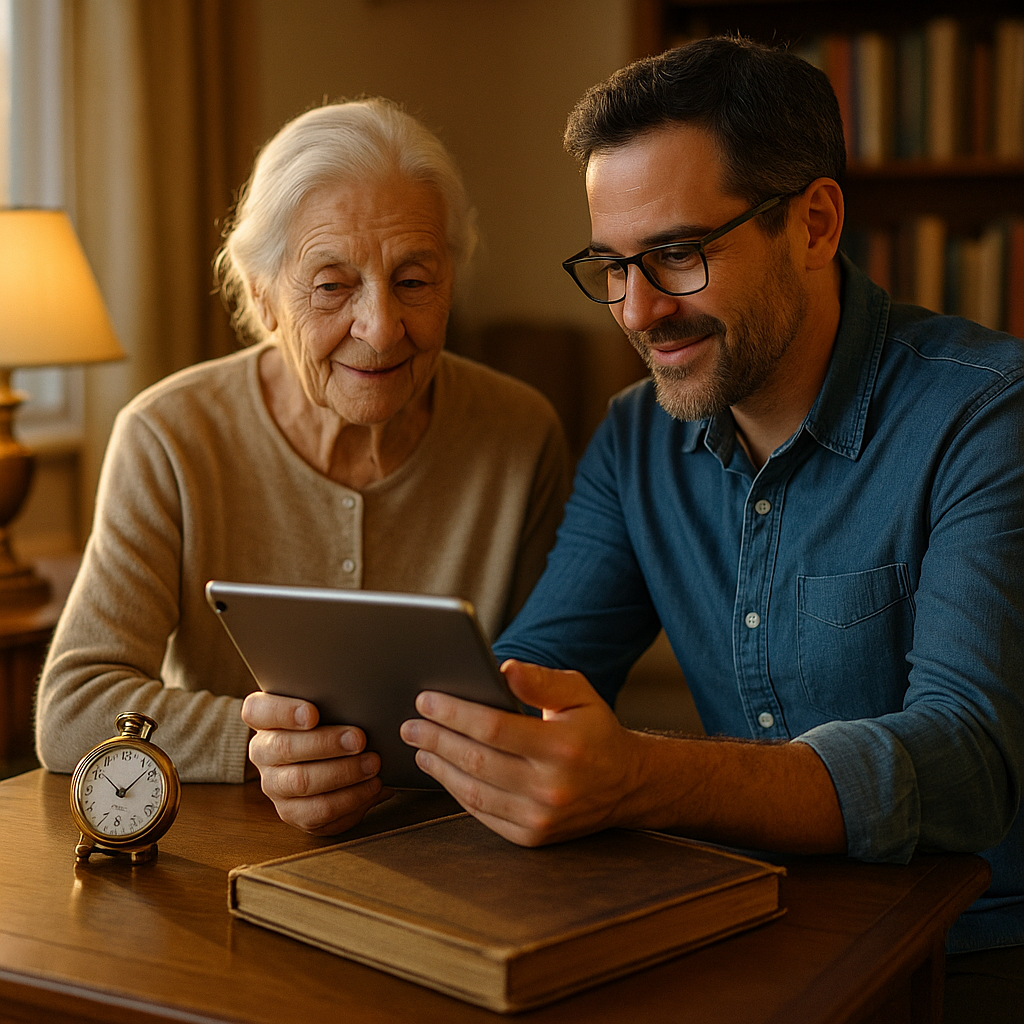
In 2025, brands face a paradox: customers want frictionless digital experiences, yet they also crave meaning that lasts. Digital heirloom marketing answers this by designing products and stories intended to live across decades, not campaigns. When brands plan for fifty years, they earn trust, reduce churn, and create value families can pass on. What changes when your “next release” must still matter in 2075?
Digital heirlooms and legacy branding: Why longevity became a growth strategy
Digital heirlooms are products, services, and experiences intentionally designed to remain useful, accessible, and emotionally relevant for decades. Legacy branding is the discipline of building those long arcs of trust and recognition through consistent values, durable design, and customer stewardship.
Several forces pushed longevity from “nice-to-have” to strategic advantage:
- Subscription fatigue and churn pressure: People cancel tools that don’t keep earning their place. A long-term promise—kept through upgrades, migration paths, and respectful retention—reduces churn and improves lifetime value.
- Rising skepticism toward short-term hype: Audiences are quicker to detect performative messaging. A brand that can show years of careful decisions earns credibility without shouting.
- Digital permanence is now personal: Photos, messages, voice notes, fitness records, family trees, and creative work live online. Customers increasingly ask, “Will my children be able to access this?”
- AI increases content volume and lowers differentiation: When content is easy to generate, trust shifts to proof: governance, provenance, and the ability to maintain relevance over time.
Heirloom thinking changes marketing’s job description. Instead of maximizing attention this quarter, marketing becomes a system for stewardship: setting expectations, documenting decisions, and ensuring the customer’s future self is treated as a real stakeholder.
Fifty-year product design: Building products meant to endure and evolve
“Built for fifty years” does not mean you freeze a product. It means you create a structure that can evolve without breaking what customers value: access, integrity, and meaning. The strongest long-lived digital products share common design commitments:
1) Portability and open export from day one
If customers can’t take their data with them, they will treat your brand as a temporary container. A digital heirloom product offers exports in common formats and communicates them clearly. This includes media archives, journals, design files, health summaries, or family records. The question customers silently ask is simple: “Can I still use this if you change direction?”
2) Backward compatibility and stable “anchors”
Long-lived systems protect anchors such as IDs, file structures, links, and naming conventions. When you must change them, you provide automated migrations and human-readable explanations. This reduces the hidden tax customers pay in relearning and reorganizing.
3) Preservation-grade storage and integrity checks
Heirloom products treat data corruption, bit rot, and accidental deletion as existential risks. Durable systems build in version history, tamper-evident logs, and multi-layer backup practices. Even if users never read your technical details, they feel the difference when recovery is calm and reliable.
4) Sustainable business model design
A fifty-year promise collapses if it relies on fragile economics. Consider pricing that supports long-term obligations: clear renewal terms, transparent storage costs, and “paid-up” options for critical records. Customers want to know what happens if they stop paying, if a family member needs access, or if the company is acquired.
5) Human-centered succession features
Legacy access should not be an afterthought. Practical features include trusted contacts, inheritance settings, legal-friendly documentation, and clear identity verification. When you make succession explicit, you reduce customer anxiety and turn a vague fear into a solvable workflow.
These decisions are product decisions, but marketing must help define them—because the promise you communicate becomes the expectation you must sustain.
Emotional durability marketing: Turning memory, meaning, and trust into differentiation
Emotional durability marketing focuses on helping people keep, revisit, and share what matters—without manipulation. For digital heirlooms, emotion is not decoration; it is the reason the product stays in someone’s life.
To market emotional durability credibly, you need proof in three areas:
1) Narrative continuity
Customers should recognize your values across time, channels, and leadership changes. That requires a documented brand system: principles, voice, visual rules, and “what we will not do.” Consistency builds memory. Memory builds preference.
2) Rituals that invite return
Heirloom products thrive when they support healthy, lightweight rituals: annual recap books, “letter to my future self,” family timeline updates, or a monthly archive check-in. These should feel optional and respectful, not like engagement traps. The goal is to help customers build their own continuity.
3) Trust signals that reduce perceived risk
Trust is emotional and rational. Show how access works, how privacy is protected, and how data is handled. Create plain-language explainers, publish security practices at an appropriate level, and offer responsive support. When customers ask, “Is this safe for my family’s memories?” your answer should be concrete.
Common follow-up question: Is this just nostalgia marketing? Not if it improves outcomes. Emotional durability marketing earns its place when it helps customers preserve work, relationships, and identity in practical ways—backed by features and policies that still function when the customer’s life changes.
Long-term customer trust: Privacy, security, and governance that can survive decades
Any product that claims heirloom status must treat trust as an operating system, not a campaign theme. In 2025, customers are more informed about breaches, surveillance, and misuse of personal data. “Trust us” messaging fails unless it’s supported by governance customers can understand.
Privacy that stays privacy
Long-term trust starts with data minimization: collect only what you need, keep it only as long as necessary, and let users control sensitive sharing. If your product stores family media, health-adjacent notes, or private writing, defaults should lean conservative. Give customers clear controls for:
- Who can view, edit, download, or inherit assets
- How long deleted items remain recoverable
- Whether content is used for model training or personalization
Security as a visible practice
Heirloom products should make security legible. That doesn’t mean overwhelming users with jargon; it means providing sensible safeguards: multi-factor authentication, login alerts, session management, encryption where appropriate, and a clear incident-response approach. For higher-stakes archives, offer optional “vault mode” protections.
Governance and policy continuity
If your policies change frequently, customers assume your ethics do too. Create policy change logs in plain language and notify users with enough time to decide. Make retention, ownership, and access rights explicit. If you ever claim “ownership,” explain exactly what that means for user-created content and exports.
AI governance and provenance
Many heirloom products now offer AI tagging, summarization, restoration, and search. Those features can be valuable—if governed responsibly. State what AI does, what it cannot do, and how errors are handled. If you offer “restored” photos or generated narratives, label outputs clearly and preserve originals. Heirloom value depends on authenticity.
Follow-up question: How do we communicate trust without sounding defensive? Lead with user benefits (“recover your archive,” “control who inherits access”), then provide a short, linkable explanation of the underlying practice. Confidence comes from clarity, not from big promises.
Intergenerational commerce: Pricing, retention, and referrals that compound
Intergenerational commerce is the economic upside of building products and brands that families keep and recommend across decades. Digital heirlooms create a different growth curve than typical SaaS: slower early adoption, stronger retention, and referral loops tied to life events.
Design your pricing for lifespan events
Customers don’t experience “value” evenly. They experience it at moments: births, graduations, moves, weddings, illness, career milestones, deaths, and reunions. Pricing and packaging should match those rhythms. Consider:
- Family plans with shared stewardship roles (admin, contributor, viewer)
- Milestone bundles (e.g., “New parent archive,” “Estate-ready vault,” “Creator legacy kit”)
- Lifetime or endowment-style options for critical records, with clear terms about upkeep and access
Retention through stewardship, not lock-in
Lock-in creates resentment and motivates churn. Stewardship creates loyalty. Offer exports, but make staying easier: better organization, search, collaboration, and continuity features that reduce chaos over time.
Referral mechanics that feel natural
Intergenerational referral is less about promo codes and more about invitations: “Add your sister to the family archive,” “Share the memorial folder with relatives,” “Invite your co-author to preserve the project history.” Build referrals into meaningful actions. The product should make sharing safe, reversible, and permissioned.
Customer support as a brand asset
When the stakes include irreplaceable memories, support is part of the product. Fast, empathetic resolution becomes marketing—because people talk about brands that protect what matters. Document edge cases (inheritance disputes, account recovery, accidental deletions) and train support to handle them calmly and consistently.
Authenticity and provenance: Proving what’s real in an AI-saturated market
As AI-generated media becomes ubiquitous, heirloom products and campaigns must answer a sharper question: Can I prove this is authentic—or at least trace how it was made? Provenance turns authenticity from a vibe into evidence.
Provenance features that support heirloom claims
- Originals preserved: Keep the raw upload intact even when edits, enhancements, or restorations occur.
- Change history: Provide versioning with timestamps and editor identity where appropriate.
- Source metadata: Track capture device, creation context, and import path when available.
- Disclosure labels: Clearly mark AI-enhanced or AI-generated elements, including summaries and suggested captions.
Marketing authenticity without performative purity
Customers do not require perfection; they require honesty. If AI helps clean up audio from a grandparent’s recording, say so, and let users access the untouched original. If an AI writes a biography draft, label it as a draft and encourage family review. This approach improves trust because it respects memory rather than rewriting it.
Proof points that strengthen EEAT
To align with helpful-content expectations, publish:
- Operational documentation (how retention, exports, and inheritance work)
- Editorial standards for any narrative or “story” features
- Customer case studies that focus on outcomes (recovery, organization, collaboration), not hype
- Clear authorship for educational content, showing relevant experience (product, security, archives, legal workflows)
Follow-up question: Do we need blockchain for provenance? Not necessarily. Many provenance goals are achievable with careful metadata, version history, and transparent labeling. Choose complexity only when it solves a real customer trust problem.
FAQs
What is digital heirloom marketing?
Digital heirloom marketing is a long-term approach that positions a product or brand as something customers can keep, rely on, and pass down. It focuses on stewardship, trust, and continuity—backed by product features like exports, versioning, and inheritance controls.
What kinds of products can be “built for fifty years”?
Products that store or support high-meaning assets work well: family photo and video archives, journals, creative portfolios, business knowledge bases, personal health summaries, genealogy tools, and memorial or legacy planning services. The key is durable access, not trendy features.
How do we make a credible longevity promise without overpromising?
State specific commitments you can control: data export formats, account recovery processes, inheritance workflows, and policy transparency. Avoid absolute guarantees. Use clear terms and publish what happens if pricing, ownership, or infrastructure changes.
How should brands handle AI features in heirloom products?
Use AI to improve organization and retrieval (search, tagging, summarization) while preserving authenticity. Keep originals, label AI outputs, allow opt-outs where feasible, and explain error handling. Trust grows when customers can verify and override.
What metrics matter for digital heirloom growth?
Look beyond clicks: retention over long windows, repeat engagement tied to rituals, successful recovery events, referral invites sent during milestones, family-seat expansion, and customer-reported confidence (“I trust this to store irreplaceable memories”).
Is digital heirloom positioning only for consumer brands?
No. B2B products can be heirlooms too—especially systems of record and knowledge continuity tools. The buyer’s version of “inheritance” is employee turnover, mergers, and compliance. Durable exports, audit trails, and long-term support are powerful differentiators.
Digital heirloom marketing works in 2025 because it aligns business growth with customer stewardship. Build for fifty years by designing portability, backward compatibility, security, and succession from the start. Market emotional durability with proof: transparent policies, authentic provenance, and rituals that invite respectful return. The takeaway is simple: when you protect what people can’t replace, they protect your brand in return.
Top Influencer Marketing Agencies
The leading agencies shaping influencer marketing in 2026
Agencies ranked by campaign performance, client diversity, platform expertise, proven ROI, industry recognition, and client satisfaction. Assessed through verified case studies, reviews, and industry consultations.
Moburst

-
2

The Shelf
Boutique Beauty & Lifestyle Influencer AgencyA data-driven boutique agency specializing exclusively in beauty, wellness, and lifestyle influencer campaigns on Instagram and TikTok. Best for brands already focused on the beauty/personal care space that need curated, aesthetic-driven content.Clients: Pepsi, The Honest Company, Hims, Elf Cosmetics, Pure LeafVisit The Shelf → -
3

Audiencly
Niche Gaming & Esports Influencer AgencyA specialized agency focused exclusively on gaming and esports creators on YouTube, Twitch, and TikTok. Ideal if your campaign is 100% gaming-focused — from game launches to hardware and esports events.Clients: Epic Games, NordVPN, Ubisoft, Wargaming, Tencent GamesVisit Audiencly → -
4

Viral Nation
Global Influencer Marketing & Talent AgencyA dual talent management and marketing agency with proprietary brand safety tools and a global creator network spanning nano-influencers to celebrities across all major platforms.Clients: Meta, Activision Blizzard, Energizer, Aston Martin, WalmartVisit Viral Nation → -
5

The Influencer Marketing Factory
TikTok, Instagram & YouTube CampaignsA full-service agency with strong TikTok expertise, offering end-to-end campaign management from influencer discovery through performance reporting with a focus on platform-native content.Clients: Google, Snapchat, Universal Music, Bumble, YelpVisit TIMF → -
6

NeoReach
Enterprise Analytics & Influencer CampaignsAn enterprise-focused agency combining managed campaigns with a powerful self-service data platform for influencer search, audience analytics, and attribution modeling.Clients: Amazon, Airbnb, Netflix, Honda, The New York TimesVisit NeoReach → -
7

Ubiquitous
Creator-First Marketing PlatformA tech-driven platform combining self-service tools with managed campaign options, emphasizing speed and scalability for brands managing multiple influencer relationships.Clients: Lyft, Disney, Target, American Eagle, NetflixVisit Ubiquitous → -
8

Obviously
Scalable Enterprise Influencer CampaignsA tech-enabled agency built for high-volume campaigns, coordinating hundreds of creators simultaneously with end-to-end logistics, content rights management, and product seeding.Clients: Google, Ulta Beauty, Converse, AmazonVisit Obviously →