


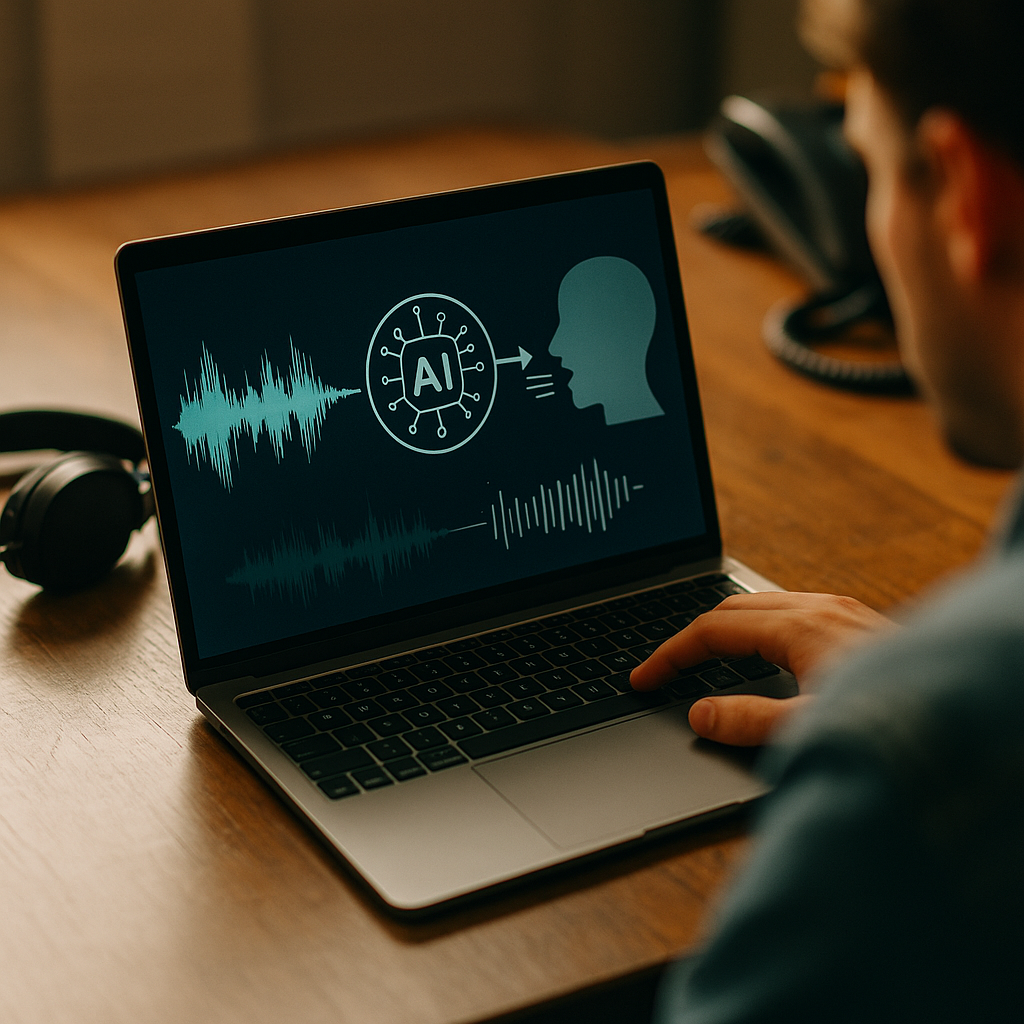
Using AI to Automate Customer Voice Extraction from Raw Audio is changing how teams turn messy recordings into reliable insights in 2025. Instead of waiting for manual transcription and scattered notes, modern pipelines can identify speakers, detect intent, and summarize pain points at scale. The result is faster decisions, better products, and measurable improvements in service quality—if you build it the right way.
AI customer voice extraction: what it is and why it matters
“Customer voice” means the needs, expectations, frustrations, and preferences customers express—often indirectly—during calls, interviews, usability sessions, and field recordings. “Extraction” means converting raw audio into structured, searchable knowledge that teams can act on.
In 2025, the value comes from three shifts in how organizations operate:
- Volume: Customer conversations happen across contact centers, sales calls, research interviews, and community channels. Manual review cannot keep up.
- Speed: Product and service cycles move quickly. Insights delayed by weeks miss the window for action.
- Consistency: Human tagging varies across reviewers. Automated pipelines can apply stable rules, then still allow expert oversight.
AI-driven customer voice extraction typically includes: speech-to-text (STT), speaker diarization (who spoke when), language detection, topic modeling, sentiment or emotion signals, entity extraction (products, competitors, locations), and summarization into themes and recommendations. The best systems treat this as an evidence-based workflow: every insight should link back to the underlying audio and transcript so stakeholders can verify context.
If you are evaluating ROI, focus on outcomes that finance and leadership recognize: reduced average handle time through targeted coaching, higher first-contact resolution from better knowledge-base content, fewer escalations, faster identification of product defects, and more confident prioritization of roadmap items because themes come with supporting quotes and counts.
Automated speech analytics pipeline: from raw audio to usable data
A dependable pipeline turns uncontrolled audio into analysis-ready data without losing traceability. Most organizations succeed by treating it like data engineering, not a one-off “AI feature.” A typical flow looks like this:
- Ingest and normalize audio: Convert formats (WAV/MP3), standardize sample rates, and capture metadata (channel, agent ID, queue, region, consent flag). If calls are stereo, keep channels separate for better speaker separation.
- Quality checks: Measure signal-to-noise, clipping, and duration. Low-quality segments can be routed to enhanced processing or excluded from certain analyses.
- Speaker diarization: Identify speaker turns and label them (agent vs customer). For contact centers, channel-based separation plus diarization usually improves accuracy.
- Speech-to-text (ASR): Transcribe with a model tuned for your domain vocabulary (product names, acronyms). Use custom dictionaries and boost words that matter for your business.
- Text enrichment: Add punctuation, restore casing, and detect language. Then extract entities (plans, SKUs, competitors), intents (cancel, refund, upgrade), and compliance markers (disclosures, payment info).
- Conversation intelligence: Compute talk-to-listen ratio, interruptions, silence time, escalation triggers, and resolution indicators.
- Summarize and theme: Generate call summaries, customer “jobs to be done,” top drivers, and emerging issues. Store themes with counts, confidence, and links to exact timestamps.
- Human review loop: Let experts validate a sample, correct tags, and feed improvements back into prompts, rules, and model tuning.
Two practical design choices improve reliability. First, separate extraction from interpretation: store clean transcripts and diarization outputs before running summarization or sentiment models. Second, keep an audit trail: every generated insight should cite the transcript spans and, ideally, the audio timestamps. This is essential for trust and for resolving disputes (“Was the customer really asking to cancel?”).
Speech-to-text for call recordings: accuracy, diarization, and multilingual needs
Speech-to-text is the foundation, and it determines how much you can trust downstream analytics. In practice, teams underestimate how many factors influence transcription quality:
- Acoustic conditions: Background noise, speakerphone use, and packet loss degrade ASR. Basic noise reduction and channel separation can yield major gains.
- Domain language: Product names, medical terms, financial phrases, and regional slang require vocabulary adaptation.
- Overlapping speech: Interruptions and cross-talk can confuse both diarization and ASR. Measuring overlap rates helps you decide whether to invest in better separation or accept lower confidence in those segments.
- Multilingual and code-switching: Customers may switch languages mid-call. Automatic language identification and per-segment ASR prevent “garbage transcripts” that poison analytics.
To keep quality high, define clear acceptance metrics and track them continuously:
- Word Error Rate (WER) on a representative, human-transcribed sample.
- Speaker attribution accuracy (customer vs agent tagging). Mislabeling can invert sentiment or intent.
- Entity recall for critical terms (cancellation, refund, competitor mentions). If “cancel” is missed, your churn signals collapse.
Answering a common follow-up question: “Do we need perfect transcription?” No. You need fitness for purpose. Coaching analytics can tolerate some errors if turn-taking and key phrases are correct. Compliance monitoring and legal-sensitive workflows require much higher accuracy and stronger redaction.
Also plan for “unknown unknowns.” New product launches, seasonal promotions, and emerging issues introduce new vocabulary. Build a lightweight process to add terms weekly and measure the effect. In 2025, the teams that win treat ASR as a living system, not a vendor checkbox.
Customer sentiment analysis from audio: beyond positive/negative
Organizations often jump to sentiment, then get disappointed when results feel shallow or inconsistent. The fix is to treat sentiment as one signal in a broader diagnostic toolkit, not a final answer.
Modern customer sentiment analysis from audio usually blends:
- Text-based sentiment from the transcript (what was said).
- Paralinguistic cues such as pace, volume variation, and stress markers (how it was said), where permitted and appropriate.
- Conversation context including escalation, repetition, and resolution (what happened in the interaction).
For operational value, shift from generic positivity to decision-ready categories:
- Driver-based sentiment: Tie emotion to themes like billing, delivery, onboarding, or outages. “Negative about billing” is actionable; “negative overall” is not.
- Moment-of-truth detection: Flag points where sentiment shifts sharply (refund denial, shipping delay confirmation). These moments guide script updates and policy changes.
- Effort signals: Repetition, long silences, and multiple transfers often correlate with dissatisfaction even if language remains polite.
To stay aligned with EEAT, document how your sentiment is computed, what it can and cannot infer, and how you validate it. Calibration matters: compare model outputs with human ratings for a sample each month, broken down by channel, language, and customer segment. If a model over-penalizes certain accents or speaking styles, you must detect and address that bias before using it for agent evaluation.
Another likely question: “Should we use emotion recognition?” Use caution. Unless you have strong consent, clear business need, and robust validation, focus on transcript-based signals and conversation outcomes. In many regulated contexts, simpler and more explainable approaches reduce risk while still delivering value.
Conversation intelligence tools: summarization, topic modeling, and insight delivery
Once transcripts are dependable, the biggest gains come from turning “a pile of calls” into a navigable map of customer reality. In 2025, the most effective conversation intelligence tools combine three layers:
- Call-level outputs: A concise summary, customer goal, outcome, and next steps—plus key quotes with timestamps.
- Theme-level outputs: Topics and subtopics with volume trends, segment breakdowns, and representative excerpts.
- Business-level outputs: Recommendations connected to KPIs (contact rate, churn risk, refund rate) and evidence links for stakeholders.
Summarization should be constrained and verifiable. Good summaries include: the customer’s request, constraints, what the agent did, what was promised, and unresolved issues. Avoid “creative” generation by requiring citations to transcript spans. If your stack supports it, store the cited spans as structured references so auditors and analysts can click directly to the exact moment in the call.
Topic modeling and clustering work best when you mix automation with a controlled taxonomy:
- Start with a seed taxonomy from your existing support categories and product areas.
- Let models suggest new themes (“unknown categories”) when clusters don’t fit. Review and promote them only after validation.
- Track drift: A theme can change meaning over time (for example, “login” shifting from password resets to SSO issues after a rollout).
Insight delivery determines adoption. Executives want trend lines and business impact. Product teams want reproducible evidence and edge cases. Support leaders want coaching opportunities and script fixes. Build role-specific dashboards, and send weekly digests with: top 5 emerging themes, largest week-over-week changes, and a short set of verified quotes. The best reports also include “what to do next” and an owner for each action.
Data privacy and compliance in voice analytics: consent, redaction, and governance
Voice data can include highly sensitive information: payment details, addresses, health information, and identity markers. In 2025, trustworthy automation requires privacy-by-design. This is a core EEAT issue: if your process is not safe, your insights will not be sustainable.
Implement these safeguards as baseline controls:
- Consent and notice: Ensure call notices and research consent forms explicitly cover recording and analysis, including automated processing where required.
- PII detection and redaction: Automatically redact payment card numbers, emails, phone numbers, and other identifiers in transcripts and analytics indexes. Keep raw audio access tightly restricted.
- Access controls: Role-based access, least privilege, and audit logs. Limit who can replay audio versus who can view aggregated insights.
- Data retention: Store audio and transcripts only as long as needed for the stated purpose, then delete or anonymize.
- Model and vendor governance: Know where data is processed, whether it is used for training, and how it is encrypted in transit and at rest. Require contractual clarity and security attestations.
If you plan to use extracted signals for performance management, set a clear policy and communicate it. Separate coaching insights (to improve scripts and training) from disciplinary actions unless your legal and HR teams have designed a compliant framework. Also test for bias: evaluate whether accuracy and sentiment outputs vary by language, accent, or demographic proxies. Document mitigation steps and keep humans in the loop for high-stakes decisions.
A final operational point: governance is easier when you keep a “lineage” record. Every dashboard metric should trace back to the model version, prompt/rule set, and input sources. When numbers change after an update, you can explain why.
FAQs
What is the fastest way to extract customer voice from thousands of calls?
Start with a production-grade pipeline: audio normalization, diarization, speech-to-text, then theme extraction with a controlled taxonomy. Add weekly human validation on a sample to keep accuracy stable, and distribute insights through role-based dashboards and short digests.
How accurate does speech-to-text need to be for customer insights?
It depends on the use case. Trend detection and topic volume can work with moderate transcript error if key terms are captured reliably. Compliance monitoring, billing disputes, and contract-related workflows require higher accuracy, stronger diarization, and strict redaction.
Can AI detect churn risk from audio?
Yes, but treat it as probabilistic. Combine intent signals (cancel, downgrade), driver themes (billing, outages), repeated contacts, and unresolved outcomes. Validate predictions against actual churn and recalibrate regularly to avoid overfitting to short-term patterns.
Should we analyze emotion from a customer’s tone of voice?
Use caution. Tone-based emotion inference can be sensitive, less explainable, and more prone to bias. Many teams get strong results using transcript-based drivers, conversation outcomes, and effort indicators, while reserving acoustic features for narrowly defined, consented scenarios.
How do we prevent AI summaries from hallucinating?
Require citations to transcript spans, constrain summary templates to specific fields (request, actions, resolution, next steps), and run automated checks that block unsupported claims. Maintain a human review loop for high-impact summaries and regularly audit errors.
What security controls are essential for voice analytics?
Consent management, PII redaction, encryption, role-based access, audit logs, retention limits, and vendor governance are the core controls. Keep raw audio access restricted and ensure every insight is traceable to its source for accountability.
How do we prove ROI from AI customer voice extraction?
Connect insights to measurable outcomes: fewer repeat contacts, reduced escalations, improved first-contact resolution, faster defect detection, shorter onboarding time, and higher conversion on save offers. Track baseline metrics, implement targeted changes, then measure impact over multiple cycles.
Conclusion
AI-driven customer voice extraction turns raw audio into structured, verifiable insights that teams can use immediately. In 2025, success depends less on flashy models and more on disciplined pipelines: strong transcription, reliable speaker labeling, evidence-linked summaries, and governance that protects customer data. Build for accuracy, auditability, and adoption, and you will convert everyday conversations into a durable competitive advantage.
Top Influencer Marketing Agencies
The leading agencies shaping influencer marketing in 2026
Agencies ranked by campaign performance, client diversity, platform expertise, proven ROI, industry recognition, and client satisfaction. Assessed through verified case studies, reviews, and industry consultations.
Moburst

-
2

The Shelf
Boutique Beauty & Lifestyle Influencer AgencyA data-driven boutique agency specializing exclusively in beauty, wellness, and lifestyle influencer campaigns on Instagram and TikTok. Best for brands already focused on the beauty/personal care space that need curated, aesthetic-driven content.Clients: Pepsi, The Honest Company, Hims, Elf Cosmetics, Pure LeafVisit The Shelf → -
3

Audiencly
Niche Gaming & Esports Influencer AgencyA specialized agency focused exclusively on gaming and esports creators on YouTube, Twitch, and TikTok. Ideal if your campaign is 100% gaming-focused — from game launches to hardware and esports events.Clients: Epic Games, NordVPN, Ubisoft, Wargaming, Tencent GamesVisit Audiencly → -
4

Viral Nation
Global Influencer Marketing & Talent AgencyA dual talent management and marketing agency with proprietary brand safety tools and a global creator network spanning nano-influencers to celebrities across all major platforms.Clients: Meta, Activision Blizzard, Energizer, Aston Martin, WalmartVisit Viral Nation → -
5

The Influencer Marketing Factory
TikTok, Instagram & YouTube CampaignsA full-service agency with strong TikTok expertise, offering end-to-end campaign management from influencer discovery through performance reporting with a focus on platform-native content.Clients: Google, Snapchat, Universal Music, Bumble, YelpVisit TIMF → -
6

NeoReach
Enterprise Analytics & Influencer CampaignsAn enterprise-focused agency combining managed campaigns with a powerful self-service data platform for influencer search, audience analytics, and attribution modeling.Clients: Amazon, Airbnb, Netflix, Honda, The New York TimesVisit NeoReach → -
7

Ubiquitous
Creator-First Marketing PlatformA tech-driven platform combining self-service tools with managed campaign options, emphasizing speed and scalability for brands managing multiple influencer relationships.Clients: Lyft, Disney, Target, American Eagle, NetflixVisit Ubiquitous → -
8

Obviously
Scalable Enterprise Influencer CampaignsA tech-enabled agency built for high-volume campaigns, coordinating hundreds of creators simultaneously with end-to-end logistics, content rights management, and product seeding.Clients: Google, Ulta Beauty, Converse, AmazonVisit Obviously →