


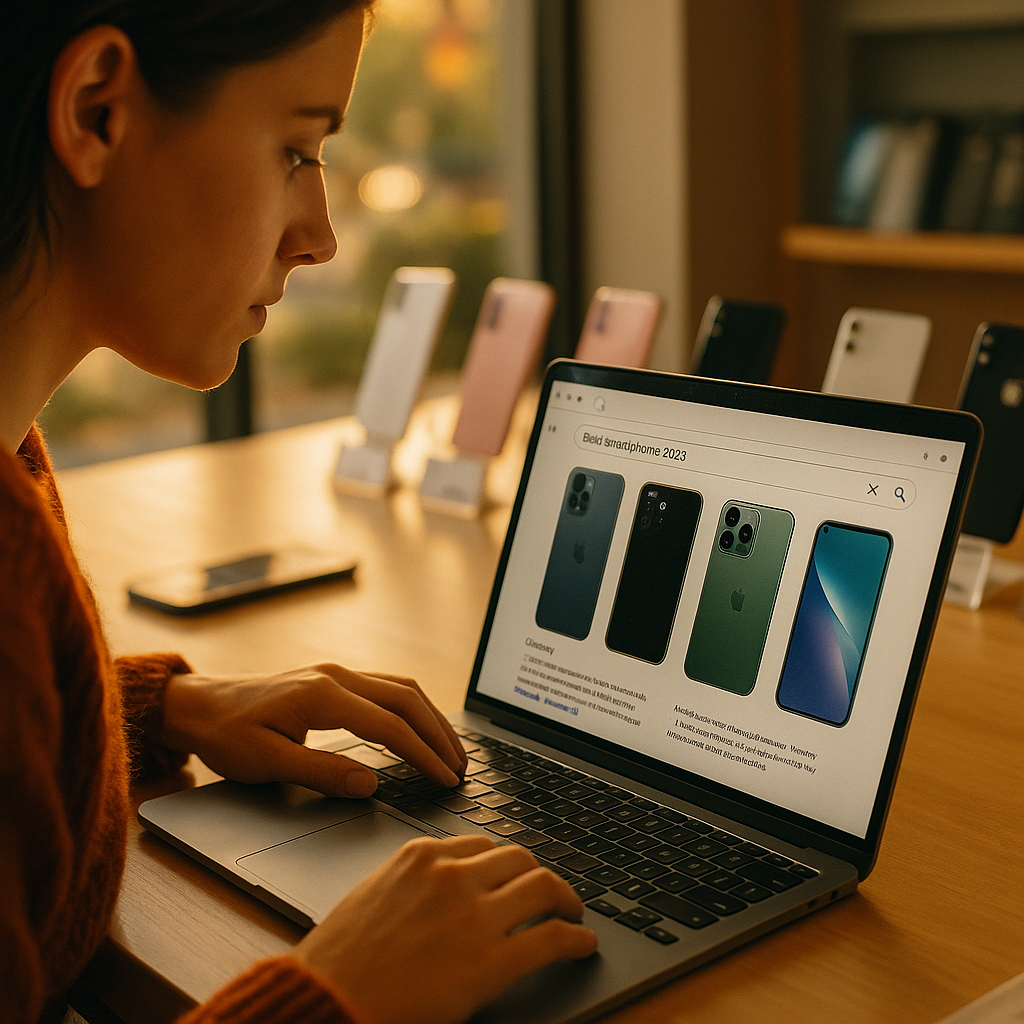
In 2025, shoppers no longer compare products the same way because generative search increasingly summarizes choices before anyone clicks through. The impact of generative search on consumer comparison habits is reshaping how people discover brands, evaluate features, and justify purchases across categories. If your offer isn’t represented accurately in AI summaries, you risk losing the comparison moment that decides winners—so what changes now?
How generative search changes comparison shopping behavior
Generative search blends traditional results with AI-generated answers that synthesize information across multiple sources. Instead of opening ten tabs, consumers often start with a single snapshot: a short list of options, a pros-and-cons breakdown, and a recommended “best for” choice. That shift changes comparison shopping in three practical ways.
First, comparison becomes summary-led. Many shoppers accept the AI summary as a baseline truth and only click to validate details. This compresses the consideration phase and reduces exposure to long-form reviews, detailed spec pages, and niche expert content unless it is cited or obviously needed.
Second, comparisons become question-led. Consumers refine the AI output with conversational follow-ups like “Which is better for sensitive skin?” or “Show me the cheapest option with a 3-year warranty.” This moves comparison from browsing to iterative interrogation, with the AI system acting as a mediator.
Third, brand discovery becomes list-driven. When an AI answer highlights three to five options, those items receive outsized attention, while others may never enter the shopper’s “consideration set.” If you are not present in that shortlist, you are often not compared at all.
For readers wondering whether this eliminates research entirely: it does not. It changes where research happens. Shoppers still seek reassurance—especially for higher-risk purchases—but the reassurance is increasingly sought by asking the AI to confirm, contrast, and justify rather than by reading multiple independent pages from scratch.
AI overviews and product discovery in 2025
AI overviews (the generative layer that appears above or within results) affect the earliest stage of the journey: product discovery. In 2025, discovery frequently starts with a prompt that combines intent and constraints, such as “best noise-cancelling headphones under $200 for commuting.” The consumer is not browsing categories; they are specifying a decision framework.
This has two notable consequences for discovery:
- Fewer neutral entry points. Historically, category pages, “top 10” lists, and marketplaces introduced a wide range of brands. With AI overviews, the first exposure may already be filtered by what the model can confidently summarize and what sources it prioritizes.
- Earlier preference formation. If the overview frames a product as “best value” or “best for beginners,” that label anchors perception. Consumers often carry those labels into later checks, even when they visit retailer pages or review sites.
Shoppers also increasingly ask the AI to translate specs into outcomes: “Will this blender crush ice daily?” or “Is this laptop good for video editing?” That behavior rewards brands that publish clear, verifiable performance claims and supporting evidence that can be surfaced and summarized.
If you are concerned about misinformation, you are asking the right question. Generative systems can compress nuance, misread specs, or merge attributes across similar models. As a result, consumers tend to perform “spot checks” on a small number of critical attributes (price, compatibility, warranty, return policy, and one or two performance factors) rather than reading broadly.
Trust signals and EEAT in AI-driven comparisons
When consumers outsource first-pass comparison to AI, trust becomes the currency that determines whether they accept an answer. That makes EEAT—experience, expertise, authoritativeness, and trustworthiness—more than a ranking concept; it becomes a practical requirement for being represented correctly in summaries.
Experience: Shoppers look for evidence that a recommendation reflects real-world use. Content that includes hands-on testing, clear usage scenarios, and photos or measurable outcomes is easier for users (and often AI systems) to treat as grounded rather than generic.
Expertise: When a topic has safety, health, or technical complexity, consumers want credentials. They may ask, “Is this advice from a dermatologist?” or “Was this router tested with Wi‑Fi 6E clients?” Publishing author bios, testing protocols, and methodology helps answer those follow-ups before they are asked.
Authoritativeness: In AI-driven comparisons, authority often comes from consistent, corroborated information across reputable sources. If your specs, pricing guidance, or policy details differ between your site, retailers, and third-party listings, the AI can surface contradictions that erode confidence.
Trustworthiness: Consumers are sensitive to hidden incentives. They ask if a list is sponsored, how affiliates work, and whether drawbacks are disclosed. Straightforward labeling of partnerships, balanced pros and cons, and accessible customer support details reduce skepticism.
Practical takeaway: if your brand content reads like marketing copy without evidence, AI summaries may still mention you, but shoppers will treat you as risky. Conversely, when your claims are specific, testable, and consistent across the web, shoppers can verify quickly—and that speed is exactly what generative search encourages.
Price comparison and feature evaluation with generative answers
Generative answers change how consumers compare price and features because the AI can do the first round of sorting instantly. Instead of manually checking retailers and spec sheets, shoppers ask for “the cheapest with X,” “the best under Y,” or “the closest alternative to Z.” This accelerates decisions but introduces new comparison patterns you should anticipate.
Consumers compare bundles, not just products. They want the complete cost: shipping, returns, warranties, subscriptions, accessories, and compatibility requirements. If your product has a required add-on, shoppers will ask the AI to compute total ownership cost and may reject options that look deceptively low up front.
Feature evaluation becomes benefit-based. AI systems often translate features into “who it’s for.” That reduces the impact of long spec lists and increases the impact of clear positioning. For example, “supports dual monitors at 4K” is less persuasive than “runs two 4K monitors smoothly for office work,” as long as you can substantiate it.
Constraints drive the shortlist. Many purchases are decided by a few constraints: budget, size, compatibility, return policy, and availability. Shoppers increasingly ask, “Only show options in stock near me,” or “Exclude anything without a 30-day return window.” If those constraints are not easy to find on your pages, you may be filtered out by default.
Readers often ask whether this means price becomes the only lever. Not necessarily. Generative search can highlight non-price differentiators—repairability, warranty length, customer support responsiveness, safety certifications, or sustainability attributes—but only when those attributes are clearly stated and easy to verify.
Zero-click shopping journeys and the new decision shortcuts
Generative search increases “zero-click” behavior: consumers get enough information from the results page to make a decision, then jump straight to a retailer or marketplace—or ask one final question and purchase. This creates new decision shortcuts that feel rational to shoppers because the AI has already done the synthesis.
Common shortcuts include:
- “Best for me” recommendations. Users provide personal constraints (skin type, room size, device ecosystem, dietary needs) and accept a tailored shortlist.
- Consensus heuristics. Shoppers ask, “Which one do most people prefer?” or “Which has fewer returns?” If you can support satisfaction signals (reviews volume, return-rate transparency where appropriate, warranty claims clarity), you reduce hesitation.
- Risk reduction checks. Instead of deep research, users confirm one fear: “Is this durable?” “Will it work with my phone?” “Is customer support good?” Brands that answer these explicitly can win faster.
However, zero-click does not mean “zero evaluation.” It means evaluation happens in fewer steps with higher reliance on summarized claims. That raises the stakes for accuracy. If your return policy is ambiguous, your compatibility list is incomplete, or your product naming is inconsistent, the AI may present an oversimplified version that pushes buyers toward a clearer competitor.
To meet the shopper’s next likely question—“How can I be sure?”—include simple verification paths: downloadable spec sheets, certification references, warranty terms in plain language, and a single canonical product page that retailers and partners can align with.
Brand strategy for generative search visibility and comparison readiness
Winning comparisons in generative search is less about chasing hacks and more about being easy to summarize correctly. In 2025, brands that support accurate synthesis earn more inclusion in AI shortlists and fewer costly misunderstandings.
1) Build a single source of truth for each product. Maintain one canonical page per model with consistent naming, specs, pricing guidance (where allowed), and up-to-date policy details. When the same product appears with different capacities, dimensions, or warranty terms across sites, AI summaries can blend them.
2) Publish comparison-friendly content that answers follow-ups. Create pages that map features to outcomes and include boundaries. Examples: “Who should not buy this,” “Compatibility checklist,” “What’s in the box,” “Expected battery life by usage,” and “Common setup issues.” This matches how people ask generative follow-ups and reduces uncertainty.
3) Demonstrate EEAT with evidence, not slogans. Show testing methodology, cite certifications, and provide clear author or reviewer credentials for advisory content. If you run internal tests, explain the process in plain language and publish results with context.
4) Make policies and constraints explicit. Prominently list warranty length, return window, repair options, subscription requirements, and ongoing costs. These factors are frequently used as filters in AI-driven comparisons.
5) Monitor how you appear in generative answers. Treat AI summaries as a new “shelf.” Regularly test high-intent prompts in your category, note recurring inaccuracies, and correct root causes: outdated third-party listings, unclear specs, or missing documentation. Where appropriate, work with partners to align product data and descriptions.
6) Prepare for “category adjacency” comparisons. Generative search often compares across categories (“tablet vs lightweight laptop,” “robot vacuum vs cordless vacuum”). Provide guidance that frames trade-offs honestly, so the AI can represent your product’s strengths without overclaiming.
The core strategy is straightforward: help consumers compare you quickly and fairly, even when an AI is doing the first pass. When shoppers can validate your claims in one click—or without needing ten—you become the lower-risk choice.
FAQs about generative search and consumer comparison habits
What is generative search, and how is it different from traditional search?
Generative search uses AI to compose a summarized answer from multiple sources, often presenting options, explanations, and recommendations directly on the results page. Traditional search primarily lists links and relies on the user to open pages and compare manually.
Does generative search reduce the importance of reviews?
No. It changes how reviews are used. Consumers rely on AI to summarize review themes, then they check a smaller set of reviews to validate key points such as durability, fit, side effects, or customer support quality.
How can consumers avoid being misled by AI summaries?
They should verify critical attributes on primary sources (manufacturer specs, warranty terms, retailer policies), cross-check at least two reputable references for high-cost purchases, and ask targeted follow-ups like “What are the downsides?” or “What assumptions does this recommendation make?”
What kinds of products are most affected by AI-driven comparisons?
High-choice categories with complex specs or many near-identical options are heavily affected—electronics, home appliances, software subscriptions, and health or wellness products. In these categories, a shortlist in an AI overview can strongly shape what gets considered.
How should brands measure success in a generative search environment?
In addition to organic traffic, track inclusion in AI shortlists for high-intent prompts, accuracy of summarized specs and policies, assisted conversions from informational queries, branded search lift, and downstream retailer performance where you sell through partners.
Will comparison sites disappear because of generative search?
Not entirely. Strong comparison publishers that show real testing, transparent methodology, and clear differentiators remain valuable. Many consumers still click through when stakes are high or when they need deeper evidence than an overview can provide.
Generative search compresses comparison into a faster, summary-led workflow, pushing consumers to ask sharper questions and validate only what feels risky. In 2025, the brands that win are the ones that make themselves easy to evaluate: consistent product facts, clear policies, and evidence-backed claims that hold up under quick scrutiny. Build for accurate summaries and effortless verification, and you’ll stay in the shortlist.
Top Influencer Marketing Agencies
The leading agencies shaping influencer marketing in 2026
Agencies ranked by campaign performance, client diversity, platform expertise, proven ROI, industry recognition, and client satisfaction. Assessed through verified case studies, reviews, and industry consultations.
Moburst

-
2

The Shelf
Boutique Beauty & Lifestyle Influencer AgencyA data-driven boutique agency specializing exclusively in beauty, wellness, and lifestyle influencer campaigns on Instagram and TikTok. Best for brands already focused on the beauty/personal care space that need curated, aesthetic-driven content.Clients: Pepsi, The Honest Company, Hims, Elf Cosmetics, Pure LeafVisit The Shelf → -
3

Audiencly
Niche Gaming & Esports Influencer AgencyA specialized agency focused exclusively on gaming and esports creators on YouTube, Twitch, and TikTok. Ideal if your campaign is 100% gaming-focused — from game launches to hardware and esports events.Clients: Epic Games, NordVPN, Ubisoft, Wargaming, Tencent GamesVisit Audiencly → -
4

Viral Nation
Global Influencer Marketing & Talent AgencyA dual talent management and marketing agency with proprietary brand safety tools and a global creator network spanning nano-influencers to celebrities across all major platforms.Clients: Meta, Activision Blizzard, Energizer, Aston Martin, WalmartVisit Viral Nation → -
5

The Influencer Marketing Factory
TikTok, Instagram & YouTube CampaignsA full-service agency with strong TikTok expertise, offering end-to-end campaign management from influencer discovery through performance reporting with a focus on platform-native content.Clients: Google, Snapchat, Universal Music, Bumble, YelpVisit TIMF → -
6

NeoReach
Enterprise Analytics & Influencer CampaignsAn enterprise-focused agency combining managed campaigns with a powerful self-service data platform for influencer search, audience analytics, and attribution modeling.Clients: Amazon, Airbnb, Netflix, Honda, The New York TimesVisit NeoReach → -
7

Ubiquitous
Creator-First Marketing PlatformA tech-driven platform combining self-service tools with managed campaign options, emphasizing speed and scalability for brands managing multiple influencer relationships.Clients: Lyft, Disney, Target, American Eagle, NetflixVisit Ubiquitous → -
8

Obviously
Scalable Enterprise Influencer CampaignsA tech-enabled agency built for high-volume campaigns, coordinating hundreds of creators simultaneously with end-to-end logistics, content rights management, and product seeding.Clients: Google, Ulta Beauty, Converse, AmazonVisit Obviously →