


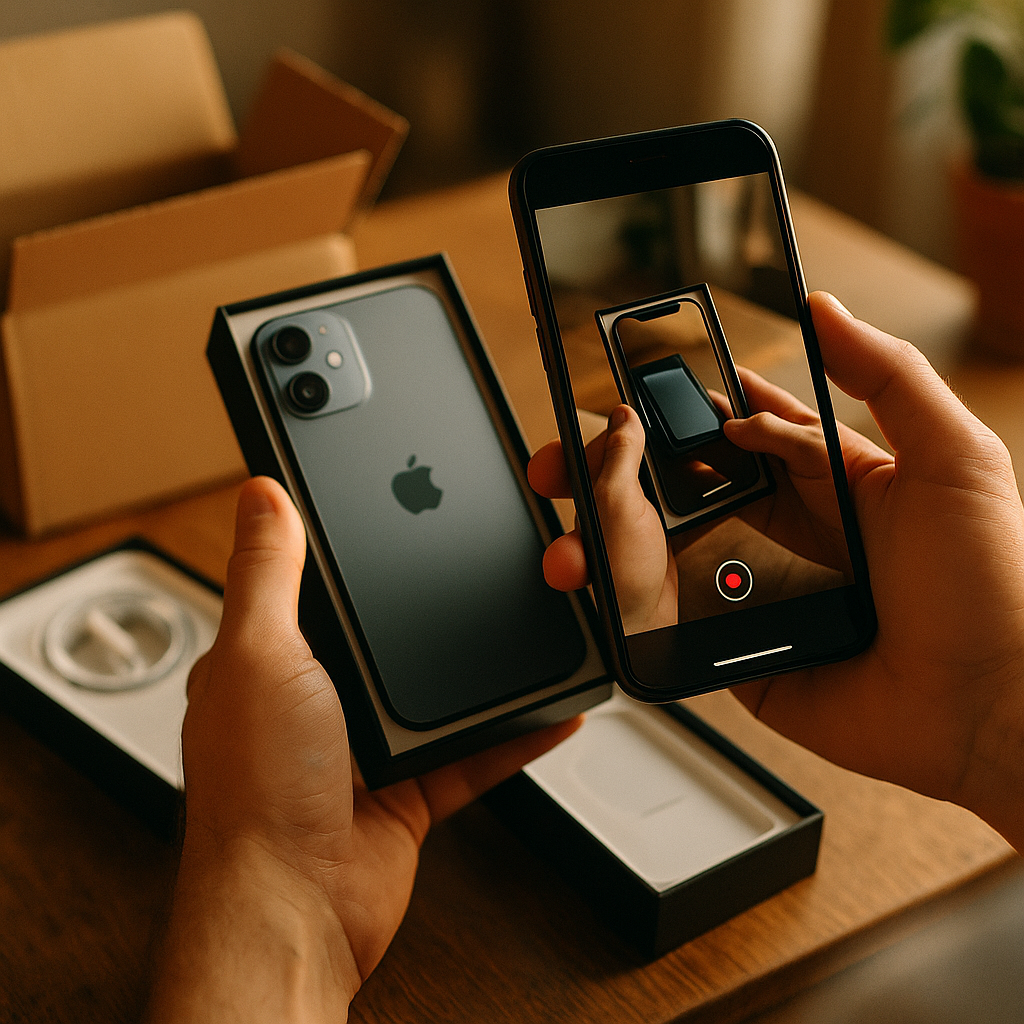
Eighty one percent of consumers say video has convinced them to buy a product, yet most launch content still gets skipped in under two seconds. The fix isn’t a bigger budget. It’s a POV format script that puts the viewer inside the moment instead of watching from the outside. For product launches specifically, point of view storytelling turns a passive scroll into a felt experience, and felt experiences convert.
Why POV Beats the Traditional Product Reveal
Traditional launch ads tell. POV scripts show, from a seat the viewer didn’t know they wanted. Instead of “here’s our new serum,” the camera becomes the viewer’s own hands unboxing it at 11pm after a long shift. Instead of a spokesperson listing features, the viewer is the one walking into the store, the one getting the notification, the one hearing their friend say “wait, you need this.”
That shift matters because launches live or die on attention in the first three seconds. A generic product shot triggers ad-blindness almost instantly. A POV hook, “you just got access to the drop everyone’s been waiting for,” activates a different part of the brain: self-recognition. Viewers don’t just watch the story. They cast themselves in it.
POV scripts don’t sell the product. They let the viewer rehearse owning it, which is a far shorter path to checkout than persuasion ever was.
This isn’t a TikTok gimmick anymore either. Brands are running POV formats across Reels, Shorts, and even paid Spark Ads because the completion rates consistently outperform standard UGC. If you’ve already tested POV hooks for paid CTR, you know the lift isn’t marginal. It’s the difference between a scroll-past and a save.
What Makes a Launch Script Actually “POV”
A lot of creators slap “POV:” on a caption and call it done. That’s not POV, that’s a label. Real point of view scripting requires three structural choices made before a single word of dialogue is written.
- Camera as character. The lens is the viewer’s eyes. No cutaways to a narrator explaining what’s happening. If the product is in the viewer’s hand, the camera shakes slightly, the way a real hand would.
- Present tense, no exposition. “You’re standing in line and your phone buzzes” works. “I want to show you what happens when you’re standing in line” breaks the spell immediately.
- A specific, relatable trigger moment. Vague scenarios (“you’re having a bad day”) underperform specific ones (“you’re the third person this week to get asked where your jacket is from”).
Get these three right and the script does something most launch content can’t: it makes the product feel discovered rather than advertised. That distinction is everything when audiences are actively suspicious of sponsored content and increasingly good at spotting a pitch from a mile away.
The Five-Beat Structure That Keeps Launch POVs Tight
Most successful POV launch scripts, regardless of category, run through the same five beats in under 30 seconds. Skip one and the pacing collapses.
- The interruption: something pulls the viewer’s “character” out of their normal routine (a text, a sound, a sighting).
- The discovery: the product enters frame, but not as a hero shot, as an incidental detail.
- The friction: a tiny moment of doubt or confusion (“wait, is this actually that good?”) that mirrors the viewer’s own skepticism.
- The payoff: the product delivers, shown through reaction, not narration.
- The exit: a line or visual cue that nudges toward action without sounding like an ad.
That friction beat is the one most brands cut, and it’s the one that makes the format work. Viewers trust a story more when it includes a moment of hesitation. Cut straight from “I found this” to “it’s amazing” and the whole thing reads as scripted, even when it’s not.
Scripting for a Launch Moment Versus Scripting for Awareness
Launch content has a shelf life problem that always content doesn’t. You’re not trying to build a following over months, you’re trying to create a spike within a window, usually 48 to 72 hours around a drop. That changes what the script needs to do.
Awareness-stage POV content can meander a little, lean on humor, build a creator’s personality. Launch POV scripts need urgency baked into the structure itself. That means timestamps in the dialogue (“it dropped four minutes ago and it’s already half gone”), countdown visuals, and a hard cut to availability information before the viewer’s attention wanders. If you’re coordinating this across a live component too, pairing it with live audio scripts that reinforce scarcity in real time tends to compound the effect.
It’s also worth separating “hero POV” content, the big hitter creator videos built for paid amplification, from the surrounding “proof POV” content that validates the claim. A single hero video rarely carries a launch on its own. It needs a chorus of smaller, rougher POV clips around it that feel like real people reacting in real time, not a coordinated campaign.
Casting the Right Creator for POV Work
Not every creator can act in first person convincingly. Some are brilliant at talking-head reviews but go stiff the moment they have to perform a scenario as “a character.” Before you brief a POV script, test whether the creator can deliver believable micro-reactions, the raised eyebrow, the half-laugh, the pause before speaking. These are the details that separate a POV video that feels real from one that feels like a commercial wearing a disguise.
This is also where faceless and hybrid accounts have found an unexpected advantage. A phone held at arm’s length, a voiceover layered over b-roll, no face required, can actually deliver POV immersion more convincingly than an overproduced creator video. If you’re building out that side of your roster, the playbook in faceless UGC account strategy pairs well with POV scripting because both formats rely on scenario over personality.
Brands running larger launches often blend both: a known creator for the hero POV asset, and a wave of faceless or micro-creator POV clips for volume and perceived authenticity. According to eMarketer, influencer-generated content now consistently outperforms brand-produced video on engagement benchmarks across major platforms, which is exactly the gap POV formats are built to close.
Compliance Still Applies, Even in First Person
Here’s where a lot of marketing teams get nervous, and rightly so. POV format blurs the line between “this is a story” and “this is an ad” more than almost any other format, which means disclosure has to be handled deliberately, not as an afterthought.
The FTC’s endorsement guidance doesn’t care that the camera is acting as the viewer’s eyes. If the creator received product, payment, or any other consideration, the disclosure requirement is the same as for any sponsored post. Bake the #ad or #sponsored tag into the script’s on-screen text early, not buried in a caption no one reads. Brands operating in the UK should run the same check against ICO guidance if any data capture or targeted retargeting is tied to the content.
The more immersive the format, the more disclosure matters, because immersion is exactly what makes a hidden ad feel manipulative once viewers notice it.
Legal teams reviewing POV scripts should look specifically for implied claims. “You can’t believe how fast this worked” reads differently in first person than it does as a third-party testimonial, and regulators have been paying closer attention to performance claims embedded in narrative content.
Measuring What Actually Matters
Views are the vanity metric here. For launch POV content, the numbers that tell you whether the format is working are completion rate, replay rate, and the ratio of saves to likes. A high save rate on a POV launch video usually means viewers intend to come back to it before buying, which is a stronger purchase signal than a like ever was.
Watch for a specific pattern: POV videos tend to spike in comments that read like the viewer is talking to the “character” in the video rather than the brand. Comments like “girl RUN don’t walk” or “wait is this still in stock” are a sign the immersion is working. If your comments section still reads like generic ad feedback, the script hasn’t crossed into true POV yet, it’s still narration with a filter on it.
Platforms like TikTok and Instagram now surface watch-time retention curves inside creator analytics, so you don’t have to guess where viewers drop off. If the drop happens right at the friction beat, your script’s doubt moment is either too long or doesn’t feel authentic enough. Tighten it. For brands running paid amplification on top of organic POV clips, cross-reference performance against the benchmarks tracked by Sprout Social and HubSpot to know whether you’re actually beating category norms or just beating your own low bar.
Pairing POV With Other Formats for a Full Launch Arc
POV rarely works best alone. The strongest launches sequence it with formats that extend trust after the initial hook lands. A POV discovery video might drive the spike, but a rating and review series keeps validating the claim days later, and a day in the life vlog shows the product living inside a routine rather than a staged moment. Think of POV as the spark and everything else as the slow burn that keeps the launch from fading after 72 hours.
Some teams also layer in green screen duet reactions once the original POV clip starts circulating, letting other creators react to the “discovery” moment and widen the narrative without reshooting from scratch. It’s a cheap way to extend a launch’s life without diluting the original hook.
Get the five-beat structure right, cast creators who can actually perform in first person, disclose clearly, and measure saves over likes. Do that consistently and your next product launch stops looking like an ad and starts looking like something your audience stumbled into and couldn’t look away from.
Frequently Asked Questions
What is a POV format script in influencer marketing?
A POV format script writes the camera and narrative from the viewer’s own perspective, placing them inside a scenario rather than having a creator narrate from the outside. It’s used to make product discovery feel personal rather than advertised.
How long should a POV launch video be?
Most effective POV launch scripts run between 15 and 30 seconds, enough time to move through the interruption, discovery, friction, payoff, and exit beats without losing momentum or viewer attention.
Do POV videos still need FTC disclosure?
Yes. First person framing doesn’t exempt sponsored content from disclosure requirements. On-screen text or spoken disclosure should appear early in the video, in line with FTC endorsement guidance.
Can faceless creators do POV content effectively?
Often more effectively than on-camera creators, since the arm’s-length camera angle and voiceover style common to faceless accounts naturally mimics genuine first person discovery rather than a produced advertisement.
What metrics show a POV script is working?
Completion rate, save-to-like ratio, and comments that address the “character” directly rather than the brand are stronger indicators than raw view count for measuring POV launch performance.
Top Influencer Marketing Agencies
The leading agencies shaping influencer marketing in 2026
Agencies ranked by campaign performance, client diversity, platform expertise, proven ROI, industry recognition, and client satisfaction. Assessed through verified case studies, reviews, and industry consultations.
Moburst

-
2

The Shelf
Boutique Beauty & Lifestyle Influencer AgencyA data-driven boutique agency specializing exclusively in beauty, wellness, and lifestyle influencer campaigns on Instagram and TikTok. Best for brands already focused on the beauty/personal care space that need curated, aesthetic-driven content.Clients: Pepsi, The Honest Company, Hims, Elf Cosmetics, Pure LeafVisit The Shelf → -
3

Audiencly
Niche Gaming & Esports Influencer AgencyA specialized agency focused exclusively on gaming and esports creators on YouTube, Twitch, and TikTok. Ideal if your campaign is 100% gaming-focused — from game launches to hardware and esports events.Clients: Epic Games, NordVPN, Ubisoft, Wargaming, Tencent GamesVisit Audiencly → -
4

Viral Nation
Global Influencer Marketing & Talent AgencyA dual talent management and marketing agency with proprietary brand safety tools and a global creator network spanning nano-influencers to celebrities across all major platforms.Clients: Meta, Activision Blizzard, Energizer, Aston Martin, WalmartVisit Viral Nation → -
5

The Influencer Marketing Factory
TikTok, Instagram & YouTube CampaignsA full-service agency with strong TikTok expertise, offering end-to-end campaign management from influencer discovery through performance reporting with a focus on platform-native content.Clients: Google, Snapchat, Universal Music, Bumble, YelpVisit TIMF → -
6

NeoReach
Enterprise Analytics & Influencer CampaignsAn enterprise-focused agency combining managed campaigns with a powerful self-service data platform for influencer search, audience analytics, and attribution modeling.Clients: Amazon, Airbnb, Netflix, Honda, The New York TimesVisit NeoReach → -
7

Ubiquitous
Creator-First Marketing PlatformA tech-driven platform combining self-service tools with managed campaign options, emphasizing speed and scalability for brands managing multiple influencer relationships.Clients: Lyft, Disney, Target, American Eagle, NetflixVisit Ubiquitous → -
8

Obviously
Scalable Enterprise Influencer CampaignsA tech-enabled agency built for high-volume campaigns, coordinating hundreds of creators simultaneously with end-to-end logistics, content rights management, and product seeding.Clients: Google, Ulta Beauty, Converse, AmazonVisit Obviously →