


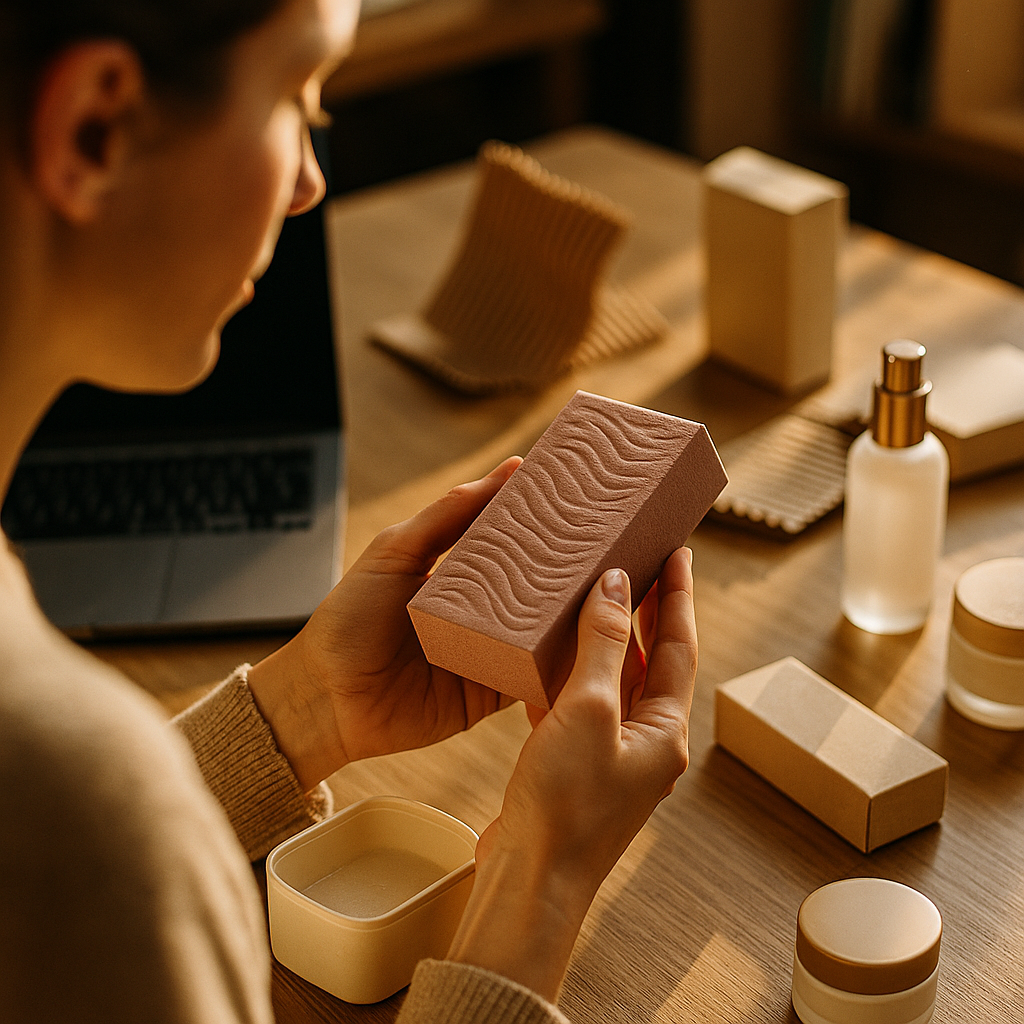
In 2025, beauty brands win attention when packaging becomes content, not an afterthought. This case study shows how one mid-sized brand grew demand by designing touch-led packaging, then translating that sensory experience into short-form videos and creator partnerships. You’ll see what changed, how it was measured, and what to copy—because the next unboxing could be your most persuasive ad.
Brand case study: What “tactile-first” meant for this beauty brand
Brand profile: A direct-to-consumer skincare and color brand with retail ambitions, steady repeat customers, and a growing creator seeding program. The team had solid products and decent social engagement, but performance creative blended into the feed. They needed a differentiated story that felt real without inflating ad spend.
The core problem: Unboxing videos existed, but they didn’t convert consistently. Most content focused on “what’s inside,” not the experience of receiving it. Meanwhile, paid acquisition costs were rising across channels, and the brand’s internal data showed that customers who mentioned “packaging” in reviews were more likely to repurchase.
The tactile-first decision: The brand reframed packaging as a sensory product feature. “Tactile-first” meant every touchpoint—outer mailer, opening moment, inner tray, materials, and product handling—was designed to create a predictable, filmable sequence of sensations. This did two things at once:
- Improved the real customer experience (less damage, clearer guidance, more delight).
- Made better content easier to capture (clear beats for creators, stronger ASMR cues, consistent visual identity).
Success criteria: The team defined measurable goals before redesigning anything: higher add-to-cart from unboxing-driven landing pages, improved retention from first-time buyers, stronger review sentiment around “giftable” and “premium,” and lower support tickets related to shipping damage and confusion.
Unboxing content strategy: Designing packaging for camera, sound, and hands
The brand treated the unboxing like a mini script. Each packaging element had a purpose in both the physical experience and the content edit. The creative team worked with operations early, so the design stayed manufacturable and scalable.
1) A “three-beat” opening sequence
- Beat 1: The reveal — A clean outer mailer with a soft-touch finish and a high-contrast pull tab that created a recognizable opening gesture.
- Beat 2: The pause — A short message under the lid (“Take 10 seconds for your skin”) that prompted creators to stop and film the inside before pulling products out.
- Beat 3: The hero lift — A molded, recyclable tray that presented the flagship product at a slight angle to camera for a natural “hero shot.”
2) Material choices that amplified “ASMR-friendly” audio
The team avoided noisy crinkle fillers and used structured paper components that produced crisp, controllable sounds. They tested adhesives and pull-tabs in a quiet room with a phone mic to ensure the sound didn’t spike or distort. The goal wasn’t gimmicky ASMR; it was clarity and consistency.
3) Micro-copy that reduced confusion and increased usage
Instead of a long insert, the brand used a single card with three lines: When to use, How much, and What to expect in 7 days. This helped customers and gave creators a simple on-camera explanation. It also reduced the common post-purchase question: “Where does this go in my routine?”
4) A built-in “proof moment”
Inside the box, a small panel highlighted two trust signals: dermatologist-reviewed ingredient standards and a QR code to batch-specific testing and sourcing details. The QR destination was mobile-first, with short paragraphs, not walls of text. This supported EEAT by making product claims easy to verify.
5) Accessibility and ease-of-open testing
Tactile-first also meant considerate design. The pull tab, grip points, and font size were tested with users who had long nails, limited dexterity, and low lighting conditions. The result: fewer “I can’t open this” comments and fewer awkward moments in creator videos.
Creator marketing results: How tactile storytelling improved performance and trust
The packaging redesign only mattered if it translated into content that audiences believed. The brand updated its creator briefs to focus on tactile storytelling rather than scripted claims.
What changed in creator direction
- Show hands first (texture, pull tab, inner tray), then face and routine.
- Describe sensations, not hype (“soft-touch,” “click,” “weighty cap,” “silky pump”).
- Use neutral lighting and phone audio to keep it believable and repeatable.
- Include one proof point via the QR code page or a simple “why I trust this” line.
Content outputs
- Short-form unboxings (10–20 seconds) optimized for thumb-stopping openings.
- Mid-length “first night routine” videos that used the insert card to explain usage.
- Paid whitelisting of top-performing creator unboxings with minimal edits.
Performance outcomes (brand-reported, 2025)
- Higher hold rates on short-form ads when the first three seconds showed the pull-tab opening and the inner tray reveal.
- Improved conversion efficiency on whitelisted creator ads that featured tactile cues, compared with prior product-only demos.
- More UGC volume without higher seeding costs because creators found the packaging “easy to film” and “satisfying to open,” leading to more voluntary posts.
Why it worked: Tactile cues act as concrete evidence. Viewers can’t touch the product through a screen, but they can infer quality through sound, friction, weight, and controlled movement. That inference becomes trust—especially when paired with clear usage guidance and verifiable proof links.
Packaging design for ecommerce: Operational changes that protected margin
Tactile-first can fail if it breaks fulfillment speed, increases damage rates, or bloats costs. This brand treated operations as a co-owner of the experience.
Key operational decisions
- Right-sizing the shipper to reduce void fill and dimensional weight charges.
- Drop-testing prototypes to prevent leaks and cracked compacts, then adjusting tray geometry instead of adding more filler.
- Standardizing components across SKUs so the same unboxing sequence worked for 80% of orders.
- Inventory simplicity by limiting finishes to what suppliers could reliably produce at scale.
What the finance team cared about
The brand tracked unit economics alongside content gains. They evaluated packaging changes using four metrics: per-order packaging cost, damage/replace rate, fulfillment time per order, and incremental revenue from improved conversion and repeat purchase. By treating the unboxing as a growth lever with measurable ROI, the redesign stayed funded and defensible.
Customer support impact
Clear routine guidance and sturdier internal protection reduced “missing item” and “arrived damaged” tickets. That mattered because support volume has a hidden cost: it also drags down review sentiment when customers feel uncertain right after delivery.
EEAT for beauty brands: Making unboxing content credible, not just pretty
Beauty audiences are skeptical for good reason. In 2025, credibility wins. The brand improved trust by embedding expertise and transparency into the tactile experience and the content around it.
How the brand demonstrated Experience
- They used real first-time reactions from customers and creators, including imperfect takes.
- They filmed “how it arrives” clips showing typical shipping conditions, not studio-only setups.
How the brand demonstrated Expertise
- They simplified routine instructions to remove ambiguity (frequency, amount, layering).
- They added a “who it’s for” line and cautions for sensitive skin where relevant.
How the brand demonstrated Authoritativeness
- They directed viewers to ingredient standards and testing details via QR, avoiding vague claims.
- They used consistent terminology across packaging, product pages, and creator briefs to prevent misstatements.
How the brand demonstrated Trust
- They avoided absolute promises and instead set realistic expectations (“expect hydration,” not “erase wrinkles”).
- They made sourcing and batch info accessible, reducing perceived risk for first-time buyers.
Practical takeaway: The most effective unboxing content pairs sensory signals with verifiable information. When viewers can both feel quality through the screen and confirm claims with a tap, conversion becomes a byproduct of reassurance.
Social commerce optimization: Turning unboxings into a repeatable growth system
The brand didn’t rely on a single viral moment. They built a repeatable pipeline that connected packaging, content, landing pages, and measurement.
System design
- Content templates with three mandatory shots: pull tab open, tray reveal, product dispense.
- Landing pages that mirrored the unboxing sequence (same order of visuals) to reduce cognitive friction.
- Post-purchase prompts encouraging customers to film the opening and tag the brand, with clear guidelines for lighting and angle.
Measurement approach
To avoid “vanity metric” reporting, the team tracked unboxing content like performance creative:
- Hook rate (3-second view / impression) for the opening gesture.
- Hold rate through the tray reveal.
- Click-through and add-to-cart when the landing page matched the video sequence.
- Repeat purchase and review sentiment for customers acquired through unboxing-led ads.
What readers usually ask next: does this work without a huge budget? Yes, if you focus on one repeatable tactile signature (a pull tab, a magnetic flap, a textured sleeve) and one proof mechanism (QR to testing, routine guide, or sourcing). The brand’s breakthrough came from consistency across dozens of videos, not expensive production.
FAQs: Tactile-first unboxing content for beauty brands
What is tactile-first unboxing content?
It’s unboxing content built around touch cues—texture, sound, weight, opening mechanisms, and structured reveals—so viewers can infer product quality through the screen. The packaging is designed to be filmed, not just shipped.
How do I choose the right tactile elements for my brand?
Start with one sensory signature that matches your positioning: soft-touch for “luxury calm,” crisp paper sounds for “clean clinical,” or a precise “click” closure for “high-performance.” Validate it with prototypes and quick creator tests using phone cameras.
Will tactile packaging increase costs too much?
It can if you add complexity without standardization. Control costs by right-sizing shippers, using shared components across SKUs, and improving protection to reduce damage replacements. Measure packaging ROI using conversion lift plus savings from fewer support issues.
How do I make unboxing content credible and compliant?
Use sensory descriptions instead of exaggerated claims, add clear routine instructions, and provide verifiable proof points (like batch testing or ingredient standards). Align packaging copy, product pages, and creator briefs so messaging stays consistent.
What content formats perform best for unboxings in 2025?
Short-form (10–20 seconds) with a strong first gesture performs well for discovery, while a “first night routine” or “first week check-in” supports consideration and reduces returns. Pair both, and keep the unboxing sequence consistent.
How quickly can a brand see results?
Many brands see creative performance shifts within weeks once new packaging reaches creators and customers. Retention and review sentiment improvements typically take longer because they depend on repeat cycles and post-purchase behavior.
By treating packaging as a sensory script, this beauty brand turned delivery into a marketing channel and unboxings into consistent performance creative. The tactile-first approach improved believability, reduced confusion, and gave creators a repeatable structure that audiences actually watched. In 2025, the takeaway is simple: design for hands, camera, and proof—then measure like a growth team.
Top Influencer Marketing Agencies
The leading agencies shaping influencer marketing in 2026
Agencies ranked by campaign performance, client diversity, platform expertise, proven ROI, industry recognition, and client satisfaction. Assessed through verified case studies, reviews, and industry consultations.
Moburst

-
2

The Shelf
Boutique Beauty & Lifestyle Influencer AgencyA data-driven boutique agency specializing exclusively in beauty, wellness, and lifestyle influencer campaigns on Instagram and TikTok. Best for brands already focused on the beauty/personal care space that need curated, aesthetic-driven content.Clients: Pepsi, The Honest Company, Hims, Elf Cosmetics, Pure LeafVisit The Shelf → -
3

Audiencly
Niche Gaming & Esports Influencer AgencyA specialized agency focused exclusively on gaming and esports creators on YouTube, Twitch, and TikTok. Ideal if your campaign is 100% gaming-focused — from game launches to hardware and esports events.Clients: Epic Games, NordVPN, Ubisoft, Wargaming, Tencent GamesVisit Audiencly → -
4

Viral Nation
Global Influencer Marketing & Talent AgencyA dual talent management and marketing agency with proprietary brand safety tools and a global creator network spanning nano-influencers to celebrities across all major platforms.Clients: Meta, Activision Blizzard, Energizer, Aston Martin, WalmartVisit Viral Nation → -
5

The Influencer Marketing Factory
TikTok, Instagram & YouTube CampaignsA full-service agency with strong TikTok expertise, offering end-to-end campaign management from influencer discovery through performance reporting with a focus on platform-native content.Clients: Google, Snapchat, Universal Music, Bumble, YelpVisit TIMF → -
6

NeoReach
Enterprise Analytics & Influencer CampaignsAn enterprise-focused agency combining managed campaigns with a powerful self-service data platform for influencer search, audience analytics, and attribution modeling.Clients: Amazon, Airbnb, Netflix, Honda, The New York TimesVisit NeoReach → -
7

Ubiquitous
Creator-First Marketing PlatformA tech-driven platform combining self-service tools with managed campaign options, emphasizing speed and scalability for brands managing multiple influencer relationships.Clients: Lyft, Disney, Target, American Eagle, NetflixVisit Ubiquitous → -
8

Obviously
Scalable Enterprise Influencer CampaignsA tech-enabled agency built for high-volume campaigns, coordinating hundreds of creators simultaneously with end-to-end logistics, content rights management, and product seeding.Clients: Google, Ulta Beauty, Converse, AmazonVisit Obviously →