


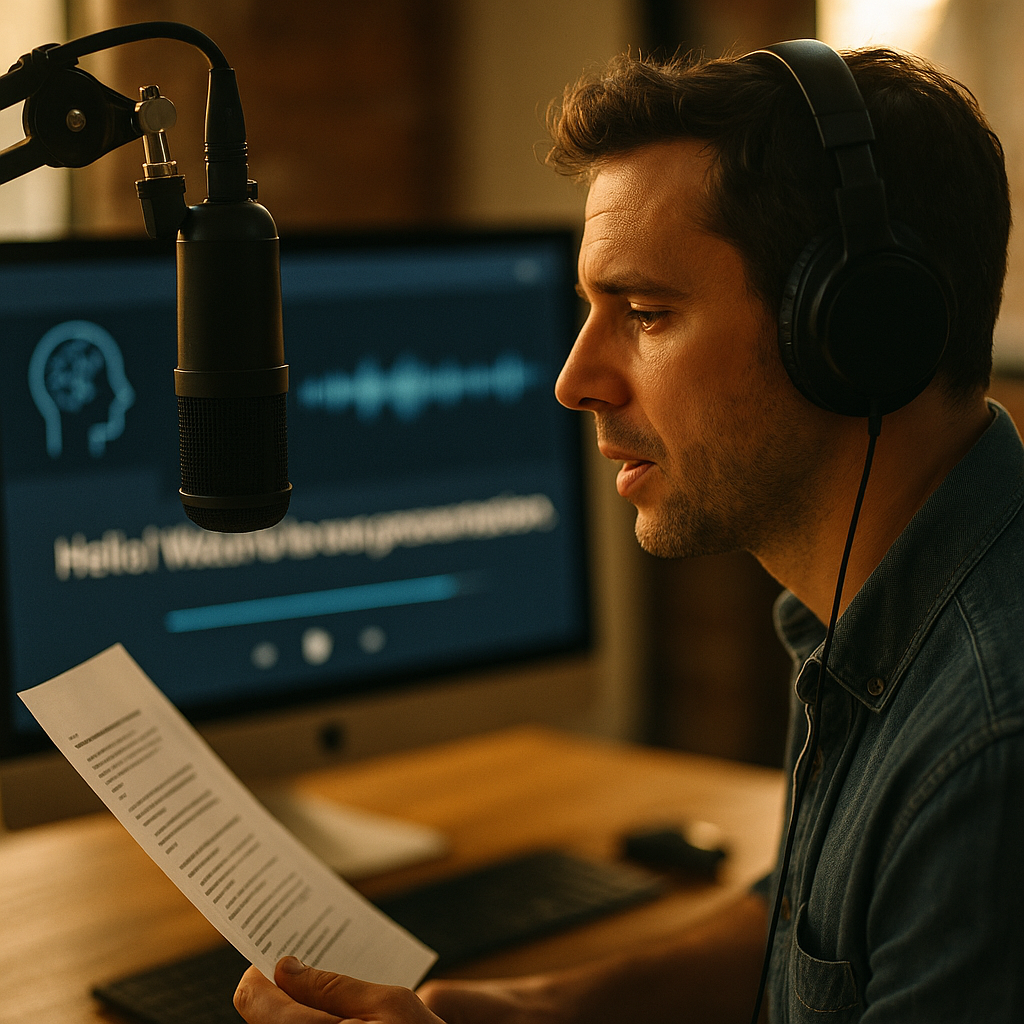
In 2025, audiences expect narration that sounds like it belongs where it’s heard. Using AI to Personalize Synthetic Voiceovers for Local Dialect Accuracy helps creators match pronunciation, rhythm, and cultural nuance without rebuilding production workflows. Done well, it improves trust, comprehension, and conversion while reducing retakes. Done poorly, it can offend or mislead. The difference comes down to process, data, and validation—so how do you get it right?
Dialect localization strategy: what “accurate” really means
Dialect accuracy is not the same as translating words. It’s the alignment of sound and meaning with local expectations. A voiceover can be grammatically correct and still feel wrong if stress patterns, vowel length, or common phrasing doesn’t match the listener’s region. For teams building a dialect localization strategy, start by defining accuracy across four layers:
- Phonetics: pronunciation of vowels and consonants, including mergers and regional variants.
- Prosody: timing, pitch movement, emphasis, and pauses that signal confidence, politeness, or urgency.
- Lexicon and register: local word choice and formality (e.g., customer support vs. entertainment).
- Cultural pragmatics: what sounds respectful, humorous, direct, or overly familiar in that community.
Answer a crucial scoping question early: are you targeting a language (e.g., Spanish), a country variant (e.g., Mexico vs. Spain), or a regional dialect (e.g., a city or province)? Each step down increases the need for more specific data and more rigorous review. It also impacts cost, because creating one “neutral” voice is simpler than supporting multiple dialect packs with validated pronunciation and style rules.
Finally, decide what success looks like. For marketing, “naturalness” and brand fit often matter most. For public information, clarity and reduced misinterpretation matter more. Put these priorities in writing; they will guide every technical and editorial decision that follows.
AI voice cloning ethics: consent, rights, and community trust
Local dialect accuracy can’t come at the expense of people’s rights. AI voice cloning ethics is the foundation of an EEAT-aligned workflow because it demonstrates responsibility, transparency, and respect for communities. In practice, that means treating voices and dialect data as sensitive creative assets—not just inputs.
Use these guardrails:
- Documented consent: obtain explicit permission for training, synthesis, and the intended use cases (ads, audiobooks, IVR, training, etc.).
- Clear compensation and attribution terms: define whether the performer is credited, how royalties work, and what happens if the brand pivots to new products.
- Right to revoke: establish a practical process for stopping usage and removing or freezing a model if required by contract or policy.
- Misuse prevention: apply access controls, watermarking where available, and approval workflows for high-risk content.
Dialect work also raises community considerations. A local dialect is often tied to identity and social history. If your project leans on a dialect for humor, stereotypes, or “authentic flavor” without involving local reviewers, you increase reputational risk. Instead, set up a small advisory loop: at minimum, a native speaker reviewer and a local cultural reviewer for sensitive verticals (health, finance, elections, public safety).
Practical follow-up question: Do we need to tell listeners it’s synthetic? For many commercial contexts, disclosure is a trust win even when not strictly required. Add it where it won’t distract (e.g., in show notes, app credits, or campaign landing pages). For regulated industries, align disclosure with legal counsel and platform policies.
Neural TTS personalization: data, features, and dialect controls
Neural TTS personalization is where linguistic goals become engineering choices. To reach local dialect accuracy, you need both the right data and the right controls during synthesis. Many teams fail by focusing only on “more training audio” instead of building a balanced dataset and a controllable pipeline.
Key dataset principles:
- Representative speech: include the dialect’s natural cadence and common phonetic patterns, not only scripted “clean” reads.
- Coverage of tricky phonemes: target words that commonly break TTS (place names, loanwords, contractions, slang, abbreviations).
- Balanced speaking styles: conversational, informative, persuasive, and formal tones if your use case spans multiple content types.
- Noise and channel consistency: keep recording conditions consistent to avoid training artifacts that reduce realism.
Then select or configure controls that map to real dialect needs:
- Pronunciation control: phoneme-level input (IPA or vendor-specific), custom dictionaries, and grapheme-to-phoneme overrides.
- Prosody control: adjustable stress, speaking rate, pause length, and emphasis tags to match local rhythm.
- Style tokens or reference audio: guide the model toward “newsreader,” “friendly support,” or “storyteller” without retraining.
- Speaker identity constraints: maintain a stable voice while changing dialectal pronunciation carefully, avoiding uncanny “accent drift.”
A common implementation question is whether to create one model per dialect or one shared model with dialect parameters. If your content volume is high and dialect differences are strong, separate models can be easier to validate. If you need multiple variants with tight brand consistency, a shared base with dialect-specific pronunciation and prosody layers often scales better.
Also plan for ongoing updates. Dialects evolve; campaigns introduce new product names; local events introduce new vocabulary. Build a repeatable process to add terms to lexicons and re-run validation, rather than treating voiceover as “set and forget.”
Accent-aware voiceover workflow: from script to approved audio
An accent-aware voiceover workflow prevents last-minute surprises and makes quality measurable. The most reliable approach is a hybrid pipeline that combines AI speed with human linguistic judgement at key points.
Use this step-by-step production flow:
- Dialect brief: define target region, audience, register, taboo terms, preferred local forms, and brand tone guidelines.
- Script adaptation: localize phrasing for naturalness, not just comprehension. Remove idioms that don’t travel. Confirm numbers, units, and date formats match local norms.
- Pronunciation planning: build a glossary for names, neighborhoods, institutions, and product terms. Add phoneme hints and syllable stress notes.
- First synthesis pass: generate multiple takes with controlled variation in pace and emphasis.
- Linguistic review: have native reviewers mark issues by category: mispronunciation, wrong stress, unnatural intonation, or inappropriate register.
- Iteration and locking: apply dictionary/prosody fixes, regenerate only affected lines, then lock approved segments.
- Audio post: consistent loudness, de-essing, and room tone matching for seamless playback across platforms.
To answer the common follow-up question—How many review rounds do we need?—plan for two rounds for straightforward marketing content and three for long-form or high-stakes material. Most repeated issues can be eliminated by improving the glossary and prosody presets, reducing future review time.
Another practical question: What about code-switching? Many communities mix languages or switch registers depending on context. If your audience does this naturally, reflect it deliberately. Write it into the script, confirm it with a local reviewer, and validate that the TTS system handles language switching without breaking rhythm or mispronouncing borrowed words.
Local pronunciation QA: testing, metrics, and continuous improvement
Local pronunciation QA turns subjective feedback into a repeatable standard. It also strengthens EEAT by showing you can validate claims like “dialect accurate” with evidence and structured review. In 2025, the best teams combine listening panels with measurable checks.
Set up a QA scorecard with clear pass/fail criteria:
- Pronunciation accuracy: correct phonemes for the dialect and correct stress for common words and names.
- Prosody naturalness: timing and emphasis patterns align with local expectations for the content type.
- Comprehension: listeners can paraphrase key messages without confusion.
- Brand fit: the voice sounds credible for the brand category in that region (e.g., healthcare vs. gaming).
- Sensitivity check: no phrasing that unintentionally signals disrespect, mockery, or stereotypes.
Testing methods that work well:
- Native-speaker listening panels: recruit participants from the target region, not just fluent speakers from elsewhere.
- A/B comparisons: compare your localized AI voiceover against a known-good human reference or a previous campaign.
- Word-level audits: create a recurring “top 200” list (place names, product names, high-frequency terms) and track error rates over time.
When you find errors, categorize them so fixes scale:
- Dictionary fixes: update phoneme mappings for specific terms.
- Script fixes: rewrite lines that force unnatural phrasing or ambiguous stress.
- Model or preset fixes: adjust speaking rate, pitch range, or style settings for the dialect.
Finally, keep an internal “dialect change log” so new team members can understand why choices were made. This is a practical EEAT move: it preserves institutional knowledge and reduces the risk of repeating mistakes.
Brand-safe multilingual content: scaling personalization across regions
Brand-safe multilingual content requires consistency without flattening local identity. The goal is to scale production while keeping each region’s voiceover credible. This is where operational design matters as much as model quality.
To scale safely:
- Create a centralized voice governance policy: approved voices, allowed dialects, disclosure rules, and restricted topics.
- Standardize assets: a shared glossary format, naming conventions, and version control for scripts and pronunciation dictionaries.
- Use tiered localization: Tier 1 regions get full dialect tuning and listening panels; Tier 2 get country-level variants; Tier 3 get a neutral standard with careful clarity checks.
- Train reviewers: give local reviewers rubrics and examples so feedback is consistent and actionable.
Teams often ask: Can we keep one “brand voice” worldwide? You can keep a consistent vocal identity (warmth, confidence, pace) while adapting dialect features per region. Think of it as a brand’s “signature” applied through local performance rules. This avoids the common failure mode where a single global voice sounds foreign everywhere.
Also consider platform realities: short-form ads may need higher energy and faster pacing; e-learning may need slower articulation and more pauses. Build presets per content type and region, then lock them down so campaigns don’t drift.
FAQs
What’s the difference between an accent and a dialect in voiceovers?
An accent mainly describes pronunciation. A dialect includes pronunciation plus vocabulary, grammar patterns, and culturally expected phrasing. For local credibility, dialect choices often matter as much as accent cues.
How much audio do we need to personalize a synthetic voice for a local dialect?
It depends on the TTS approach. Some systems can adapt with limited reference audio for style, while deeper dialect tuning benefits from larger, well-designed datasets and strong pronunciation controls. Start with a pilot and measure error rates on a targeted word list before expanding.
Can AI reliably pronounce local place names and surnames?
Yes, if you maintain a pronunciation glossary and enforce it through phoneme overrides or custom dictionaries. Without that layer, place names are one of the most common failure points.
How do we prevent stereotypes when using local dialect features?
Use local reviewers, avoid exaggerating features for comedic effect unless the community context supports it, and prioritize natural register. Treat dialect as communication accuracy, not a costume.
Should we disclose that a voiceover is AI-generated?
Disclosure often strengthens trust, especially for informational content. Use clear, non-disruptive disclosure in credits, descriptions, or landing pages, and follow platform and industry rules for sensitive categories.
What’s the best way to validate dialect accuracy before launching?
Combine native-speaker listening panels, a structured QA scorecard, and A/B tests against a trusted reference. Track recurring errors (especially names and high-frequency terms) and require fixes before final approval.
AI can deliver local-sounding narration at scale, but dialect accuracy is earned through careful design, not automation alone. Build a documented dialect brief, secure consented data, and use controllable TTS features for pronunciation and prosody. Validate with native reviewers and measurable QA, then standardize what works so every release improves. The takeaway: treat localized synthetic voiceover as a governed product, not a one-off file.
Top Influencer Marketing Agencies
The leading agencies shaping influencer marketing in 2026
Agencies ranked by campaign performance, client diversity, platform expertise, proven ROI, industry recognition, and client satisfaction. Assessed through verified case studies, reviews, and industry consultations.
Moburst

-
2

The Shelf
Boutique Beauty & Lifestyle Influencer AgencyA data-driven boutique agency specializing exclusively in beauty, wellness, and lifestyle influencer campaigns on Instagram and TikTok. Best for brands already focused on the beauty/personal care space that need curated, aesthetic-driven content.Clients: Pepsi, The Honest Company, Hims, Elf Cosmetics, Pure LeafVisit The Shelf → -
3

Audiencly
Niche Gaming & Esports Influencer AgencyA specialized agency focused exclusively on gaming and esports creators on YouTube, Twitch, and TikTok. Ideal if your campaign is 100% gaming-focused — from game launches to hardware and esports events.Clients: Epic Games, NordVPN, Ubisoft, Wargaming, Tencent GamesVisit Audiencly → -
4

Viral Nation
Global Influencer Marketing & Talent AgencyA dual talent management and marketing agency with proprietary brand safety tools and a global creator network spanning nano-influencers to celebrities across all major platforms.Clients: Meta, Activision Blizzard, Energizer, Aston Martin, WalmartVisit Viral Nation → -
5

The Influencer Marketing Factory
TikTok, Instagram & YouTube CampaignsA full-service agency with strong TikTok expertise, offering end-to-end campaign management from influencer discovery through performance reporting with a focus on platform-native content.Clients: Google, Snapchat, Universal Music, Bumble, YelpVisit TIMF → -
6

NeoReach
Enterprise Analytics & Influencer CampaignsAn enterprise-focused agency combining managed campaigns with a powerful self-service data platform for influencer search, audience analytics, and attribution modeling.Clients: Amazon, Airbnb, Netflix, Honda, The New York TimesVisit NeoReach → -
7

Ubiquitous
Creator-First Marketing PlatformA tech-driven platform combining self-service tools with managed campaign options, emphasizing speed and scalability for brands managing multiple influencer relationships.Clients: Lyft, Disney, Target, American Eagle, NetflixVisit Ubiquitous → -
8

Obviously
Scalable Enterprise Influencer CampaignsA tech-enabled agency built for high-volume campaigns, coordinating hundreds of creators simultaneously with end-to-end logistics, content rights management, and product seeding.Clients: Google, Ulta Beauty, Converse, AmazonVisit Obviously →