


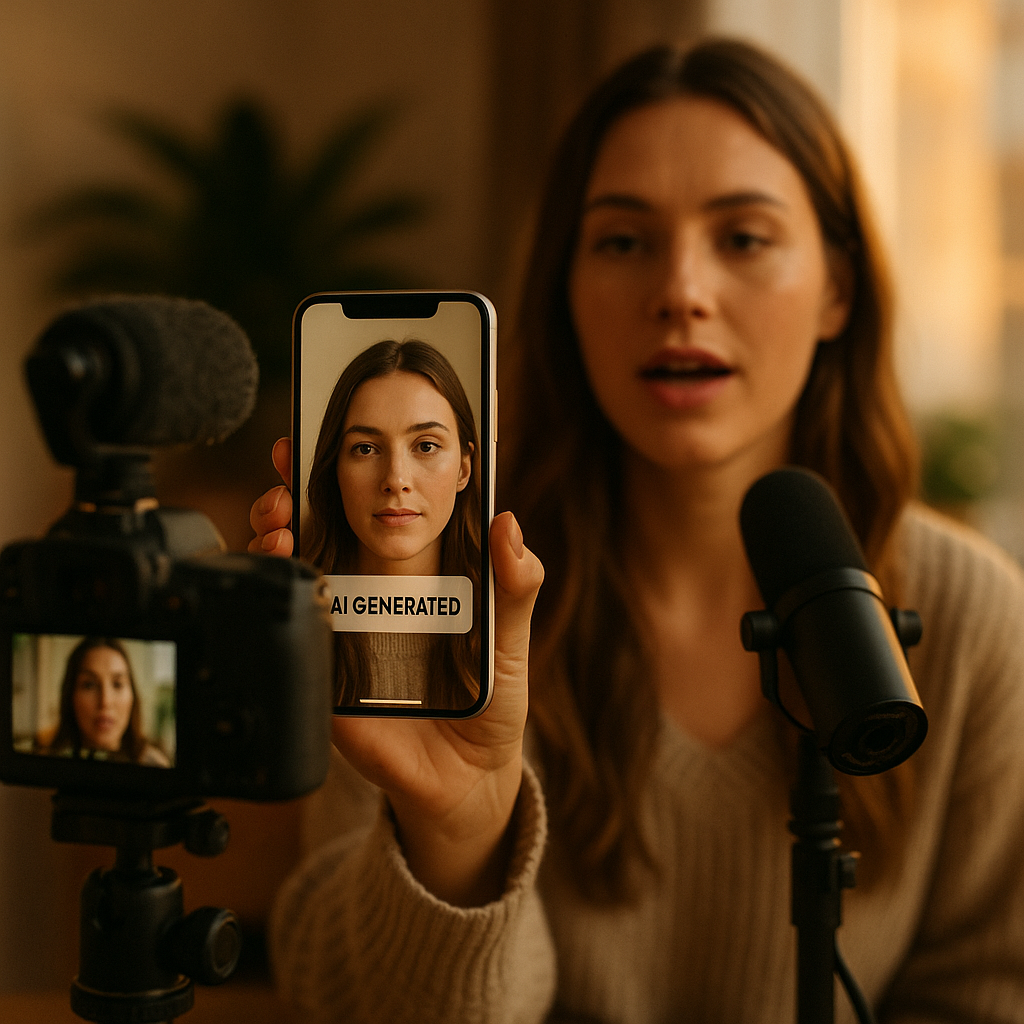
Understanding New Disclosure Rules for AI Generated Influencer Likeness has moved from a niche compliance issue to a daily operational need for brands, agencies, and creators in 2025. Synthetic media is now easy to produce, hard to detect, and quick to spread across paid and organic channels. Clear disclosure protects audiences and reduces legal risk, but what actually counts as “AI” and when must you disclose? The rules are evolving fast—are you ready?
AI disclosure requirements in 2025: what changed and why it matters
Newer guidance and platform policies have converged on one central expectation: when an audience could reasonably believe a real person said or did something, you must clearly disclose if AI generated, altered, or simulated that likeness. This matters because influencer marketing relies on perceived authenticity. When the content uses a synthetic voice, face, body, or performance—especially of a recognizable influencer—undisclosed AI can mislead consumers and trigger regulatory and reputational consequences.
In 2025, the compliance focus is less about the tool you used and more about the net impression on a typical viewer. If the content could influence purchasing decisions or opinions by presenting a simulated human endorsement, it falls into a higher-risk category. Readers often ask: “If we used AI only to polish or translate, does it still count?” The safest approach is to disclose when AI meaningfully changes what viewers believe is real, including voice cloning, face swaps, synthetic performances, or generated scenes that imply the influencer participated.
Three practical takeaways drive most disclosure decisions:
- Materiality: Would knowing it’s AI affect how someone interprets the endorsement or message?
- Recognizability: Is a real person’s likeness (face, voice, mannerisms) identifiable?
- Context: Is it an ad, a product claim, political/issue advocacy, or a sensitive category where deception risk is higher?
AI generated influencer likeness: definitions, examples, and risk triggers
An AI generated influencer likeness generally refers to synthetic or altered content that depicts a person—often a known influencer—in a way that suggests real participation. Likeness includes more than a face. It can include a voiceprint, distinctive gestures, signature phrases, tattoos, or other identifiable attributes. In practice, these are common scenarios that trigger disclosure:
- Voice cloning: Using AI to replicate an influencer’s voice to read a script or improvise lines.
- Face replacement or body doubling: Placing an influencer’s face on another person’s body, or generating a full-body avatar.
- AI-generated “new footage”: Creating scenes of an influencer using or praising a product when they never recorded it.
- AI “translation” that changes meaning: Dubbing into another language with synthetic voice that introduces new claims or tone.
- Composite endorsements: Stitching together real clips and AI-generated segments that create an overall message the influencer did not approve.
Lower-risk examples may still warrant transparency depending on the overall impression: minor retouching, background generation, or cleanup that doesn’t alter what the influencer appears to endorse. But if the edit changes who is speaking or what they appear to say, treat it as disclosure-required territory.
A common follow-up question is, “What about fully virtual influencers?” If the persona is clearly fictional and consistently presented as such, the disclosure emphasis shifts: you still disclose advertising and any material connections, but you may not need to label every post “AI” if the audience already understands the character is virtual. Problems arise when a virtual persona is presented as a real human, or when a real influencer’s likeness is simulated without clear labeling.
Influencer marketing compliance: disclosures that satisfy regulators and platforms
Disclosures need to be clear, conspicuous, and close to the claim. In influencer marketing, regulators and platforms tend to punish ambiguous labels buried in hashtags, hidden at the end of long captions, or placed behind “more” truncation. In 2025, the bar is effectively: a typical viewer should notice the disclosure without hunting.
For AI-generated likeness content, you often need two disclosures:
- Advertising/relationship disclosure: e.g., “Ad,” “Paid partnership,” or “Sponsored,” where applicable.
- Synthetic media disclosure: e.g., “AI-generated,” “AI-altered,” or “Digitally created,” explaining that the likeness/voice is simulated.
Where to place disclosures:
- Short-form video: On-screen text at the beginning and again near any key product claims; include in caption as well.
- Stories/Reels/TikTok-style formats: Use native labels when available; add readable overlay text with high contrast; avoid tiny fonts.
- Livestream or dynamic ads: Use persistent or repeated disclosures; one quick mention at the start is rarely enough.
- Audio-only content: Verbal disclosure early and before claims; consider repeating after ad breaks.
What to say (examples you can adapt):
- When simulating a real influencer: “This is an AI-generated depiction of [Name]. [Name] did not record this video.”
- When voice is cloned: “AI-generated voice. Script approved by [Name].” (Only if true.)
- When content is partially altered: “Some scenes are AI-generated/AI-edited.”
Readers often ask whether “#AI” is enough. Standing alone, it’s usually too vague. Use plain language that explains what is synthetic: the voice, face, entire performance, or specific scenes.
Digital likeness rights and consent: contracts, approvals, and recordkeeping
Disclosure is not a substitute for permission. If you use a real influencer’s likeness—especially to create new speech or actions—you need explicit, written consent that covers the intended uses. In 2025, strong agreements typically address:
- Scope of use: Which platforms, regions, formats, and campaign duration.
- Permitted AI transformations: Voice cloning, face synthesis, dubbing, de-aging, wardrobe changes, or scene generation.
- Approval workflow: Whether the influencer must approve scripts, final outputs, and any iterations or A/B tests.
- Prohibited categories: Politics, sensitive health claims, financial products, or any brand competitors.
- Attribution and disclosure language: Pre-approved phrasing to keep messaging consistent and compliant.
- Data handling: How training materials (voice samples, footage) are stored, secured, and deleted.
- Audit rights and logging: Ability to verify where the asset ran, in what version, and with what targeting.
Keep records that demonstrate responsible practices: signed releases, script approvals, final exported files with timestamps, and a distribution log (placements, dates, and versions). If a complaint arises, this evidence often determines whether the matter resolves quickly or escalates.
A key follow-up question is: “Can we use a past clip to train a model?” Treat training rights separately from usage rights. Even if you have a license to post a video, you may not have permission to extract voice/face data for model training. Spell it out.
Synthetic media labeling best practices: placement, wording, and accessibility
Effective labeling reduces confusion without destroying performance. The goal is not to overwhelm viewers; it is to inform them at the moment they form an impression. In 2025, the most helpful disclosures share three qualities: specificity, readability, and consistency.
Placement and timing:
- Put “AI-generated” or “AI-altered” at the start of the caption, not after multiple lines.
- For video, show overlay text for long enough to read and repeat it after scene changes or before major claims.
- Don’t rely only on a disclosure in the comments; many viewers never see it.
Wording that audiences understand:
- Use plain phrases like “Created with AI” or “AI-generated voice” instead of technical jargon.
- Clarify participation: “Digitally created. [Name] did not film this.” when applicable.
- Avoid implying real-time authenticity (for example, “caught on camera”) when it’s synthetic.
Accessibility:
- Ensure sufficient color contrast and font size for on-screen labels.
- Include disclosures in audio form when the content is primarily listened to.
- For multilingual campaigns, translate disclosures accurately; don’t leave them only in one language.
Performance teams often worry that disclosure reduces conversions. In practice, transparency can protect brand trust and reduce backlash-driven churn. If you need reassurance, run creative tests that compare different compliant disclosure formats, not compliant versus non-compliant. The question in 2025 is rarely “Can we skip disclosure?” and more often “Which disclosure approach is clearest while staying on-brand?”
Brand risk management for AI endorsements: governance, review workflows, and monitoring
AI likeness campaigns require tighter governance because a single asset can be repurposed endlessly, localized quickly, and distributed across many accounts. A workable risk program in 2025 includes:
- Pre-production risk scoring: Flag high-risk categories (health, finance, children) and higher-risk tactics (voice cloning, fabricated testimonials).
- Legal and policy review gates: Require sign-off on scripts, claims substantiation, and final edits before launch.
- Asset provenance: Maintain a source-of-truth folder with approved files and a ban on unofficial re-exports.
- Platform policy checks: Confirm each platform’s synthetic media and political/issue policies before upload.
- Post-launch monitoring: Track comments, shares, duets/remixes, and unauthorized reposts; address confusion quickly with pinned clarifications.
Also plan for incident response. If a disclosure is missed or an asset is misused, you need a rapid playbook: pause spend, pull the creative, publish a correction, notify partners, and document the fix. Many brands now treat synthetic media errors like other critical marketing incidents—because they can spread at the speed of the algorithm.
If you work with agencies, require them to follow the same standards. Put disclosure requirements into insertion orders and briefs, and demand proof of compliance (screenshots, exported files, and live links).
FAQs
Do we need to disclose AI if we only used it to edit lighting or remove background noise?
If the edits don’t materially change what viewers believe happened or who said what, disclosure may not be necessary. If the edits create a misleading impression—such as altering spoken words, adding scenes, or changing the endorser’s apparent actions—disclose clearly.
If an influencer approves the script, can we use an AI-generated version of their likeness without labeling it?
No. Approval is not the same as transparency. If the audience is seeing an AI-generated or AI-altered depiction that looks or sounds like a real person, you should label it so viewers understand it is synthetic media.
Is “#AI” or “#deepfake” an adequate disclosure?
Usually not. Use plain, specific language such as “AI-generated voice” or “AI-generated depiction of [Name].” Place it where people will notice it immediately (on-screen and/or at the beginning of the caption).
Do we need both an ad disclosure and an AI disclosure?
Often yes. If there is a paid relationship or material connection, disclose the ad relationship. If the likeness or performance is synthetic, disclose the AI component. They solve different consumer-understanding problems.
What documentation should we keep for AI likeness campaigns?
Keep written consent, licensing terms, scripts, approval records, final exports, disclosure language used, claim substantiation, and a distribution log of where each version ran. This supports compliance audits and helps resolve disputes quickly.
How do we handle user-generated reposts that remove our disclosure?
Monitor high-performing reposts and request edits or takedowns where appropriate, especially for paid or brand-controlled placements. When feasible, add a pinned comment or follow-up post clarifying that the content used AI-generated or AI-altered likeness.
New disclosure expectations in 2025 reward brands and creators who treat synthetic media like any other material marketing fact: disclose it clearly, get explicit consent, and keep records. If viewers could reasonably think a real influencer performed or spoke, label the AI use in plain language and place it where it can’t be missed. Build review gates and monitoring into every campaign. Transparency now protects trust and reduces costly compliance surprises.
Top Influencer Marketing Agencies
The leading agencies shaping influencer marketing in 2026
Agencies ranked by campaign performance, client diversity, platform expertise, proven ROI, industry recognition, and client satisfaction. Assessed through verified case studies, reviews, and industry consultations.
Moburst

-
2

The Shelf
Boutique Beauty & Lifestyle Influencer AgencyA data-driven boutique agency specializing exclusively in beauty, wellness, and lifestyle influencer campaigns on Instagram and TikTok. Best for brands already focused on the beauty/personal care space that need curated, aesthetic-driven content.Clients: Pepsi, The Honest Company, Hims, Elf Cosmetics, Pure LeafVisit The Shelf → -
3

Audiencly
Niche Gaming & Esports Influencer AgencyA specialized agency focused exclusively on gaming and esports creators on YouTube, Twitch, and TikTok. Ideal if your campaign is 100% gaming-focused — from game launches to hardware and esports events.Clients: Epic Games, NordVPN, Ubisoft, Wargaming, Tencent GamesVisit Audiencly → -
4

Viral Nation
Global Influencer Marketing & Talent AgencyA dual talent management and marketing agency with proprietary brand safety tools and a global creator network spanning nano-influencers to celebrities across all major platforms.Clients: Meta, Activision Blizzard, Energizer, Aston Martin, WalmartVisit Viral Nation → -
5

The Influencer Marketing Factory
TikTok, Instagram & YouTube CampaignsA full-service agency with strong TikTok expertise, offering end-to-end campaign management from influencer discovery through performance reporting with a focus on platform-native content.Clients: Google, Snapchat, Universal Music, Bumble, YelpVisit TIMF → -
6

NeoReach
Enterprise Analytics & Influencer CampaignsAn enterprise-focused agency combining managed campaigns with a powerful self-service data platform for influencer search, audience analytics, and attribution modeling.Clients: Amazon, Airbnb, Netflix, Honda, The New York TimesVisit NeoReach → -
7

Ubiquitous
Creator-First Marketing PlatformA tech-driven platform combining self-service tools with managed campaign options, emphasizing speed and scalability for brands managing multiple influencer relationships.Clients: Lyft, Disney, Target, American Eagle, NetflixVisit Ubiquitous → -
8

Obviously
Scalable Enterprise Influencer CampaignsA tech-enabled agency built for high-volume campaigns, coordinating hundreds of creators simultaneously with end-to-end logistics, content rights management, and product seeding.Clients: Google, Ulta Beauty, Converse, AmazonVisit Obviously →