


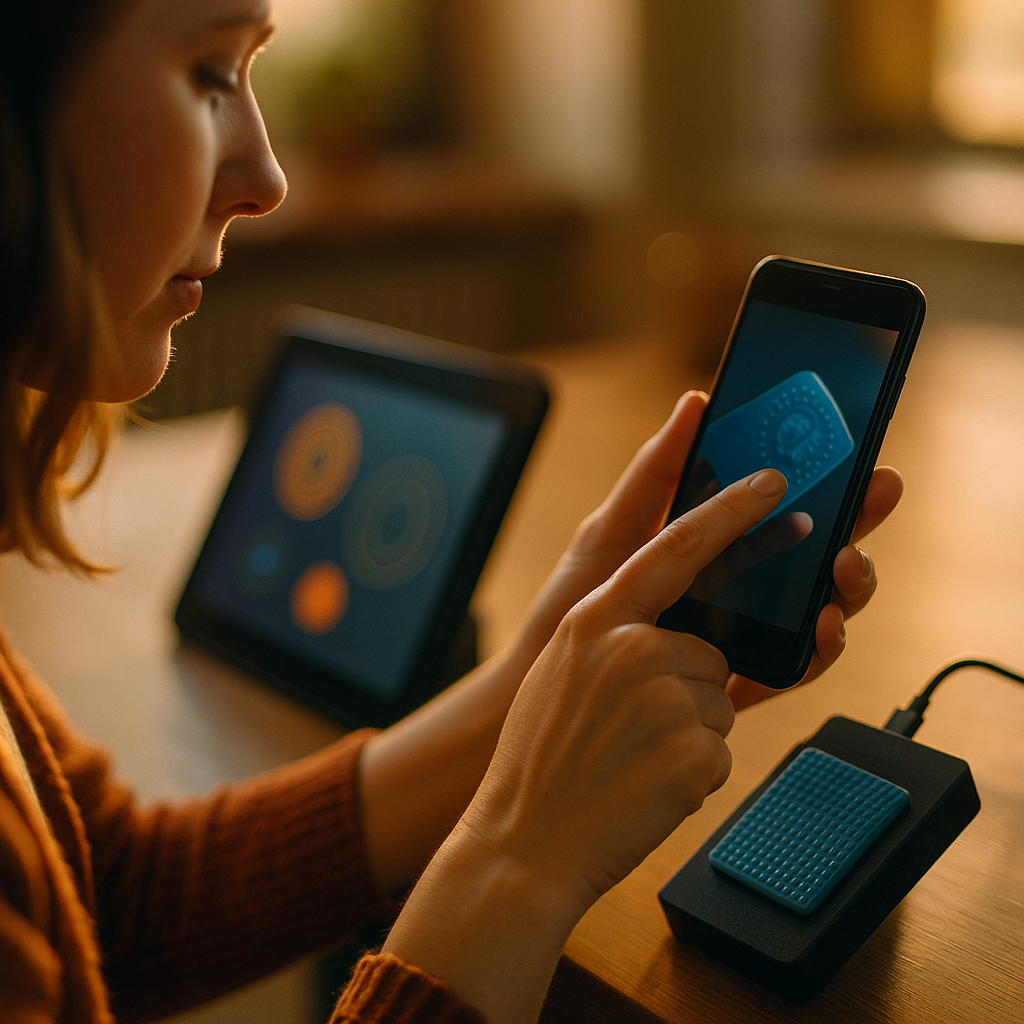
The Future of Haptic Marketing is arriving as touch moves from a novelty to a measurable channel in digital experiences. In 2025, consumers expect content to feel as responsive as it looks, and brands that design tactile feedback with intent can increase confidence, clarity, and conversion. The question is no longer whether touch belongs in content, but how to integrate it without friction—ready to feel it?
Haptic marketing definition and why touch matters in 2025
Haptic marketing uses tactile feedback—typically vibrations, force, texture simulation, or pressure cues—to influence perception and behavior. On phones, it often appears as micro-vibrations that confirm actions (a tap, a swipe, a purchase) or guide attention. In wearables and emerging devices, it can include localized pulses or patterns that communicate meaning.
Touch matters because it reduces uncertainty. When content provides a physical confirmation of an action, users make fewer errors and feel more in control. That “felt” reassurance can be especially valuable in high-stakes moments like checkout, identity verification, medication reminders, or consent flows. Done well, haptics also improves accessibility by offering non-visual cues when sound is unavailable or undesired.
From an EEAT perspective, treat haptics as a product-quality layer rather than a gimmick. The most helpful approach starts with user needs: What confusion do users experience? Where do they hesitate? Where do they mis-tap? Haptic feedback should answer those problems with a clear tactile language—consistent patterns mapped to consistent meanings.
Sensory branding with haptics: building recognizable “touch signatures”
Sensory branding traditionally focuses on visual identity and sound. Haptics adds a third brandable layer: repeatable patterns that become recognizable across touchpoints. A “touch signature” is a designed set of tactile cues—durations, intensities, rhythms—used consistently to signal states such as success, warning, progress, or premium moments.
To make sensory branding credible, prioritize function over flourish:
- Define a tactile vocabulary. Establish a small set of patterns (for example: confirmation, error, loading/progress, achievement) and document where each is used.
- Map meaning to pattern. Keep intensity and rhythm proportional to importance: subtle for minor confirmations, stronger for critical warnings.
- Stay consistent across platforms. Android and iOS render haptics differently. Use platform-native patterns where possible, then align timing and intent across devices.
- Make it optional. Users vary in sensitivity. Provide settings to reduce intensity or disable non-essential haptics.
Readers often ask whether a brand can “own” a tactile signature the way it can own a sonic logo. In practice, distinctiveness is possible, but utility must lead. The more your haptics helps users complete tasks confidently, the more it becomes associated with your brand—without feeling like an ad.
Immersive content experiences: touch in video, AR, VR, and interactive stories
Integrating touch into content becomes most compelling when users are already leaning in—interactive video, AR try-ons, VR training, and narrative experiences. The goal is not constant vibration; it’s timed, context-aware cues that increase comprehension and emotional clarity.
High-impact use cases in 2025 include:
- Interactive product education. A short tactile pulse when a user “locks” a component into place in a 3D model can teach assembly faster than text alone.
- AR commerce and fit/placement confirmation. When a user places furniture in AR, a gentle “snap” haptic can confirm alignment, level, or correct spacing.
- Training and safety simulations. In VR, haptic cues can reinforce procedural steps and hazard awareness without overloading audio.
- Live events and second-screen experiences. Haptic “beats” synced to moments (goals, drops, scene transitions) can deepen engagement, especially with headphones on.
A likely follow-up question is whether haptics can replace visual storytelling. It can’t, but it can support it. Touch works best as punctuation: a confirmation, a boundary, a moment of emphasis. The best immersive experiences keep haptics rare, meaningful, and aligned with the user’s intent.
Mobile user experience design: practical patterns for integrating touch into content
Most haptic marketing today happens on smartphones, so mobile UX design determines whether touch feels premium or annoying. Effective haptic integration follows three principles: clarity, restraint, and predictability.
Use these practical patterns:
- Action confirmation. Provide a crisp, brief tap when users complete a meaningful action: adding to cart, saving changes, sending a message.
- Error prevention. Use a distinct “blocked” pattern when an action can’t proceed (invalid input, unavailable inventory). Pair it with clear on-screen messaging.
- Progress and completion. For content with steps (onboarding, quizzes, learning modules), use subtle cues when a step completes or a milestone is reached.
- Navigation boundaries. A gentle “edge” cue can indicate the end of a carousel or the limit of a zoom, preventing repeated swipes.
- Micro-interactions in content. Quizzes, polls, interactive infographics, and shoppable content benefit from tactile confirmation that a selection registered.
To keep experiences helpful, avoid “always-on” vibration. Frequent or high-intensity haptics can feel like nagging, drain battery, and reduce trust. Also design for context: users might be in quiet environments, using one hand, or wearing gloves. Touch cues should never be the only way to understand what happened; they should reinforce clear visuals and, where appropriate, sound.
If you’re deciding where to start, pick one high-friction moment—often checkout or form completion—and add haptic confirmation and error cues. Measure changes in form abandonment, mis-taps, and time-to-complete. That keeps the work grounded in user outcomes rather than novelty.
Haptic technology trends: wearables, gaming, and the tactile web
Haptic capabilities are expanding beyond phone vibration motors. In 2025, the most relevant trend is a broader device ecosystem where tactile feedback is more precise and more personalized. For marketers and content teams, this means touch will increasingly travel with the user rather than staying inside a single app.
Key haptic technology trends to watch:
- Wearable haptics. Smartwatches and fitness wearables deliver private, glance-free cues. This opens new content formats for reminders, guided routines, and micro-learning prompts.
- Gaming-grade feedback in mainstream devices. Many consumers now recognize nuanced rumble patterns from controllers, which raises expectations for tactile quality in other experiences.
- Richer haptic engines. Improved actuators enable more “textural” sensations—taps, clicks, thuds—rather than a single generic buzz.
- Personalization and adaptive intensity. Devices increasingly support system-level haptic settings. Respect those settings and adapt your patterns to user preferences.
People often ask about the “tactile web.” In practical terms, it means haptics becomes a standard layer of interaction design—supported by OS conventions and hardware improvements—rather than an experimental add-on. Brands that document their tactile patterns, test them across devices, and treat them as part of design systems will move faster as new touch-capable surfaces appear.
Measuring haptic engagement: trust, accessibility, and ethical considerations
Haptic marketing only earns its place when it improves outcomes without manipulating users. The tactile channel is intimate; misuse can feel intrusive. Ethical, accessible design is also a trust signal—an EEAT advantage—because it demonstrates care for user wellbeing.
Measure success with metrics tied to user value:
- Task success rate. Do users complete key actions more reliably with haptics enabled?
- Error rate and mis-taps. Do tactile cues reduce form mistakes or repeated taps?
- Time-to-complete. Does touch reduce hesitation in complex flows?
- Conversion and retention. Are checkout completion and return visits improving in haptic-enhanced experiences?
- Accessibility feedback. Are users who benefit from non-visual cues reporting improved usability?
Build guardrails:
- Consent and control. Provide clear settings to reduce or disable non-essential haptics. Respect system preferences.
- Avoid coercive patterns. Do not use strong haptics to pressure users into choices, rush decisions, or mask dark patterns.
- Design for sensitivity. Some users experience discomfort with vibration. Keep defaults gentle and limit frequency.
- Document and test. Test across devices and with diverse users. A pattern that feels crisp on one phone may feel harsh on another.
If you need a simple decision rule: if a haptic cue doesn’t improve clarity, safety, or confidence, remove it. Touch should earn attention the same way good copy or good UI earns it—by being useful.
FAQs
-
What is haptic marketing in simple terms?
Haptic marketing is using touch feedback—like taps, pulses, or clicks from a device—to guide users, confirm actions, and shape how content feels during interaction.
-
How do you integrate touch into digital content without annoying users?
Use haptics sparingly and tie each cue to a clear meaning: confirmation, error, boundary, or progress. Keep intensity low by default, avoid constant vibration, and offer settings to reduce or disable non-essential feedback.
-
Does haptic feedback actually improve conversion?
It can when it reduces uncertainty in high-friction steps like forms and checkout. The most reliable approach is to A/B test haptic patterns against a control and track task completion, error rates, and abandonment.
-
What devices support haptic experiences beyond smartphones?
Wearables (especially smartwatches), gaming controllers, some AR/VR systems, and newer laptops/trackpads can deliver advanced tactile feedback. Coverage varies by hardware and operating system.
-
Are there accessibility benefits to haptics?
Yes. Haptics can provide non-visual cues for confirmations, warnings, and navigation boundaries, helping users who prefer reduced audio or who benefit from additional sensory reinforcement. It should complement—not replace—clear visuals and text.
-
What are ethical concerns with haptic marketing?
Because touch is intimate, aggressive or manipulative haptics can feel coercive. Ethical design requires user control, gentle defaults, avoidance of dark patterns, and testing for comfort across diverse users.
Touch is becoming a standard layer of digital experience design, not a novelty. In 2025, the brands that win with haptics treat it as a clear communication tool: confirm, guide, warn, and reassure. Start with one friction point, design a consistent tactile vocabulary, and measure outcomes tied to user confidence. When touch earns its place, content feels easier—and more trustworthy.
Top Influencer Marketing Agencies
The leading agencies shaping influencer marketing in 2026
Agencies ranked by campaign performance, client diversity, platform expertise, proven ROI, industry recognition, and client satisfaction. Assessed through verified case studies, reviews, and industry consultations.
Moburst

-
2

The Shelf
Boutique Beauty & Lifestyle Influencer AgencyA data-driven boutique agency specializing exclusively in beauty, wellness, and lifestyle influencer campaigns on Instagram and TikTok. Best for brands already focused on the beauty/personal care space that need curated, aesthetic-driven content.Clients: Pepsi, The Honest Company, Hims, Elf Cosmetics, Pure LeafVisit The Shelf → -
3

Audiencly
Niche Gaming & Esports Influencer AgencyA specialized agency focused exclusively on gaming and esports creators on YouTube, Twitch, and TikTok. Ideal if your campaign is 100% gaming-focused — from game launches to hardware and esports events.Clients: Epic Games, NordVPN, Ubisoft, Wargaming, Tencent GamesVisit Audiencly → -
4

Viral Nation
Global Influencer Marketing & Talent AgencyA dual talent management and marketing agency with proprietary brand safety tools and a global creator network spanning nano-influencers to celebrities across all major platforms.Clients: Meta, Activision Blizzard, Energizer, Aston Martin, WalmartVisit Viral Nation → -
5

The Influencer Marketing Factory
TikTok, Instagram & YouTube CampaignsA full-service agency with strong TikTok expertise, offering end-to-end campaign management from influencer discovery through performance reporting with a focus on platform-native content.Clients: Google, Snapchat, Universal Music, Bumble, YelpVisit TIMF → -
6

NeoReach
Enterprise Analytics & Influencer CampaignsAn enterprise-focused agency combining managed campaigns with a powerful self-service data platform for influencer search, audience analytics, and attribution modeling.Clients: Amazon, Airbnb, Netflix, Honda, The New York TimesVisit NeoReach → -
7

Ubiquitous
Creator-First Marketing PlatformA tech-driven platform combining self-service tools with managed campaign options, emphasizing speed and scalability for brands managing multiple influencer relationships.Clients: Lyft, Disney, Target, American Eagle, NetflixVisit Ubiquitous → -
8

Obviously
Scalable Enterprise Influencer CampaignsA tech-enabled agency built for high-volume campaigns, coordinating hundreds of creators simultaneously with end-to-end logistics, content rights management, and product seeding.Clients: Google, Ulta Beauty, Converse, AmazonVisit Obviously →