


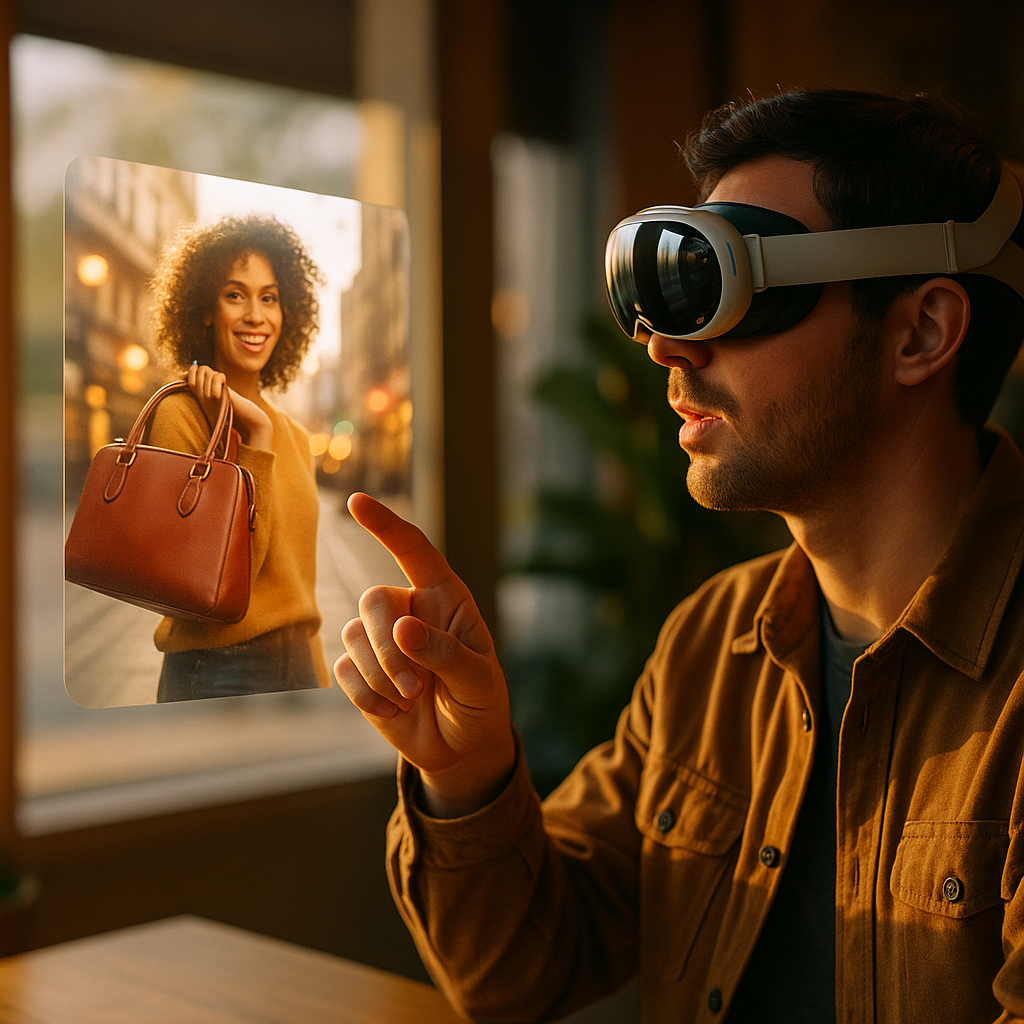
Spatial computing is redefining how audiences experience stories by blending digital content with real-world context. In 2025, narrative brand content can move beyond screens into interactive spaces where people look, gesture, and speak to progress a plot. This shift affects strategy, production, measurement, and trust. Brands that adapt early will earn attention differently—so what changes first?
What Spatial Computing Means for Brand Storytelling
Secondary keyword: spatial computing brand storytelling
Spatial computing describes experiences where digital elements understand and respond to physical space—using sensors, computer vision, and real-time 3D rendering. For narrative brand content, it changes the “where” and “how” of storytelling:
- Stories become place-aware: A narrative can react to a store aisle, a living room, or a city street, changing scenes based on location, surfaces, lighting, or proximity.
- Attention becomes embodied: Instead of passive viewing, audiences use gaze, hands, and movement. “Scrolling” is replaced by looking closer, walking around, or picking up an object.
- Context becomes a character: Time of day, ambient sound, and nearby objects can influence tone and pacing. Brands can build narratives that feel locally relevant without rewriting the core plot.
This isn’t simply “AR with better graphics.” It’s a shift in narrative grammar. Spatial stories rely less on edits and more on discovery: revealing information through exploration, perspective changes, and physical interaction. That makes creative direction, UX, and technical production inseparable.
If you’re asking whether this applies only to headsets, the answer is no. Spatial computing spans phones, tablets, in-store displays, and wearables. Headsets amplify immersion, but the narrative principles—environmental anchoring, interaction, and spatial audio—carry across devices.
Immersive Brand Experiences That Earn Attention and Trust
Secondary keyword: immersive brand experiences
Traditional brand videos compete in crowded feeds. Spatial experiences compete in the real world, where relevance is earned through utility, delight, and credibility. In 2025, the most effective immersive brand experiences tend to share five traits:
- They start with a clear audience job-to-be-done: “Help me choose,” “teach me,” “let me try,” or “make this moment memorable.” Story is built around that job, not layered on at the end.
- They minimize friction: Simple onboarding, accessible controls, and short time-to-reward. If a user needs a tutorial to begin, your story is already losing momentum.
- They use space as a narrative device: Progress is physical—moving to a hotspot, rotating an object, stepping closer to reveal detail, or listening for spatial audio cues.
- They show receipts: When you claim performance, sustainability, or safety, embed evidence. Spatial layers can reveal certifications, materials, provenance, testing footage, or third-party verification in context.
- They respect boundaries: Clear permission prompts, visible controls, and straightforward privacy language increase trust and reduce drop-off.
Brands often ask: “Should this be a game?” Not always. Interactivity should serve meaning. A luxury brand may use subtle interactions—lighting changes, product cutaways, craft details—while a sports brand might use timed challenges and shared leaderboards. In both cases, narrative works best when it reinforces a single point of view and a consistent emotional arc.
Trust is also shaped by realism. If your spatial objects look photoreal but behave unrealistically (wrong scale, physics, or lighting), the experience triggers doubt. Assign ownership for plausibility—usually a combination of 3D art direction, technical art, and QA in varied real environments.
AR Narrative Marketing and the New Story Structure
Secondary keyword: AR narrative marketing
AR narrative marketing changes structure because users control pacing and viewpoint. Instead of a fixed timeline, you design a narrative field: moments and beats users can discover in different orders while still arriving at the intended takeaway.
Three structural patterns work reliably:
- Guided discovery: A narrator, character, or interface gently points users to the next beat. This suits product education and brand origin stories.
- Object-centered arcs: The story is embedded in an item: a shoe, a bottle, a vehicle, a piece of furniture. Users unlock chapters by inspecting components, materials, or features.
- Location-based chapters: Each physical zone reveals a scene. This works for retail, events, museums, and tourism partnerships.
To prevent users from missing key information, design for “fail-soft” comprehension:
- Redundancy without repetition: Present the core message in multiple modalities—visual labels, audio, and a short recap panel—so different user behaviors still lead to understanding.
- Micro-summaries at transitions: When a user completes a beat, briefly state what it meant and why it matters.
- Strong affordances: Make interactive elements obvious through motion, highlight, or sound, while keeping the aesthetic aligned with the brand.
Another follow-up question is measurement: “How do we know people got the story?” In spatial, you can track narrative completion differently than video views. Instead of a single completion rate, track milestone coverage: percentage of users who discovered Beat A, Beat B, and the final payoff. This gives creative teams actionable data—where the story loses people and which interactions confuse.
Spatial Content Strategy for Production, Platforms, and Measurement
Secondary keyword: spatial content strategy
Spatial content strategy is where many brand pilots succeed creatively but fail operationally. The fix is to plan for modularity, performance, and distribution from the start.
1) Build a content system, not a one-off
Think in reusable assets and templates:
- 3D asset library: Product models, materials, lighting setups, and animations maintained like brand design files.
- Narrative components: Character rigs, voice lines, spatial UI elements, and interaction patterns that can be reused across campaigns.
- Localization-ready layers: Text, voice, and culturally sensitive elements separated from core logic for quick adaptation.
2) Choose platforms by audience behavior
Distribution should match where the audience already is:
- Mobile-first AR: Best reach for broad campaigns, packaging activations, and social extensions.
- In-store spatial installations: Best for high-intent moments where customers want clarity and confidence.
- Headset-grade experiences: Best for premium storytelling, training, and events where immersion is the point.
3) Define measurement that maps to narrative goals
Spatial metrics should connect to business and story outcomes:
- Engaged time: Time spent interacting meaningfully, not just time in session.
- Beat completion: Percent reaching key narrative moments.
- Interaction quality: Repeated inspections, zoom-ins, or replays indicating curiosity and comprehension.
- Downstream actions: Store locator use, add-to-cart, appointment bookings, or captured leads with explicit consent.
4) Budget for real-world QA
Spatial experiences behave differently across rooms, lighting, and device capabilities. QA must include varied physical settings. If your narrative relies on anchors sticking to surfaces, test in cluttered environments, reflective floors, and low light. Reliability is part of brand perception.
EEAT, Privacy, and Accessibility in Spatial Media
Secondary keyword: spatial media ethics
In 2025, audiences and regulators expect more transparency from technologies that map spaces and interpret behavior. EEAT principles—experience, expertise, authoritativeness, and trust—translate into spatial media ethics and execution.
Build trust through clear data practices
- Explain what you collect: Camera access, spatial mapping, approximate location, voice input, and interaction telemetry should be described in plain language at the moment of need.
- Offer real controls: Let users pause tracking, delete session data, and continue with reduced features when possible.
- Minimize by design: Collect only what the experience requires. Avoid “just in case” data collection that increases risk.
Demonstrate expertise inside the experience
If your narrative includes claims—health, safety, environmental impact, performance—support them with verifiable sources. In spatial, you can embed evidence in-context:
- Source cards: Short citations with links or references users can open without breaking immersion.
- Behind-the-scenes layers: Show testing setups, lab procedures, or audit checkpoints as optional deep dives.
- Third-party validation: Where available, reference certifications or independent evaluations clearly and accurately.
Design for accessibility from the start
- Multiple input methods: Support touch, voice, and simplified gestures when feasible.
- Comfort settings: Reduce motion, limit flashing, and allow seated mode where relevant.
- Captioning and transcripts: Provide readable text for audio moments and options for larger type.
One practical question brands ask is: “Will privacy prompts hurt completion?” Poorly designed prompts do. Clear, brief explanations placed at logical moments improve completion because users feel in control. Trust increases engagement.
How Teams and Talent Will Evolve for 3D Storytelling
Secondary keyword: 3D storytelling
Spatial narratives demand hybrid teams. The winning org design in 2025 brings brand, product, and engineering closer together instead of treating spatial as a marketing add-on.
Key roles and responsibilities
- Spatial narrative director: Owns story logic across branching paths, pacing, and emotional arc while collaborating on interaction design.
- Technical artist: Bridges creative intent and performance constraints: shaders, optimization, lighting, and asset pipelines.
- Interaction designer (spatial UX): Defines how people discover beats, manipulate objects, and recover from mistakes.
- 3D product lead / producer: Manages scope, platform requirements, QA environments, and release operations.
- Trust & compliance partner: Ensures claims, disclosures, and data practices meet legal and ethical standards.
New creative constraints that change writing
Writers used to controlling the frame must now write for movement and interruption. People may walk away mid-scene, talk to someone, or explore a different object. Scripts should include:
- Interruptible dialogue: Lines that can pause and resume naturally.
- Environmental storytelling: Meaning carried by objects, labels, sound, and lighting—not only spoken lines.
- Short, layered beats: A surface-level story for quick sessions, with optional depth for curious users.
Operational advice for brand leaders
If you’re deciding how to start, avoid boiling the ocean. Pick one high-intent moment—product consideration, onboarding, or an event—and ship a reliable experience with measurable outcomes. Then reuse assets and interactions for the next chapter. Spatial maturity is built through iteration, not a single “big splash.”
FAQs
-
What is spatial computing in simple terms?
Spatial computing lets digital content understand and respond to the physical world. It uses sensors and software to place, scale, and animate 3D elements in real spaces so people can interact through movement, gaze, touch, gestures, or voice.
-
How will spatial computing change narrative brand content the most?
It shifts stories from passive watching to active exploration. Brands will design story beats that users discover in space, making environment, interaction, and pacing part of the narrative instead of relying only on linear video editing.
-
Do brands need a headset to benefit from spatial storytelling?
No. Mobile AR and in-store experiences can deliver strong spatial narratives at scale. Headsets increase immersion, but the core value—context-aware, interactive storytelling—can be delivered across devices.
-
What metrics matter for immersive brand experiences?
Track engaged time, key beat completion, interaction quality (replays, inspections, depth of exploration), and downstream actions like add-to-cart, bookings, or store visits. Map each metric to a specific narrative and business goal.
-
How can brands keep spatial experiences privacy-safe?
Use clear consent prompts, collect only necessary data, provide user controls, and explain how camera, location, or spatial mapping data is used. Trust increases completion and reduces reputational risk.
-
What’s the best first spatial project for a brand?
Start with a single high-intent use case such as product try-on, guided product education, or an event activation. Focus on reliability, accessibility, and measurable story milestones, then reuse the asset library for future chapters.
Spatial computing will reshape narrative brand content by turning stories into interactive environments people can explore, not just watch. In 2025, the strongest brands will combine creative direction with spatial UX, trustworthy data practices, and modular 3D production. The takeaway is simple: design narratives for discovery, prove claims in context, and measure beat-by-beat engagement to scale what works.
Top Influencer Marketing Agencies
The leading agencies shaping influencer marketing in 2026
Agencies ranked by campaign performance, client diversity, platform expertise, proven ROI, industry recognition, and client satisfaction. Assessed through verified case studies, reviews, and industry consultations.
Moburst

-
2

The Shelf
Boutique Beauty & Lifestyle Influencer AgencyA data-driven boutique agency specializing exclusively in beauty, wellness, and lifestyle influencer campaigns on Instagram and TikTok. Best for brands already focused on the beauty/personal care space that need curated, aesthetic-driven content.Clients: Pepsi, The Honest Company, Hims, Elf Cosmetics, Pure LeafVisit The Shelf → -
3

Audiencly
Niche Gaming & Esports Influencer AgencyA specialized agency focused exclusively on gaming and esports creators on YouTube, Twitch, and TikTok. Ideal if your campaign is 100% gaming-focused — from game launches to hardware and esports events.Clients: Epic Games, NordVPN, Ubisoft, Wargaming, Tencent GamesVisit Audiencly → -
4

Viral Nation
Global Influencer Marketing & Talent AgencyA dual talent management and marketing agency with proprietary brand safety tools and a global creator network spanning nano-influencers to celebrities across all major platforms.Clients: Meta, Activision Blizzard, Energizer, Aston Martin, WalmartVisit Viral Nation → -
5

The Influencer Marketing Factory
TikTok, Instagram & YouTube CampaignsA full-service agency with strong TikTok expertise, offering end-to-end campaign management from influencer discovery through performance reporting with a focus on platform-native content.Clients: Google, Snapchat, Universal Music, Bumble, YelpVisit TIMF → -
6

NeoReach
Enterprise Analytics & Influencer CampaignsAn enterprise-focused agency combining managed campaigns with a powerful self-service data platform for influencer search, audience analytics, and attribution modeling.Clients: Amazon, Airbnb, Netflix, Honda, The New York TimesVisit NeoReach → -
7

Ubiquitous
Creator-First Marketing PlatformA tech-driven platform combining self-service tools with managed campaign options, emphasizing speed and scalability for brands managing multiple influencer relationships.Clients: Lyft, Disney, Target, American Eagle, NetflixVisit Ubiquitous → -
8

Obviously
Scalable Enterprise Influencer CampaignsA tech-enabled agency built for high-volume campaigns, coordinating hundreds of creators simultaneously with end-to-end logistics, content rights management, and product seeding.Clients: Google, Ulta Beauty, Converse, AmazonVisit Obviously →