


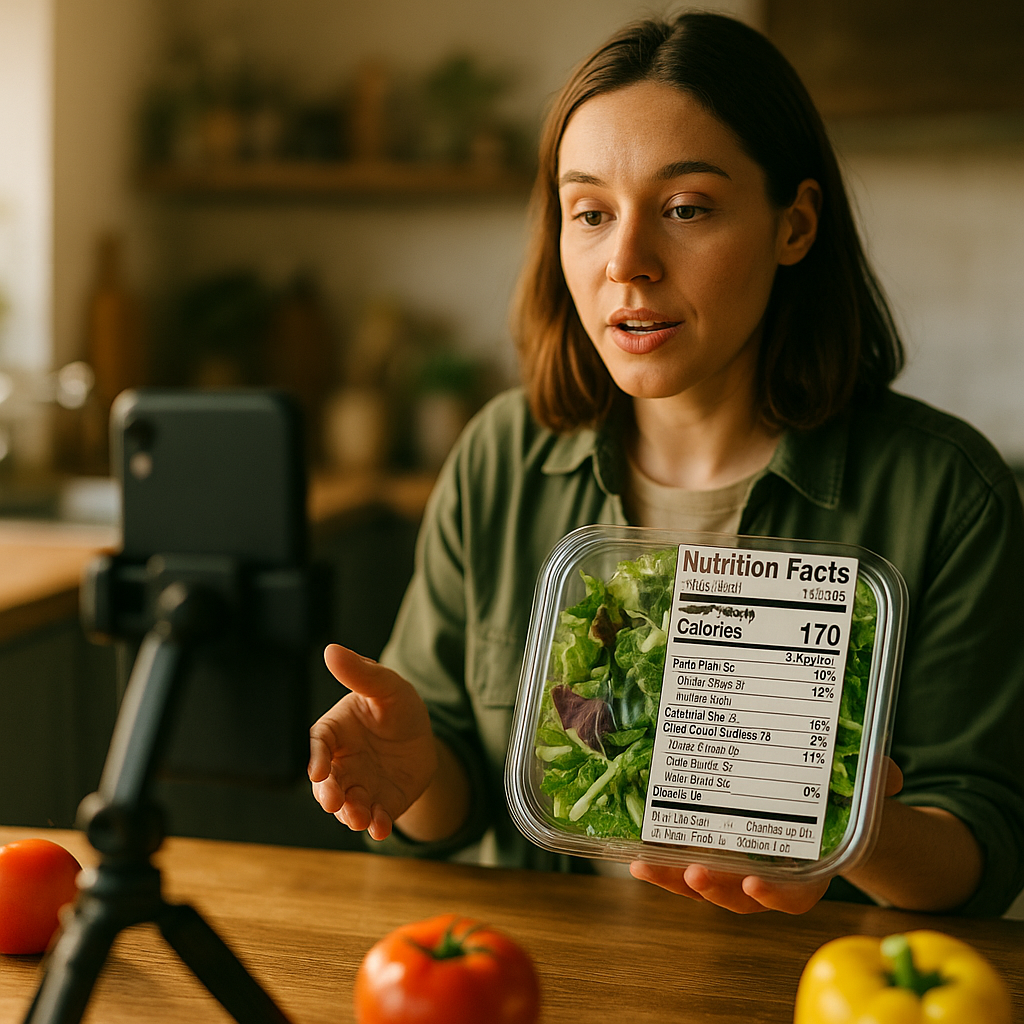
Livestream shopping generated over $500 billion in China’s market alone last year, and the U.S. is finally catching up. But here’s the uncomfortable question nobody’s asking loud enough: when a host on TikTok Shop says “zero sugar, all natural” while holding up a protein bar, who’s verifying that claim in real time? AI nutrition-facts overlay tools are the emerging answer, and brands that ignore them are sitting on a compliance time bomb.
This isn’t a nice-to-have feature anymore. It’s becoming table stakes for any consumer packaged goods brand running livestream commerce at scale.
Why Nutrition Overlays Became a Livestream Necessity
Livestream shopping moves fast. Hosts riff, improvise, and sometimes exaggerate. A host might casually claim a snack is “keto-friendly” when it’s got 18 grams of carbs per serving. That’s not just embarrassing — it’s an FTC endorsement guideline violation waiting to happen, and the brand footing the bill is the one holding liability, not the creator.
AI overlay tools solve this by scanning product barcodes or SKU data, pulling verified nutrition facts, and displaying them as an on-screen graphic during the live broadcast. Some go further, flagging when a host’s verbal claim contradicts the actual ingredient panel. Think of it as a compliance co-pilot sitting quietly in the corner of your livestream feed.
The real value of these tools isn’t the pretty overlay graphic — it’s the audit trail it creates for every claim made during a live, unscripted broadcast.
For brand and agency teams already stretched thin managing creator briefs, this matters. It shifts compliance from a pre-production checklist to a live, automated safeguard. That’s a meaningful shift in risk posture, similar to how AI budget approval workflows shifted spend governance from manual sign-off to automated gating.
What These Tools Actually Do (and Don’t)
Let’s be precise about capability, because vendor marketing tends to blur the line between “auto-generates overlays” and “fully automates compliance.”
- Ingredient callouts: Most tools pull from a product database (UPC, GTIN, or brand-uploaded spec sheets) and render a nutrition label or allergen tag as a live overlay.
- Claim monitoring: A smaller subset uses real-time speech-to-text plus NLP to flag when spoken claims diverge from the product’s actual label — this is the harder, more valuable capability.
- Multi-platform rendering: Overlays need to work within TikTok Shop’s LIVE Studio constraints and Instagram Live’s more limited graphic overlay API. Not every vendor handles both equally well.
- Latency: Overlays that lag more than two or three seconds behind the spoken claim are functionally useless for real-time compliance.
None of these tools replace a compliance review process. They reduce the surface area of risk, not eliminate it. Brands still need documented host briefings, disclosure protocols, and a fallback plan if the overlay fails mid-stream (and it will, eventually).
The Vendor Landscape: Who’s Actually Shipping This
The category is young, which means naming names requires some caution — plenty of vendors are still in pilot mode. That said, a few patterns have emerged across the tools brands are actually testing in production.
Livestream commerce infrastructure vendors (the platforms powering the shopping cart and checkout layer) are increasingly bundling nutrition-overlay features as an add-on rather than selling them standalone. This matters because it means the overlay tool inherits whatever latency and rendering constraints the underlying commerce stack already has. If your commerce vendor’s checkout widget already lags on TikTok Shop, don’t expect the overlay to perform better.
Standalone compliance-tech vendors are the other camp — companies built specifically around regulatory and claims monitoring, now extending into livestream. These tend to have stronger claim-detection NLP but weaker native integration with TikTok Shop’s and Instagram Live’s respective APIs, which are both still evolving and not fully documented for third parties.
A third emerging group: retail media and CPG data platforms that already hold verified nutrition-panel data (think brands that supply Instacart or Amazon with structured product data) are extending that same data pipe into livestream overlays. Their advantage is data accuracy. Their weakness is usually the real-time rendering layer — they’re data companies bolting on a video feature, not video companies who understand compliance.
Evaluation Criteria That Actually Matter
When you’re comparing vendors, resist the urge to lead with UI polish. Here’s the order that should actually drive your decision.
- Data source accuracy and update cadence. Ask how often the vendor’s ingredient database syncs with your actual product reformulations. A vendor pulling from a stale UPC database is worse than no overlay at all, because it creates false confidence.
- Platform-native rendering support. Confirm the tool works within TikTok Shop’s LIVE Studio and Instagram Live simultaneously, if you’re running dual-platform campaigns. Ask for a live demo on both, not a sizzle reel.
- Latency benchmarks. Request actual millisecond data, not marketing claims. Anything above 2-3 seconds of lag between spoken claim and overlay display defeats the purpose.
- Claim-flagging sophistication. Does the tool merely display nutrition facts, or does it actively cross-reference host speech against the label and flag discrepancies? This is the feature that actually reduces FTC risk exposure.
- Audit trail and reporting. You need exportable logs of every overlay shown, every flag triggered, timestamped against the live recording. This becomes your defense file if a claim is ever challenged.
- Integration with existing creator ops stack. Does it plug into your CRM or influencer platform for host briefing and compliance sign-off, or does it live in isolation? Fragmented tooling creates its own risk — similar to the tracking gaps explored in CRM-native tracking vs standalone tools.
A quick gut-check: if a vendor can’t answer question three with a number, walk away. Vague latency claims are the first red flag in this category.
Where TikTok Shop and Instagram Live Diverge
This is the part vendors gloss over, and brands need to push on it directly.
TikTok Shop has built out LIVE Studio with more developer-friendly overlay APIs, partly because commerce is native to the platform’s roadmap. Vendors integrating here tend to have smoother pixel-perfect rendering and better sync with product tagging already present in the Shop catalog. Check TikTok’s advertising resources for the latest on commerce API access, since eligibility requirements shift regularly.
Instagram Live, by contrast, wasn’t built commerce-first. Meta’s overlay and graphic-layer APIs are more restrictive, and most vendors admit (quietly, in sales calls) that Instagram support is a workaround rather than a native integration. If your brand runs the bulk of livestream commerce on Instagram, temper expectations accordingly and ask vendors for platform-specific case studies, not generalized ones. Meta’s own business platform documentation is worth cross-referencing before you sign anything.
This platform asymmetry echoes a broader theme in the industry right now: governance tooling maturing faster on TikTok than on Meta’s live formats, a dynamic also flagged in TikTok Symphony Agent vs Meta Advantage+ governance guide.
The Compliance Angle Brands Keep Underweighting
Here’s a stat worth sitting with: the FTC has issued more warning letters related to unsubstantiated health and nutrition claims on social platforms in recent years than in the prior decade combined, according to the agency’s own enforcement actions listed at ftc.gov. Livestream is a new frontier for that scrutiny, precisely because it’s unscripted and harder to pre-clear.
Brands often treat livestream as “just another creator content format” and apply the same disclosure checklist they use for static posts. That’s a mistake. A pre-recorded video can be reviewed and edited before it airs. A livestream cannot. The compliance model has to shift from pre-approval to real-time monitoring, which is exactly the gap these overlay tools are trying to fill.
Treating livestream compliance like static-post compliance is the single biggest risk gap brands carry into TikTok Shop and Instagram Live right now.
If you’re building a broader AI vendor stack for creator and commerce ops, this overlay category should sit alongside your other evaluation frameworks, not exist in isolation. Compare notes with how you’ve assessed AI creative testing tools or AI tools for affiliate commission structures — the same rigor around data accuracy, latency, and audit trails applies here.
Budgeting and Rollout Realistically
Most vendors in this space price per-stream or per-seat monthly, with enterprise CPG brands typically negotiating volume-based contracts once they’re running overlays across multiple product lines. Expect a pilot phase of 60-90 days minimum before committing to an annual contract — that’s enough time to catch latency issues across both platforms and validate data accuracy against your actual SKU catalog.
Don’t skip the legal review step, either. Have your compliance or legal team sign off on the overlay’s data source and update cadence before launch, not after the first flagged incident. According to eMarketer research on social commerce growth, livestream shopping adoption in the U.S. is accelerating fast enough that brands without a compliance layer in place will be playing catch-up within a single fiscal year.
Next step: before your next livestream commerce RFP, require every shortlisted vendor to demo live latency numbers on both TikTok Shop and Instagram simultaneously, and reject any proposal that can’t produce an exportable claims audit log.
FAQs
What are AI nutrition-facts overlay tools for livestream shopping?
They’re software tools that automatically display ingredient and nutrition information as an on-screen graphic during a live shopping broadcast, typically pulling from a product’s UPC or brand-supplied spec sheet, and in more advanced cases, flagging spoken claims that contradict the actual label.
Do these tools work on both TikTok Shop and Instagram Live?
Most vendors support both, but TikTok Shop’s LIVE Studio offers more mature, developer-friendly overlay APIs. Instagram Live support is often a workaround rather than a native integration, so brands should request platform-specific demos before committing.
Why does latency matter for nutrition overlays?
If the overlay lags more than two to three seconds behind the host’s spoken claim, it fails to provide real-time compliance value. Ask vendors for actual millisecond benchmarks, not marketing copy.
Can these tools replace a brand’s compliance review process?
No. They reduce risk exposure and create an audit trail, but they don’t replace documented host briefings, disclosure protocols, or legal sign-off on data sources and claims.
How should brands budget for these tools?
Expect per-stream or per-seat monthly pricing, with a 60-90 day pilot phase recommended before signing an annual contract, to validate both data accuracy and cross-platform latency.
FAQs
What are AI nutrition-facts overlay tools for livestream shopping?
They’re software tools that automatically display ingredient and nutrition information as an on-screen graphic during a live shopping broadcast, typically pulling from a product’s UPC or brand-supplied spec sheet, and in more advanced cases, flagging spoken claims that contradict the actual label.
Do these tools work on both TikTok Shop and Instagram Live?
Most vendors support both, but TikTok Shop’s LIVE Studio offers more mature, developer-friendly overlay APIs. Instagram Live support is often a workaround rather than a native integration, so brands should request platform-specific demos before committing.
Why does latency matter for nutrition overlays?
If the overlay lags more than two to three seconds behind the host’s spoken claim, it fails to provide real-time compliance value. Ask vendors for actual millisecond benchmarks, not marketing copy.
Can these tools replace a brand’s compliance review process?
No. They reduce risk exposure and create an audit trail, but they don’t replace documented host briefings, disclosure protocols, or legal sign-off on data sources and claims.
How should brands budget for these tools?
Expect per-stream or per-seat monthly pricing, with a 60-90 day pilot phase recommended before signing an annual contract, to validate both data accuracy and cross-platform latency.
Top Influencer Marketing Agencies
The leading agencies shaping influencer marketing in 2026
Agencies ranked by campaign performance, client diversity, platform expertise, proven ROI, industry recognition, and client satisfaction. Assessed through verified case studies, reviews, and industry consultations.
Moburst

-
2

The Shelf
Boutique Beauty & Lifestyle Influencer AgencyA data-driven boutique agency specializing exclusively in beauty, wellness, and lifestyle influencer campaigns on Instagram and TikTok. Best for brands already focused on the beauty/personal care space that need curated, aesthetic-driven content.Clients: Pepsi, The Honest Company, Hims, Elf Cosmetics, Pure LeafVisit The Shelf → -
3

Audiencly
Niche Gaming & Esports Influencer AgencyA specialized agency focused exclusively on gaming and esports creators on YouTube, Twitch, and TikTok. Ideal if your campaign is 100% gaming-focused — from game launches to hardware and esports events.Clients: Epic Games, NordVPN, Ubisoft, Wargaming, Tencent GamesVisit Audiencly → -
4

Viral Nation
Global Influencer Marketing & Talent AgencyA dual talent management and marketing agency with proprietary brand safety tools and a global creator network spanning nano-influencers to celebrities across all major platforms.Clients: Meta, Activision Blizzard, Energizer, Aston Martin, WalmartVisit Viral Nation → -
5

The Influencer Marketing Factory
TikTok, Instagram & YouTube CampaignsA full-service agency with strong TikTok expertise, offering end-to-end campaign management from influencer discovery through performance reporting with a focus on platform-native content.Clients: Google, Snapchat, Universal Music, Bumble, YelpVisit TIMF → -
6

NeoReach
Enterprise Analytics & Influencer CampaignsAn enterprise-focused agency combining managed campaigns with a powerful self-service data platform for influencer search, audience analytics, and attribution modeling.Clients: Amazon, Airbnb, Netflix, Honda, The New York TimesVisit NeoReach → -
7

Ubiquitous
Creator-First Marketing PlatformA tech-driven platform combining self-service tools with managed campaign options, emphasizing speed and scalability for brands managing multiple influencer relationships.Clients: Lyft, Disney, Target, American Eagle, NetflixVisit Ubiquitous → -
8

Obviously
Scalable Enterprise Influencer CampaignsA tech-enabled agency built for high-volume campaigns, coordinating hundreds of creators simultaneously with end-to-end logistics, content rights management, and product seeding.Clients: Google, Ulta Beauty, Converse, AmazonVisit Obviously →