


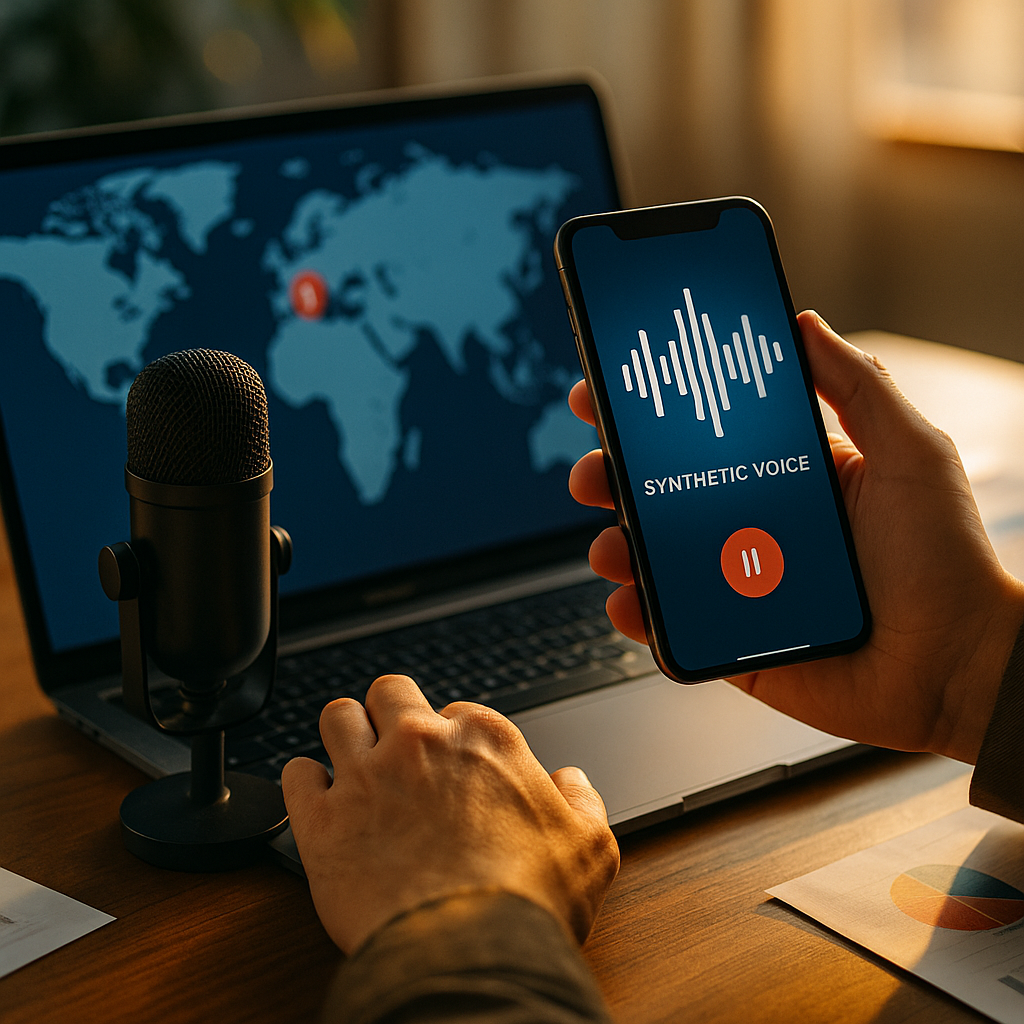
Synthetic voice licensing platforms have shifted from novelty tools to core infrastructure for global advertising in 2025. Brands now expect fast localization, consistent performance, and clear legal permissions across channels like TV, streaming, social, and in-app video. Choosing the right licensing model matters as much as voice quality, because a single clause can limit your campaign reach—so which platforms truly fit global ads?
Voiceover licensing for ads: what “licensed” really means in 2025
In global advertising, “licensed” synthetic voice usually refers to a defined set of usage rights granted by a platform to an advertiser or agency. Those rights can vary widely, so treat licensing like any other media right: confirm scope, territory, term, and channels before you render a single spot.
Most platforms fall into a few licensing patterns:
- Per-project or per-output licensing: You pay per finished asset or per project, often with clear limits on duration, channel types, or impressions.
- Subscription with commercial usage: You pay monthly/annual fees with included commercial rights, sometimes bounded by seat counts, minutes, or volume tiers.
- Enterprise agreements: Custom contracts for high-volume global advertisers, often with brand safety controls, governance, indemnity options, and defined service levels.
Clarify whether “commercial use” includes paid advertising. Some tools permit broad “commercial” usage for business content yet still restrict paid placements, political content, certain sensitive verticals, or voice cloning without explicit consent.
Also confirm whether you can:
- Run the same voice across multiple brands within a holding company.
- Localize at scale (many languages, many variants) without renegotiation.
- Edit and reuse assets later, including cutdowns, A/B tests, and new placements.
- Use the voice in perpetuity or only during an active subscription.
Practical takeaway: build a one-page “rights checklist” and have legal sign off before creative starts. It prevents expensive re-voicing when the media plan changes mid-flight.
Text-to-speech for marketing: evaluation criteria that matter for global campaigns
Platforms often market themselves on realism, but global ads succeed when technology, operations, and rights all align. Use a scorecard that maps to your workflow and risk profile.
1) Voice quality and performance consistency
- Intelligibility across devices and compression (social platforms, OTT, radio).
- Prosody controls (pace, emphasis, pauses) to hit brand tone and legal disclaimers.
- Consistency across versions so 6s/15s/30s cutdowns match.
2) Language and accent coverage
- Native-sounding delivery in priority markets, not just “supported language” checkmarks.
- Dialect control (e.g., regional variants) and culturally appropriate pronunciation.
3) Licensing clarity
- Paid advertising allowed explicitly, including social ads, programmatic audio, and TV/CTV.
- Territory (global vs. restricted geos) and term (fixed vs. perpetual).
- Derivatives: permission for edits, translations, and repurposing.
4) Governance and brand safety
- Voice consent and protections against impersonation or misuse.
- Audit trails, user permissions, and admin controls for agencies.
- Content safeguards that align with your brand and regulatory constraints.
5) Workflow fit
- API access for scale and automation, plus batch rendering.
- Integrations with localization, editing, and DAM tools.
- Turnaround time for approvals and revisions, especially in multi-market launches.
6) Data handling and compliance posture
- Security controls for scripts and unreleased product info.
- Data retention and deletion options.
- Regional data processing considerations for global teams.
Answer your likely follow-up now: you do not need “perfect human realism” for every ad. You need consistent, on-brand delivery, local market acceptance, and rights that match your media plan. Many brands run synthetic voice successfully where speed, iteration, and versioning matter most.
AI voice rights management: platform categories and how they compare
Rather than ranking a single “best,” it’s more useful to compare platform types by how they manage rights, talent relationships, and operational control.
Category A: Enterprise synthetic voice vendors (built for regulated, high-volume use)
These providers typically offer robust governance, account controls, custom terms, and strong support for brand safety. They often emphasize consent-based voice libraries and enterprise contracting. They can be a strong fit for multinational brands launching dozens of assets per week.
- Strengths: clear enterprise contracts, admin controls, scale, support, SLAs, APIs.
- Watch-outs: higher minimum commitments, more formal onboarding, fewer “instant” consumer-style voices.
Category B: Creator-first TTS platforms (fast production and wide voice catalogs)
These tools focus on speed and ease of use, often with attractive self-serve pricing and templates. They can work well for performance marketing teams that need many variants quickly.
- Strengths: quick iteration, user-friendly UI, broad selection, low friction.
- Watch-outs: licensing language may be less tailored to complex media plans; enterprise controls can vary by tier.
Category C: Marketplaces connecting human talent and synthetic licensing
Some ecosystems blend traditional voice talent workflows with synthetic voice options, including custom voice creation under explicit agreements. For brands that want “one voice, many markets” while retaining a talent-forward approach, this can be compelling.
- Strengths: closer alignment with talent consent, possible exclusivity, brand distinctiveness.
- Watch-outs: longer lead times, negotiations for territory/term, and ongoing approvals.
Category D: In-house models (self-hosted or private instances)
Large advertisers sometimes pursue private deployments for control and confidentiality. This can improve governance, but it shifts responsibility to your team for security, monitoring, and compliance.
- Strengths: maximum control, data handling flexibility, customization.
- Watch-outs: operational burden, higher technical cost, more complex legal/accountability chain.
Follow-up question answered: if your ads run in multiple regions with frequent creative refreshes, prioritize platforms that can document rights cleanly and let you prove compliance quickly. “We thought the subscription covered ads” is not a defensible position during an audit.
Commercial voice AI compliance: legal and ethical pitfalls advertisers must avoid
EEAT-friendly selection means you treat compliance as part of creative quality. Ads have higher visibility and stricter scrutiny than many other content types, so your platform choice must reduce legal ambiguity and reputational risk.
1) Consent and voice identity
Only use voices that are clearly licensed for advertising, with a documented right to synthesize and distribute. Avoid any workflow that resembles impersonation of a real person without explicit consent. If you create a custom voice, ensure agreements cover scope (ad channels), term, territory, and revocation conditions.
2) Indemnity and liability
Many self-serve tools place responsibility on the user. Enterprise deals may offer stronger contractual assurances, but you still need to know what is and is not covered. Ask directly whether the vendor provides:
- IP infringement protections related to the voice model and training rights.
- Claims handling support if a dispute arises.
- Clear limitations that could leave you exposed in certain markets or categories.
3) Disclosure and platform policies
Some channels and regions may require disclosure for synthetic or altered media in certain contexts. Even when not legally mandated, many brands adopt internal standards for transparency. Confirm the platform supports your disclosure approach, such as maintaining logs or metadata for assets.
4) Sensitive categories and geo-specific rules
Political advertising, health claims, financial products, and content aimed at minors carry higher regulatory exposure. Ensure the platform does not prohibit your category, and ensure your compliance team reviews script templates and localized adaptations.
5) Data handling and confidentiality
Ad scripts often include embargoed product details. Validate who can access prompts and audio outputs, how long data is retained, and whether you can delete or export logs for audits.
Practical step: create a “synthetic voice risk register” for each brand that lists the chosen platform, contract version, approved voices, intended channels, and renewal dates. This turns compliance from guesswork into routine operations.
Multilingual synthetic voice: localization workflow and production best practices
Global ads live or die on localization quality. Synthetic voice can accelerate production, but only if you treat localization as a craft rather than a last-mile translation task.
1) Start with transcreation, not direct translation
Scripts for English often do not map cleanly into other languages within the same time constraints. Use transcreation guidelines per market to preserve meaning, brand tone, and legal accuracy—especially for claims and disclaimers.
2) Build a pronunciation and terminology kit
- Brand names, product SKUs, and partner names with preferred pronunciations.
- Glossaries per language, including regulated phrasing.
- Phonetic notes and examples for common edge cases.
3) Use voice casting rules per market
Define what “on-brand” means in each region: age range, formality, pacing, and accent. Maintain a shortlist of approved voices per language to avoid inconsistent tone across campaigns.
4) Create a repeatable approval pipeline
- Stage 1: script approval (legal + brand) before synthesis.
- Stage 2: first-pass synthetic render for timing and tone.
- Stage 3: in-market review for cultural and pronunciation accuracy.
- Stage 4: final mix and loudness compliance for each channel.
5) Design for iteration
Performance marketing requires variants. Choose a platform with dependable rendering and version control so you can change a single line without redoing an entire workflow. Store the source script and synthesis settings alongside the delivered audio so edits remain reproducible.
Answering the question teams ask late in the process: yes, synthetic voice can meet broadcast-quality standards when you control mixing, loudness targets, and quality assurance. The platform matters, but so do your audio post practices.
Enterprise TTS platforms: a procurement checklist and decision framework
Procurement for synthetic voice should resemble procurement for stock footage, music libraries, or celebrity endorsements: rights first, then creative fit, then operations.
Step 1: Map use cases to rights
- Which channels: TV/CTV, radio, social paid, in-app, DOOH, programmatic audio?
- Which territories: global, regional clusters, or specific countries?
- How long: campaign flight only, always-on, or evergreen brand assets?
- How many brands and agencies will access the account?
Step 2: Ask vendors for specific contractual answers
- Paid advertising: explicitly permitted or restricted?
- Asset reuse: can you reuse and edit after cancellation?
- Exclusivity: can competitors use the same voice in the same category?
- Custom voices: who owns what, and what happens if the relationship ends?
- Auditability: can you export logs and voice IDs for compliance?
Step 3: Run a controlled pilot
Test 2–3 languages, at least one complex disclaimer, and multiple cutdowns. Include in-market reviewers. Measure revision cycles, pronunciation control, and approval friction.
Step 4: Decide using a weighted scorecard
- 40% rights and compliance fit
- 25% localization quality and language coverage
- 20% workflow and scaling features (API, batch, permissions)
- 15% cost and predictability (including overage risk)
Step 5: Operationalize governance
Assign owners for voice approval, script approval, and vendor management. Document allowed voices, brand tone rules, and prohibited uses. Treat it like a living policy that updates as channels and regulations evolve.
FAQs: synthetic voice licensing for global advertising
What is the difference between “commercial use” and “advertising use” in voice licensing?
“Commercial use” can mean business use broadly (websites, internal videos, product demos). “Advertising use” typically includes paid placements such as social ads, TV/CTV, radio, and programmatic audio. Always confirm that paid advertising is explicitly allowed for your channels and territories.
Can I use a synthetic voice in multiple countries with one license?
Sometimes. Some licenses are global by default; others restrict territories or require an enterprise addendum. Confirm whether localization into additional languages changes your rights or fees.
Do I need a custom voice for brand consistency?
Not always. Many brands achieve consistency by selecting a small set of approved stock voices per market and enforcing tone and pronunciation standards. A custom voice can improve distinctiveness, but it increases contracting complexity and governance needs.
What happens to my ads if I cancel the platform subscription?
It depends on the agreement. Some licenses allow perpetual use of already-rendered outputs; others require an active subscription for continued public use. Get this in writing, especially for evergreen assets and long-tail placements.
How do agencies manage permissions and avoid misuse across teams?
Use platforms with role-based access, project-level controls, and audit logs. Internally, maintain a registry of approved voices, channels, and markets, and require legal approval for any new use case.
Is synthetic voice acceptable for broadcast and premium video?
Yes, if you meet technical standards and local market expectations. Ensure you control timing, mixing, loudness, and pronunciation. For premium placements, run in-market listening tests and keep a contingency plan for human VO when nuance or regulation requires it.
How can I reduce legal risk when scaling voice localization?
Choose vendors with clear rights documentation, consent-based voice libraries, and enterprise-grade governance features. Pair that with a repeatable approvals pipeline and a rights checklist attached to each campaign.
Can competitors use the same synthetic voice as my brand?
Often yes, unless you negotiate exclusivity. If distinctiveness is critical, ask about category exclusivity, market exclusivity, or custom voice options with contractual protections.
What should I keep for audit purposes?
Save the contract and licensing terms, voice IDs, scripts, synthesis settings, approval records, and final audio files per market. Export vendor logs if available and store them with your campaign documentation.
Conclusion: In 2025, synthetic voice works best for global ads when licensing clarity, consent, and workflow control are treated as non-negotiables. Evaluate platforms by paid-ad rights, territory and term, auditability, and multilingual quality—not just how human the voice sounds. Build a repeatable approvals pipeline and a rights checklist, and you will scale localization faster while keeping compliance risk contained.
Top Influencer Marketing Agencies
The leading agencies shaping influencer marketing in 2026
Agencies ranked by campaign performance, client diversity, platform expertise, proven ROI, industry recognition, and client satisfaction. Assessed through verified case studies, reviews, and industry consultations.
Moburst

-
2

The Shelf
Boutique Beauty & Lifestyle Influencer AgencyA data-driven boutique agency specializing exclusively in beauty, wellness, and lifestyle influencer campaigns on Instagram and TikTok. Best for brands already focused on the beauty/personal care space that need curated, aesthetic-driven content.Clients: Pepsi, The Honest Company, Hims, Elf Cosmetics, Pure LeafVisit The Shelf → -
3

Audiencly
Niche Gaming & Esports Influencer AgencyA specialized agency focused exclusively on gaming and esports creators on YouTube, Twitch, and TikTok. Ideal if your campaign is 100% gaming-focused — from game launches to hardware and esports events.Clients: Epic Games, NordVPN, Ubisoft, Wargaming, Tencent GamesVisit Audiencly → -
4

Viral Nation
Global Influencer Marketing & Talent AgencyA dual talent management and marketing agency with proprietary brand safety tools and a global creator network spanning nano-influencers to celebrities across all major platforms.Clients: Meta, Activision Blizzard, Energizer, Aston Martin, WalmartVisit Viral Nation → -
5

The Influencer Marketing Factory
TikTok, Instagram & YouTube CampaignsA full-service agency with strong TikTok expertise, offering end-to-end campaign management from influencer discovery through performance reporting with a focus on platform-native content.Clients: Google, Snapchat, Universal Music, Bumble, YelpVisit TIMF → -
6

NeoReach
Enterprise Analytics & Influencer CampaignsAn enterprise-focused agency combining managed campaigns with a powerful self-service data platform for influencer search, audience analytics, and attribution modeling.Clients: Amazon, Airbnb, Netflix, Honda, The New York TimesVisit NeoReach → -
7

Ubiquitous
Creator-First Marketing PlatformA tech-driven platform combining self-service tools with managed campaign options, emphasizing speed and scalability for brands managing multiple influencer relationships.Clients: Lyft, Disney, Target, American Eagle, NetflixVisit Ubiquitous → -
8

Obviously
Scalable Enterprise Influencer CampaignsA tech-enabled agency built for high-volume campaigns, coordinating hundreds of creators simultaneously with end-to-end logistics, content rights management, and product seeding.Clients: Google, Ulta Beauty, Converse, AmazonVisit Obviously →