


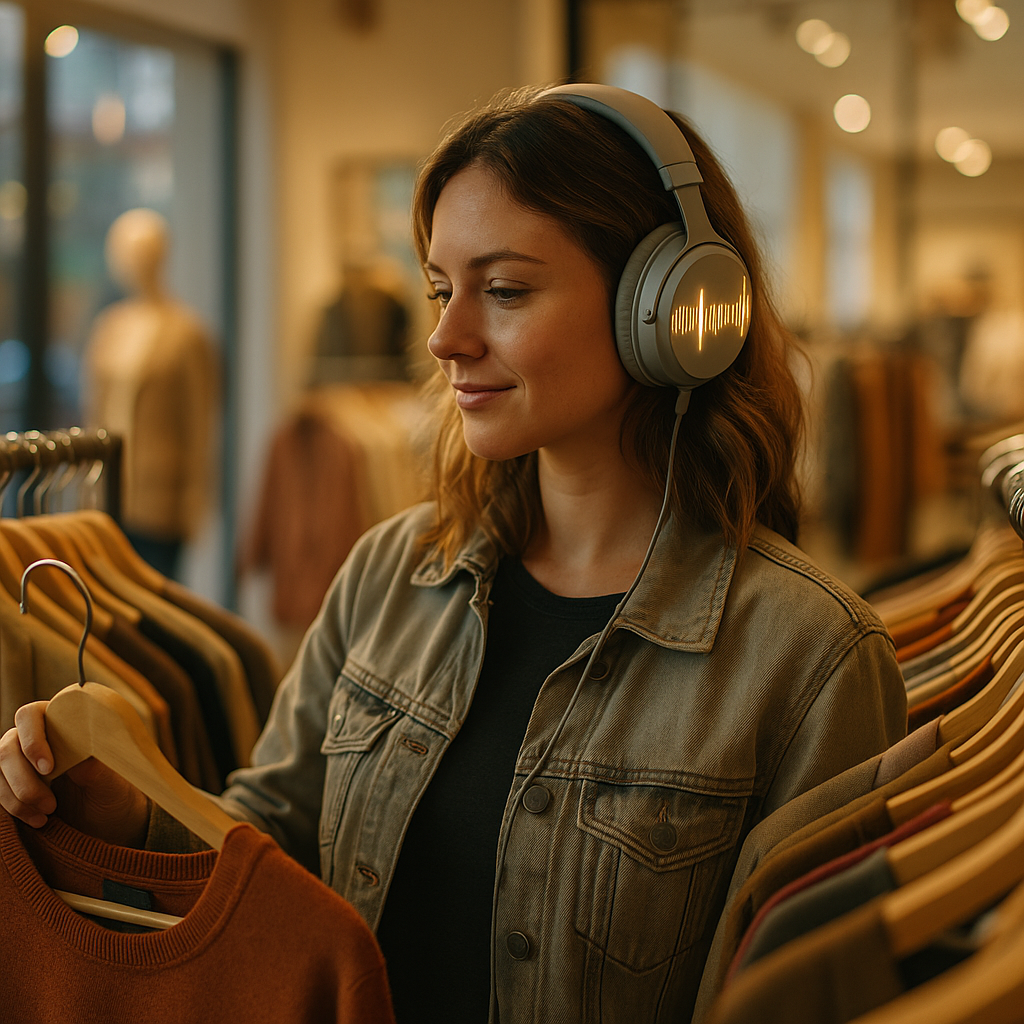
In 2025, retail brands compete on more than price and product: they compete on how a space feels. Using AI to Generate Hyper Niche Soundscapes for Branded Retail has become a practical way to tailor atmosphere to micro-audiences, dayparts, and locations without sacrificing consistency. The result can be a measurable lift in dwell time, basket size, and recall—if you build it with strategy, rights, and testing. Ready to tune your store into a signature?
AI soundscapes for retail: what they are and why they work
AI soundscapes for retail are adaptive, brand-specific audio environments produced or arranged with machine learning and generative tools. They go beyond “a playlist.” A soundscape can include music beds, textural ambience (city hush, coastal air, light mechanical rhythm), transitions, and even spatial cues that change by zone inside a store.
They work because sound directly shapes perception and behavior. Retail audio influences pace, comfort, privacy perception, and the sense of quality. AI adds two capabilities traditional background music struggles with:
- Hyper segmentation: audio can be tuned to niche subcultures (e.g., minimalist techwear, artisanal home fragrance, recovery and wellness) without relying on widely licensed tracks that competitors also use.
- Dynamic control: the system can shift energy, density, and brightness based on context (footfall, time of day, weather, promotions) while keeping brand identity consistent.
For decision-makers, the core question is not “Can AI make music?” It is “Can we design an audio identity system that is recognizable, measurable, and legally safe?” The rest of this article answers that with a retail-first lens.
Branded retail audio identity: start with strategy, not software
Branded retail audio identity is the audible equivalent of your visual design system. Before generating anything, define the rules that keep every track, loop, and transition on-brand across hundreds of micro-variations.
Build a simple “sound bible” that your creative, operations, and legal teams can align on:
- Brand attributes to audio traits: translate values into measurable parameters. Example: “premium” might map to lower dynamic harshness, restrained percussion, higher mix clarity, and slower harmonic rhythm.
- Audience and mission per zone: entry zones often need clarity and approachability; discovery zones can be more textured; fitting rooms may require privacy-supporting ambience and minimal lyrical distraction.
- Daypart profiles: opening (reset, calm), midday (steady energy), peak (upbeat but not chaotic), close (deceleration). This is where hyper-niche shines: you can keep the same identity while nudging tempo and density.
- Do-not-cross lines: define what must never appear: lyrical themes, aggressive transients, certain instruments, or cultural references that conflict with brand positioning.
Answer the follow-up question early: Will it sound “AI”? It doesn’t have to. The most effective programs treat AI as an assistant for ideation, variation, arrangement, and adaptive mixing, with human audio direction ensuring taste, consistency, and restraint.
Hyper niche sound design: building soundscapes for micro-audiences
Hyper niche sound design means you are not targeting “18–34 urban” with generic chill tracks. You are tailoring to specific shopper mindsets and product stories, while still honoring brand identity.
A practical method is to define sound personas that correspond to high-value missions in your store:
- “Precision Buyer”: clean, rhythmic minimalism; tight low end; reduced reverb; supports focused comparison shopping in electronics or specialty tools.
- “Weekend Explorer”: warmer harmonic color; subtle organic textures; moderate tempo; supports browsing in lifestyle and home retail.
- “Self-care Refill”: soft transients, airy high end, gentle movement; supports wellness, beauty, and apothecary-like experiences without feeling sleepy.
Then generate families of audio assets rather than single tracks: intros, loops, stingers for promotions, and smooth transitions between zones. AI is valuable because it can produce many controlled variations that share the same motif, instrumentation palette, and mix profile.
To keep it credible and culturally aware, ground niche choices in real customer insight. Use loyalty segmentation, top-selling categories, time-on-site analytics, and short intercept surveys (“What should this store sound like?”). If you can’t explain the niche in one sentence tied to customer behavior, it’s probably aesthetic overreach.
Generative music licensing and rights: how to stay compliant in 2025
Generative music licensing and rights is the fastest way for promising pilots to stall. You need clarity on ownership, permissions, and public performance obligations before you deploy audio across locations.
Key considerations to review with counsel and your music provider:
- Training data transparency: understand whether a vendor can document how models were trained and what guarantees they offer. Prefer providers that can state clear provenance and provide contractual assurances.
- Ownership and exclusivity: confirm whether you own the generated output, receive an exclusive license, or share rights. Exclusivity matters if your sound is part of brand equity.
- Public performance: retail playback is typically a public performance. Even if audio is “original,” you may still need venue or blanket licenses depending on jurisdiction and the composition’s rights status. Do not assume AI output eliminates performance obligations.
- Voice and likeness: avoid synthetic voices that resemble recognizable artists or imply endorsement. If you use vocal elements, keep them clearly original and documented.
- Documentation: maintain a rights folder per sound pack: vendor agreement, model/output terms, cue sheets (if applicable), and deployment logs.
Answer the common follow-up: Is it safer to use “AI-generated” than commercial music? Not automatically. It can be safer if your provider offers strong indemnities and provenance controls, and if you avoid mimicry. It can be riskier if you treat it casually.
In-store audio personalization: adapting sound to context without creepiness
In-store audio personalization means the soundscape adapts to store conditions, not to identifiable individuals. The goal is better atmosphere and flow, not surveillance.
Effective, privacy-respectful inputs include:
- Daypart and calendar: time of day, local events, seasonal merchandising.
- Footfall and occupancy levels: adjust density and tempo to maintain comfort when the store is crowded, or add warmth when it’s quiet.
- Weather signals: subtle shifts in brightness and texture to match local weather can feel cohesive, especially for outdoor, travel, and lifestyle brands.
- Zone-based rules: different audio profiles for entry, browsing, consultation, and checkout, with transitions that avoid sudden jumps.
Implementation detail that often gets missed: loudness management. Shoppers and staff fatigue quickly if levels creep up. Use consistent loudness targets, automatic gain control tuned for retail, and scheduled “quiet minutes” in high-sensitivity zones.
Also plan for operations: store managers need simple controls (volume range, emergency mute, holiday mode) and clear escalation paths. A soundscape that requires constant tuning will fail in multi-site rollout.
Retail soundscape ROI: measurement, experiments, and rollout
Retail soundscape ROI improves when you treat audio as a testable system rather than a vibe. In 2025, you can run controlled experiments without disrupting store operations.
Set measurable objectives tied to the shopper journey:
- Dwell time: time spent in key zones; often correlates with exploration and cross-sell.
- Conversion rate and units per transaction: measure changes during matched periods.
- Queue abandonment: audio can reduce perceived wait time when tuned correctly.
- Staff satisfaction: a neglected KPI; staff hear the soundscape more than anyone else, and burnout hurts service.
Run a clean pilot:
- Choose comparable stores (similar traffic, layout, demographics) and run an A/B test across several weeks to reduce noise from promotions.
- Lock variables like volume, zone routing, and daypart schedule; avoid changing multiple factors at once.
- Collect qualitative feedback through short staff check-ins and customer intercepts. Ask specific questions: “How easy was it to talk to staff?” “Did the store feel calm or rushed?”
Then scale with governance. Maintain a versioned library of sound packs, a change log, and a quarterly review cadence. Brands that win with AI audio treat it like any other product system: design, QA, deployment, measurement, iteration.
FAQs: AI-generated hyper niche soundscapes for branded retail
What is a hyper niche soundscape in retail?
A hyper niche soundscape is an audio environment designed for a very specific shopper mindset, product category, or local context, while still matching the overall brand’s audio identity. It uses tailored textures, rhythm, and transitions rather than generic background playlists.
Do AI soundscapes replace curated playlists?
Not always. Many retailers use a hybrid approach: curated tracks for recognition and cultural relevance, plus AI-generated beds and transitions for consistency, zone control, and adaptation. The best programs keep human oversight for taste and brand fit.
How do you prevent AI music from sounding repetitive?
Create variation sets (multiple loops and alternates), rotate motifs, and use adaptive mixing that changes instrumentation density by daypart. Also set rules for harmonic and rhythmic variety so the system doesn’t rely on a single pattern.
Is AI-generated retail music legally safe to use in stores?
It can be, but only with proper contracts and documentation. Confirm output rights, provenance assurances, and any public performance obligations in your region. Avoid voice cloning or artist-like mimicry, and keep a clear audit trail for every deployed asset.
What equipment do stores need for branded soundscapes?
Typically: a reliable playback device or media player, zone-capable amplification if you segment areas, calibrated speakers, and a management dashboard. For adaptive sound, you may also integrate anonymized occupancy/footfall signals and scheduling tools.
How long does it take to launch an AI soundscape pilot?
A focused pilot can launch in weeks if you already have brand guidelines and vendor approvals. The timeline is usually driven by rights review, hardware readiness, and agreeing on test metrics and store selection.
AI-driven retail audio is most effective when it behaves like a brand system: defined, repeatable, and measured. By combining clear audio identity rules, hyper niche persona design, compliant licensing, and privacy-respectful adaptation, you can create soundscapes that feel custom to every location while staying unmistakably on-brand. Treat the rollout like a product launch, validate ROI in pilots, and iterate with discipline.
Top Influencer Marketing Agencies
The leading agencies shaping influencer marketing in 2026
Agencies ranked by campaign performance, client diversity, platform expertise, proven ROI, industry recognition, and client satisfaction. Assessed through verified case studies, reviews, and industry consultations.
Moburst

-
2

The Shelf
Boutique Beauty & Lifestyle Influencer AgencyA data-driven boutique agency specializing exclusively in beauty, wellness, and lifestyle influencer campaigns on Instagram and TikTok. Best for brands already focused on the beauty/personal care space that need curated, aesthetic-driven content.Clients: Pepsi, The Honest Company, Hims, Elf Cosmetics, Pure LeafVisit The Shelf → -
3

Audiencly
Niche Gaming & Esports Influencer AgencyA specialized agency focused exclusively on gaming and esports creators on YouTube, Twitch, and TikTok. Ideal if your campaign is 100% gaming-focused — from game launches to hardware and esports events.Clients: Epic Games, NordVPN, Ubisoft, Wargaming, Tencent GamesVisit Audiencly → -
4

Viral Nation
Global Influencer Marketing & Talent AgencyA dual talent management and marketing agency with proprietary brand safety tools and a global creator network spanning nano-influencers to celebrities across all major platforms.Clients: Meta, Activision Blizzard, Energizer, Aston Martin, WalmartVisit Viral Nation → -
5

The Influencer Marketing Factory
TikTok, Instagram & YouTube CampaignsA full-service agency with strong TikTok expertise, offering end-to-end campaign management from influencer discovery through performance reporting with a focus on platform-native content.Clients: Google, Snapchat, Universal Music, Bumble, YelpVisit TIMF → -
6

NeoReach
Enterprise Analytics & Influencer CampaignsAn enterprise-focused agency combining managed campaigns with a powerful self-service data platform for influencer search, audience analytics, and attribution modeling.Clients: Amazon, Airbnb, Netflix, Honda, The New York TimesVisit NeoReach → -
7

Ubiquitous
Creator-First Marketing PlatformA tech-driven platform combining self-service tools with managed campaign options, emphasizing speed and scalability for brands managing multiple influencer relationships.Clients: Lyft, Disney, Target, American Eagle, NetflixVisit Ubiquitous → -
8

Obviously
Scalable Enterprise Influencer CampaignsA tech-enabled agency built for high-volume campaigns, coordinating hundreds of creators simultaneously with end-to-end logistics, content rights management, and product seeding.Clients: Google, Ulta Beauty, Converse, AmazonVisit Obviously →