


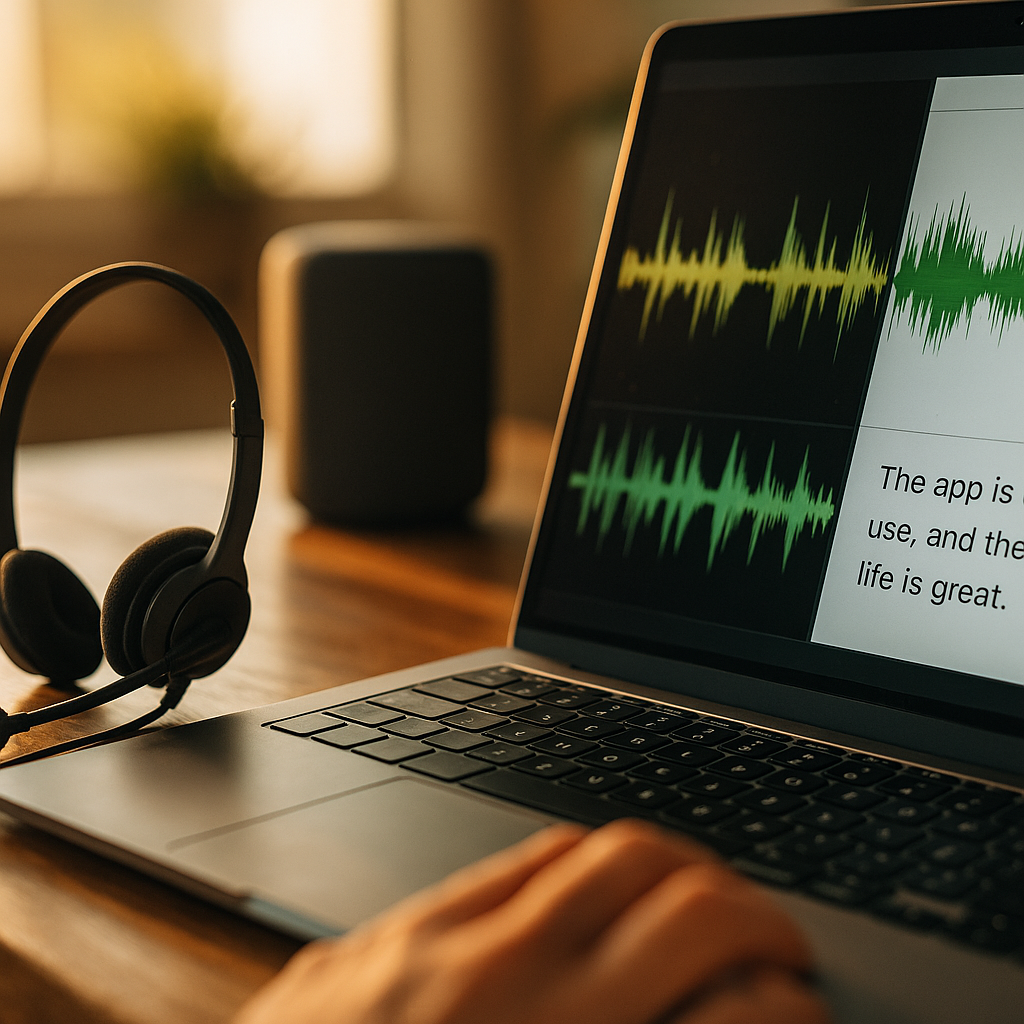
Using AI to Automate Customer Voice Extraction from Raw Audio is changing how teams turn messy conversations into decisions they can defend. In 2025, contact centers, product teams, and researchers no longer need weeks of manual listening to find patterns. Modern pipelines transcribe, label, and summarize at scale while keeping humans in control. The result is faster insight—if you know how to design it right. Ready to hear what your customers already said?
AI speech-to-text for customer calls: from raw recordings to usable text
Raw audio is rich but inconvenient. It contains intent, emotion, interruptions, accents, background noise, and multiple speakers. The first step in customer voice extraction is reliable speech-to-text that preserves enough structure for downstream analysis. In practice, that means building an ingestion and transcription layer that is consistent, measurable, and auditable.
Start with a repeatable intake process:
- Capture sources: call center recordings, sales calls, user interviews, in-app voice notes, support voicemails, and field recordings.
- Standardize audio: normalize sample rate, separate channels when available, and remove long silences to reduce cost and improve readability.
- Apply diarization: identify “Agent” vs “Customer” speakers. Without diarization, sentiment and issue attribution become unreliable.
- Measure transcription quality: use word error rate (WER) on a labeled validation set and track it by language, accent, channel, and topic.
Accuracy is not just a technical metric; it affects business decisions. If your model frequently confuses product names, plan types, competitor mentions, or negations (“didn’t work”), your downstream summaries will drift. Mitigate this with domain adaptation: custom vocabulary, phrase hints, post-processing dictionaries, and fine-tuned language models for industry terms.
Readers often ask whether “good enough” transcription exists. The practical answer: you do not need perfect transcripts, but you do need consistent performance on the moments that matter—complaints, cancellations, compliance statements, and feature requests. Build a test set that overrepresents those moments and evaluate there, not only on random snippets.
Customer sentiment analysis with AI: extracting emotion, intent, and outcomes
Once audio becomes text (and ideally has timestamps and speaker labels), AI can pull out signals that human reviewers usually notice: frustration, urgency, confusion, and resolution quality. However, “sentiment” alone is rarely enough. A strong customer voice system separates emotion from topic and outcome.
Effective extraction typically includes:
- Sentiment and emotion classification: overall polarity plus finer labels like frustration, relief, distrust, or confidence.
- Intent detection: billing dispute, cancellation, upgrade inquiry, troubleshooting, delivery delay, refund request.
- Outcome tagging: resolved, escalated, churn risk, follow-up needed, promise made, ticket created.
- Effort signals: repeated explanations, long holds, transfers, and “I already tried that.”
To keep this trustworthy under Google’s EEAT expectations, you need traceability. When a dashboard says “frustration increased,” teams will ask: Which calls? What phrases? What changed? Provide evidence links back to transcript segments, timestamps, and, where permitted, the audio snippet. This makes the system usable in real operations, not just in reports.
Also separate agent sentiment from customer sentiment. A cheerful agent does not mean a happy customer. Good diarization plus per-speaker scoring prevents misleading conclusions.
Finally, treat sentiment as probabilistic. Set thresholds for automation actions. For example: automatically flag “high churn risk” only when the model confidence is high and supporting cues exist (e.g., cancellation intent plus negative emotion plus competitor mention). Everything else should route to review or contribute to aggregate trends.
Voice of the customer analytics: turning transcripts into themes and priorities
“Customer voice extraction” becomes valuable when it produces themes you can act on. Modern AI systems go beyond keyword counts by clustering similar issues, detecting emerging topics, and quantifying impact. The goal is to answer: What problems are customers describing, how often, and what is the business cost?
Key components of voice of the customer analytics include:
- Topic modeling and clustering: group conversations by issue type even when customers use different words.
- Entity and attribute extraction: product names, plan tiers, feature names, error codes, shipping regions, device types.
- Root-cause hints: “after the update,” “since switching devices,” “when I travel,” “only on Wi‑Fi.”
- Trend detection: monitor spikes by week, channel, geography, and segment to catch incidents early.
A reliable workflow combines machine-scale discovery with human validation:
- Start with a taxonomy: a simple hierarchy of issues (e.g., Billing > Refund, Product > Setup, Delivery > Delay). Keep it small at first.
- Let AI propose new labels: when clusters appear that do not fit the taxonomy, surface them for review.
- Close the loop: approved themes update the taxonomy and training data, improving future extraction.
Teams usually want prioritization, not just lists. Add scoring that ties themes to outcomes:
- Volume: how many customers mention it.
- Severity: negative sentiment, escalation rate, compliance risk.
- Business impact: churn signals, refunds, repeat contacts, operational cost.
- Effort to fix: estimated engineering or process changes.
Answer the follow-up question before it’s asked: How do we know this is “the customer’s voice” and not model bias? Use stratified sampling across segments and channels, regularly audit false positives/negatives, and include “unknown/other” buckets to avoid forcing misclassifications.
Call center automation with generative AI: summaries, QA, and agent coaching
Generative AI adds a layer that business users immediately understand: concise summaries, consistent QA notes, and coaching opportunities. In 2025, the best systems do not replace quality teams; they help them cover more interactions with higher consistency.
High-value generative outputs include:
- Call summaries: what happened, what was tried, the resolution, and next steps—separately for customer and agent actions.
- Disposition suggestions: recommended case category and subcategory with confidence.
- Auto-generated follow-ups: customer emails or internal tickets that reflect the actual conversation.
- Quality assurance checks: did the agent verify identity, disclose required statements, avoid prohibited claims, and follow the script where required?
- Coaching insights: talk-to-listen ratio, interruptions, empathy markers, clarity, and missed opportunities.
To keep this safe and aligned with EEAT, use a “grounded” generation approach:
- Constrain the model to evidence: summaries should cite or be derived from transcript spans, not invent details.
- Use structured output: fields like “Customer goal,” “Root issue,” “Resolution,” “Commitments,” “Risks.” Structure reduces hallucinations.
- Require confidence and fallbacks: if evidence is weak, the system should say “Not enough information” rather than guess.
A common follow-up is whether generative AI can replace agents or analysts. In practice, it performs best as a co-pilot: it drafts and highlights, while humans approve high-stakes actions. This also improves adoption because teams can see and correct outputs rather than feel replaced by them.
Data privacy and compliance in audio analytics: governance you can explain
Customer calls and interviews often contain sensitive data—names, addresses, payment details, health or financial context, and sometimes unintended disclosures. Any AI automation plan must include privacy-by-design so you can confidently scale without creating hidden risk.
Core governance controls:
- Consent and notice: ensure customers are informed about recording and analysis where required.
- PII detection and redaction: mask credit cards, IDs, emails, phone numbers, and addresses in transcripts and downstream outputs.
- Role-based access: limit who can replay audio vs view redacted text vs see aggregate analytics.
- Retention policies: store audio only as long as necessary; keep derived insights longer when permissible.
- Audit trails: log who accessed what, when, and which model/version produced each label and summary.
Model governance matters too. Document your pipeline: transcription provider/model version, diarization method, labeling models, prompt templates, and evaluation results. This supports internal audits, vendor reviews, and customer trust questions.
Many teams also ask where processing should happen: cloud, private cloud, or on-prem. Choose based on data sensitivity, regulatory exposure, latency needs, and total cost of ownership. A practical approach is a hybrid design: sensitive audio stays in controlled storage while anonymized text and embeddings power analytics.
Implementing an AI customer insights pipeline: tools, metrics, and rollout plan
Automation succeeds when it is introduced as an operational capability, not a one-time project. Build a pipeline that product, support, and compliance teams can rely on weekly, with clear metrics and ownership.
A robust implementation plan looks like this:
- Define the questions: “What drives churn this month?” “Which features cause confusion?” “Where do agents miss compliance language?”
- Start with a narrow scope: one channel (calls), one language, and 5–10 high-value issue categories.
- Create a gold dataset: a few hundred to a few thousand interactions with human labels for topics, outcomes, and key moments.
- Select evaluation metrics: WER for transcription; precision/recall for intents and topics; calibration for risk flags; human-rated summary accuracy.
- Design human-in-the-loop review: sampling plans, adjudication guidelines, and retraining cadence.
- Integrate with workflows: CRM, ticketing, QA tools, and product feedback systems so insights lead to action.
Operational KPIs keep the program honest:
- Coverage: percent of interactions processed and labeled.
- Freshness: time from call end to insight availability.
- Reliability: model drift, error rates by segment, and stability of top themes.
- Business outcomes: reduced repeat contacts, faster resolution, improved CSAT, fewer escalations, and measurable churn reduction.
Address the most common stakeholder concern early: “Will we trust this enough to act?” Build trust with transparency (evidence links), controlled automation (thresholds and approvals), and continuous evaluation (monthly audits and drift checks). When teams can inspect the underlying conversation and see why the system reached a conclusion, adoption accelerates.
FAQs about AI voice extraction from raw audio
What does “customer voice extraction” mean in practice?
It means converting raw audio into structured insights: accurate transcripts, speaker separation, topics, sentiment/emotion, intents, outcomes, and summaries—plus dashboards that quantify trends and link back to evidence.
How accurate does speech-to-text need to be for useful analytics?
It needs to be consistently accurate on critical entities and moments (product names, negations, complaints, cancellations). You can tolerate minor grammatical errors if diarization, timestamps, and key terms are reliable and routinely audited.
Can AI detect sarcasm and nuanced emotion from calls?
Sometimes, but it remains imperfect. The best approach combines text-based signals with acoustic cues (pitch, pace) when allowed, uses calibrated confidence scores, and routes ambiguous cases to human review rather than forcing a label.
How do we prevent generative AI from inventing details in call summaries?
Use grounded generation: constrain outputs to transcript evidence, require structured fields, include confidence thresholds, and provide “insufficient evidence” fallbacks. Always keep a link from each summary claim to the relevant transcript segment.
What are the biggest privacy risks in analyzing audio?
Unredacted PII in transcripts, overly broad access to recordings, and long retention of sensitive audio. Mitigate with automated redaction, strict role-based access, retention limits, and full audit logs.
How long does it take to deploy an AI audio-to-insights pipeline?
A focused pilot can deliver usable insights in weeks if data access is ready. A production rollout typically takes longer because governance, integrations, evaluation, and human review processes need to be operationalized and documented.
AI-based customer voice extraction turns raw recordings into structured, searchable insight that teams can use daily. In 2025, the advantage comes from building a transparent pipeline: strong transcription, diarization, validated sentiment and topic models, and grounded summaries that link back to evidence. Pair automation with privacy controls and human review where stakes are high. The takeaway: scale listening without sacrificing accuracy, governance, or trust.
Top Influencer Marketing Agencies
The leading agencies shaping influencer marketing in 2026
Agencies ranked by campaign performance, client diversity, platform expertise, proven ROI, industry recognition, and client satisfaction. Assessed through verified case studies, reviews, and industry consultations.
Moburst

-
2

The Shelf
Boutique Beauty & Lifestyle Influencer AgencyA data-driven boutique agency specializing exclusively in beauty, wellness, and lifestyle influencer campaigns on Instagram and TikTok. Best for brands already focused on the beauty/personal care space that need curated, aesthetic-driven content.Clients: Pepsi, The Honest Company, Hims, Elf Cosmetics, Pure LeafVisit The Shelf → -
3

Audiencly
Niche Gaming & Esports Influencer AgencyA specialized agency focused exclusively on gaming and esports creators on YouTube, Twitch, and TikTok. Ideal if your campaign is 100% gaming-focused — from game launches to hardware and esports events.Clients: Epic Games, NordVPN, Ubisoft, Wargaming, Tencent GamesVisit Audiencly → -
4

Viral Nation
Global Influencer Marketing & Talent AgencyA dual talent management and marketing agency with proprietary brand safety tools and a global creator network spanning nano-influencers to celebrities across all major platforms.Clients: Meta, Activision Blizzard, Energizer, Aston Martin, WalmartVisit Viral Nation → -
5

The Influencer Marketing Factory
TikTok, Instagram & YouTube CampaignsA full-service agency with strong TikTok expertise, offering end-to-end campaign management from influencer discovery through performance reporting with a focus on platform-native content.Clients: Google, Snapchat, Universal Music, Bumble, YelpVisit TIMF → -
6

NeoReach
Enterprise Analytics & Influencer CampaignsAn enterprise-focused agency combining managed campaigns with a powerful self-service data platform for influencer search, audience analytics, and attribution modeling.Clients: Amazon, Airbnb, Netflix, Honda, The New York TimesVisit NeoReach → -
7

Ubiquitous
Creator-First Marketing PlatformA tech-driven platform combining self-service tools with managed campaign options, emphasizing speed and scalability for brands managing multiple influencer relationships.Clients: Lyft, Disney, Target, American Eagle, NetflixVisit Ubiquitous → -
8

Obviously
Scalable Enterprise Influencer CampaignsA tech-enabled agency built for high-volume campaigns, coordinating hundreds of creators simultaneously with end-to-end logistics, content rights management, and product seeding.Clients: Google, Ulta Beauty, Converse, AmazonVisit Obviously →